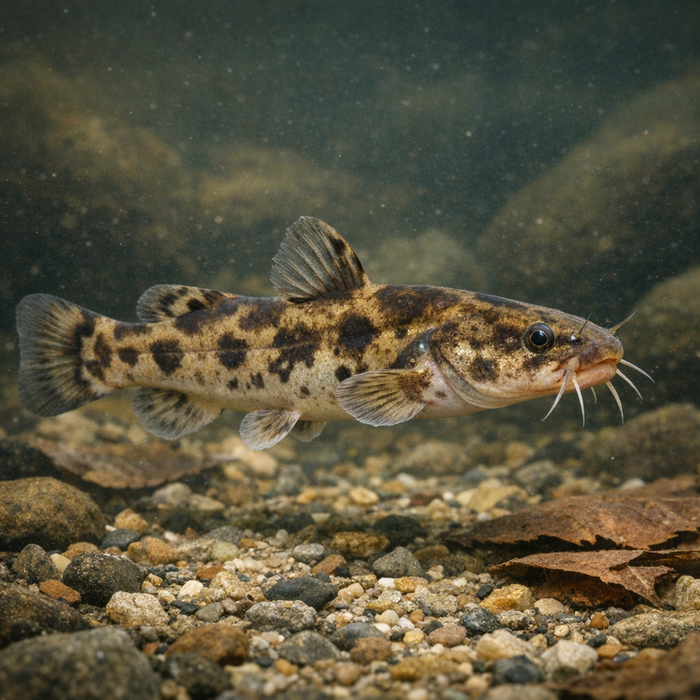
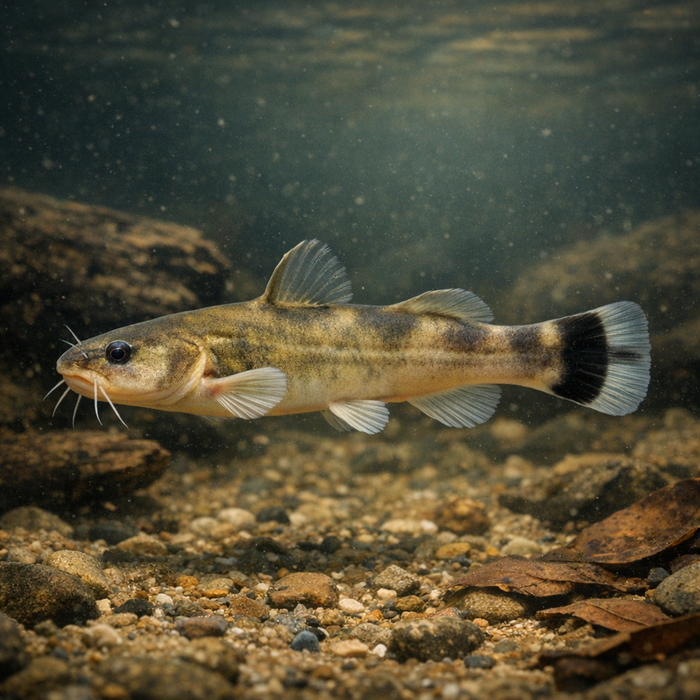
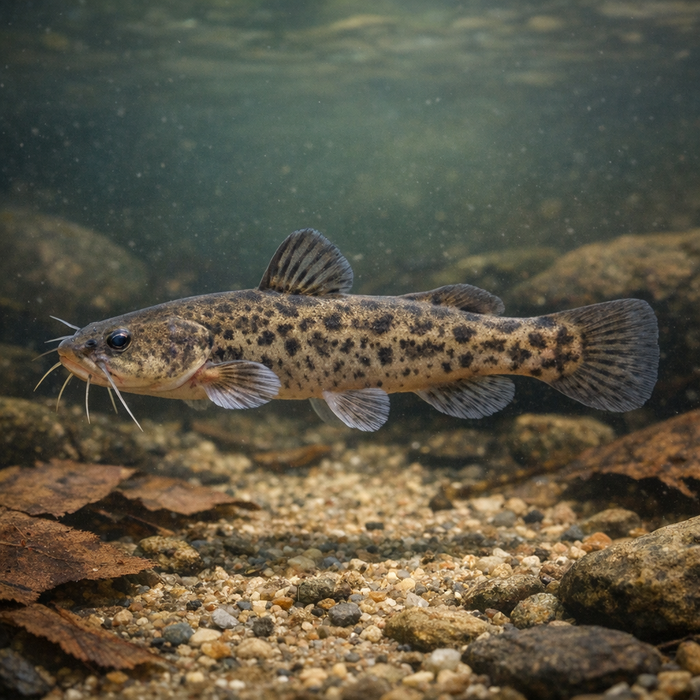
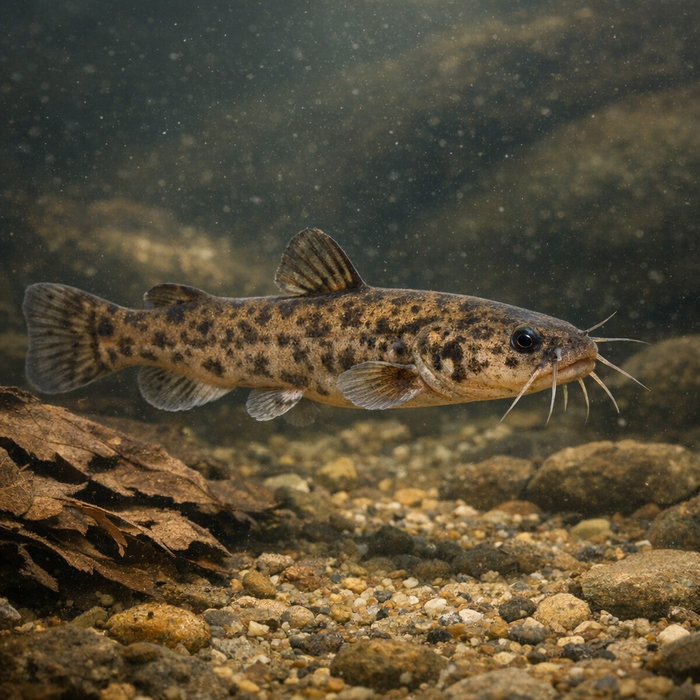
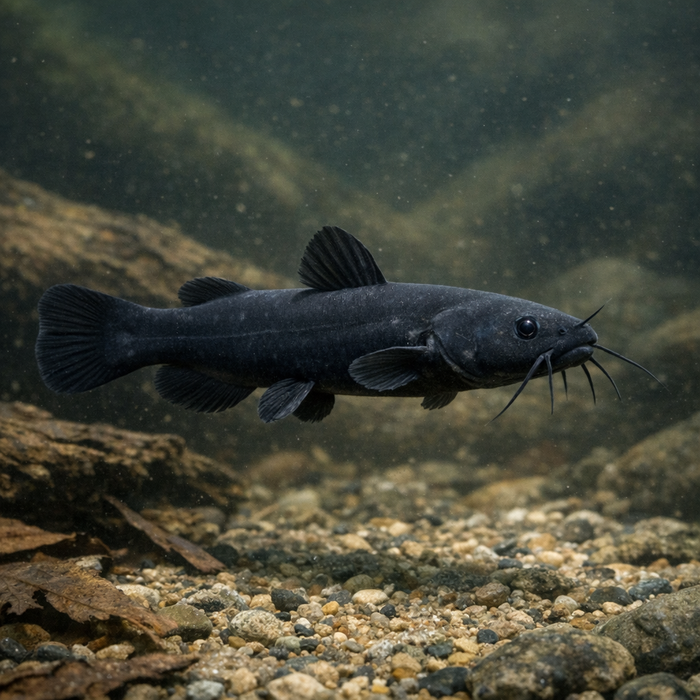
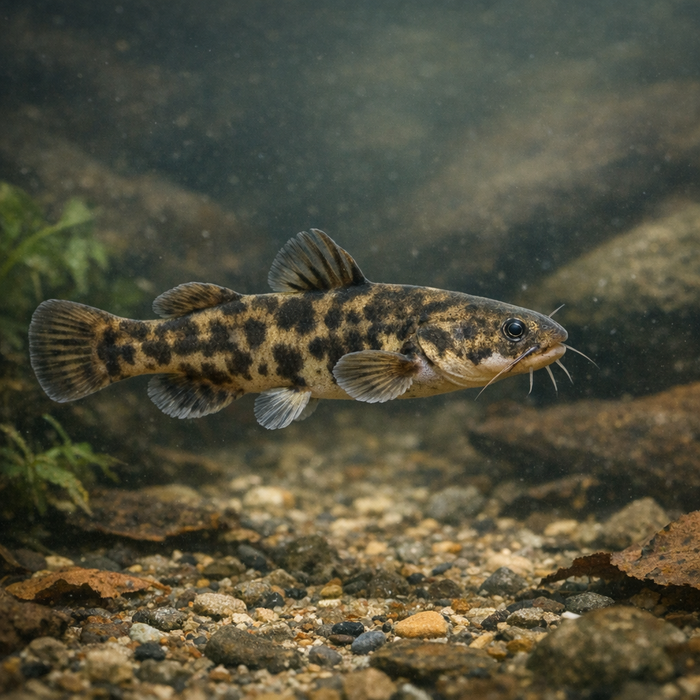
Slender Madtom (Noturus exilis): Pocket-sized catfish with a venomous attitude and serious riffle swaggerIntroductionThe slender madtom is the river's stealthy night shift. It is tiny, wired for current, and rigged with spines that will make you remember the encounter. Anglers rarely target it on purpose, but anyone who microfishes or flips stones in an Ozark riffle learns fast: this little catfish punches way above its weight. If you are here for real Slender madtom facts, you are in the right riffle.What Makes the Slender madtom Unique?Two things. First, that body plan. The slender madtom is a needle of muscle with a long adipose fin that nearly merges into the tail, letting it slice into fast seams without getting tossed. Second, those spines. Dorsal and pectoral spines lock and carry mild venom, a built-in "hands off" sign for predators and careless anglers. Add nocturnal habits and hyper-sensitive barbels, and you have a micro predator built for dark, rocky chaos.Habitat & Global RangeThis species is a specialist of clear, rocky streams, especially the Ozarks and central U.S. drainages that feed the Mississippi and lower Ohio systems. Picture knee-deep riffles, cobble flats, and pocket water that churns just enough to hide a catfish the size of your pinky. It tucks under flat stones by day and prowls the bottom after dusk. If you wanted a simple sound bite on Slender madtom habitat, here it is: clean flow, stable gravel, and just enough boulders to make a labyrinth.Behavior & TemperamentThe slender madtom spends daylight hours under cover, wedging in with its spines like a living doorstop. At night it loosens up, sliding across cobble to graze insects, larvae, and small invertebrates. Sight is secondary. Taste buds along the skin and barbels do the heavy lifting. Hook one and it fights like a caffeinated paperclip: short runs, stubborn headshakes, instant attempts to re-wedge under the nearest slab.Ecological ImportanceThis fish is a health meter for small streams. Slender madtom prosper where silt is low, oxygen is high, and the substrate is not buried in muck. They convert invertebrate production into catfish biomass, then pass that energy up the chain to bigger predators. Males guarding nests keep fungus at bay and oxygen moving, a tiny parental service with outsized impact in microhabitats that can swing from pristine to smothered in a single storm.Conservation & Environmental PressuresThe slender madtom is listed as Least Concern overall, but that is not a free pass. It needs clean flow and un-silted rock. Erosion from poorly managed construction, livestock access, or flash-flood scouring can turn prime riffle real estate into a sand trap. Agricultural chemicals and warm, stagnant pools also hit hard. Local populations rise and fall with everything we do to headwaters and riparian buffers, which means stewardship matters.The FishyAF TakeIf you think fishing is only about giants, the slender madtom will disagree from under a dinner plate of limestone. It is small, yes, but it is also a masterclass in adaptation: venom-tipped spines, stealth, and speed in ankle-deep rapids. Target it intentionally and you will sharpen your stream reading, stealth, and rig finesse. Ignore it and you are missing one of freshwater's coolest specialists. The slender madtom is proof that apex attitude comes in micro packaging, and that the best stories sometimes weigh less than an ounce.