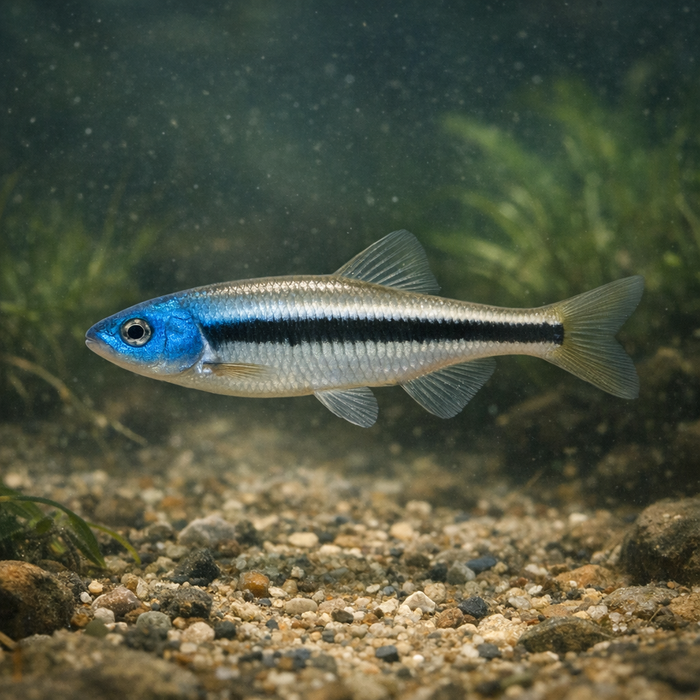
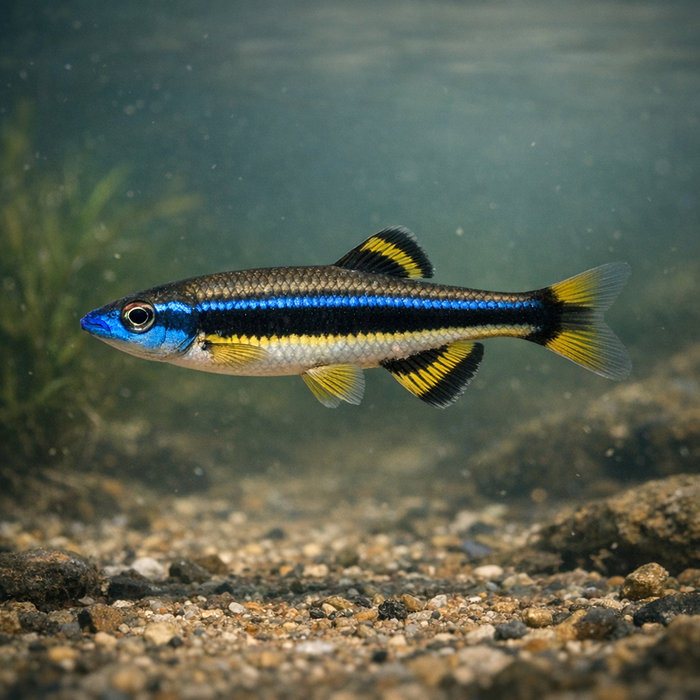
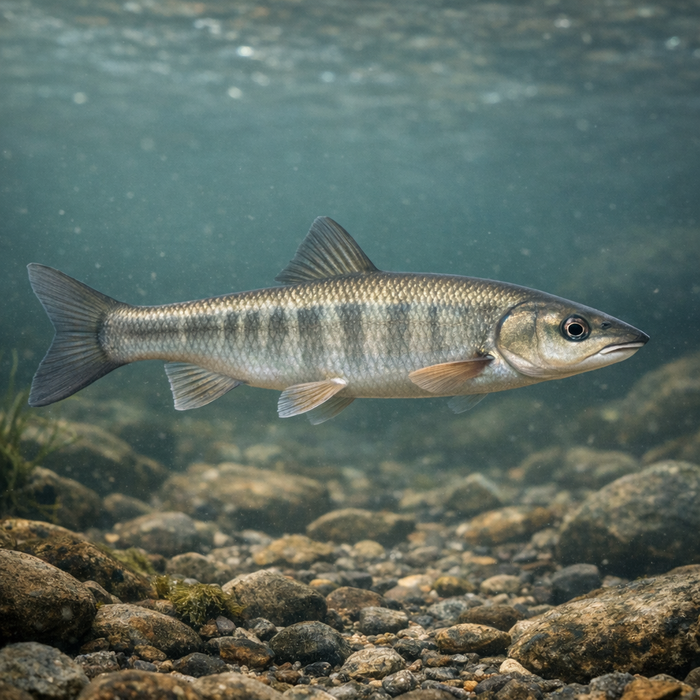
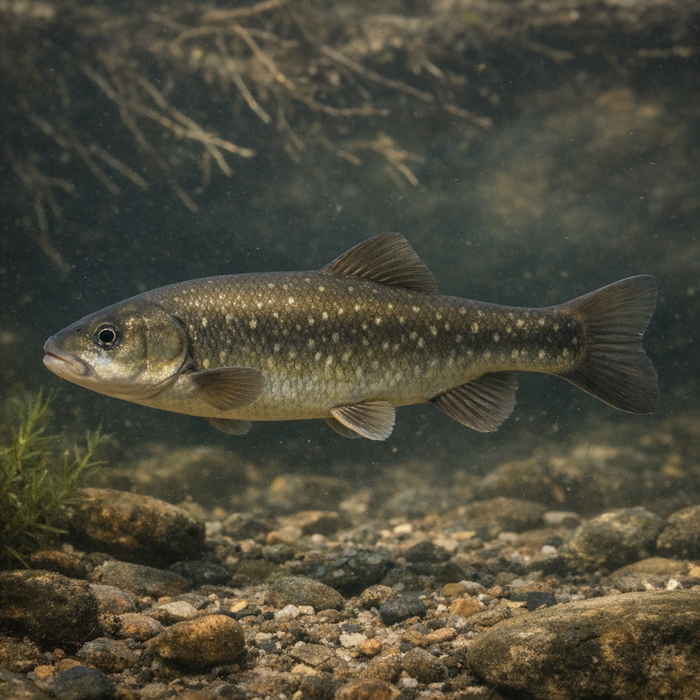
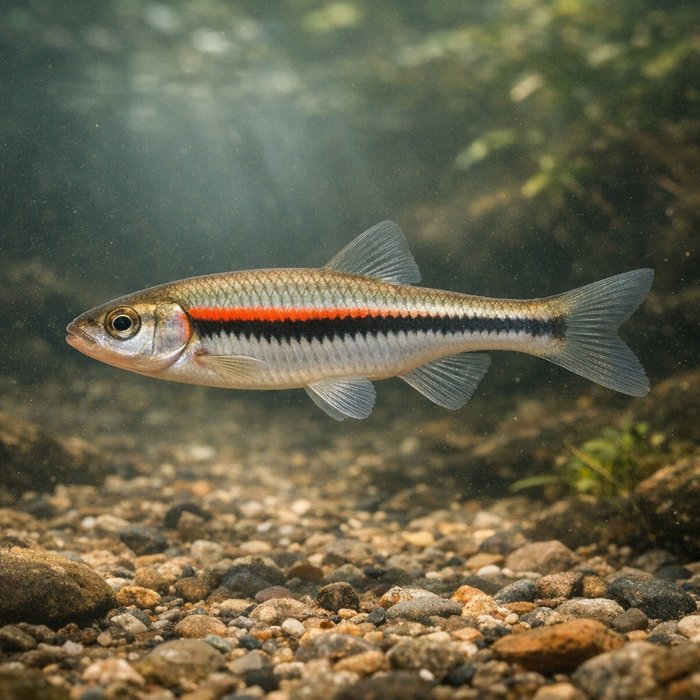
Pallid Shiner (Hybopsis amnis): A ghost-minnow built for sand and subtlety.IntroductionThe pallid shiner is the little specter that slips through sandy runs while everyone else stares at the riffles. It's small, pale, and maddeningly good at disappearing. If you're into microfishing, this species is the stealth challenge you brag about to exactly three other people who care. If not, consider this your primer on a tiny fish with an outsized story. These Pallid shiner facts and field notes will get you looking in the right places.What Makes the Pallid shiner Unique?First, the paint job. The pallid shiner earns its name with a low-contrast, washed-out body that practically vanishes over sunlit sand. Forget flashy stripes or neon fins. This fish wins by blending in. Second, its build screams drift-feeder. Sleek lines, small mouth, and efficient fins keep it hovering just off the bottom where invertebrates tumble by. Third, it's a schooling minimalist. Groups slide along sand waves, flashing once, then gone. That muted color, paired with a subtle midline shade, gives it the optical cloak it needs. The pallid shiner looks plain until you try to catch one.Habitat & Global RangeAsk about Pallid shiner habitat and you'll hear one word: sand. This species favors clear to lightly turbid streams and rivers with clean, shifting sand bottoms. Think gentle runs, inside bends, and pool tails where current straightens and the substrate ripples. It's a Mississippi Basin character, broadly Midwestern into the Gulf coastal plain, with patchy strongholds and gaps created by dams, dredging, and silt. You'll spot them where flow is steady but not blasting, depths are knee to waist high, and the bottom is more beach than cobble.Behavior & TemperamentThe pallid shiner does not brawl. It's about precision. Shoals move with the current like they're on cruise control, tapping drifting midge larvae, mayfly bits, and other tiny groceries. When shadows or boots spook them, they drop closer to the substrate or slide into the next soft seam. Spawning rolls in late spring into summer when water warms and flows stabilize. Males get a sandpaper feel from breeding tubercles, and eggs are scattered in the current over clean bottom. Most individuals are short-lived, typically two to three years, which keeps populations dependent on stable annual reproduction.Ecological ImportanceSmall doesn't mean trivial. The pallid shiner links flowing water's insect production to bigger fish, birds, and herps. It's a barometer for sandbed health too. When sand is clean and oxygenated, this fish thrives. Smother that bottom with silt or starve it with channelization and the pallid shiner fades out. Its presence signals a functioning, dynamic river reach where current, substrate, and bug life still sync.Conservation & Environmental PressuresOn paper, the pallid shiner can look widespread. In reality, it's patchy and sensitive to how we rearrange rivers. Dams flatten flows and trap sediment upstream while starving sand downstream. Gravel mining and bar scraping rough up the very texture this fish needs. Persistent turbidity and siltation clog interstitial spaces and mess with spawning and feeding. Many states flag it as a species of concern, even when global assessments sound calm. Translation: treat its sandbars like delicate gear.The FishyAF TakeCatching a pallid shiner isn't about hero shots. It's about reading light, current, and the fine print on a sand ripple. You're working micro hooks, micro baits, and micro mistakes that send the whole school into low gear. Once you see them, you can't unsee them: pale ghosts hovering inches off bottom, sliding past your boots. The pallid shiner is proof that some of the best river stories are written in lowercase. Learn the seams, keep it delicate, and you'll add a truly sneaky fish to your life list.