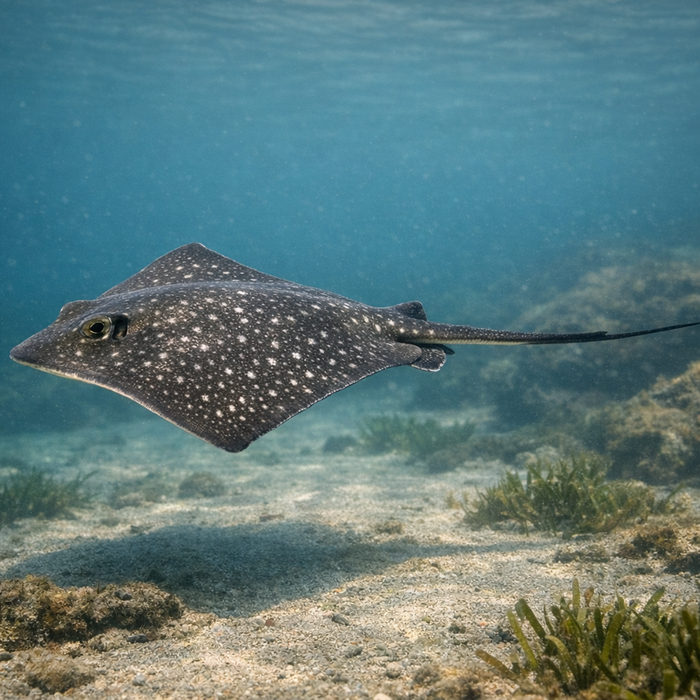
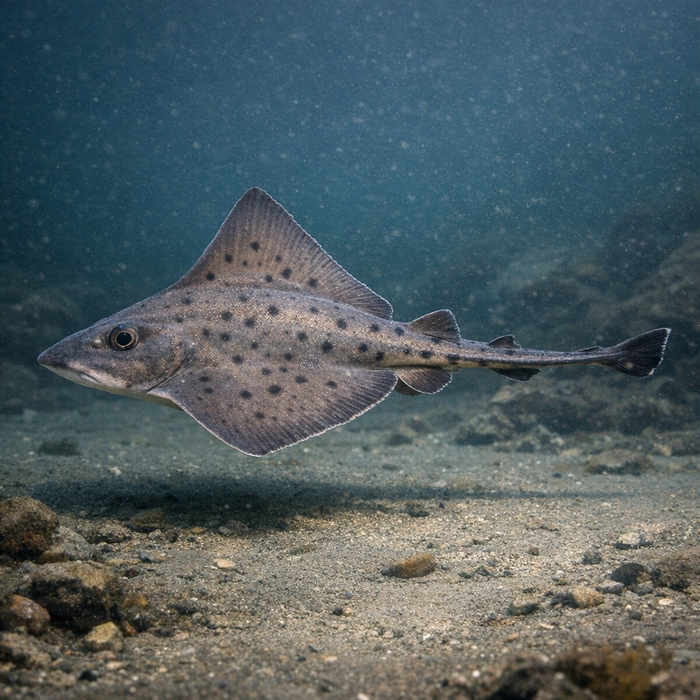
Pelagic stingray (Pteroplatytrygon violacea): A winged bluewater drifter that shows up where tuna and weedlines collideIntroductionImagine a stingray that skipped the reef life, strapped on wings, and moved permanently into the fast lane. That's the pelagic stingray, a sleek, open-ocean specialist that cruises current edges and floating debris fields like it owns the place. Anglers don't often target it, but anyone who works offshore long enough will eventually see those wingtips slicing the surface beside a sargassum raft. It's beautiful, weird, and tougher than it looks.What Makes the Pelagic stingray Unique?Most rays are bottom dwellers; the pelagic stingray isn't. It's built for the midwater column, rowing nonstop with powerful pectoral fins while that whip tail trails menacingly behind. Females give birth to live young nourished by uterine milk, cranking out litters big enough to keep the species thriving in a predator-packed ocean. And unlike many rays that glide, this one keeps the wings beating, birdlike, in perpetual cruise mode. If you want Pelagic stingray facts that stick, start there: it's a ray that behaves like a pelagic fish.Habitat & Global RangeIf your mental note reads "Pelagic stingray habitat," think warm currents, bluewater clarity, and endless room to roam. The species occurs globally in tropical and warm-temperate oceans, from glassy slicks to wind-chopped rips. They relate to structure the way tuna do: not rocks, but ocean architecture like temperature breaks, current convergences, and floating mats. Depth is elastic. One moment they're finning near the surface under birds; hours later they're hundreds of meters down where the buffet moved. They'll ghost along FADs, drift lines, and the edges of gyres, often in the same neighborhoods as mahi, wahoo, and small tunas.Behavior & TemperamentThe pelagic stingray is curious but not reckless. It will nose baits and jigs like any midwater predator, then spool up the attitude when hooked. Expect stubborn circling and heavy, down-and-dirty pulling power. They're not sprint monsters; they're grinders with wings. Schooling happens, especially around debris, but they're just as likely to cruise solo. Sharks consider them lunch, which keeps them honest. They spend real time up high in the water column, but vertical wanderlust is part of the program. If a current line dries up, they'll drop, relocate, and pop back up miles away.Ecological ImportancePelagic stingrays are mid-level predators sewing the open ocean together. They trim populations of small fishes and cephalopods, and then surrender calories to higher-end hunters like sharks and billfish. That energy relay matters across ocean basins. Their fast growth and live-bearing strategy help them bounce back from natural predation, and their habit of using oceanic features connects disparate patches of productivity. In simple terms: they're movers that turn patches of life into a linked system.Conservation & Environmental PressuresGlobally, the pelagic stingray is listed as Least Concern, thanks to wide range and decent productivity. But it's not bulletproof. Longline bycatch remains a concern, and improper handling can spike mortality. Warming seas shuffle distribution, often pushing them poleward or deeper. Floating plastic mimics natural structure and concentrates life, but it also concentrates trouble. The species is doing okay for now, yet it lives at the mercy of industrial fishing gear and shifting ocean physics. Crew training on safe release and dehooking tools makes a tangible difference.The FishyAF TakeThe pelagic stingray is the ocean's curveball. You're trolling for tuna, and boom, a flying carpet with a sword for a tail shows up. Respect the animal and respect the hardware. It's a legit fighter, a photogenic oddball, and a reminder that bluewater isn't just glam predators. If you're collecting Pelagic stingray facts for the boat, write this down: keep heavy leader handy, carry a dehooker, and mind that spine. The pelagic stingray isn't a headline trophy, but it's an unforgettable chapter in any offshore day, and it belongs in the conversation every time you work a rip line or sargassum mat.