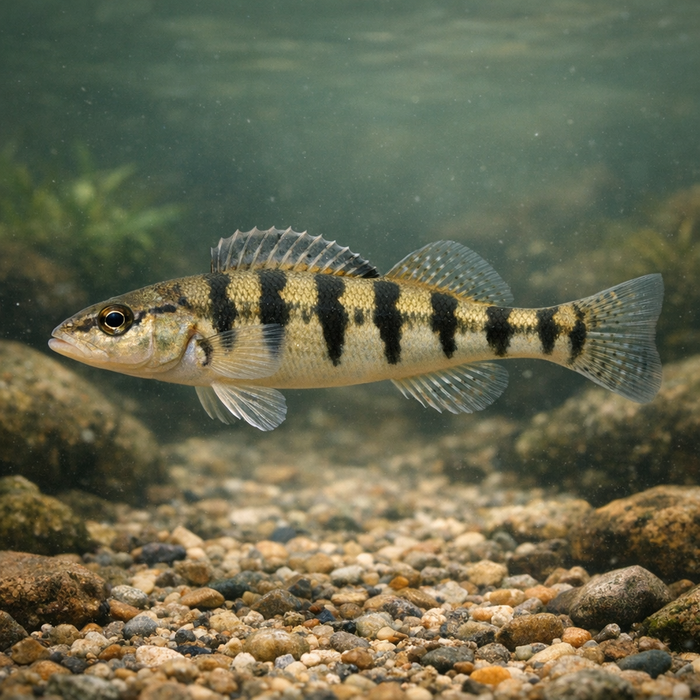
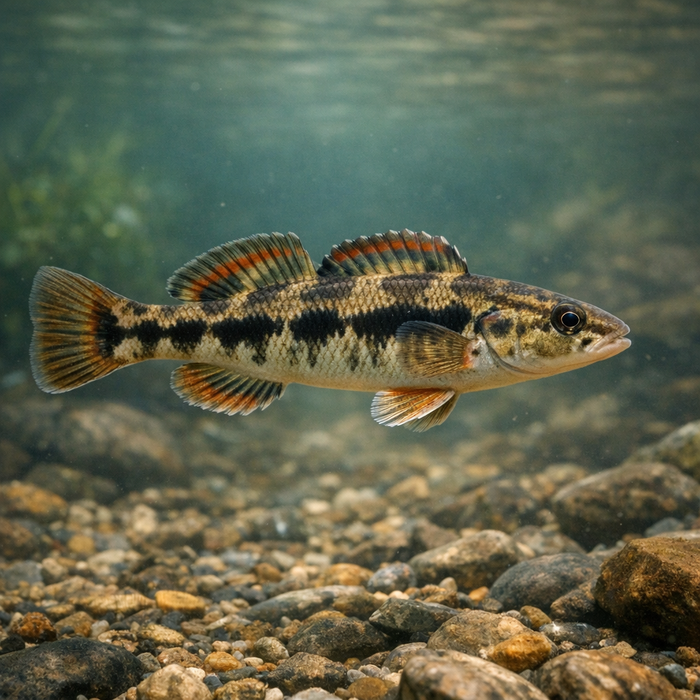
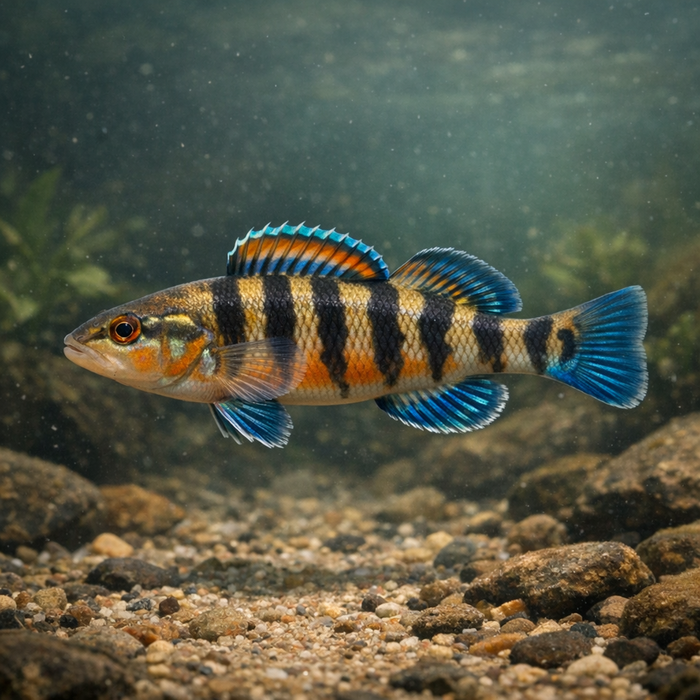
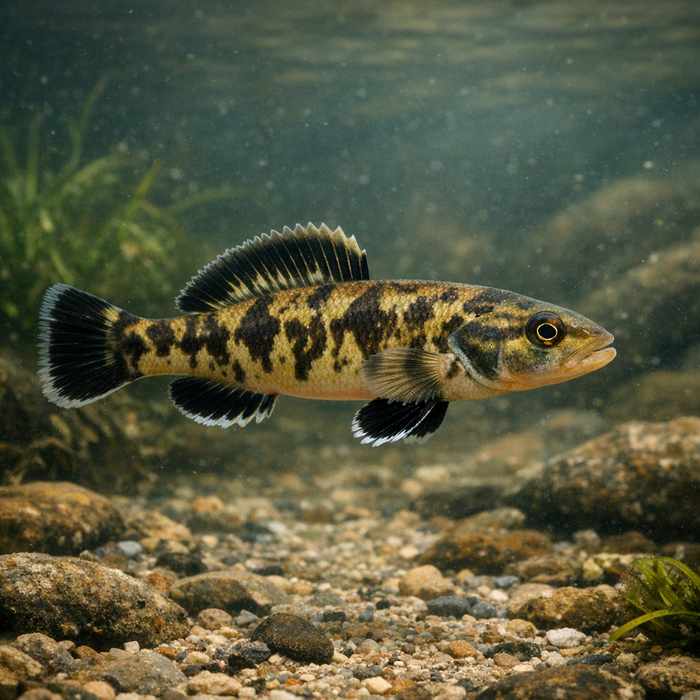
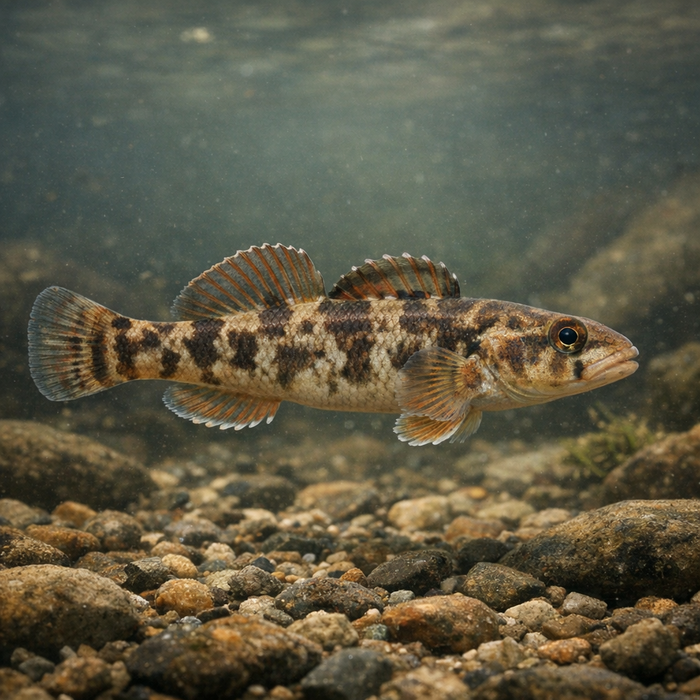
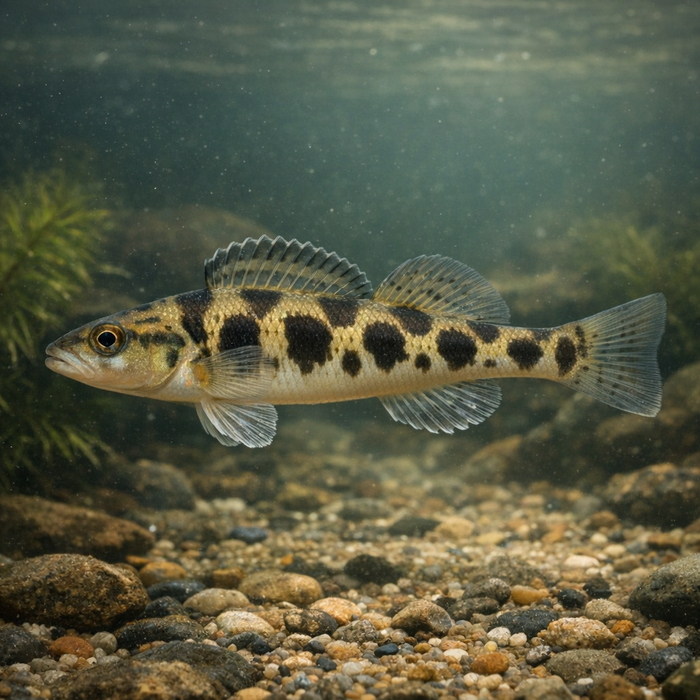
Piedmont Darter (Percina crassa): A Bold, Memorable Hook LineIntroductionSmall fish, big attitude. The Piedmont darter is a chunky little river gremlin built for life in knee-deep flow, hugging gravel and cobble like it pays rent. You won't win a weigh-in with this fish, but if you appreciate precision, stealth, and the weirdly satisfying world of microfishing, this species dishes out a lesson in current reading and presentation finesse. Consider this your crash course in Piedmont darter facts and the no-BS skinny on how it lives.What Makes the Piedmont darter Unique?Start with the body. Percina crassa literally means thick, and compared to many delicate darters, it shows. That stocky shape, broad pectoral fins, and low-slung posture let it lock onto the bottom while waiting for drifted morsels. The pattern is utility camo: bars and saddles that break up its outline among cobble and sand. While many small stream fish wander, the Piedmont darter operates in micro-territories, executing sudden, tight sprints followed by dead-still freezes. It's like a rock that occasionally decides to teleport six inches.Habitat & Global RangeThe Piedmont darter is an Atlantic-slope specialist associated with the southeastern Piedmont's rolling foothill rivers and streams. Think stable, moderate current, riffles and runs, and a clean substrate mix of gravel and small cobble with minimal embedded silt. If you're scouting "Piedmont darter habitat," look for shallow glides below riffle heads and the thin seams alongside faster tongues of water. These spots offer conveyor-belt feeding without tossing the fish around. Local populations are typically patchy; moving a few bends upstream or down to locate the right flow and substrate often changes everything. It's a freshwater lifer's fish, built for geology as much as water.Behavior & TemperamentDespite the name, darters aren't reckless sprinters all day long. The Piedmont darter times short charges to intersect drifting invertebrates, then settles hard to the bottom again. That rhythm saves energy and keeps it hidden from predators above. Aggression is low; precision rules. Spawning fires up in spring as water temperatures push into the 60s, with activity clustered around prime gravel. Don't expect schooling; think peppered singles and loose clusters, each holding tiny feeding lanes. Light fluctuations, especially early and late in the day, can crack open short feeding windows when they're more willing to move an inch or two farther for the right target.Ecological ImportanceThis species is a riffle translator. When Piedmont darters do well, it usually means the stream has healthy oxygen, decent flow stability, and substrate that's not choked with fines. They help keep aquatic insect populations in check and, in turn, serve as bite-sized protein bars for larger fishes and stream predators. Their micro-scale habits knit together the food web between cobble, current, and everything that swims above it. Ignore the size; their ecological footprint punches up.Conservation & Environmental PressuresOverall, the Piedmont darter sits in a reasonably safe lane where intact riffles persist. The real villain isn't angling pressure; it's sedimentation and flashy urban runoff that smothers gravel, fills interstitial spaces, and upends spring flows. Prolonged turbidity hammers their ability to feed and spawn efficiently. Stream fragmentation and poorly designed culverts don't help either. The species is generally considered secure across much of its range, but like most riffle specialists, it's allergic to bad watershed management. Keep the gravel clean and the flows honest, and the fish responds.The FishyAF TakeYou don't target the Piedmont darter to pad a cooler. You chase it to sharpen your streamcraft. It's the fish that punishes sloppy approaches and rewards anglers who pay attention to seam geometry, light angle, and micro-speed. Drop a tiny offering six inches off and you get a shrug. Thread the needle and it's game on. If you want a new appreciation for how rivers actually work, a session with the Piedmont darter is graduate school. Small? Yep. Forgettable? Not a chance. Nail your stealth, slow your breathing, and welcome to the most fun you'll ever have moving a fish the length of your finger.