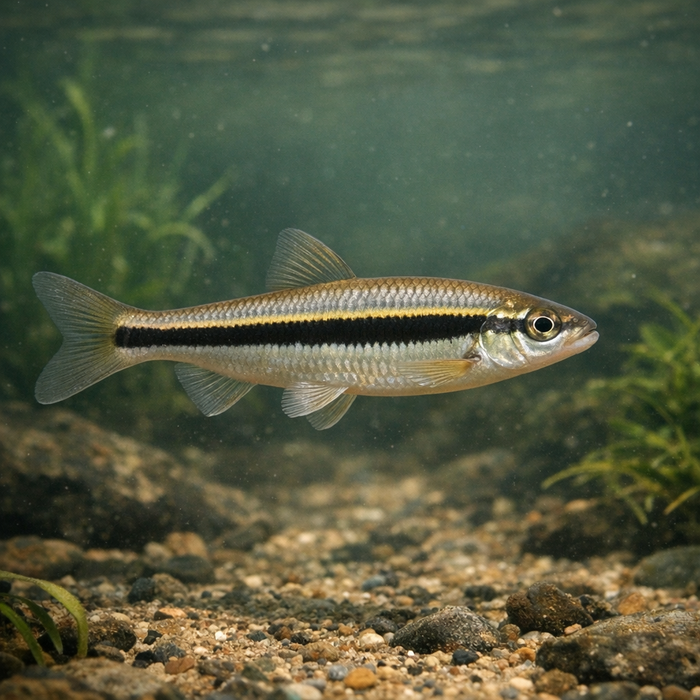
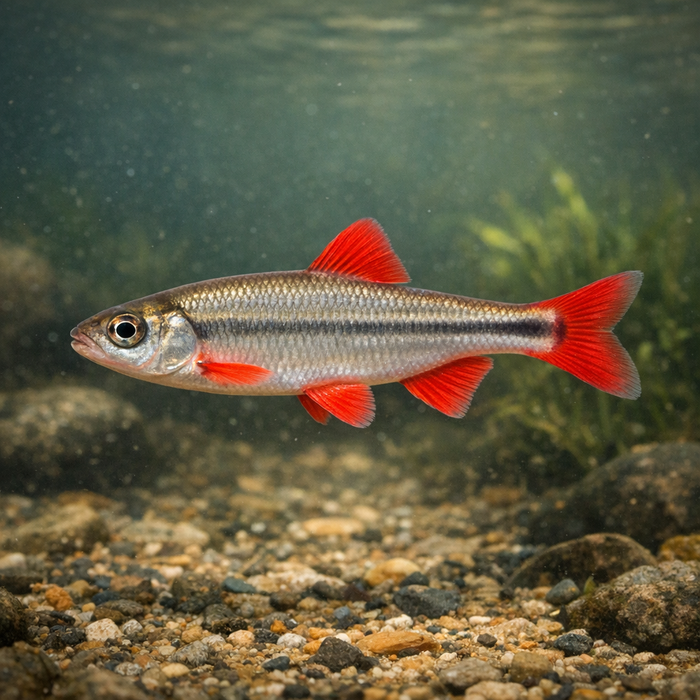
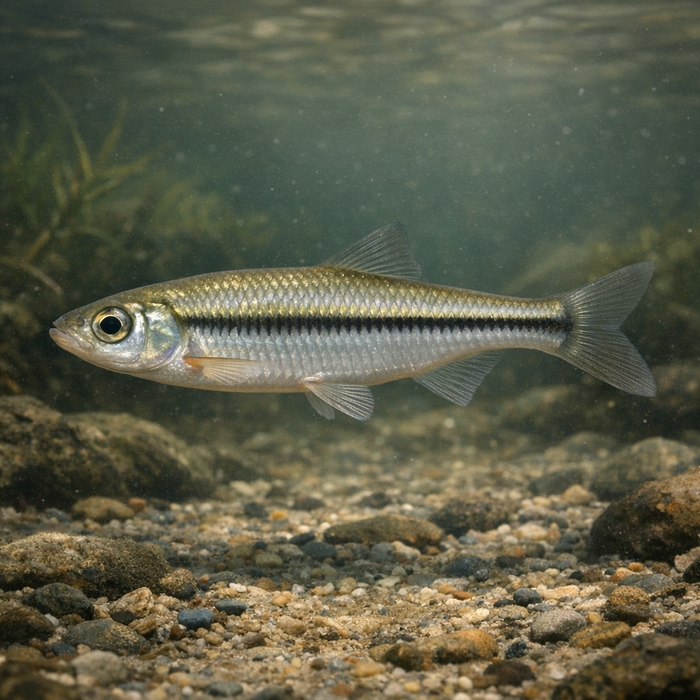
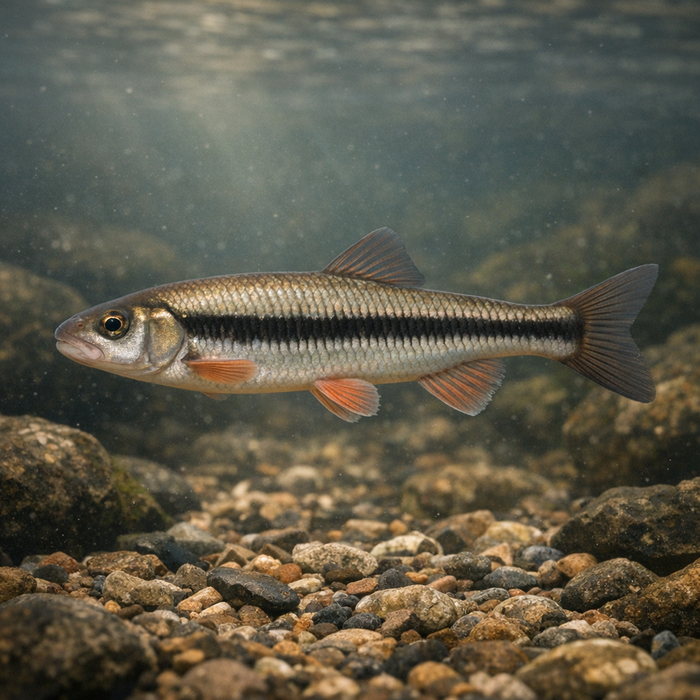
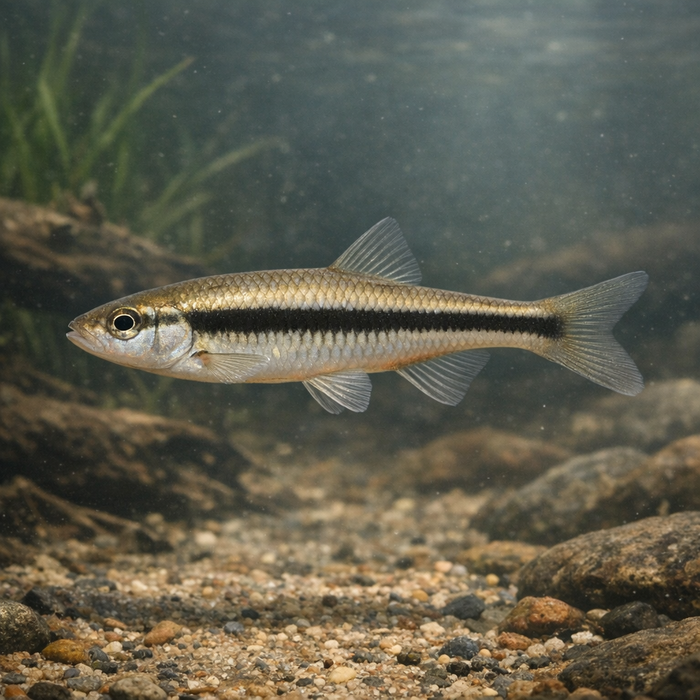
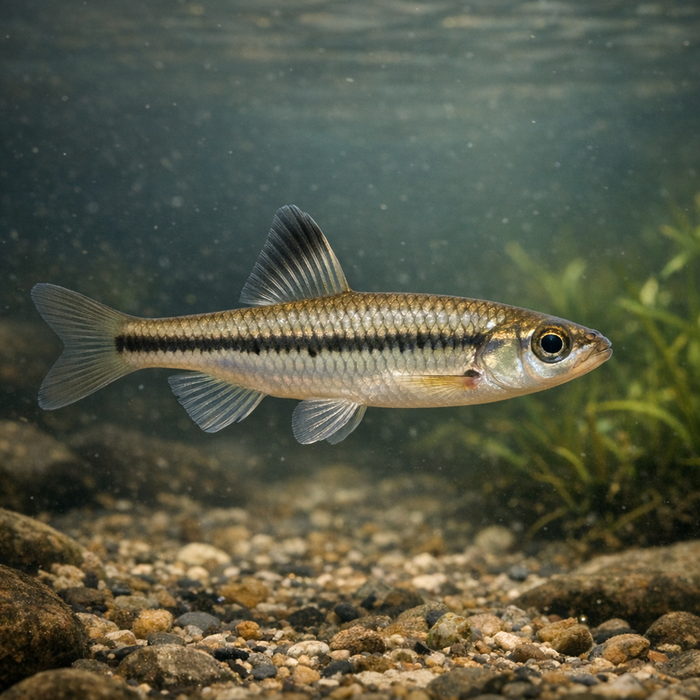
Pretty Shiner (Lythrurus bellus): The Southeast's tiny disco ball that turns gravel runs into a light show.IntroductionIf you think minnows are just bait, the pretty shiner will roast that take. This little cyprinid explodes with rose and scarlet during spawning season, schooling tight and darting like glitter in current. For micro anglers, it's a photogenic, cooperative target that rewards finesse. For everyone else, it's proof that small water can pack serious color.What Makes the Pretty shiner Unique?Two things: showtime colors and slick, finescale sheen. Breeding males don't just blush; they glow, painting dorsal and anal fins a loud crimson while the sides pick up an iridescent rose wash. Add those tiny scales and you get a satin-metallic surface that throws light back at you. The pretty shiner also leans into communal spawning antics, often crowding around gravel cleaned by nest-building minnows. It's social, flashy, and seasonally supercharged, a perfect subject for macro lenses and micro hooks.Habitat & Global RangeCall this one a Southeast specialist. The pretty shiner works small to medium streams, especially clear, moderate currents with sand-and-gravel bottoms and scattered vegetation. Shaded banks, gentle riffles feeding calm runs, and clean pool tails are its wheelhouse. You might spot them along quiet backwaters and oxbows too, but moving water lights them up. If you're searching "Pretty shiner habitat," think textbook wadeable creeks with good visibility and honest flow.Behavior & TemperamentSchooling is the move. Pretty shiners travel in tight groups, sliding midwater, then flaring to the surface when insects drift. In spring and early summer, expect buzzing courtship loops over clean gravel, the group surging and splintering as males posture. They're not bruisers, but they're quick and wary; sloppy presentation scatters them. When the sun warms the runs, they'll pulse color brighter, then dial it back when clouds or shadows roll over.Ecological ImportanceThey're a small fish that does big ecosystem work. Pretty shiners graze fine material, pick at invertebrates, and recycle nutrients back into the food web. They feed sunfish, bass, and wading birds, essentially moving energy from riffles up the ladder. Because they're sensitive to silt and poor water quality, healthy schools can be a living indicator that a creek still has its act together.Conservation & Environmental PressuresOfficially, the pretty shiner sits comfortably as Least Concern, but that's not a free pass. Siltation, stormwater pulses, and habitat fragmentation can nuke the clean gravel they favor. Road crossings and poorly managed construction send fine sediment downstream, smothering eggs and flattening spawning microhabitats. Keep the gravel clean, keep the current breathable, and this species typically flourishes. Looking up "Pretty shiner facts" often leads you straight into water-quality conversations, which is exactly the point.The FishyAF TakeWe love this fish because it punches above its weight in personality. It's accessible, gorgeous in the right light, and honest about what it wants: clear water, steady current, and a small, clean presentation. If your stream has a healthy pretty shiner scene, odds are it's a stream worth defending. Chase them for micro bragging rights, sure, but also for the satisfaction of dialing in the precise drift that makes an entire school lean your way. Tiny fish, big signal.