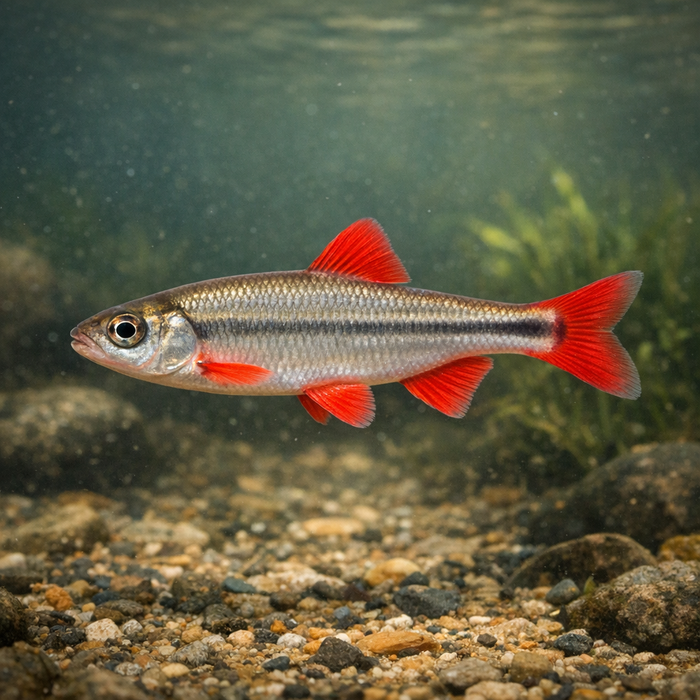
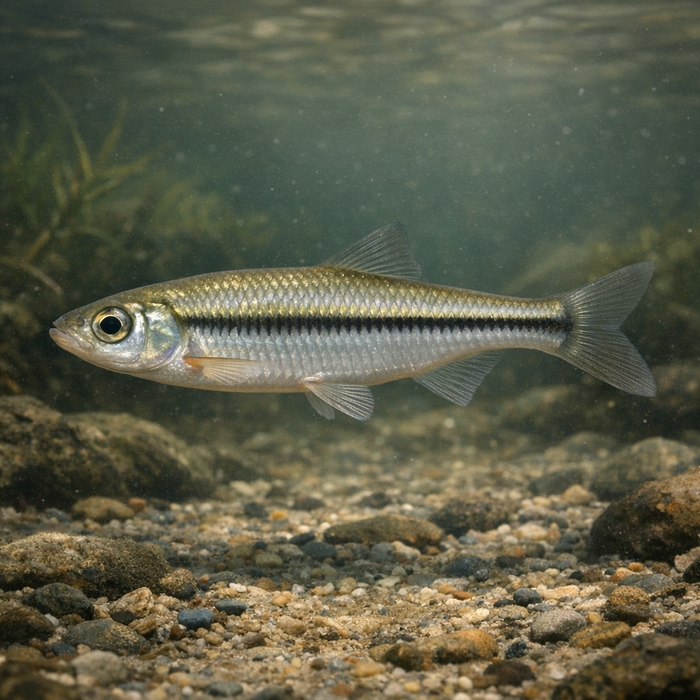
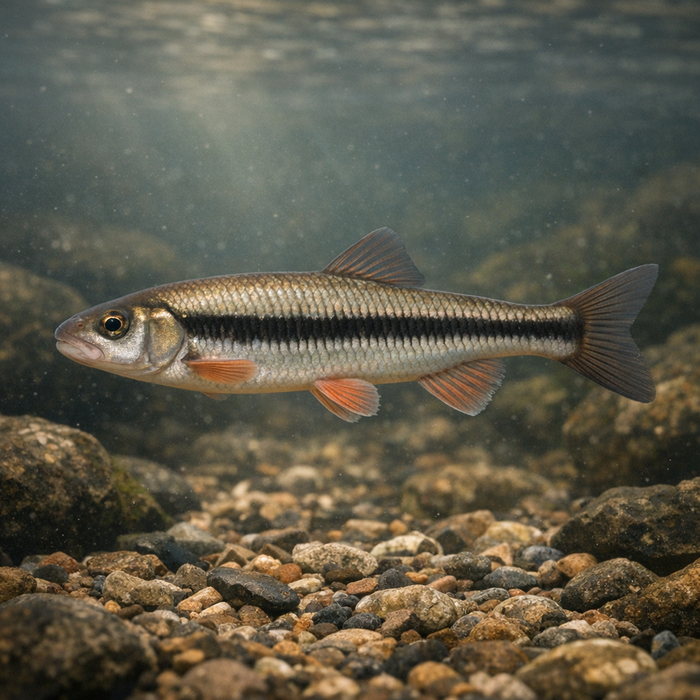
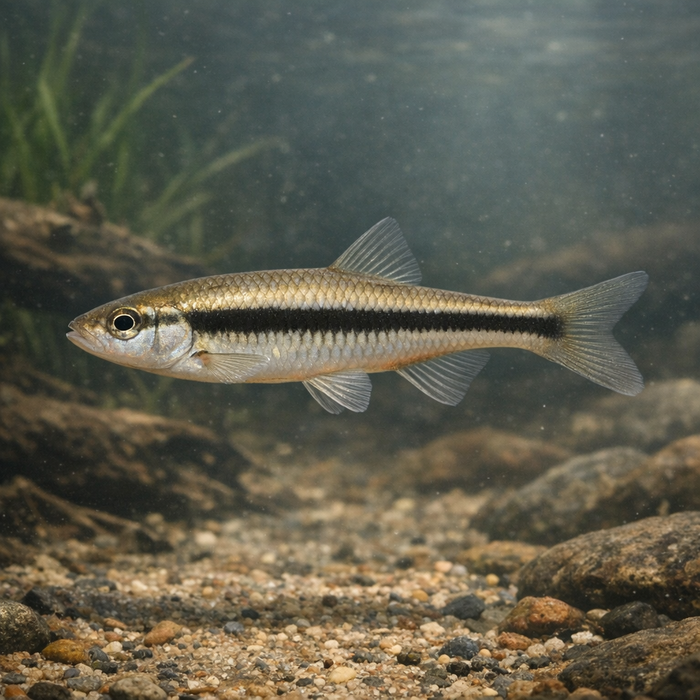
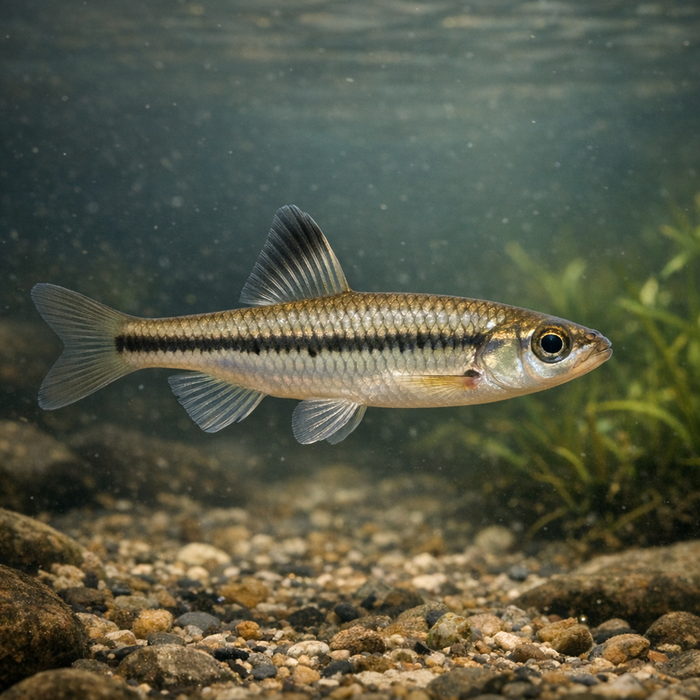
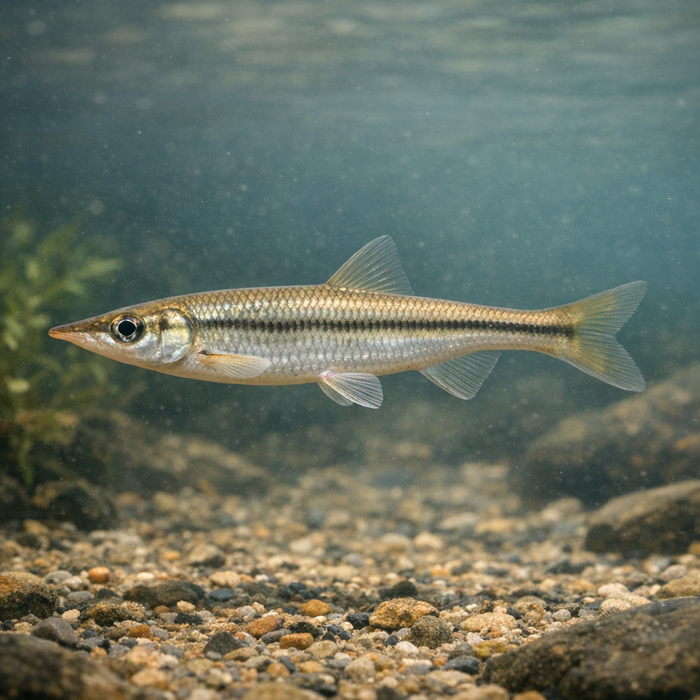
Broadstripe Shiner (Pteronotropis euryzonus): A racing stripe with attitude and surprising color when the mood strikesIntroductionSmall doesn't mean boring. The broadstripe shiner is proof. This sleek little cyprinid cruises clear Southern creeks like a rolling billboard: a jet-black band down its side and, in breeding season, electric blues and orange fins that look hand-painted. You won't spool your reel on this one, but you'll get a crash course in finesse, stealth, and appreciating the fine print of freshwater life.What Makes the Broadstripe shiner Unique?First, the stripe. It isn't just dark; it's disproportionately wide, spanning multiple scale rows and giving the fish a bold, graphic look you can ID at a glance. Second, color. When temperatures rise and hormones kick in, males glow with neon blues and fiery oranges, turning a quiet pool into a light show. Third, speed of life. The broadstripe shiner grows fast, often matures in its first year, and rarely sees a third birthday, so everything about it feels urgent-courtship, feeding, and schooling.Habitat & Global RangePut "Broadstripe shiner habitat" into plain English: think clear, moderate-flow creeks with sandy runs, patches of aquatic vegetation, and wood for cover. They favor the midwater lane in slack-to-gentle current, slipping between plants and open lanes like cyclists in a peloton. While its overall range is geographically tight compared to famous sportfish, the species thrives where water stays clean, stable, and sunlit. If you're scouting, look for transparency, pale sand, scattered grass, and small woody tangles-classic microfishing postcard water.Behavior & TemperamentThe broadstripe shiner is a schooling specialist. Tight groups pulse through riffle tails and pool edges, turning in unison and blasting little flashes that read like a single chrome ribbon. They're alert, but not spooky to the point of impossibility. Present something tiny and natural and they'll investigate. In spring, pre-spawn and spawning behavior ramps up with side-by-side quivers, chases, and quick egg releases onto plants or woody stems. Feeding sits mostly midwater, picking drifting morsels and tiny invertebrates with a quick, efficient snap.Ecological ImportanceThis fish is small, but it holds the line in the food web. The broadstripe shiner converts insects and micro-crustaceans into energy packages for larger predators. Its schooling pushes nutrients around the creek and its short life cycle keeps generations turning over fast, which makes populations responsive to good habitat-and vulnerable when that habitat goes sideways. Healthy shiners usually mean a healthy stream; when they disappear, that's an early warning siren.Conservation & Environmental PressuresHere's the rub: clarity and clean flow matter. Sedimentation from sloppy land use, nutrient spikes from runoff, and reduced vegetation all punch above their weight on this species. Because the broadstripe shiner leans on plants and clean sand, turbidity and algae blooms can clear out prime real estate fast. Fragmentation and dewatering don't help either. The species isn't a poster child for national listings, but local declines can happen when creeks get choked or channelized. Protect the plants, protect the flow, and the stripe stays bold.The FishyAF TakeIf your fishing world is only measured in pounds and inches, you'll miss the point. The broadstripe shiner is the gateway drug to micro finesse. You need tiny hooks, gentle drifts, and zero ego. It's a masterclass in reading current at ankle depth and respecting the details-sun angle, shadow lines, and quiet feet. Want quick "Broadstripe shiner facts"? It's fast-living, stripe-forward, school-happy, and color-mad in spring. Get the presentation right and the whole school wakes up. Get sloppy and you'll watch them ghost your rig like you don't exist. Micro doesn't mean minor. It means precise, and this fish demands it.