Rainbow Bass (Parachromis dovii): Pretty Colors, Ugly Intentions
The first mistake is admiring the colors before checking where your line is headed. Rainbow Bass have the looks of an ornamental fish and the attitude of something that wants your crankbait back inside a submerged tree. This freshwater predator belongs to the cichlid family, not the true bass family, but familiar bass tackle provides a sensible starting point. Expect tropical water, tight cover, and very little time to negotiate after the hookset. For anglers who value accurate casting over endless open-water prospecting, this is a compelling target: colorful enough for the photograph, stubborn enough to make you earn it.
What Makes the Rainbow Bass Unique?
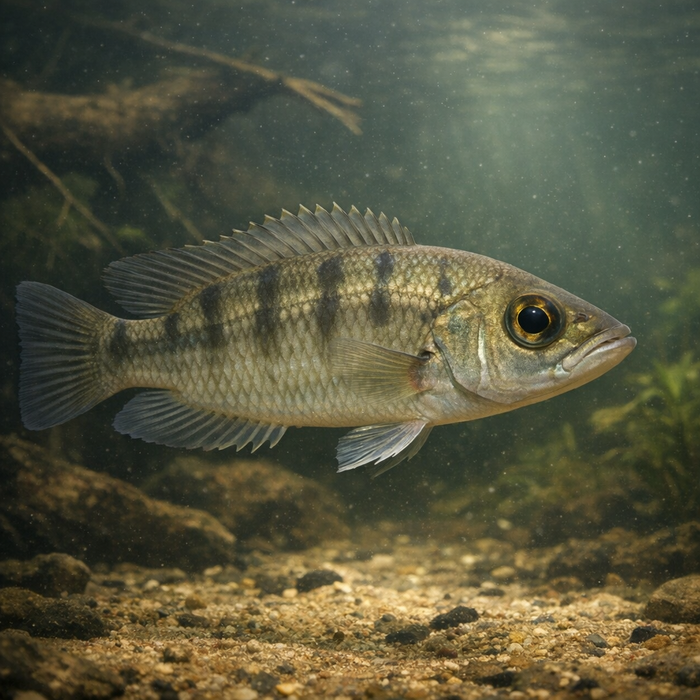
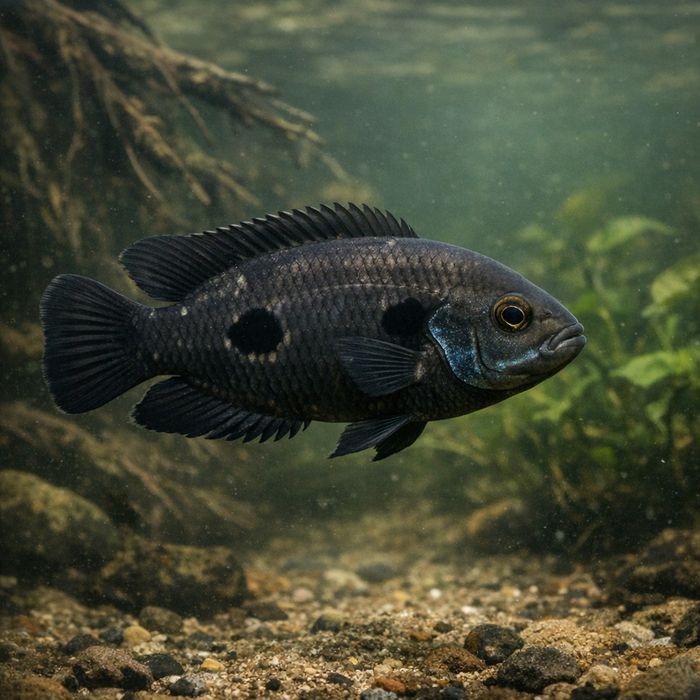
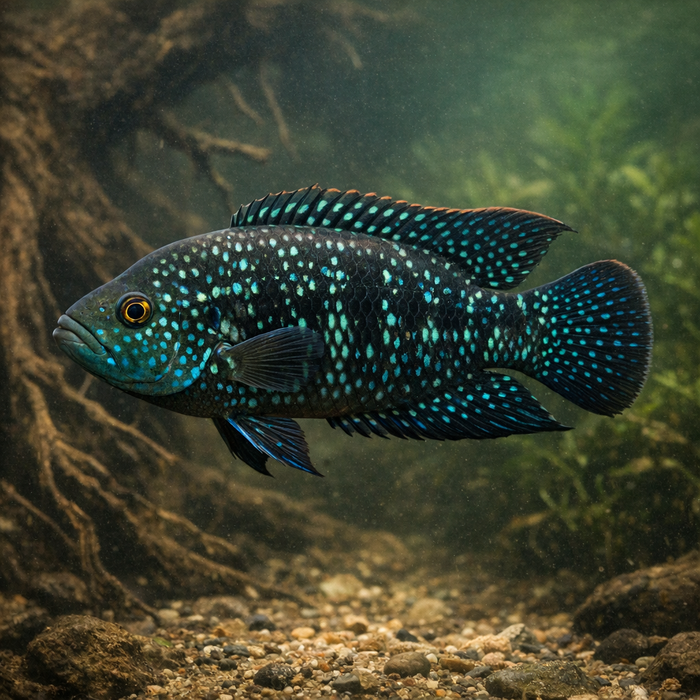
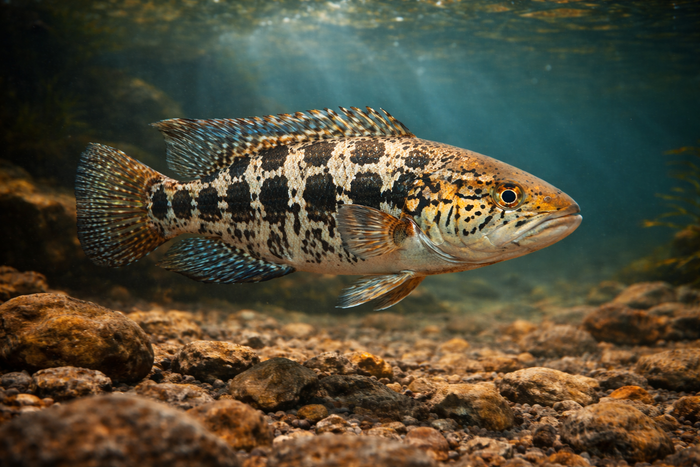
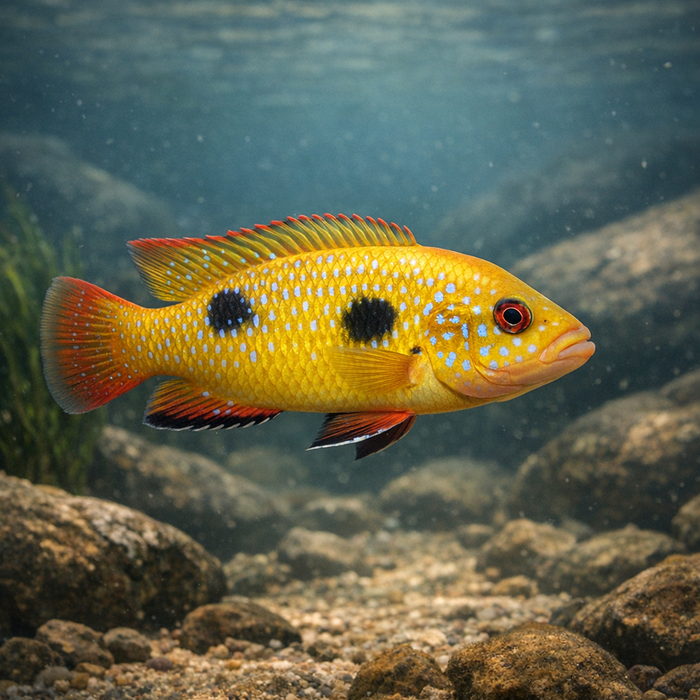
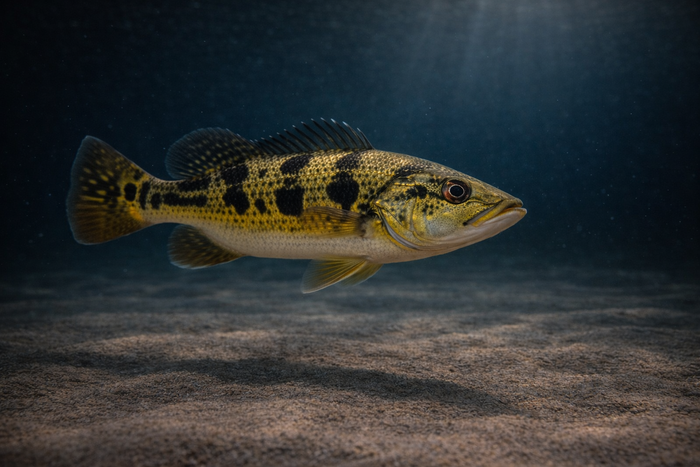
Three traits define this fish better than its misleading surname: striking coloration, serious predatory equipment, and an unexpectedly complicated family life. Adults can display purple tones and blue-green fins, giving Rainbow Bass their unmistakable visual appeal. Their large mouths and teeth belong to a fish hunter, not a decorative pond resident. Then comes the stranger detail: males of the Nicaragua cichlid have been observed helping defend this species’ young. That is not a universal arrangement, and its evolutionary explanation remains debated, but the interaction is documented. Among Rainbow Bass facts, another standout is rare yellow or orange coloration caused by pigment abnormalities. These unusual individuals occur in wild populations, not just selectively bred aquarium stock.
Habitat & Global Range
Rainbow Bass habitat centers on Central American freshwater, with a native distribution spanning Honduras, Nicaragua, and Costa Rica. The species occurs on both Caribbean and Pacific drainage slopes, inhabiting lakes and lower to middle river valleys. For anglers, the listed fisheries includes Lake Arenal, Lake Apanás, the Solentiname Archipelago of Lake Nicaragua, Río San Juan, and Río Indio. The useful question within those waters is not simply whether fish are present, but where cover meets a workable presentation. Submerged timber, rocky banks, and weed edges deserve attention. A lake shoreline and a jungle river bend may look completely different above water while offering the same basic opportunity below it: cover beside a route used by smaller fish.
Behavior & Temperament
This is a predator with a strong territorial streak, especially around reproduction. Breeding fish guard their offspring, and the species is also known for digging cavities. Those behaviors add context to its reputation without turning every strike into a story about aggression. A fish may attack an offering because it resembles prey; territorial responses are a separate possibility, not something anglers can reliably diagnose from the boat. Rainbow Bass are particularly unforgiving once hooked near cover. Their push toward snags makes the opening seconds important. Plan the landing before making the cast, use controlled pressure, and keep a realistic escape route between the fish and the net. The prettiest piece of timber is not automatically the smartest place to fish with inadequate tackle.
Ecological Importance
The species participates in freshwater food webs as both hunter and parent. Smaller fishes make up much of its food, while crustaceans and insects also occur in its diet. Research on Costa Rican convict cichlids identifies juvenile Parachromis dovii as important threats to their offspring, illustrating that predation matters well before this fish reaches trophy size. The adult that interests an angler is only one stage in a much larger set of interactions. Its own young require protection, while other cichlid families must defend against it. Rainbow Bass also have a human role beyond sport fishing: the species has been documented in Nicaraguan fish markets. It is simultaneously a recreational target, a food fish, and part of a native ecological community.
Conservation & Environmental Pressures
Rainbow Bass are assessed as Least Concern globally, but that classification should not be mistaken for a guarantee about every shoreline or fishery. Research from Nicaragua reports competition between introduced tilapias and this species for feeding or breeding resources. Those findings support a practical warning: moving fish between waters can alter communities that already have their own complicated balance. Avoid releasing aquarium fish or transporting live bait into another drainage. Treat catch-and-release as a sensible option, particularly for memorable large fish, rather than as proof that handling has no consequences. Keep photographs efficient, support the fish properly, and respect local restrictions. Good conservation is often less dramatic than the catch itself; it starts with leaving the water and its residents in better shape than an impulsive decision would.
The FishyAF Take
This fish deserves more than the label “tropical bass.” That nickname gets anglers interested, but it undersells a distinctive cichlid with its own colors, behavior, and place in Central American waters. Fish it deliberately. Put the lure where you can still manage the fight, inspect your leader, and resist the temptation to turn every promising cast into a tackle-strength experiment. A medium-heavy outfit is a practical tool here, not an admission that you lack finesse. Our take is simple: the reward is not just landing something exotic. It is solving a close-range problem without letting a submerged branch finish the conversation. Enjoy the photograph, respect the fish, and leave the next angler something worth traveling for.