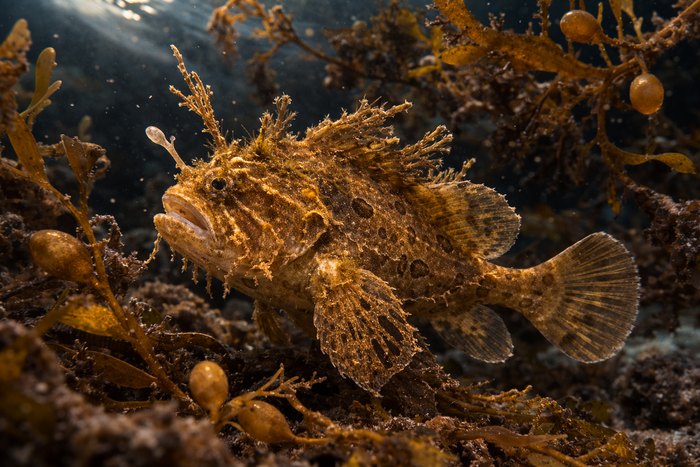
Ribbon Fish (Trachipterus arcticus): The Ocean’s Slender Specter That Defies Expectations
The Ribbon Fish, scientifically known as Trachipterus arcticus, is not your average finned friend. With a body that looks like it was stretched on a cosmic loom, this fish commands attention in the deep. It’s a creature that blends mystery with a striking silhouette, making it a standout in the ocean’s midwater realm. If you’re diving into Ribbon Fish facts, prepare for a journey into the unusual and the fascinating.
What Makes the Ribbon Fish Unique?
First off, the Ribbon Fish is a master of elongation. Its body is long, ribbon-like, and laterally compressed, giving it a snake-like appearance that’s both elegant and eerie. Unlike typical fish shapes, it lacks the bulky, rounded form most of its piscine cousins sport. Instead, it’s all about length and grace, with dorsal fins running nearly the entire length of its body. This design isn’t just for show—it aids in its undulating swimming style, allowing it to glide through the water with a hypnotic, wave-like motion.
Its silvery, reflective skin is another standout feature. This sheen helps it blend into the dim, open ocean light, a clever camouflage against predators and prey alike. The Ribbon Fish’s head is narrow with a pointed snout and a mouth full of sharp teeth, hinting at a predatory lifestyle. It’s built for snagging smaller fish and squid in the twilight zones of the ocean.
Habitat & Global Range
Ribbon Fish habitat spans the cold, temperate waters of the North Atlantic and Arctic Oceans. They prefer the mesopelagic zone, roughly 200 to 1,000 meters deep, where sunlight barely penetrates. This midwater zone is a twilight world, and the Ribbon Fish thrives here, far from the sunlit surface and the crushing depths below.
Their range is impressive, stretching from the eastern coasts of North America across to European waters, including the Norwegian Sea and parts of the Arctic. They are not coastal dwellers but roam the open ocean, often found near continental slopes and deep-sea trenches. This preference for deep, cold waters means encounters with humans are rare, mostly limited to deep-sea fishing bycatch or scientific expeditions.
Behavior & Temperament
Ribbon Fish behavior is as fluid as their shape. They are solitary hunters, relying on stealth and speed rather than brute force. Their elongated bodies allow for quick, sinuous movements that can confuse prey. They swim with a distinctive undulating motion, propelling themselves forward like a ribbon fluttering in the current.
Despite their fearsome teeth, Ribbon Fish are not aggressive toward humans. They are more likely to flee than fight if disturbed. Their temperament is cautious and elusive, fitting for a creature that lives in the ocean’s shadowy mid-layers. They come closer to the surface only occasionally, often at night, following the vertical migration of their prey.
Ecological Importance
Ribbon Fish play a vital role in the ocean’s midwater ecosystem. As mid-level predators, they help regulate populations of smaller fish and squid, maintaining a balance in the food web. Their presence indicates a healthy mesopelagic zone, which is crucial for nutrient cycling and carbon sequestration in the ocean.
They also serve as prey for larger predators such as sharks, deep-diving marine mammals, and bigger fish species. This dual role as predator and prey makes them an integral link in the ocean’s complex food chain. Understanding Ribbon Fish facts helps us appreciate the delicate equilibrium of deep-sea ecosystems.
Conservation & Environmental Pressures
While Ribbon Fish are not currently listed as endangered, their deep-sea habitat faces growing threats. Climate change is altering ocean temperatures and currents, which can disrupt the Ribbon Fish habitat and the availability of prey. Deep-sea fishing, though not targeting Ribbon Fish directly, often results in bycatch that can impact their populations.
Pollution, particularly plastic and chemical contaminants, is another concern. These pollutants accumulate in the ocean’s depths, potentially affecting Ribbon Fish health and reproductive success. The lack of comprehensive data on their population trends makes it difficult to assess long-term impacts, underscoring the need for more research and monitoring.
The FishyAF Take
The Ribbon Fish is a prime example of how the ocean’s depths harbor creatures that defy conventional fish design and behavior. Its slender, shimmering form and elusive nature make it a fascinating subject for anyone interested in marine life beyond the surface. Ribbon Fish facts reveal a species perfectly adapted to a challenging environment, playing a crucial role in the midwater ecosystem.
If you want to understand the ocean’s hidden layers, the Ribbon Fish is a perfect ambassador. It reminds us that the sea is full of surprises, with species that challenge our expectations and expand our knowledge. Keep an eye out for this ribboned marvel next time you explore deep-sea biology—it’s a creature that deserves more attention than it gets.