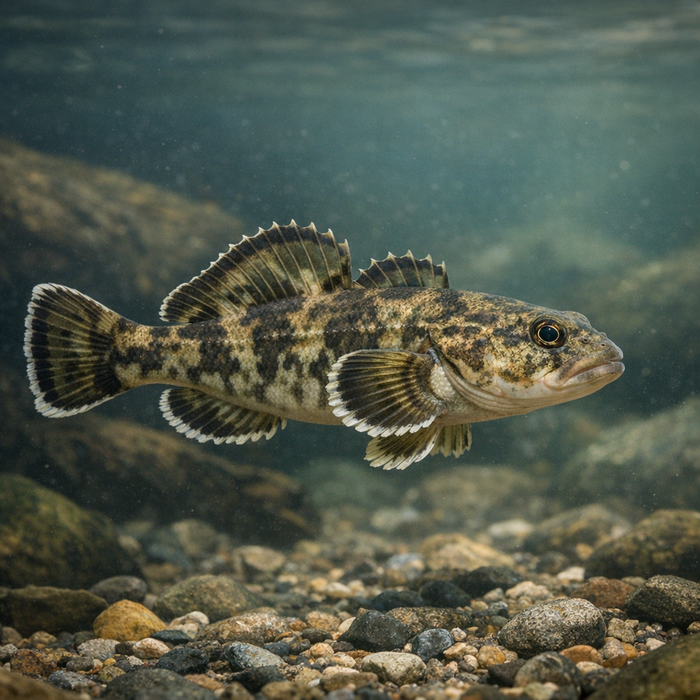
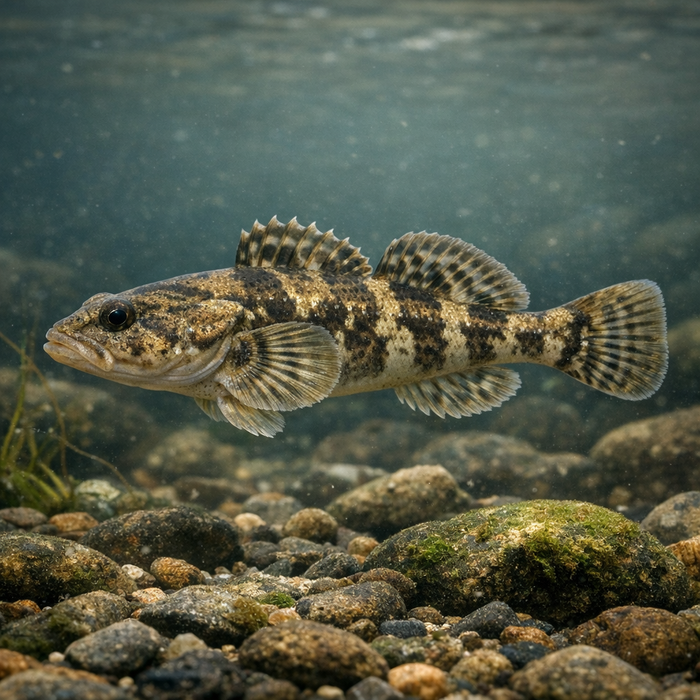
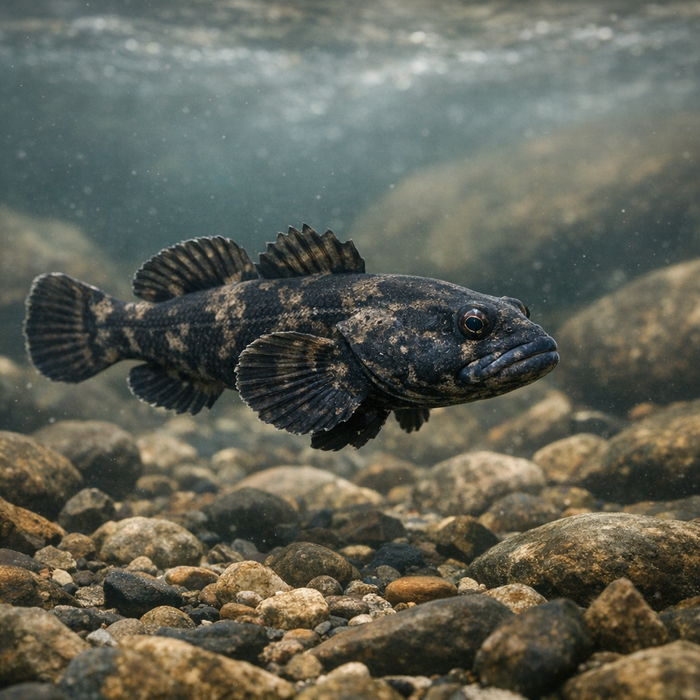
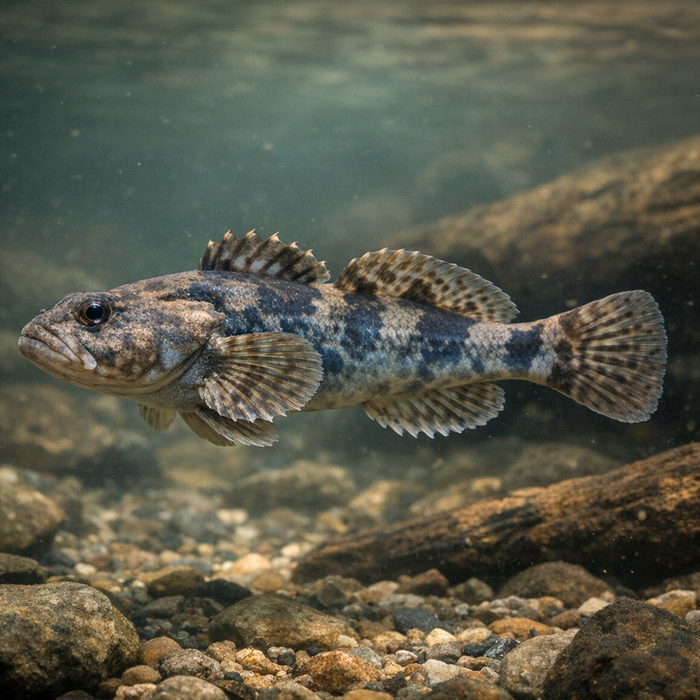
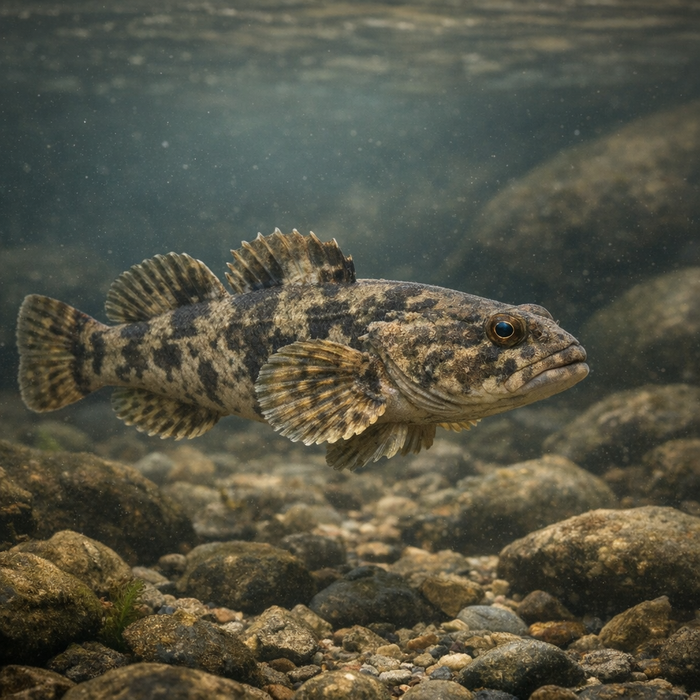
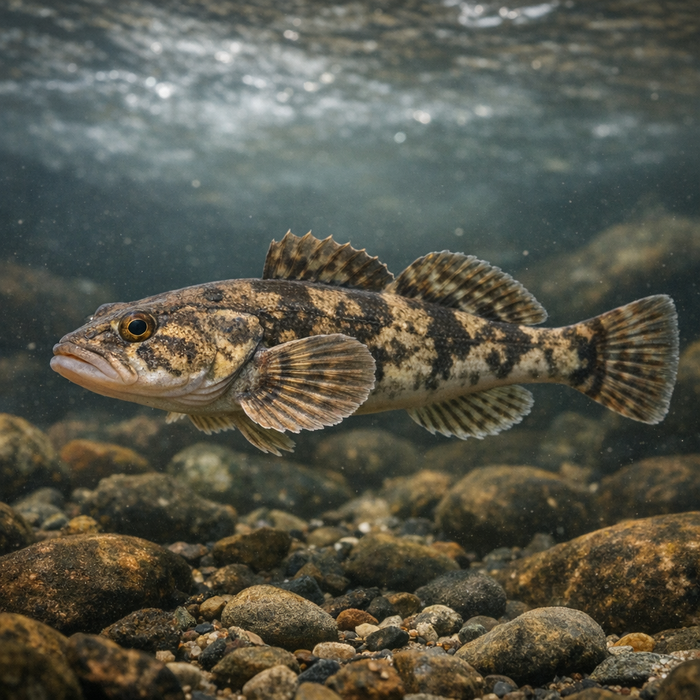
Riffle Sculpin (Cottus gulosus): Stone-hugging pocket rocket with a mouth far bigger than its resume.IntroductionThe riffle sculpin is the stealth bomber of shallow current. It doesn't cruise, it clings. It doesn't chase, it pounces. Blink and it's just another fleck of mottled rock, until a mayfly nymph wanders too close and vanishes. For anglers who love technical water and tiny targets, the riffle sculpin offers a weirdly addictive challenge. Consider this your crash course in Riffle sculpin facts, behavior, and the odd little game of tempting them.What Makes the Riffle sculpin Unique?Start with the name: gulosus means glutton. That tracks, because this fish packs a vacuum-nozzle mouth onto a fun-size body. It's designed for ambush in ripping current, all head and fins with a tapering body that wastes nothing. Like many sculpins, it skips the swim bladder altogether. Instead of hovering midwater, the riffle sculpin plants itself on stone and turns torrent into opportunity. Add chameleon-grade camouflage and flared cheek spines for defense, and you've got a tiny predator perfectly tuned for the roughest part of the stream.Habitat & Global RangeThe riffle sculpin lives where water is cold, clean, and fast. Think shallow cobble riffles, spring-chilled runs, and the seammy margins of pocket water. It uses broad pectoral fins as underwater airbrakes, holding station behind stones or in the micro-eddies along current breaks. If you're reading about Riffle sculpin habitat and picturing ankle- to knee-deep flow over gravel and cobble, you're already in the right neighborhood. While other fish spread across pools and flats, this one leans hard into turbulence.Behavior & TemperamentThe riffle sculpin is the definition of homebody. It sprints a foot, then locks down. Its eyesight isn't bad, but the lateral line is the real superpower, mapping out vibrations from passing insects and small invertebrates. Dusk and night spark more movement, but daytime feeds happen whenever food drifts within lunging distance. When spooked, it doesn't bolt downstream; it melts into the bottom, color-shifting to match the nearest stones. During spawning, males claim undersides of rocks, glue up egg clusters, and fan them like tiny HVAC units.Ecological ImportanceThis little bruiser punches way above its weight. By vacuuming up benthic invertebrates and the occasional micro-prey, the riffle sculpin channels energy from riffles into the larger food web. It's also an important snack for bigger fish in cold streams. Healthy riffle sculpin populations tell a story about oxygen-rich flow, intact cobble, and cool temperatures. Lose those, and you lose far more than one small fish.Conservation & Environmental PressuresRiffle habitat is fragile. Siltation packs the spaces between stones where the riffle sculpin feeds and nests. Warm water from reduced shade or altered flow turns prime lanes into dead zones. Even minor pollutants hit hard in small headwaters. Dams, sudden flow changes, and channelization can strip out the shallow complexity this species needs. The silver lining is that sculpins respond quickly when conditions improve. Restore cold, clean current over rough substrate, and the riffle sculpin typically reappears like it never left.The FishyAF TakeRiffle sculpin aren't a numbers flex or a grill-filler. They're a litmus test for how dialed you are at reading current and presenting small offerings with precision. If you appreciate micro targets, technical water, and the satisfaction of turning "there's no fish here" into "holy hell, there it is," this species is your jam. Learn the seams, respect the rocks, and keep it gentle. The riffle sculpin is small, tough, and wildly cool. Treat it that way, and your favorite riffle will fish better for everything else too.