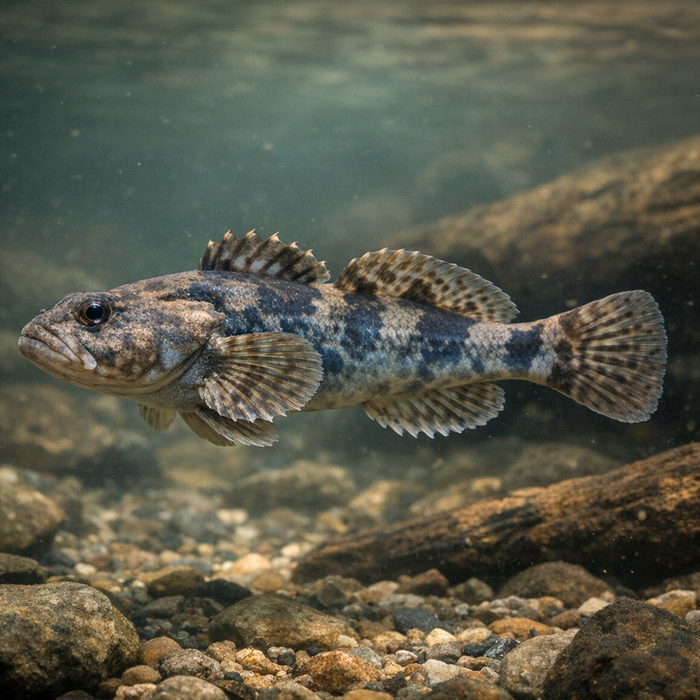
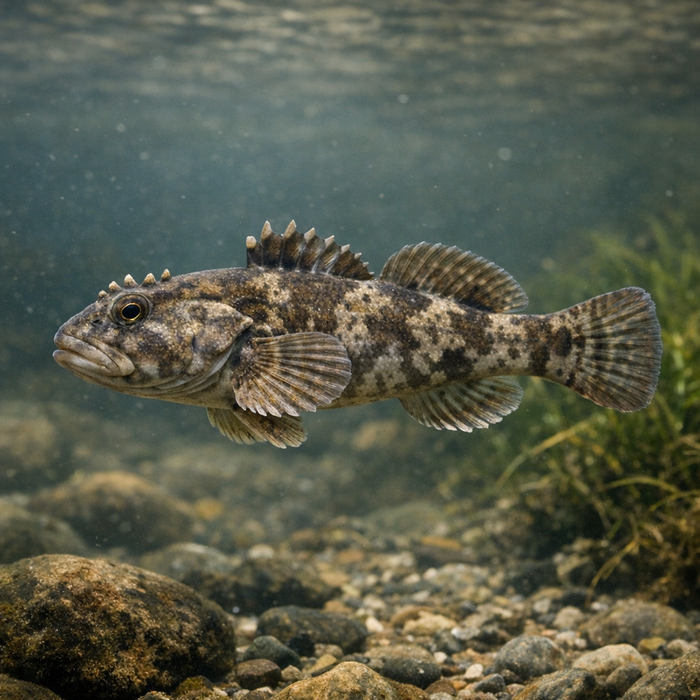
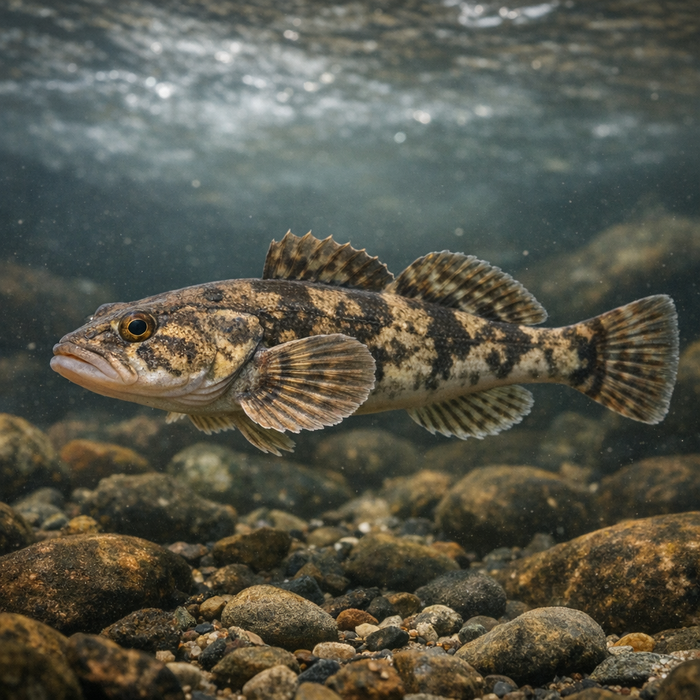
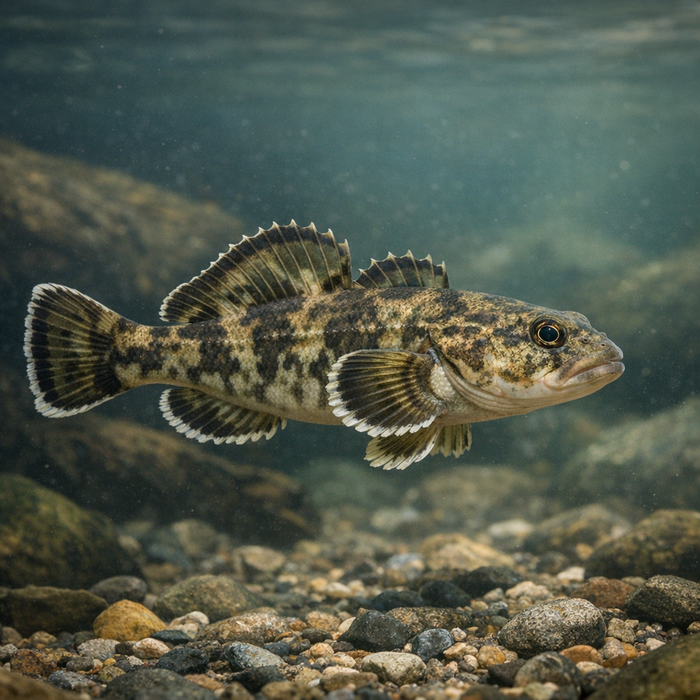
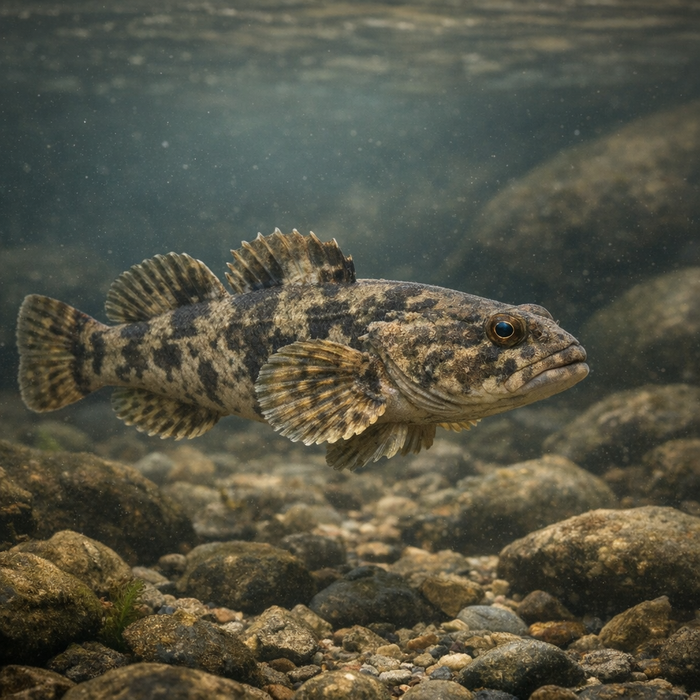
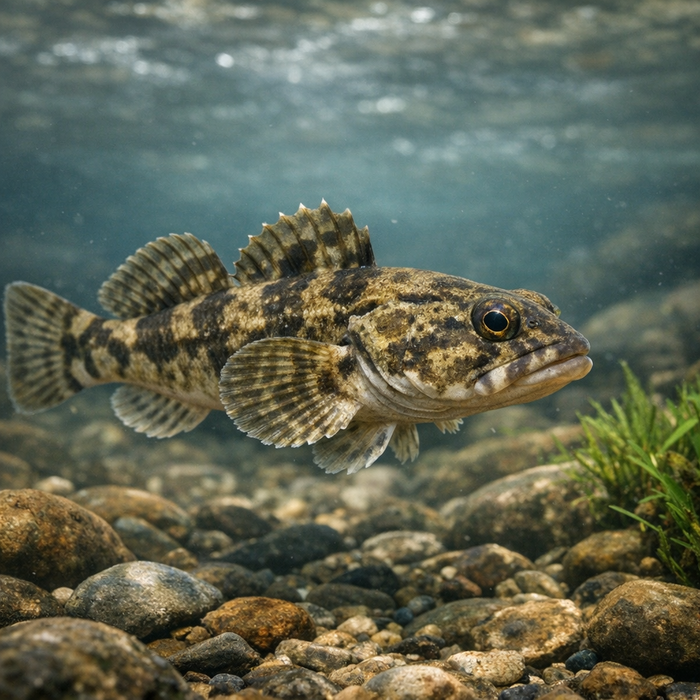
Black sculpin (Cottus baileyi): A Bold, Memorable Hook LineIntroductionThe Black sculpin is the streambed's tiny brawler, a dark, wide-headed ambusher that lives where riffles roar and cobbles chatter. It won't spool your reel or star in a fish fry, but it will school you in micro-predator design. If you like peeking under rocks and outsmarting fish measured in inches, this one scratches the itch. Consider this your fast track to real Black sculpin facts.What Makes the Black sculpin Unique?Start with the chassis: a bulldog head, sprawling pectoral fins, and a body tuned for hugging bottom. Like many sculpins, the Black sculpin has a reduced swim bladder, which means it doesn't bob around like a cork. It sticks. Males guard nests under flat stones, fanning eggs with those huge fins like tiny bellows. And despite their size, they hit with sudden, vacuum-like strikes, inhaling prey that looks too big to fit. The whole package screams ambush specialist.Habitat & Global RangeWhen anglers talk Black sculpin habitat, they're talking cool, clear upland streams with gradient. Picture boulder gardens, pocket water, and undercut banks. These fish take the seams nobody else wants: inches-deep chutes, gravel tongues, and the shadow line beneath a slab of limestone. They're homebodies, rarely traveling far, and prefer consistent current and ample cover. If a stream section has loose cobble, clean flow, and bugs drifting through, it's prime. Pool tails and riffle heads are the money spots where food funnels right to their faces.Behavior & TemperamentThe Black sculpin is a stealth addict. Most of the day it's locked down, pressed to rock, watching and waiting. Then it flicks, blips forward, and returns to statue mode like nothing happened. They're crepuscular by nature, feeding harder in low light, and they rely more on feel than on chase. They aren't social; you'll encounter singles tucked into micro territories rather than schools. Hook one and you'll feel a few headshakes, then the classic sculpin move: they bulldog for the nearest stone and try to pin themselves there.Ecological ImportanceThis is a miniature gatekeeper of the riffle food web. The Black sculpin hoovers up benthic invertebrates and small prey, then passes that energy along to larger predators. Their nest-guarding habit boosts egg survival, packaging the next generation tightly into productive microhabitats. And because they're picky about clean, cool water, a healthy population is a neon sign that the stream is doing fine.Conservation & Environmental PressuresThey're not a headline species, but they feel every headline problem: sedimentation that smothers cobble, storm surges that scour nests, warming summers that compress cold-water refuge, and barriers that chop rivers into isolated fragments. Localized populations can get boxed into short reaches. If you want Black sculpin around, you want intact riparian buffers, stable baseflows, and rockwork that isn't caked in silt. The good news is simple: protect streams for trout and darters, and you're protecting the sculpin too.The FishyAF TakeThe Black sculpin makes microfishing addictive. It's the perfect puzzle: precise presentations to a fish that refuses to move more than a body length. The trick isn't power; it's angle, drift, and nerve. Learn to read rocks like a map and the Black sculpin becomes obvious, then inevitable. Small fish? Sure. Small challenge? Not a chance. When you finally lift one from its lair, that's a win measured in cunning, not pounds.