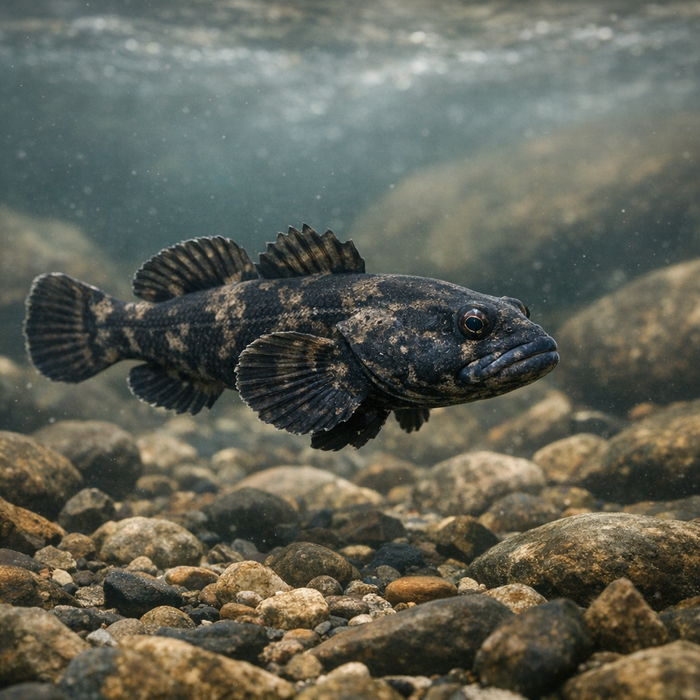
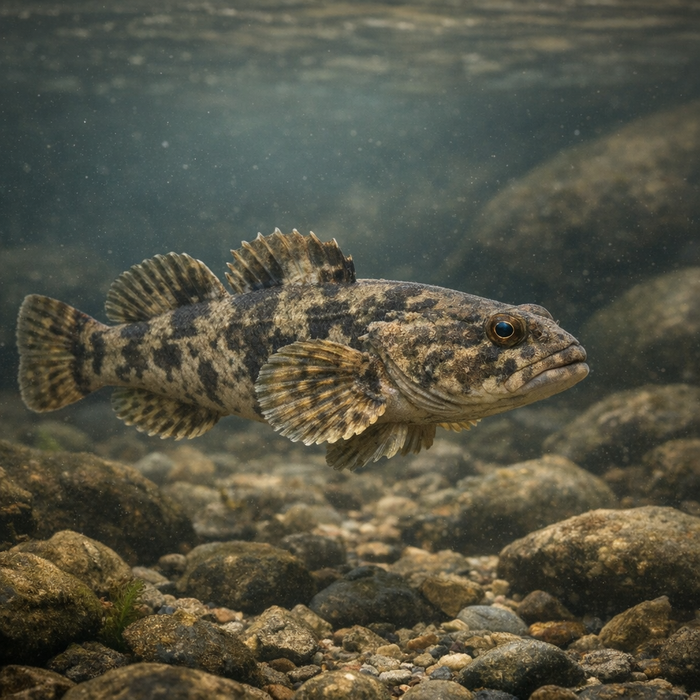
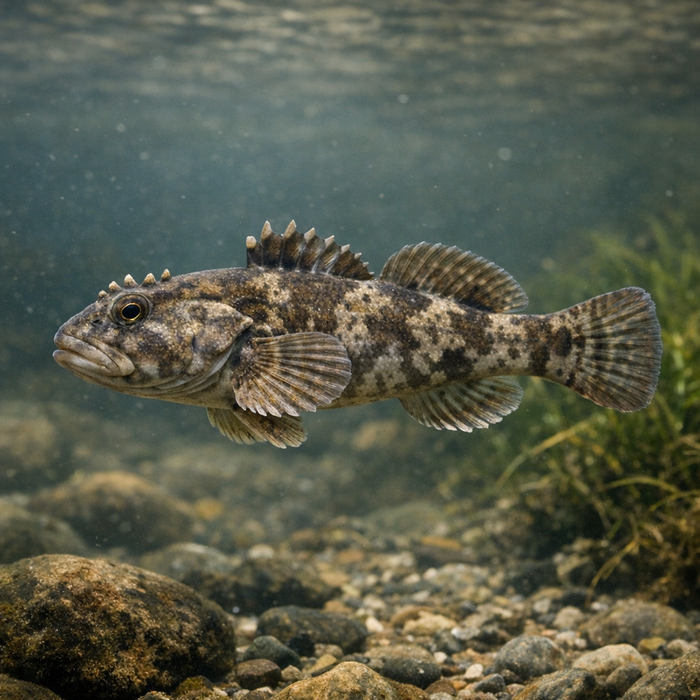
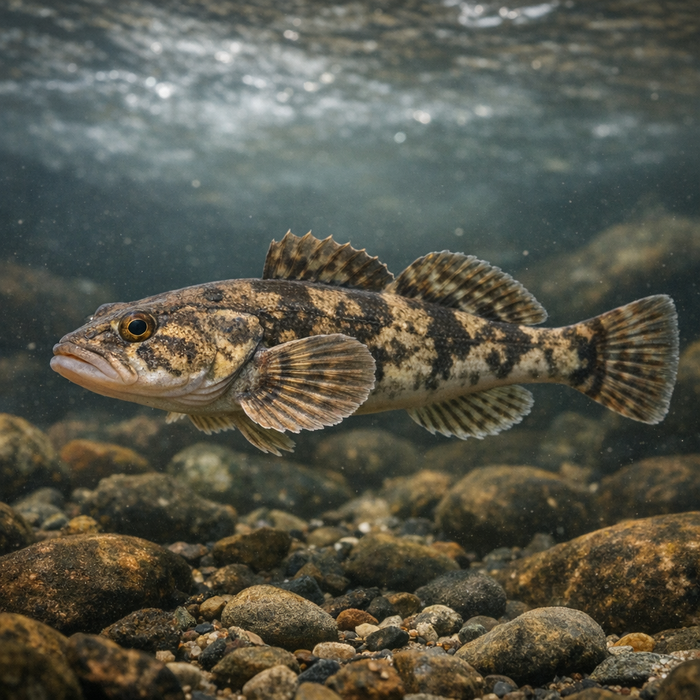
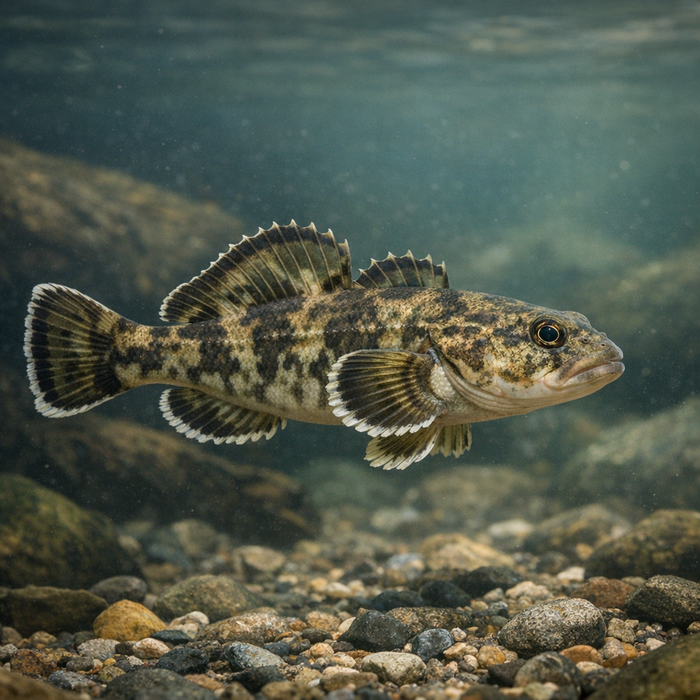
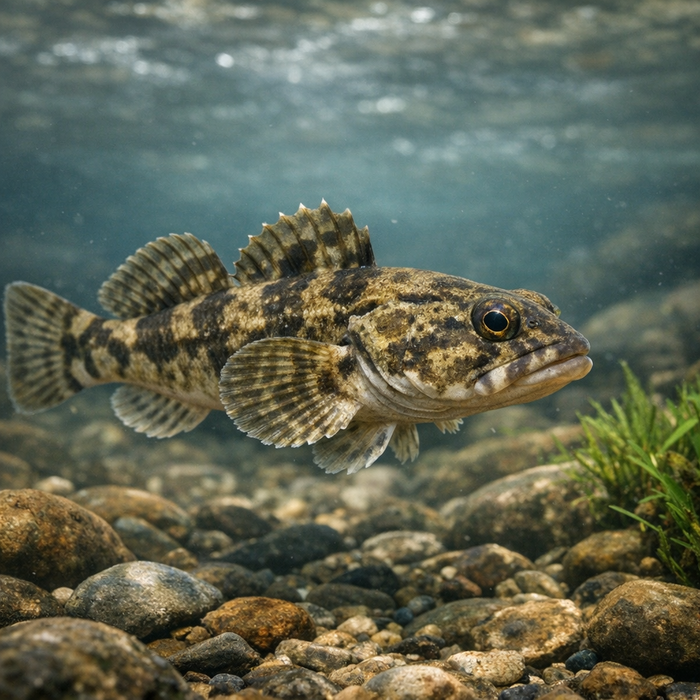
Blue Ridge sculpin (Cottus caeruleomentum): The bulldog of Appalachian riffles, tiny but all attitude.IntroductionMeet the Blue Ridge sculpin, a pocket-sized ambush artist built for boulder gardens and roaring riffles. It's not a trophy fish; it's a micro-trophy with a huge head, fan-throttle fins, and a mug only a current nerd could love. If you're chasing trout, you've met its kind as forage. If you're a micro angler, this is one of the crown jewels of fast-water creeks. Keep reading for plain-language Blue Ridge sculpin facts and what makes this little bruiser tick.What Makes the Blue Ridge sculpin Unique?Start with the chin. Breeding males sport a striking blue flush around the lips and lower jaw, a color pop so loud it literally named the species. Then there's the build: no swim bladder, huge pectorals, and a head like a battering ram. The Blue Ridge sculpin glues itself to bottom and rockets in short bursts to inhale prey. Finally, it plays real estate mogul during spawning season, sticking egg masses to the underside of flat rocks and guarding the clutch with serious attitude. Small fish, big personality.Habitat & Global RangeThe Blue Ridge sculpin lives where water runs cold, clear, and quick. Think Appalachian foothill creeks and small rivers that tumble over cobble and bedrock, especially in the Blue Ridge region. Current seams, plunge pools, and knee-deep runs are prime. They prefer stable, oxygen-rich flow with clean gravel and minimal silt. If you're scouting Blue Ridge sculpin habitat, look for streams with wooded shade, boulder fields, and that telltale pocket-water soundtrack. Their range is regional rather than coast-to-coast, with strongholds in select Appalachian drainages. That localized footprint is a big reason micro anglers travel for them.Behavior & TemperamentThis fish is a bottom-hugging lurker. It spends most of its time tight to rocks, shifting only a few body lengths to feed. Wariness is high; shadow the water and it's gone. But when a morsel drifts inches from its face, it hits with a vacuum-gulp that out-punches its size. Surface activity? Basically none. Schooling? Not its style. Blue Ridge sculpin stake out micro-territories and let the buffet come to them. Low light perks them up, but they'll feed through the day in broken current. Hook one and expect a quick, stubborn shake rather than a run. The fight's short, the hunt is the game.Ecological ImportanceThe Blue Ridge sculpin is a keystone snack for trout and larger stream predators, yet it's also a sharp little hunter. By vacuuming up aquatic insects, small crustaceans, and the odd minnow, it recycles energy at the rocky bottom where productivity starts. Because it needs clean, cold, well-oxygenated flow, its presence is a living indicator that a stream is healthy. Lose the sculpin, and you're usually losing mayflies, stoneflies, and everything upstream of them.Conservation & Environmental PressuresWhile the Blue Ridge sculpin is not a headliner for endangered lists, it's very sensitive to bad water. Sedimentation chokes spawning undersides, warm runoff blunts oxygen, and channelization bulldozes the pocket-water architecture it needs. Even small land-use changes can turn a vibrant riffle into a lifeless glide. It's a hyper-local species: protect the headwaters, keep the banks forested, and you keep the sculpin. Ignore those basics, and you won't just lose Blue Ridge sculpin-you'll watch the whole creek dim.The FishyAF TakeThe Blue Ridge sculpin is the stream's bouncer. It's parked by the rock, scowling blue-chinned during spawning, daring debris to drift past. For casual anglers, it's a ghost underfoot. For the micro-curious, it's a lesson in precision: short casts, tiny offerings, stealth like your next step matters. Trout get all the Instagram, but the Blue Ridge sculpin is the honest heartbeat of pocket water. Learn this fish and you learn the creek. That's the real flex.