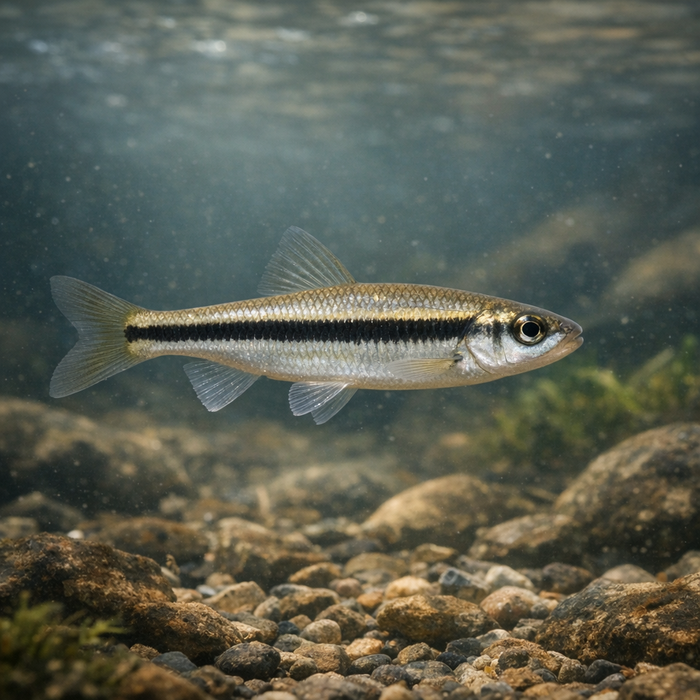
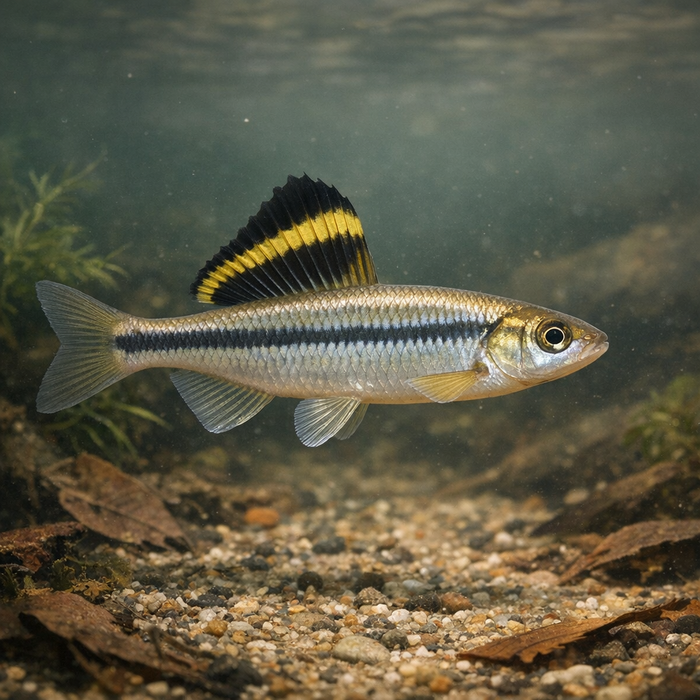
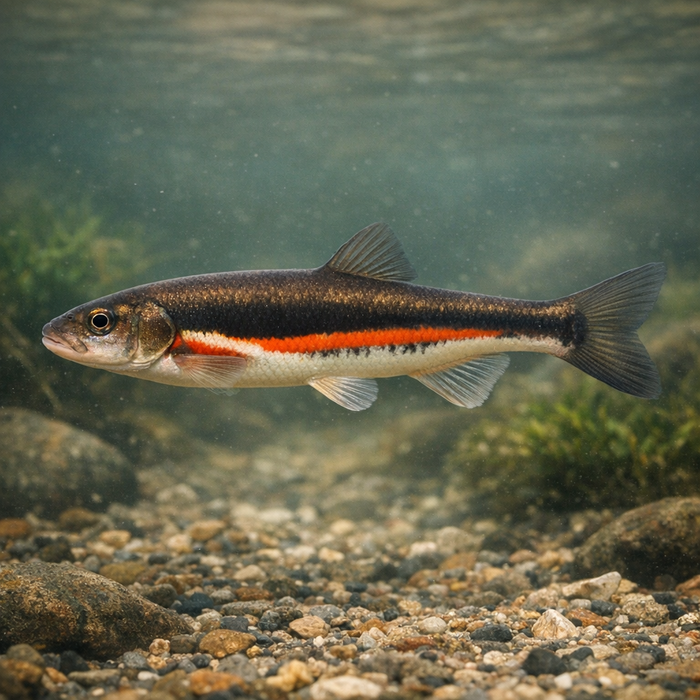
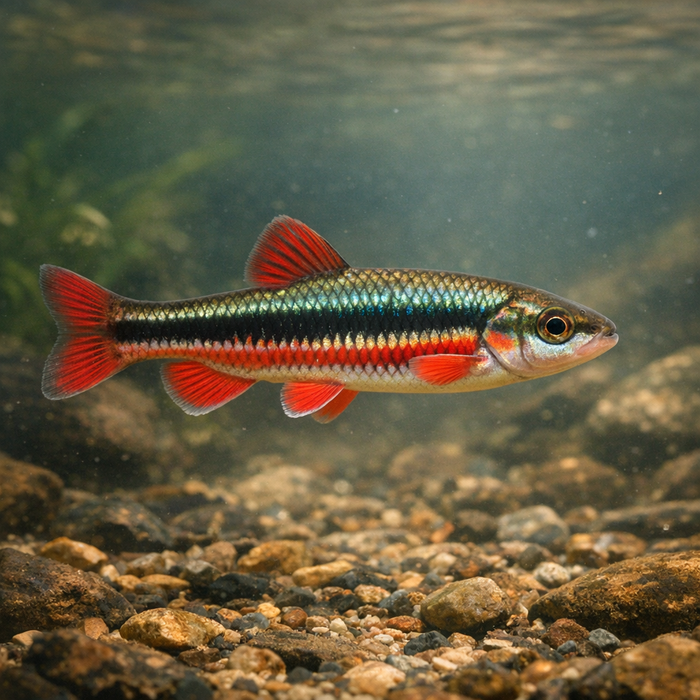
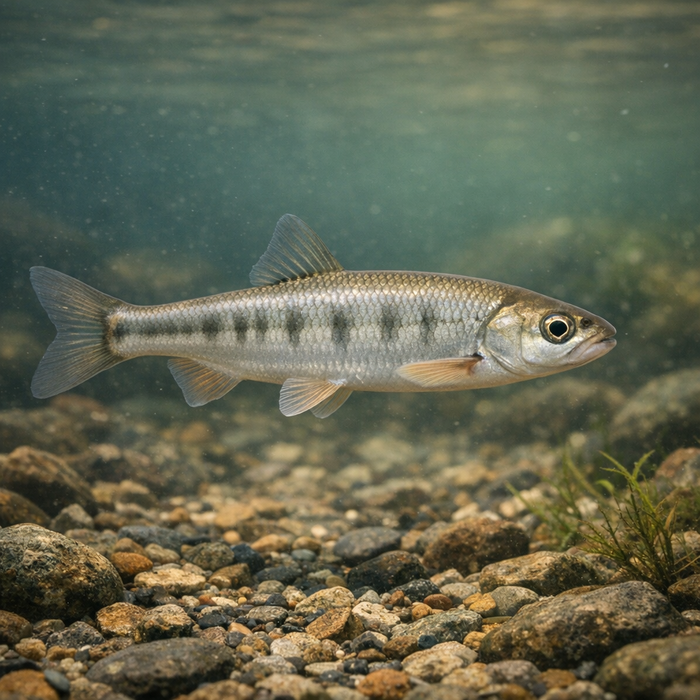
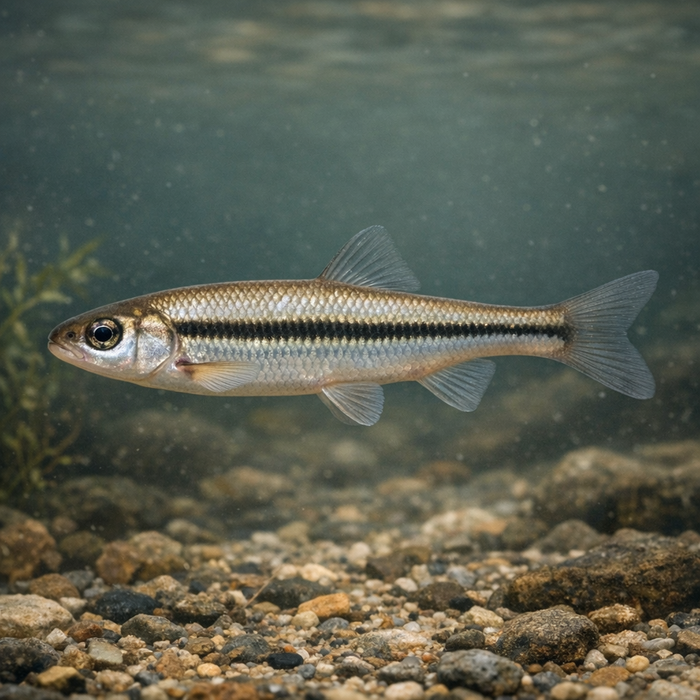
Rio Grande Chub (Gila pandora): A scrappy native minnow with a big attitude and a bigger head.IntroductionThe Rio Grande chub is the small fish that quietly runs the show in a lot of desert-stream pools. It's not a glamour species, but it's a native cornerstone with surprising punch for a few ounces of fish. If you're chasing Rio Grande chub facts, or just trying to ID the gold-olive bullet flashing from a shady undercut, this little native will make you look harder at water you used to walk past.What Makes the Rio Grande chub Unique?Two things jump out. First, proportions: the Rio Grande chub carries a stout head and deep caudal peduncle that screams short-burst power. Second, attitude: they hold tight to cover like a bass, popping in and out of woody debris and boulder edges, then darting into midwater to grab drifting morsels. Breeding males even roughen up with nuptial tubercles and warm tones along the fins, which is wild for such a "plain" fish.Habitat & Global RangeHere's the short of Rio Grande chub habitat: cool to moderately warm streams and small rivers throughout the upper Rio Grande drainage, especially northern New Mexico and southern Colorado, with remnant or patchy occurrences elsewhere in the basin. Think pools and slow runs with undercut banks, root wads, and cobble to gravel bottoms. They tolerate some turbidity and seasonal flow swings but still want at least semi-stable pools. You'll also see them in side channels, irrigation ditches, and small impoundments connected to streams, provided summer temps and oxygen don't crash.Behavior & TemperamentThe Rio Grande chub is a cover hugger with quick-burst sprinting ability. Loose schools form in the safety of wood and rock, then individuals peel off to nab drifting insects, small invertebrates, and the occasional micro-crustacean. They rarely chase far; if it's not close, it's not dinner. Spawning hits late spring into early summer when flows settle and temps rise, with eggs broadcast over clean substrate and zero parental care. They're not aerial acrobats when hooked, but they'll bulldog for their size and immediately look for the nearest snag.Ecological ImportanceThis fish is the flashlight battery of the desert-stream food web. The Rio Grande chub turns bugs into biomass that feeds larger natives and even some invasive predators. It also does janitorial duty by vacuuming organic bits that would otherwise rot in quiet pools. When chubs are common, you're usually looking at a stream with functional habitat complexity: wood, boulders, pools, and a living drift. Pull them from the system, and energy transfer unravels.Conservation & Environmental PressuresThe Rio Grande chub has been squeezed by water diversions, altered hydrographs, loss of wood and bank cover, and nonnative predators like brown trout and smallmouth bass. Fragmentation isolates populations, so a single low-water year can smack a reach that no longer connects to refuge pools. Many jurisdictions treat the species as a conservation priority, with surveys, translocations, and habitat projects aimed at keeping wild populations on the map.The FishyAF TakeIf you're stream-smart enough to spot Rio Grande chub, you're probably tuned into the river's heartbeat. This is not a hero-shot fish. It's a litmus test for living habitat. Light line, tiny hooks, a respectful release, and you'll start seeing your home water differently. Respect the cover, watch the drift, and don't sleep on the natives. When the Rio Grande chub is doing well, odds are the whole creek is doing better too.