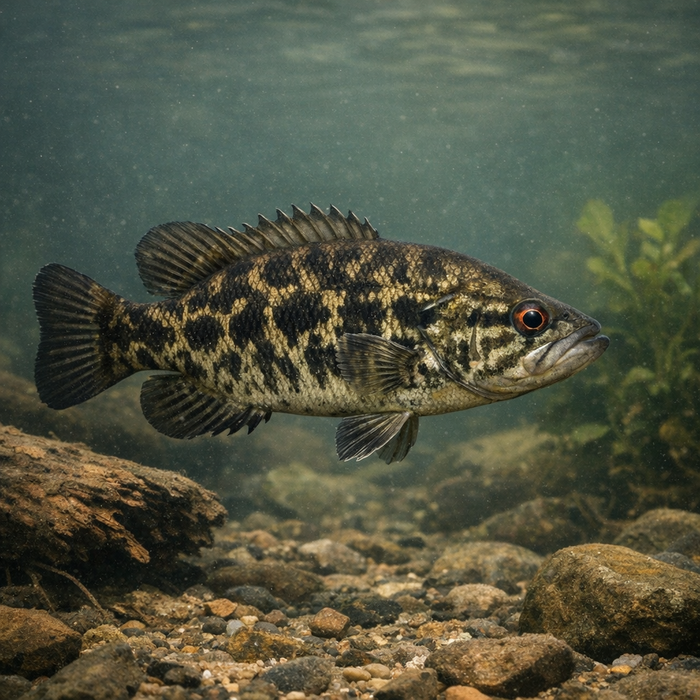
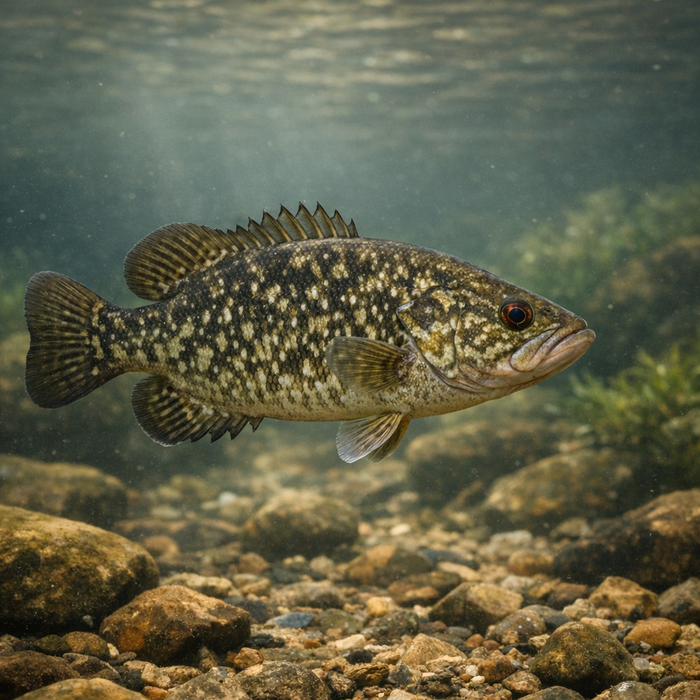
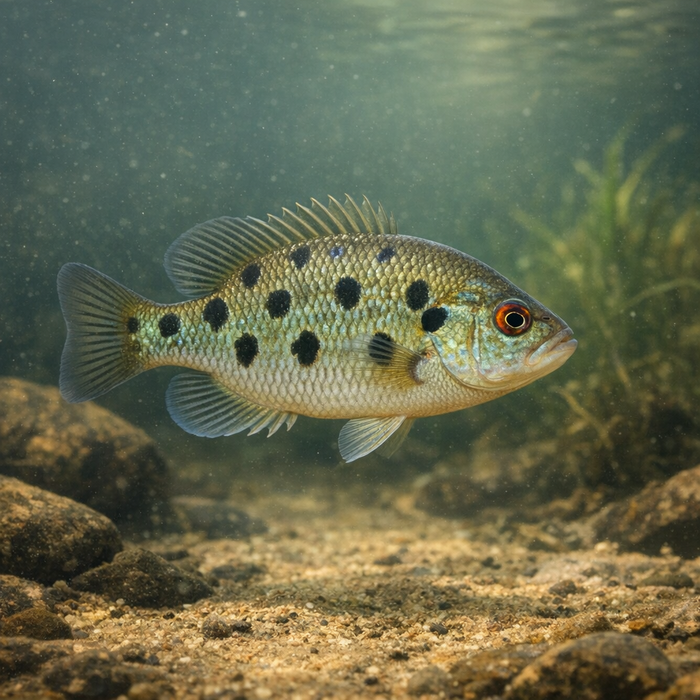
Roanoke bass (ambloplites cavifrons): A Bold, Memorable Hook Line Introduction If you like sunfish with a mean streak, the Roanoke bass is your kind of scrapper. Compact, thick-shouldered, and always looking to ambush something crunchy, this river specialist eats like a heavyweight and fights way above its weight class. Its not as famous as smallmouth or as widespread as bluegill, but hook one around a boulder seam and youll get the point fast. What Makes the Roanoke bass Unique? Start with the head. The scientific name cavifrons literally means hollow forehead, and that concave profile is a dead giveaway if youre trying to separate it from its cousin, the rock bass. The Roanoke bass also packs more spines than your average sunfish and shows off dark chocolate mottling that lets it melt into shadowed cobble. Add ruby eyes and a bulldog attitude and youve got a fish that feels custom-built for small river combat. For anglers hunting Roanoke bass facts, its a species defined by subtle ID cues, punchy fights, and tight allegiance to prime current breaks. Habitat & Global Range This one is a homebody. The Roanoke bass is native to select Atlantic-slope drainages in Virginia and North Carolina, especially Piedmont rivers with clear flow, gravel to cobble substrate, and scattered wood. Think riffle-run-pool sequences with boulders, undercut banks, and fallen trees. While youll catch some in backwaters and small lakes, classic Roanoke bass habitat centers on moving water. They favor lanes where current delivers food but also gives them a quick escape into cover. Seasonal shifts are mild: they slide shallower around the spawn, then hold in deeper runs and shaded lies during bright, hot periods. Behavior & Temperament The Roanoke bass is an ambush predator with a strong structure addiction. Its not a cruiser like white bass or a schooling maniac like crappie. Instead, it picks a quality lie and defends it, popping out to pin prey to rocks or to crush a jig creeping across gravel. Dusk and dawn bring the best aggression, and overcast skies stretch those feeding windows. Theyre not picky eaters, but they are cover-loyal, so you must hit the strike zone tight: roots, seams, and shade lines. Hook one and expect a short, nasty run aimed straight back into the nearest snag. Ecological Importance Roanoke bass help regulate benthic invertebrates and small forage fish, turning crayfish and aquatic insects into concentrated energy for the river food web. Their nesting behavior reshuffles gravel patches, lightly aerating streambed areas that benefit more than just their own offspring. As mid-level predators, they also become prey for larger fish and birds, bridging the energy gap between riffle bugs and apex hunters. Conservation & Environmental Pressures Their biggest headaches are habitat fragmentation, sedimentation, and competition or hybridization with introduced rock bass. Silt smothers gravel, warm runoff reduces oxygen, and poorly designed culverts block movement between seasonal habitats. Because the Roanoke bass occupies a relatively tight geographic window, local problems hit harder. Agencies monitor populations and adjust regulations, but anglers can help by releasing larger fish, protecting spawning areas, and reporting unusual catches where rock bass are newly present. The FishyAF Take The Roanoke bass is the small-river bouncer you dont hear enough about. Its not giant, its not flashy, and it doesnt roam far, but it delivers exactly what current junkies want. Tight casts. Immediate feedback. Zero nonsense. Nail the presentation and youre rewarded with a pounding take and a determined dig for cover. Miss the spot by a foot and you might as well be casting on the moon. If your idea of fun is picking apart seams, reading pocket water, and matching crayfish vibes with light tackle, the Roanoke bass will absolutely make your day. Call it underappreciated, call it localjust dont call it delicate. This fish punches hard, demands accuracy, and turns a modest river into a serious game board for anyone dialed on Roanoke bass habitat.