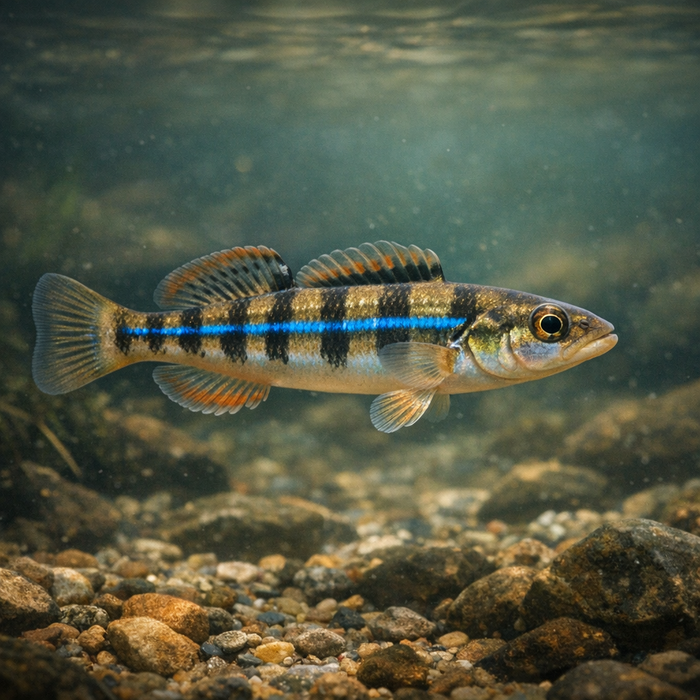
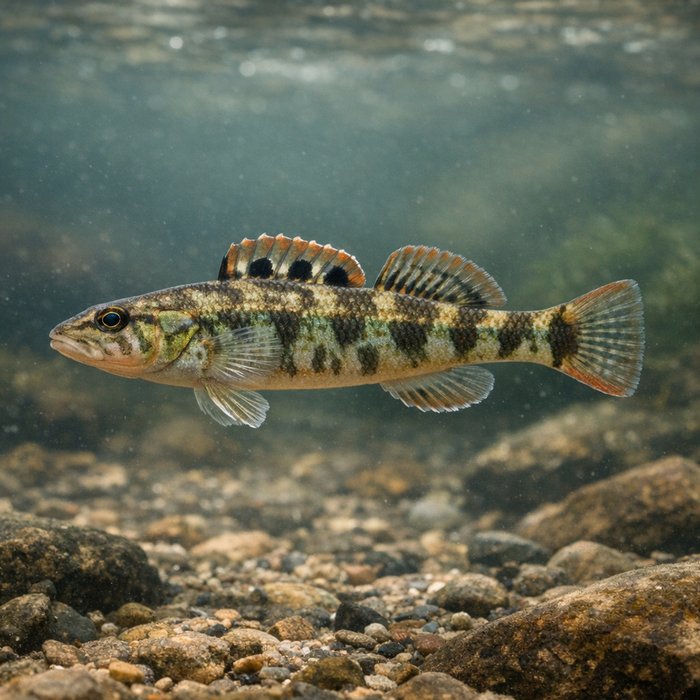
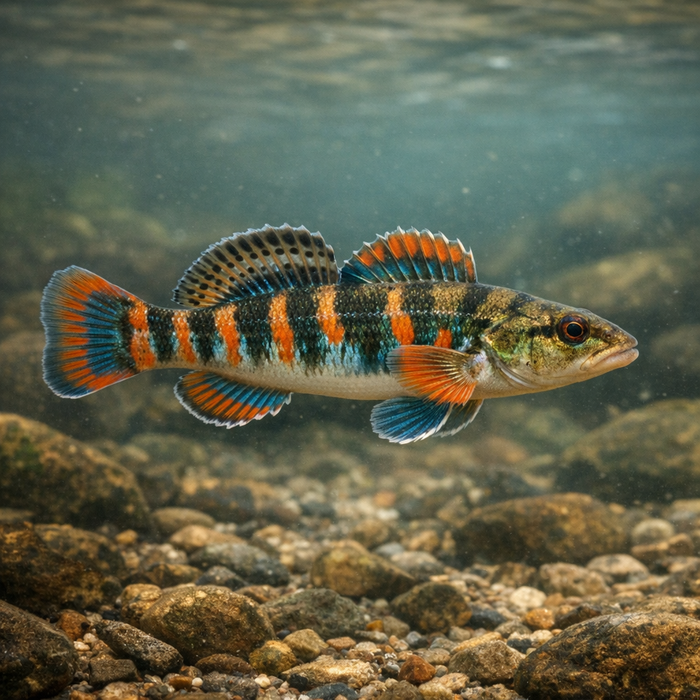
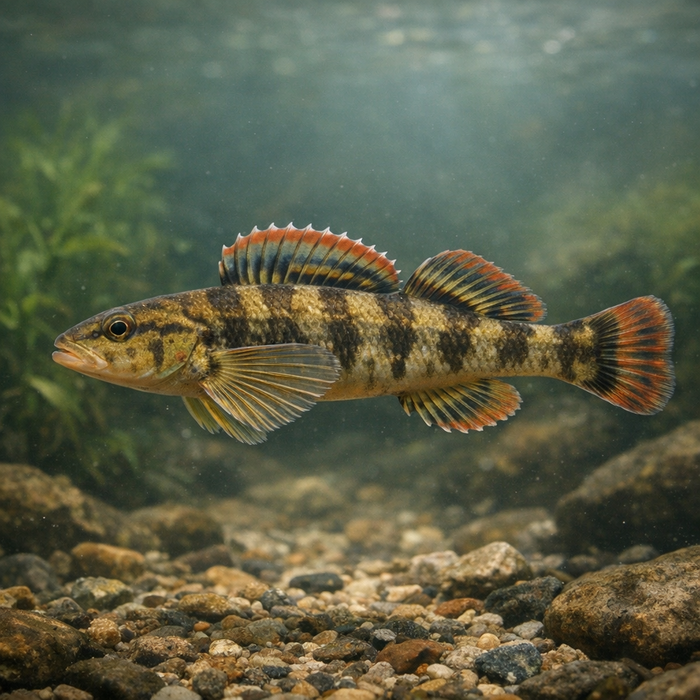
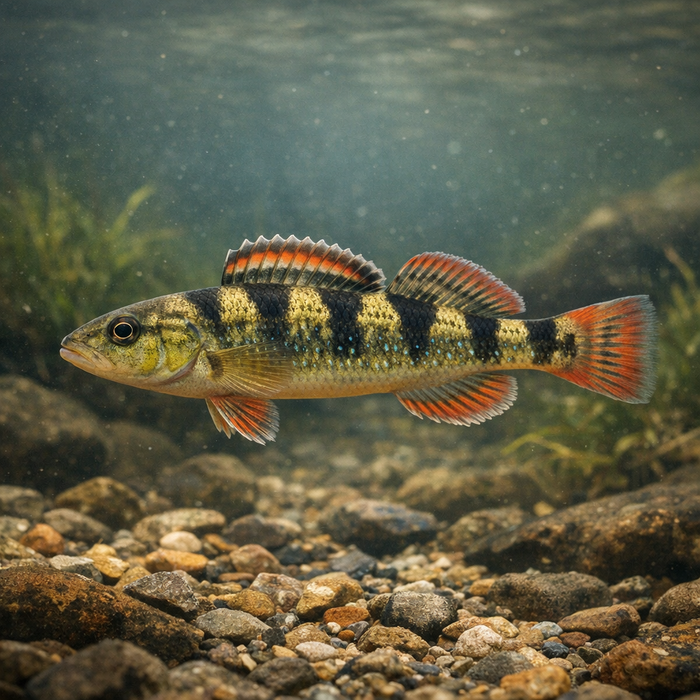
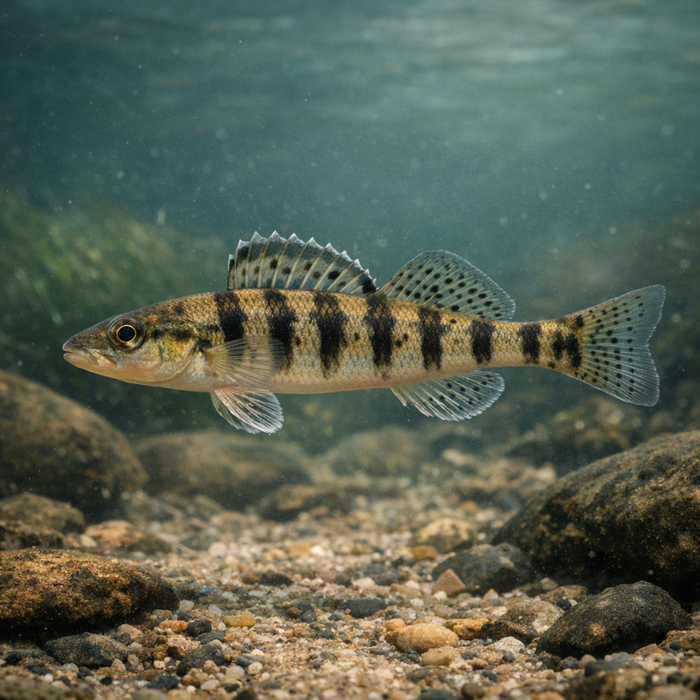
Rock Darter (Etheostoma rupestre): The riffle rocket you've been stepping over your whole lifeIntroductionThe rock darter is the definition of small but mighty. While you're wading past "nothing water," this two- to three-inch torpedo is clamped to the bottom, blasting between cobbles like a tiny river missile. If you're into microfishing or just appreciate elite current athletes, the rock darter delivers. It's a compact predator with a need for speed and the perfect poster child for clean, fast water. Consider this your quick hit of rock darter facts, minus the snooze.What Makes the Rock Darter Unique?Start with the chassis. The rock darter has an elongated, low-profile body, oversized pectorals, and a reduced swim bladder, so it stays glued to the substrate instead of bobbing. That setup, plus cryptic gravel-matching paint, makes it vanish until it explodes forward in a jittery sprint. During spring, males level up with dramatic barring and warm fin highlights that pop in clear riffles. For a fish that rarely clears three inches, the rock darter shows wild attitude and surprising color-basically a pocket-sized peacock bass that traded boulders for timber.Habitat & Global RangeWhen anglers say "rock darter habitat," they mean clear, cool, swiftly moving streams with rocky riffles and runs. Think Ozark and nearby upland drainages in the central U.S., where limestone and chert rubble build perfect flow breaks. The species thrives in ankle- to knee-deep lanes where current is loud, oxygen is high, and silt doesn't settle. You'll see them tuck behind stones, hover just off the bottom, and blast to the next gap if you blink. This isn't a lake fish and it's not a lazy pool cruiser. It's a riffle specialist, and that niche keeps it both localized and wonderfully findable for anglers who read current seams.Behavior & TemperamentThe rock darter is skittish but decisive. It won't travel far, yet it reacts fast to anything drifting inches above the stones. Bursts are short, surgical, and powerful for the size. They don't school tight like shiners; you'll instead find scattered individuals or small loose groups, each claiming thumbprint territories. Feeding is focused on the bottom layer, where micro-invertebrates and tiny morsels roll along. Low light helps, but mid-day action holds if the water stays clear and cool. Spawning in late spring ignites color and concentrated standoffs, with males staking turf and patrolling like cranky little bouncers.Ecological ImportanceIf you want a quick read on stream health, meet the rock darter. It's wired for clean, moving water and crashes fast when silt and pollutants take over. That makes it a superb indicator species for habitat integrity in upland streams. It also channels the food chain upward, converting bottom-dwelling invertebrates into calories for larger predators. When rock darters thrive, odds are your craws, mayflies, and smallmouth neighbors are doing fine too. When they vanish, there's usually a bigger problem than one missing microfish.Conservation & Environmental PressuresGood news: the rock darter is generally listed as Least Concern. The catch: it's allergic to sloppy land use. Sedimentation, nutrient overloads, and channelization degrade riffles and smother the rocks it needs. Even subtle increases in turbidity can kneecap feeding and spawning. Groundwater drawdowns that warm and thin summer flows are another quiet threat. The fix is basic but hard: protect riparian buffers, keep cattle and heavy equipment out of streams, and manage stormwater like it matters. Where habitat stays sharp, the rock darter hangs tough.The FishyAF TakeThe rock darter is the fish you ignore until you try to catch one. Then it becomes an obsession. It's a precision target in tiny water, the ultimate test of stealth, drift control, and micro-tackle discipline. Nail the presentation and you'll watch a miniature predator rocket off a stone and smack your offering like it owes rent. Miss, and it vaporizes under the next cobble. For anglers hunting fresh challenges and clean-water charisma, the rock darter is pound-for-pound attitude. Add it to your lifelist and thank the riffles later.