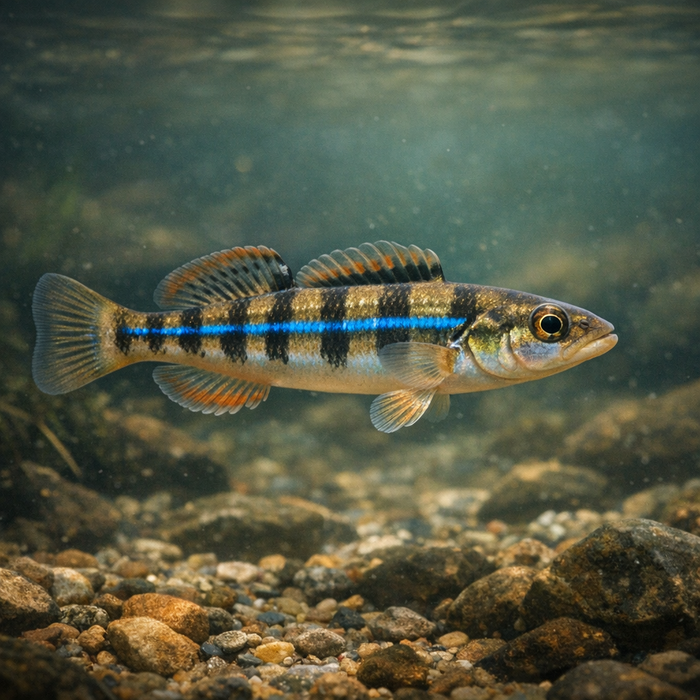
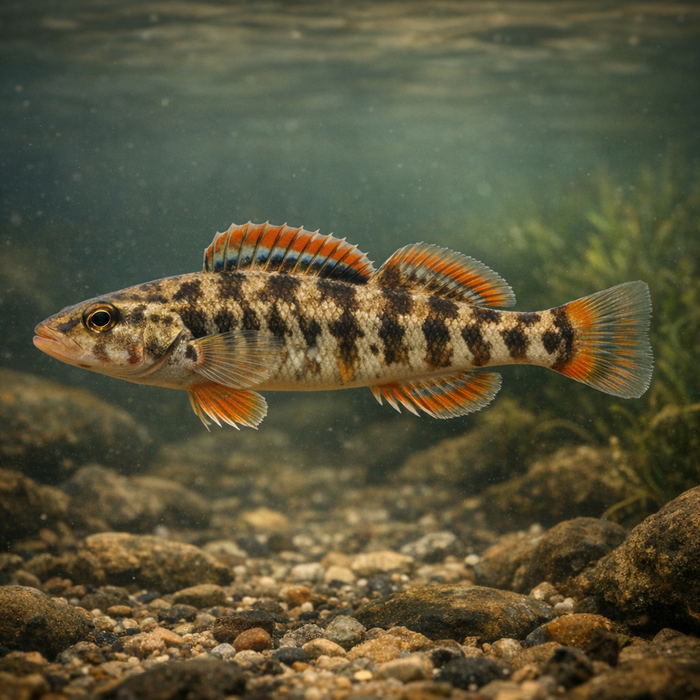
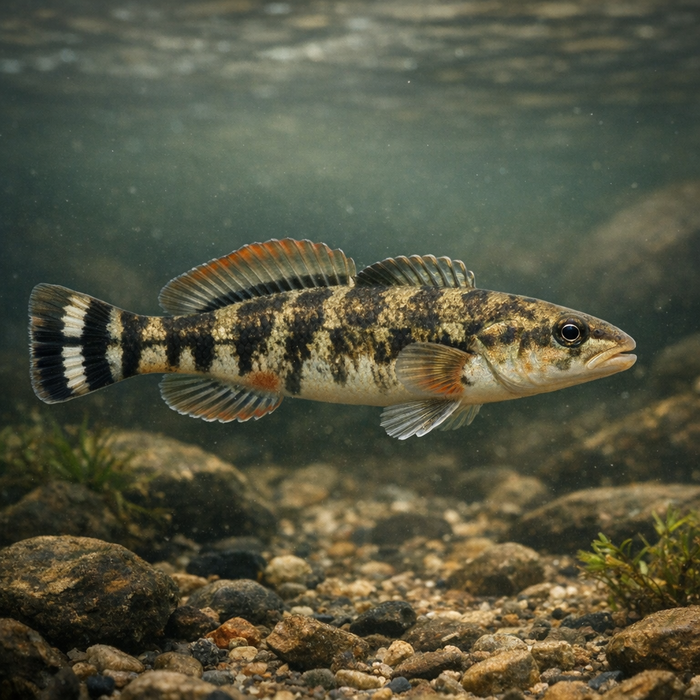
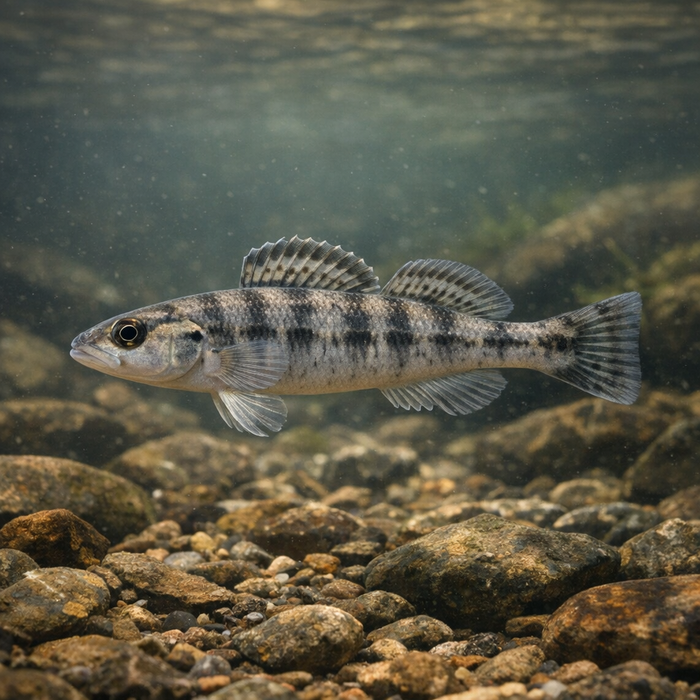
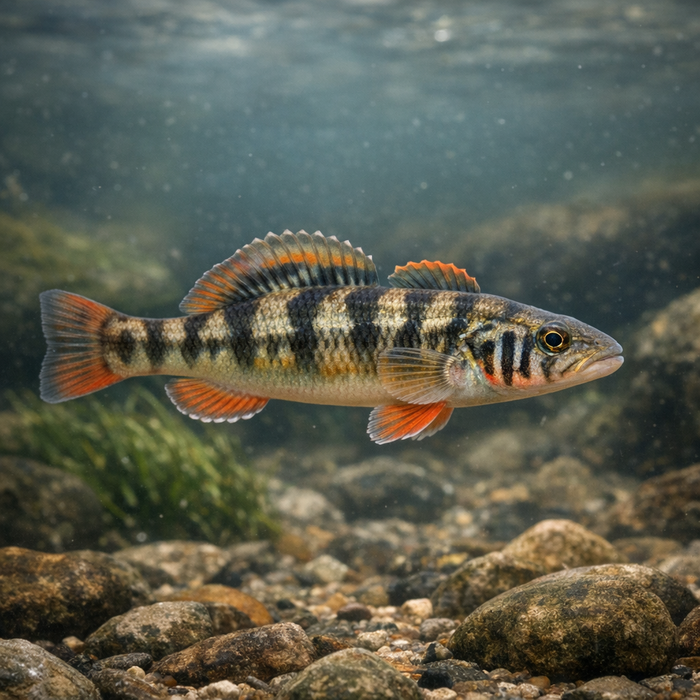
Missouri saddled darter (Etheostoma tetrazonum): A pocket-rocket riffle sprinter with racing stripes and serious current chops.IntroductionThe Missouri saddled darter is proof that small fish can have huge personalities. This riffle-loving micro bruiser rockets between pebbles, wears bold dark saddles like a custom paint job, and survives in current that would spin most minnows like laundry. If you're hunting Missouri saddled darter facts, you're stepping into the addictive world of microfishing and Ozark stream ecology where stealth, tiny hooks, and clean water rule.What Makes the Missouri saddled darter Unique?First, the look: four dark saddle bars arch across its back, the inspiration for its scientific name tetrazonum. In spring, males level up with brighter fins and flank color, turning otherwise plain riffles into a neon runway. Second, the design: reduced or absent swim bladder plus big pectoral fins keep it plastered to the bottom, letting it slip between cobble like a tiny submarine. Third, the attitude: despite topping out around three inches, a Missouri saddled darter will stake a territory and defend it with real swagger, especially when spawning time nears.Habitat & Global RangeThink clear, cool Ozark streams with steady current, gravel to cobble substrate, and oxygen-rich riffles. That's prime Missouri saddled darter habitat. You'll spot them in runs just downstream of riffle crests, along micro-seams, and beside bowling-ball rocks where flow slackens a hair. Distribution is centered in Missouri's Ozark Highlands, particularly drainages like the Gasconade, Meramec, and Osage systems. Seasonal shifts are subtle: in winter cold snaps, they may slide into slightly deeper runs or slow pockets, but they're riffle employees year-round.Behavior & TemperamentThis fish doesn't cruise midwater. It hops. Short, explosive darts from rock to rock keep it fed and unbothered by the heavy current. Eyes are positioned to spot drifting invertebrates overhead, and the body stays glued to the substrate. Missouri saddled darters are daylight operators that feed in windows tied to stable flows and decent visibility. During the spawn, males get bold and territorial over prime gravel. They aren't schoolers in the crappie sense, but you'll often see several working the same riffle complex, each minding a tiny patch.Ecological ImportanceRiffle fish like the Missouri saddled darter translate stream health into motion. Their presence signals clean, well-oxygenated water and intact gravel free of suffocating silt. They graze down midge and mayfly larvae, and in turn, feed larger fish and stream predators. If you care about smallmouths, trout, or simply clear water, you care about what keeps darters thriving. Because they're tightly linked to substrate quality and flow, they react quickly to watershed abuse and can be early-warning alarms for habitat decline.Conservation & Environmental PressuresThe species is currently considered Least Concern, but that's not a free pass. Siltation from poor land use, low summer flows, and nutrient spikes can smother the exact gravel this fish needs. Stream channelization erases the riffle-run blueprint. Invasive species and poorly timed water withdrawals add more stress. Missouri saddled darter numbers track habitat quality; protect the riffles and they bounce back fast. Trash the riffles and they disappear even faster.The FishyAF TakeThe Missouri saddled darter is the gateway drug to microfishing. You stalk clear riffles, tie on a hook the size of a sesame seed, and suddenly you're seeing a stream like a hawk. It's a species that rewards stealth and precision, not horsepower. Chase it for the challenge, the clean-water vibe, and the bragging rights of putting a three-inch Ozark athlete in the net. Whether you came for Missouri saddled darter facts or just wanted an excuse to explore pretty water, this fish delivers tiny fireworks in a world built for finesse.