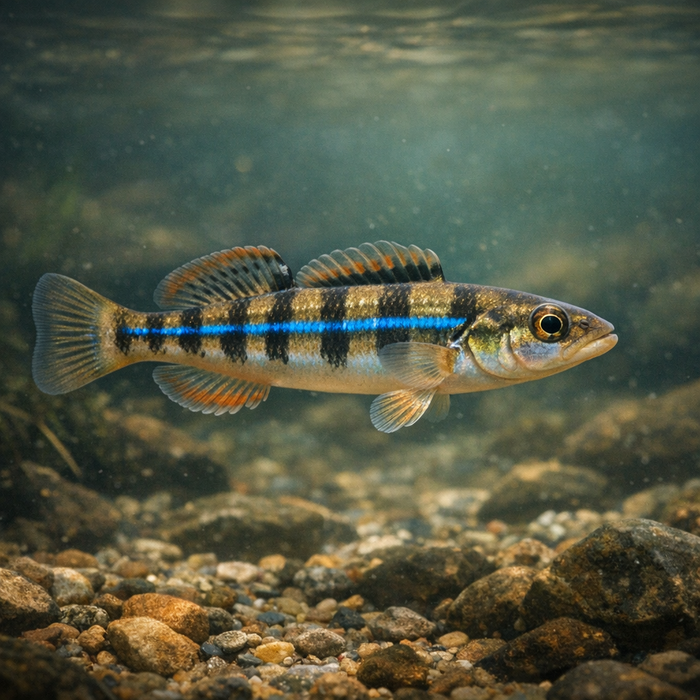
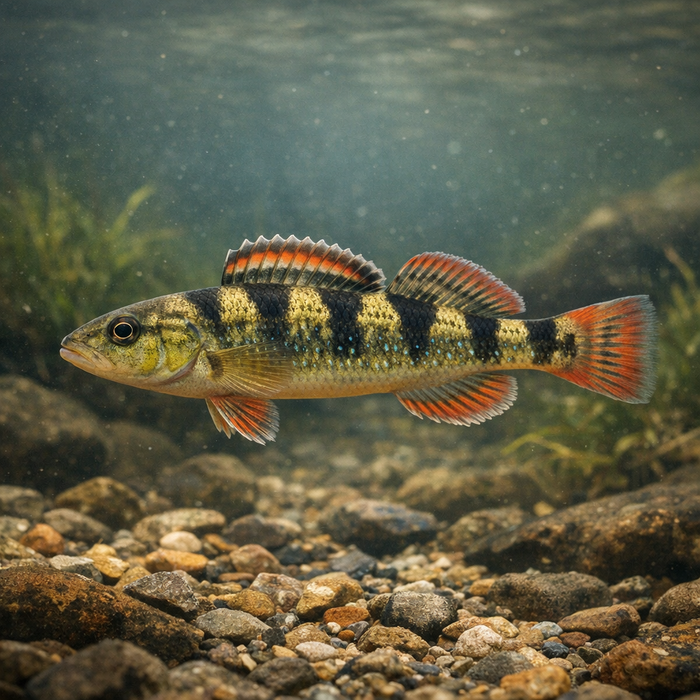
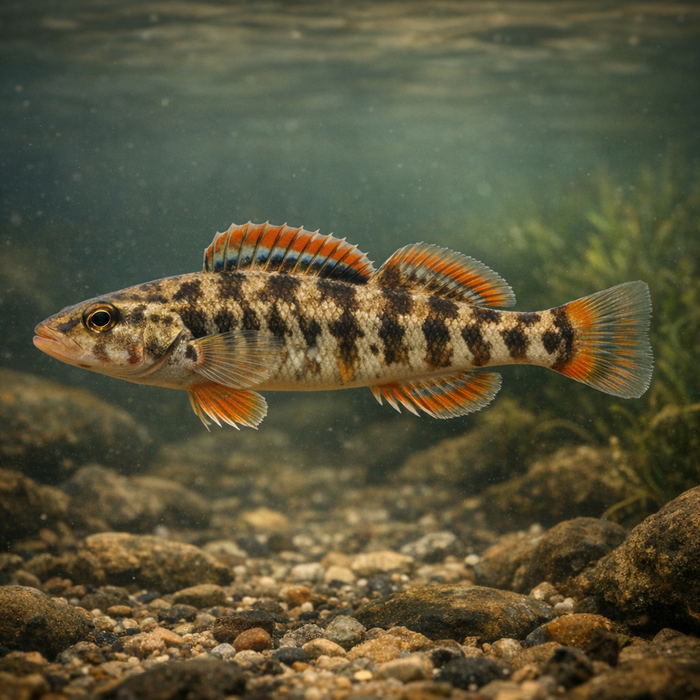
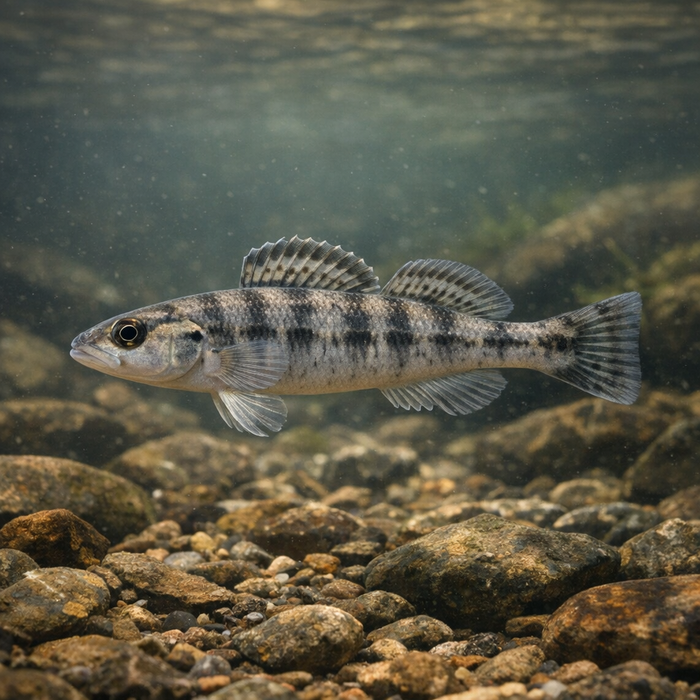
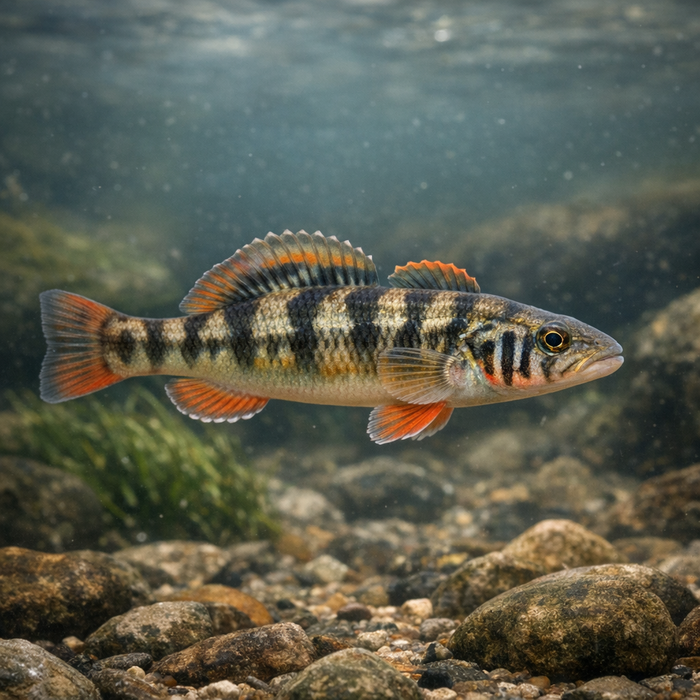
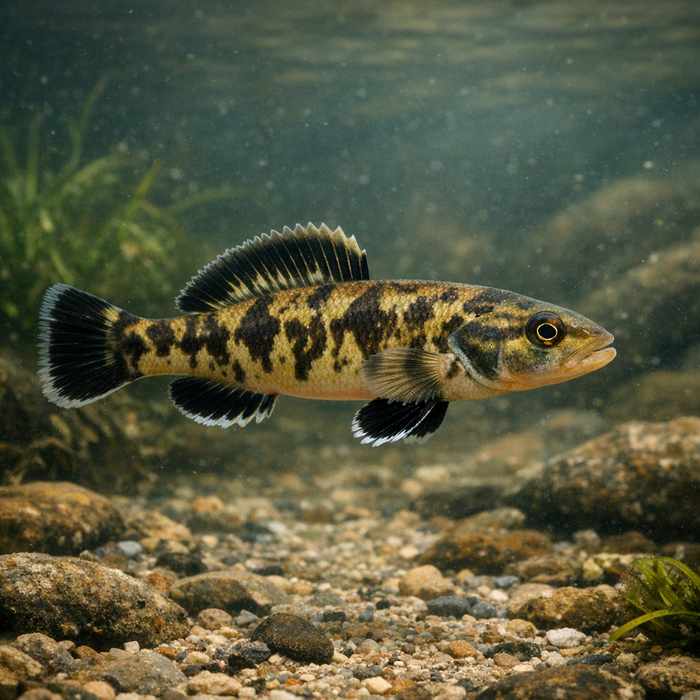
Stripetail Darter (Etheostoma kennicotti): Small Stripes, Big Attitude In Fast WaterIntroductionThe stripetail darter is the stream's tiny sprinter: flashy tail bars, throttle-wide bursts, and zero wasted motion. It doesn't headline any tournaments, but this little Percidae specialist owns the riffles with confidence. If you're into microfishing or just love creek-biology weirdos, the stripetail darter delivers. Consider this your crash course in real stripetail darter facts and what makes this fish worth your kneecaps in cold current.What Makes the Stripetail darter Unique?Start with the namesake tail. Those bold vertical bars aren't just paint; they're social signals. During spring, males sharpen the contrast like a racing flag, broadcasting territory and readiness. Then there's the launch system: broad pectoral fins let the fish park on gravel, while a coiled body fires sudden, piston-like dashes after drifting insects. Finally, nest habits are peak darter. Males glue eggs to the underside of flat rocks and guard the brood with pint-sized fury. No, it's not a bluegill, but try telling him that.Habitat & Global RangeIf you want stripetail darter habitat in one line, it's this: clean, moderate-flow riffles over gravel and small cobble. Think ankle-to-knee-deep chutes where oxygen and insect life are nonstop. The species is a child of the Ohio, Cumberland, and Tennessee River systems across the Midwest and the Upper South. That network of streams and creeks is sprawling but patchy, and local water quality matters. Mud the riffles, and the stripetail darter ghosts out; keep them clear, and the fish stack back in the seams.Behavior & TemperamentThe stripetail darter doesn't cruise. It posts up on the bottom, reads tiny current shifts, and strikes with burst speed. Surface business is basically zero. Most feeding is near-bottom, timing ambushes when a mayfly nymph or midge drifts right. These fish aren't wanderers; they work short home ranges centered on quality micro-structure: pebble bars, pocket rocks, and tiny ledges. In spring, expect heightened color and territorial spats as males claim nesting slabs and defend them like small, angry security guards.Ecological ImportanceTake the stripetail darter out of a riffle and you'll feel it all the way up the food web. They graze down invertebrates, get eaten by larger fish and herps, and telegraph stream health just by showing up. Because they need clean, well-oxygenated runs, their presence is a fast read on habitat quality. They're living diagnostics that happen to look like a custom paint job on a two-inch chassis.Conservation & Environmental PressuresPlenty of stripetail darter water still exists, but the threats are familiar: siltation from poor land use, nutrient spikes, and low summer flows that bake riffles into puddles. Because they spawn under flat rocks and rely on crevices, smothering fine sediment wrecks reproduction first and biomass soon after. Regionally, legal protections vary. Even where the species isn't listed, darter-rich creeks often host neighbors that are, so management tends to be habitat-first. Protect riffles and stable flows, and you protect a crowd, stripetail included.The FishyAF TakeThe stripetail darter is a minimalist masterpiece. It turns a few inches, a striped tail, and ruthless efficiency into a life that flat-out works in fast water. If you're chasing "Stripetail darter habitat," you're really hunting clean gravel, oxygen, and honest current. If you're hunting "Stripetail darter facts," here's the loudest one: complexity scales down beautifully. You don't need a boat, a guide, or a spreadsheet of waypoints. You need boots in a riffle, eyes on the stones, and respect for the smallest hunter doing big work at the bottom of the flow.