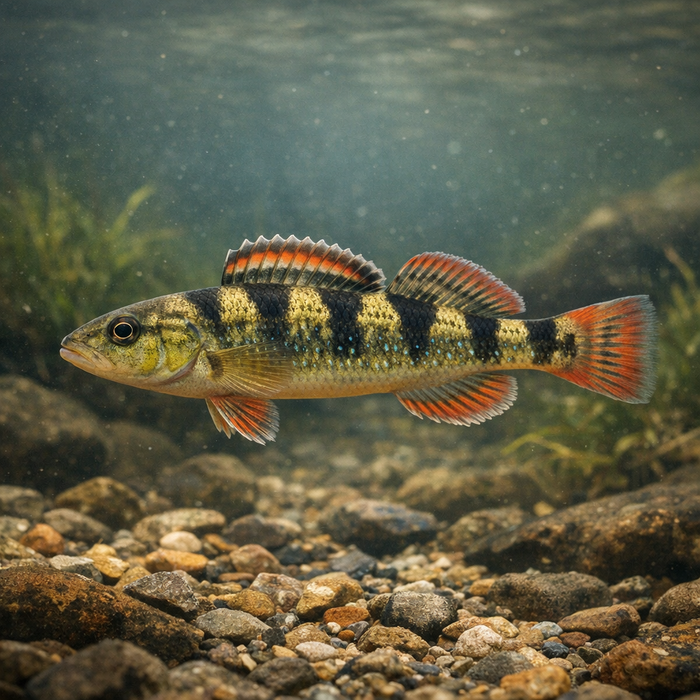
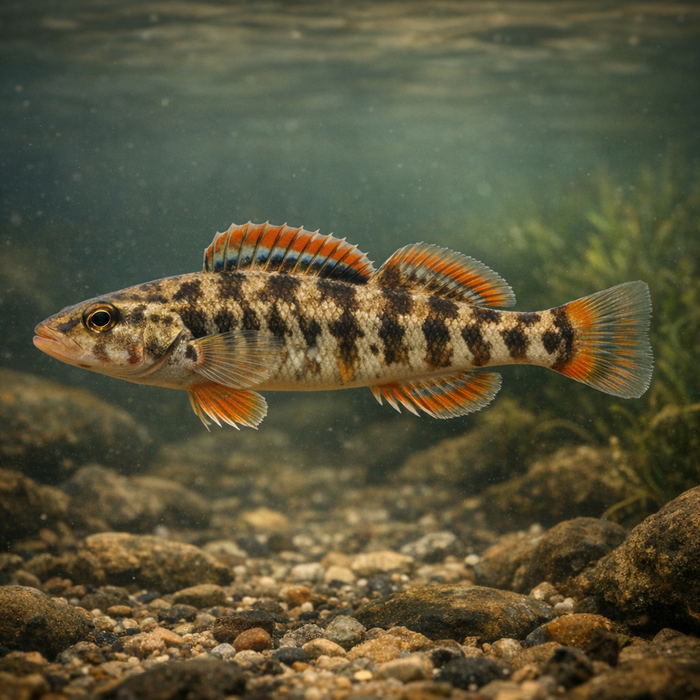
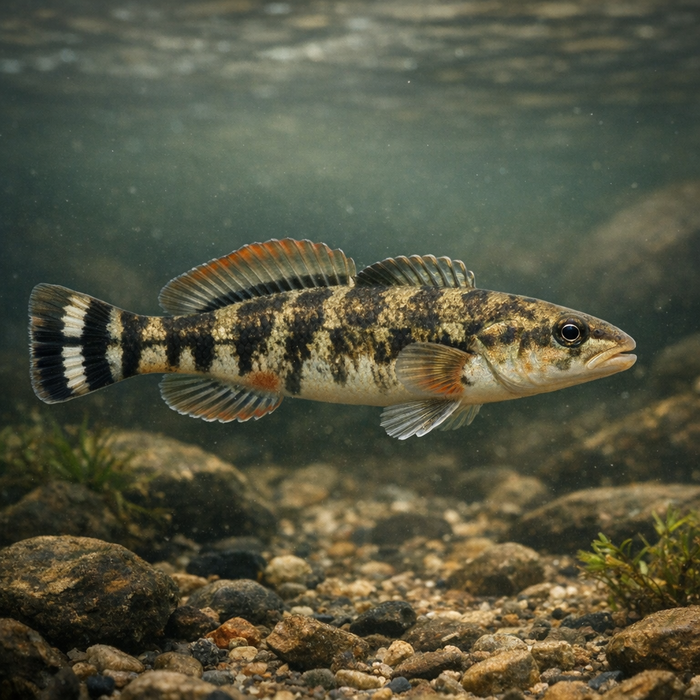
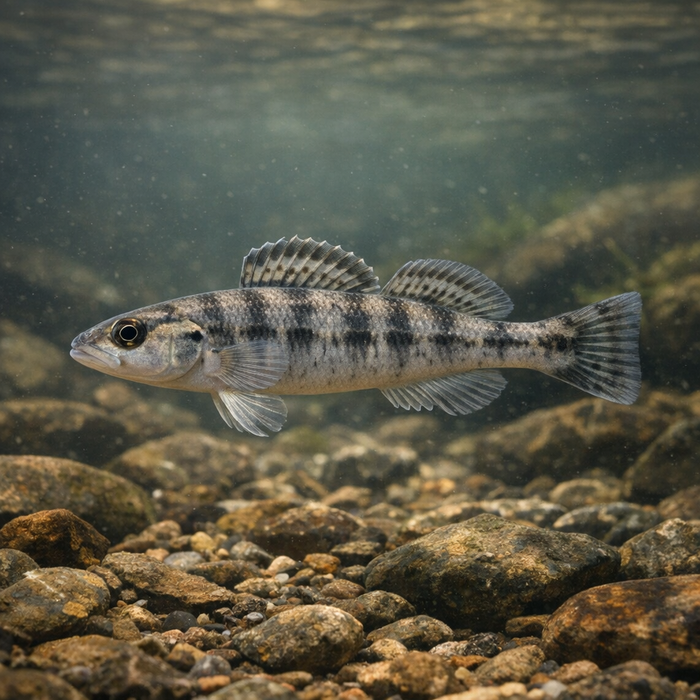
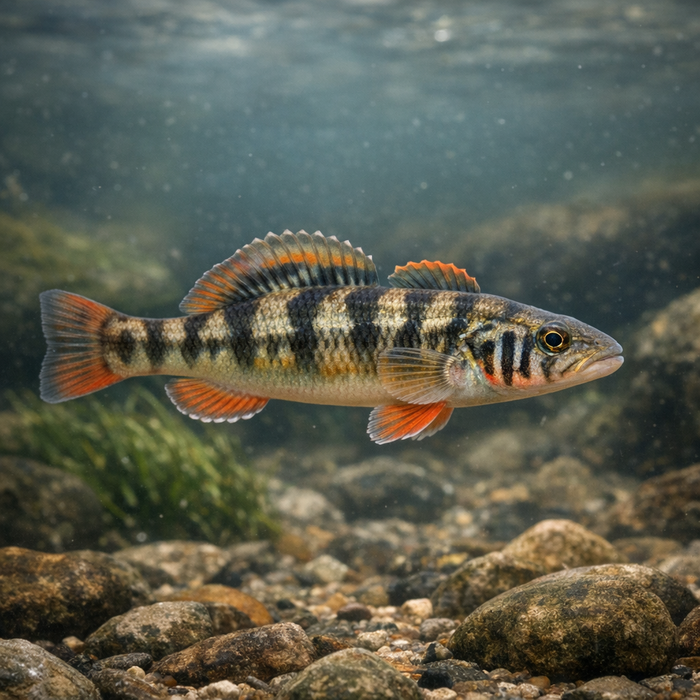
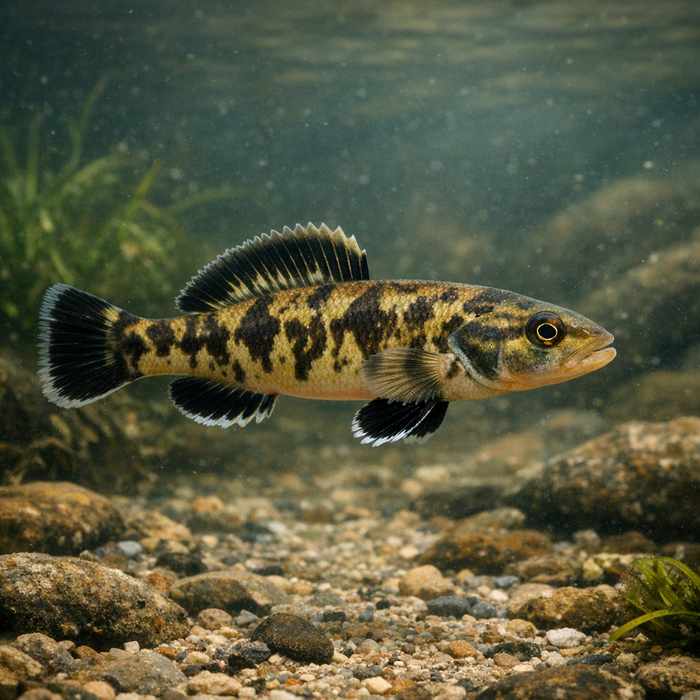
Bluestripe Darter (Percina cymatotaenia): A flash of neon in a foot of fast waterIntroductionThe Bluestripe darter is proof that tiny fish can still stop you in your tracks. In knee-deep riffles, this little rocket lays low, then pops with a neon-blue stripe when the mood (and the season) hits. For anglers who love wild places, stealth, and the microfishing challenge, the Bluestripe darter offers a surprisingly addictive pursuit.What Makes the Bluestripe darter Unique?That name isn't hype. Breeding males wear a crisp, sky-blue racing stripe down their flank that looks painted on. It's structural color, not pigment, so it shimmers differently as light angles change. Combine that with jittery, darting movement and you've got a fish that feels like it runs on espresso. The Bluestripe darter also keeps its world small. Territories can be the size of a pizza box, which means once you dial the micro-spot, you can quietly work fish without roaming miles. These are the Bluestripe darter facts that hook the curious: bold color, tight turf, and feisty little personalities packed into a few inches of fish.Habitat & Global RangeCall it a riffle specialist. The Bluestripe darter keys on clear, cool, high-oxygen streams with clean gravel and cobble. Think Ozark-style water: spring-fed clarity, braided current seams, and knee-deep runs that sparkle in sunlight. Within that slice, the fish leans hard into bottom structure. Pebbles, fist-sized stones, and the gaps between them become highways and hideouts. If you're here for Bluestripe darter habitat specifics, it's simple: aerated riffles and the adjacent tails of pools. Distribution is localized to select drainages, so getting on the right stream matters more than covering tons of water.Behavior & Temperament"Darter" isn't just branding. They hop, scoot, and brace themselves with oversized pectoral fins like little current-surfers. The Bluestripe darter is a sit-tight ambush feeder that watches upstream and pounces in bursts. It's skittish in bright light, far calmer when the sun dips or clouds thicken. During spring, colors fire up and micro-territories get contested; in low, clear water they become extra spooky. They almost never leave the bottom, so your game is near the rocks, in the riffle tongue, and along the cushion of flow behind stones.Ecological ImportanceSmall doesn't mean insignificant. The Bluestripe darter is part of the clean-water early warning system. It needs well-oxygenated, silt-free substrate to thrive. Lose the gravel or cloud the water and their numbers slide. In turn, they help press down on invertebrate populations and serve as prey for larger stream predators. Their presence signals stream health in a way a gauge station can't: instantly, visually, and right under your boots.Conservation & Environmental PressuresThese fish don't handle dirty water or bulldozed banks. Sedimentation from poorly managed construction, nutrient runoff, and heavy storm pulses can roll fine silt into the gaps they use for shelter and spawning. Fragmented habitats and road crossings complicate life further. Some populations receive special attention from state agencies and researchers. Even where harvest isn't explicitly illegal, responsible anglers default to careful catch-and-release and minimal handling, because one careless step can crush the exact microhabitat they rely on.The FishyAF TakeChasing a Bluestripe darter turns fishing into craftsmanship. You're reading cobble instead of contours, sunlight instead of sonar. The gear shrinks, the water shallows, and the margin for error gets tiny. But the payoff is huge: a wild, electric-blue flash in your net from a fish most folks never notice. If you want a fresh obsession, this is it. Respect the riffle, fish light, and keep your eyes open. The Bluestripe darter will teach you more about current and stealth in one afternoon than a year of pond hopping ever could.