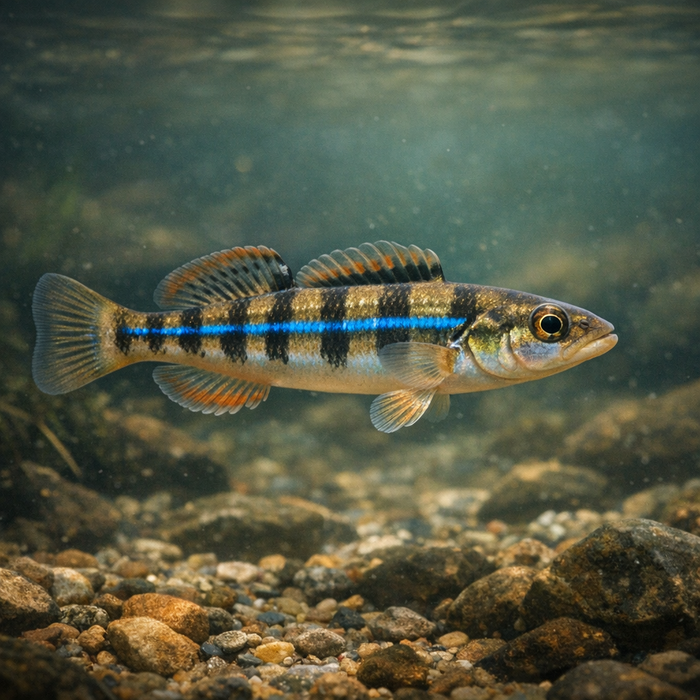
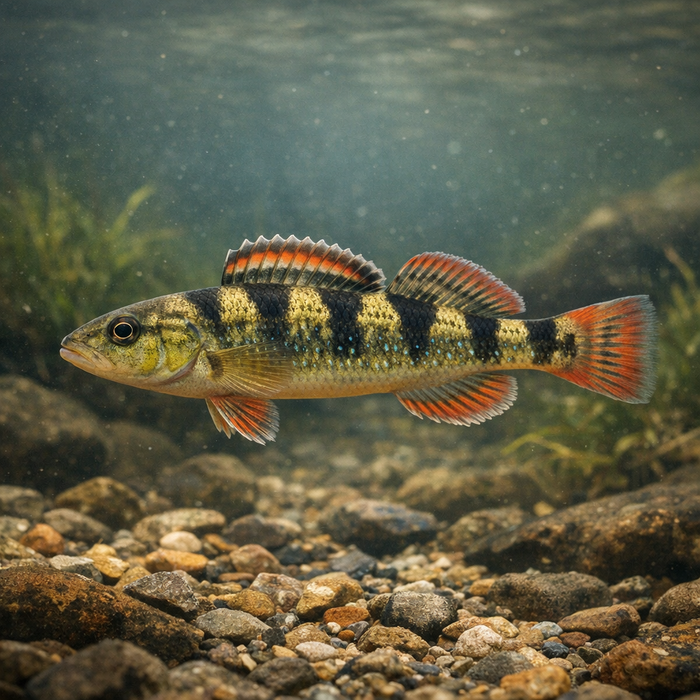
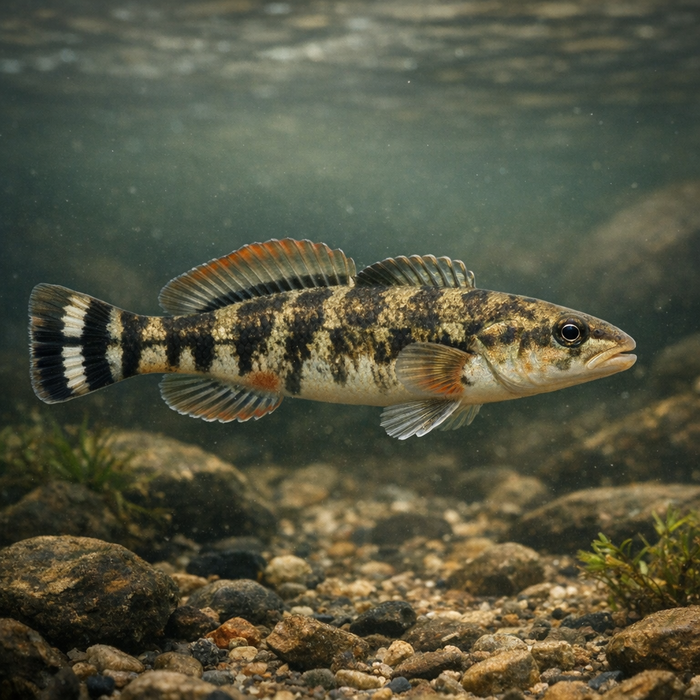
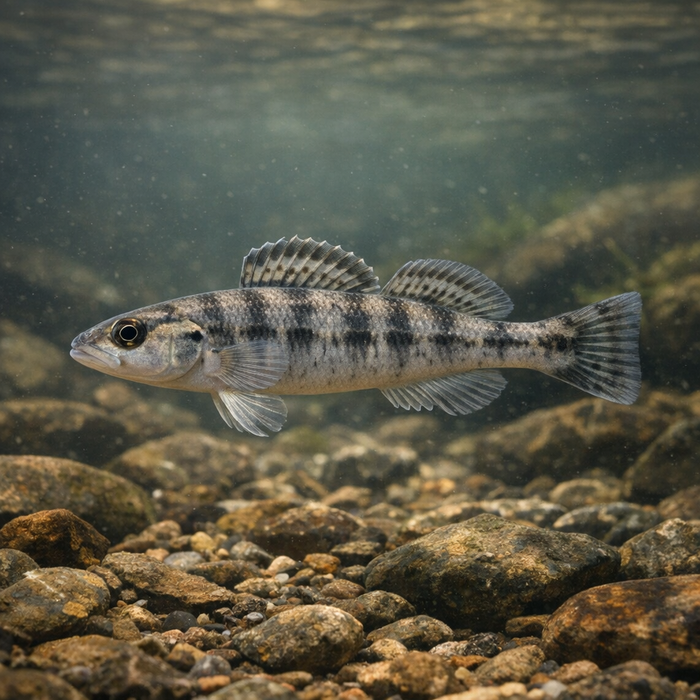
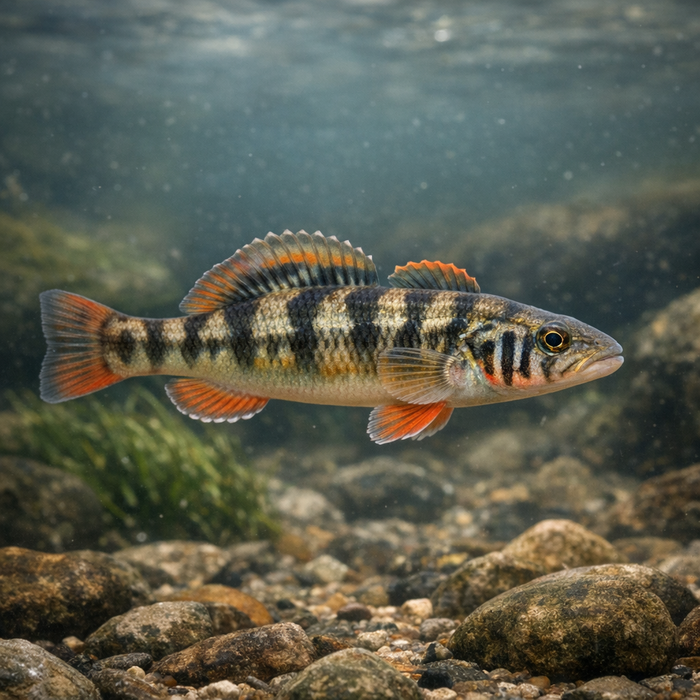
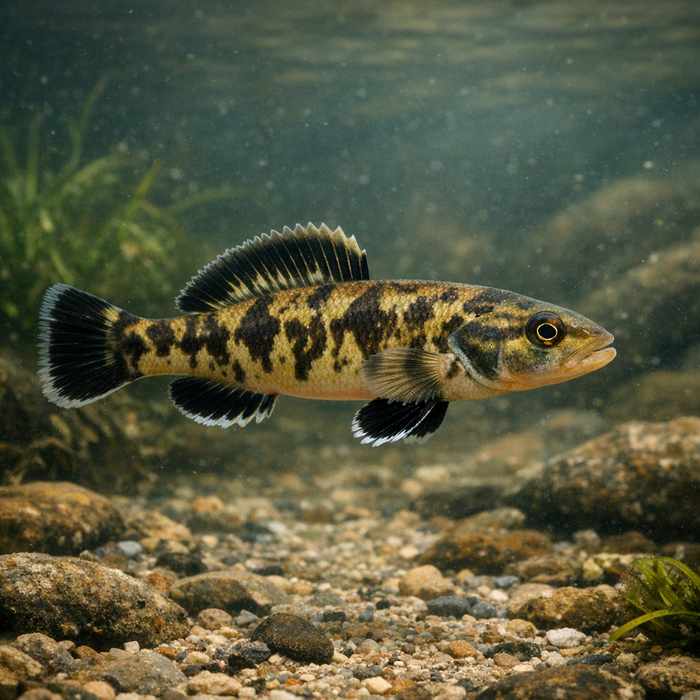
Shawnee Darter (Etheostoma tecumsehi): Tiny, electric, and tougher to outsmart than you'd thinkIntroductionThe Shawnee darter is the ankle-deep assassin of riffle country. It's pocket-sized, fast, and vanishes behind a cobble with a single tail twitch. Anglers who chase this species aren't counting fillets; they're chasing precision. If you're curious about true microfishing or just want clean Shawnee darter facts without the fluff, this little fish delivers a masterclass in stealth and finesse.What Makes the Shawnee darter Unique?Start with the size: most adults slide in under 3 inches, which instantly flips your usual playbook. Then there's the color show. In spring, males flash ember-orange fins trimmed with icy blue-green, like someone snuck neon markers into Appalachia. Finally, the name. Etheostoma tecumsehi honors Shawnee leader Tecumseh, a fitting nod to a fish that defends its tiny patch of rock with unblinking resolve. Put it together and you have a species that's more scalpel than sledgehammer, tailor-made for anglers who obsess over the details.Habitat & Global RangeIf you're Googling "Shawnee darter habitat," think clear, cool streams with firm gravel to cobble, brisk current, and steady oxygen. The Shawnee darter is a bottom-hugger, living in the fast lanes of riffles and shallow runs. It favors seams, micro-eddies, and the downstream side of rocks where drifting invertebrates stack up. Its overall range is tight, confined to select interior drainages, which is why responsible access and clean handling matter. Wading anglers should read water like a map: find the knee-deep, cobble-bottom riffle that doesn't silt in after storms and you're in the neighborhood.Behavior & TemperamentThe Shawnee darter doesn't cruise. It perches. It scoots. It lunges a few inches at a time, then braces on pectoral fins as the current rolls by. That sit-and-dart routine makes it surprisingly catchable if you nail the drift, but absolutely unforgiving if you don't. These fish key on tiny prey and tiny presentations, so they reward precision over power. During the spawn, males guard egg clusters glued to the undersides of stones, boosting their territorial streak and keeping them pinned to microstructure. Don't expect blistering runs; expect surgical takes and quick shake-offs if your hook size is wrong.Ecological ImportanceFor something so small, the Shawnee darter hits above its weight. It converts riffle invertebrates into fish biomass, then passes that energy up the chain to larger predators. Because it is picky about substrate and flow, the species acts like a riffle health meter. Stable gravel, cold clean water, and oxygen-rich current mean darters. Siltation, nutrient spikes, or flood-scoured beds mean trouble. Keep an eye on the Shawnee darter and you're basically monitoring a stream's pulse in real time.Conservation & Environmental PressuresThis fish isn't a highway wanderer; it's a homebody with a small address. That makes it vulnerable to runoff, chronic sediment, and poorly timed construction. One nasty flood can remodel entire riffle complexes, wiping out egg sites and shuffling what used to be prime feeding lanes. Because ranges are tight, local issues hit like a hammer. Many jurisdictions emphasize protective language around non-game darters, so expect limited or no harvest where the Shawnee darter lives. Clean wading, gentle releases, and zero rock-flipping beyond what's necessary are the baseline if you care about the resource.The FishyAF TakeThe Shawnee darter is the fish that forces you to level up. It punishes sloppy drifts, oversized hooks, and loud boots. It also rewards anyone who treats micro water like a technical river, not a ditch. Want bragging rights? Land a vividly colored male in spring on a size 22 nymph and get a sharp photo before the release. That's harder than posting another stocker trout. If your idea of a flex is finesse and fieldcraft, the Shawnee darter belongs on your list. These Shawnee darter facts may read small, but on the creek, everything about this species feels big.