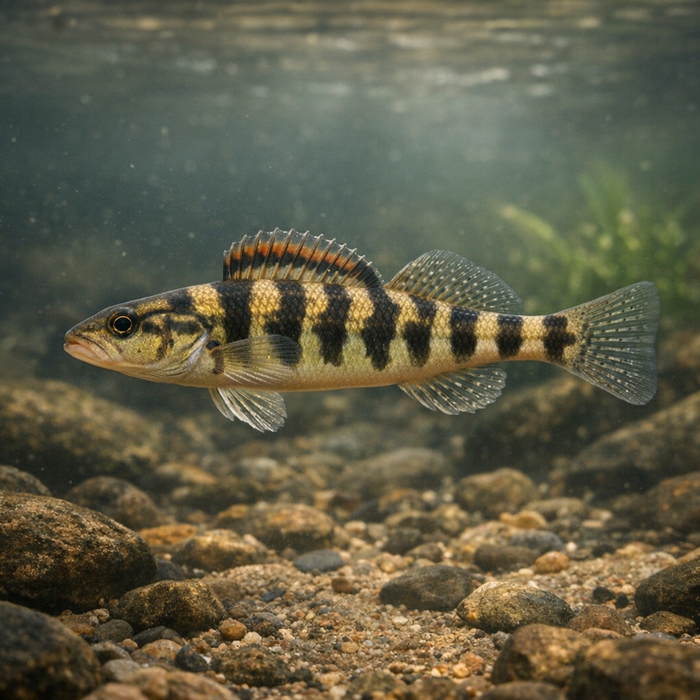
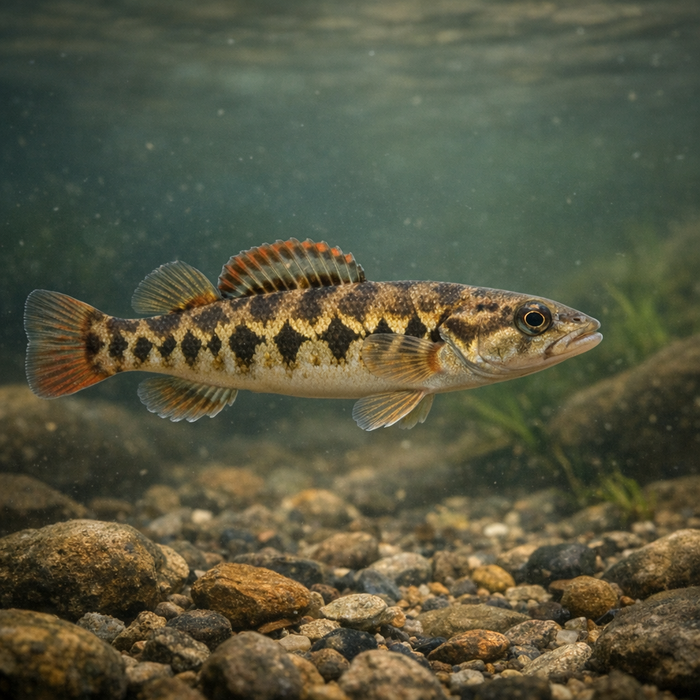
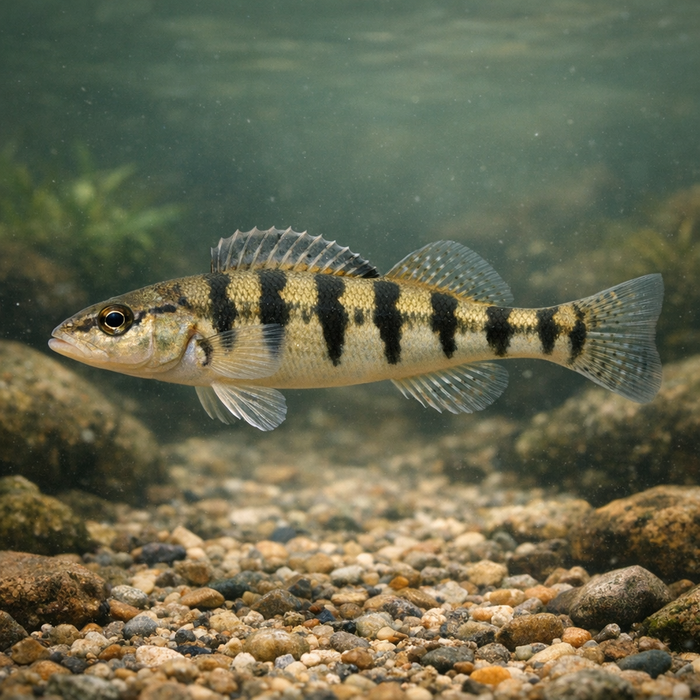
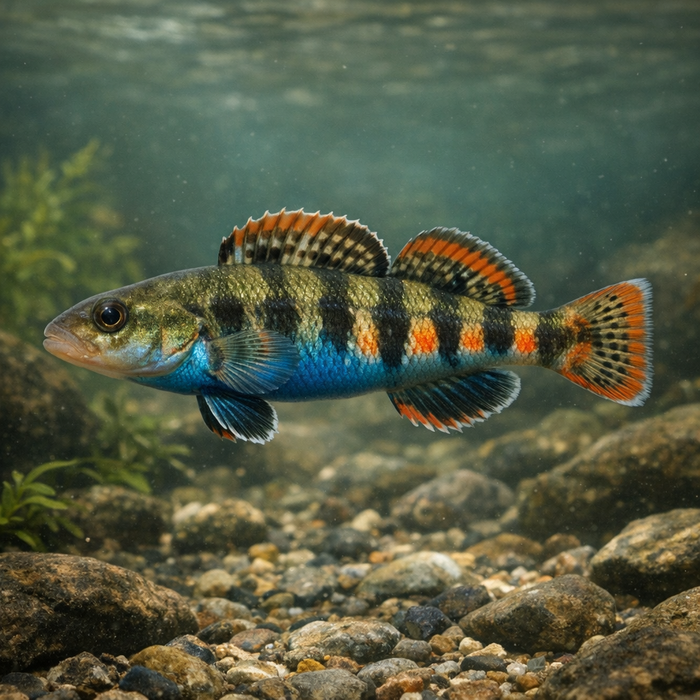
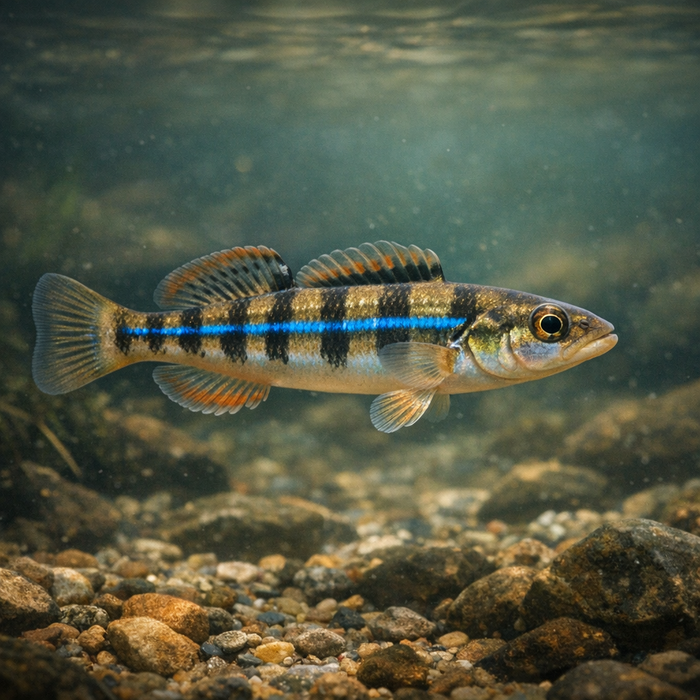
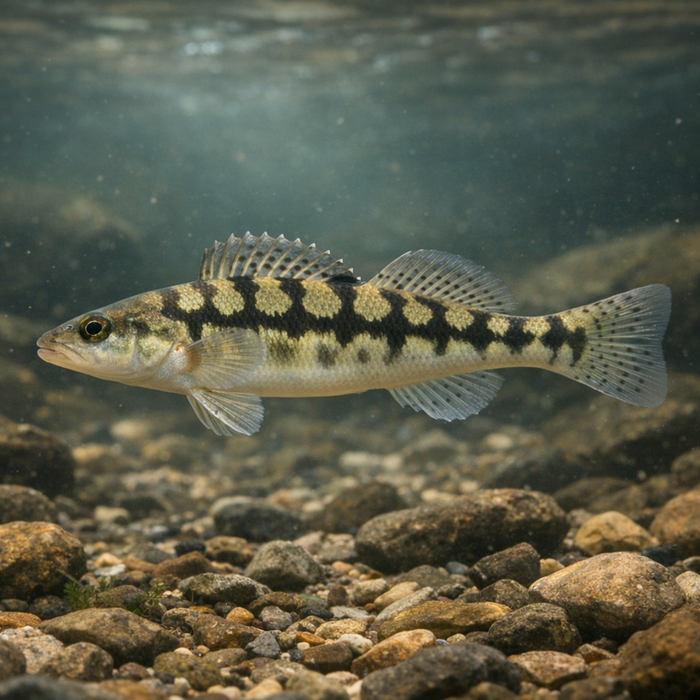
River Darter (Percina shumardi): Pocket-Sized Current Junkie With Serious AttitudeIntroductionThe river darter is the little submarine you never see, living where the current thumps hardest. While everyone else hammers the obvious riffles and eddies, this tiny bruiser posts up deep in the main flow, vacuuming drift like it owns the channel. If you're after River darter facts or curious about River darter habitat, buckle up. This is a masterclass in staying glued to the bottom and loving it.What Makes the River darter Unique?Three things: depth, design, and economy of motion. First, the river darter is unusually comfortable in deeper, faster water than most of its darter cousins. Second, it's built for it, with reduced swim bladder, big pectoral fins, and a torpedo profile that punches into current and stays put. Third, it wastes nothing. Short bursts, quick resets, and a life strategy focused on holding the seam, not sprinting across it. The two dorsal fins scream "perch family," but the rest is pure benthic athlete.Habitat & Global RangeThink medium to large rivers with serious flow, stable sand or fine gravel, and clean water. The river darter favors main-channel edges, deep runs below bars, and the tails of long pools where the current still hums. It's a fish of the central and southeastern United States' big drainages, especially the sprawling Mississippi system and major tributaries. Don't expect shoreline selfie sessions; these fish tend to live where it's inconvenient: mid-channel lanes, sweeping bends, and drop-offs where you can't just tiptoe down with a net.Behavior & TemperamentThe river darter is a bottom-hugger with the patience of a stone. It slides inches at a time, then springs forward in a blur to nail something drifting by. Those oversized pectorals press it into the substrate, and the reduced buoyancy keeps it from bobbing when the river flexes. You won't see surface action. You won't see schooling blitzes. What you'll see, if you're lucky, is a quick flick along the bottom and then nothing again. It's not spooky in the trout sense, but presentation matters. Miss the lane by a foot and you're fishing empty water.Ecological ImportanceSmall doesn't mean small-time. The river darter is a tight link in the benthic food chain, converting insect drift into calories that feed up the ladder. It's also a reliable barometer for river health. These fish prefer clean, well-oxygenated flows over stable substrate, so their presence usually points to rivers doing something right. When silt buries gravel, when oxygen drops, or when flows get choked by dams and withdrawals, darters are among the first to thin out.Conservation & Environmental PressuresOverall, the river darter sits on the safer end of concern, but it still lives at the mercy of big-river management. Siltation, channelization, altered flow regimes, and localized pollution can smother their world. Because they're small and not targeted, declines can be sneaky, masked by the river's size and the species' deep-channel habits. Keep the water clear, the flows honest, and the substrate clean, and the river darter does its job without fanfare.The FishyAF TakeThe river darter is the unsung technician of heavy current. It won't bend your rod, but it will humble your aim. This fish rewards precision and punishes lazy drifts. If you're the kind of angler who geeks out on tiny hooks, thread-sized line, and reading a seam from 40 yards away, the river darter is your spirit animal. Catching one isn't about glory; it's about nailing the hard stuff in a place most folks ignore. It's small, yes, but it's pure river grit packed into three inches. And that's our kind of trophy.