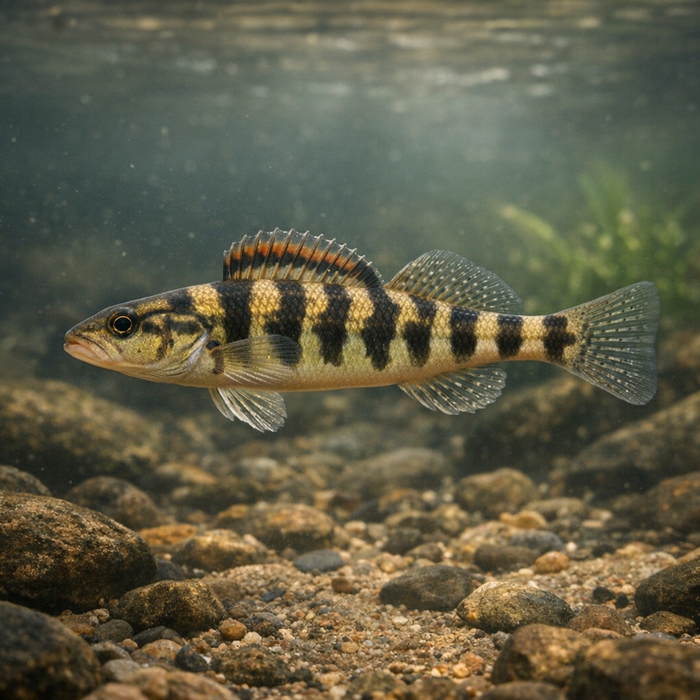
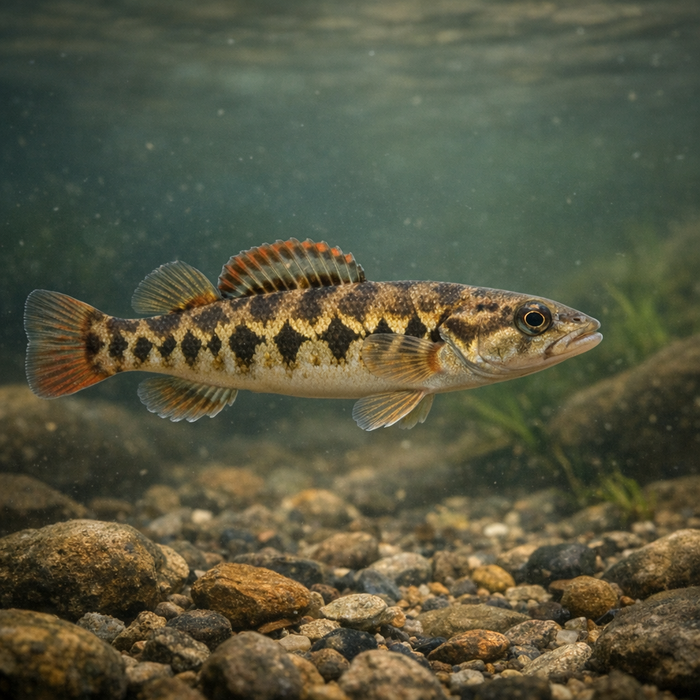
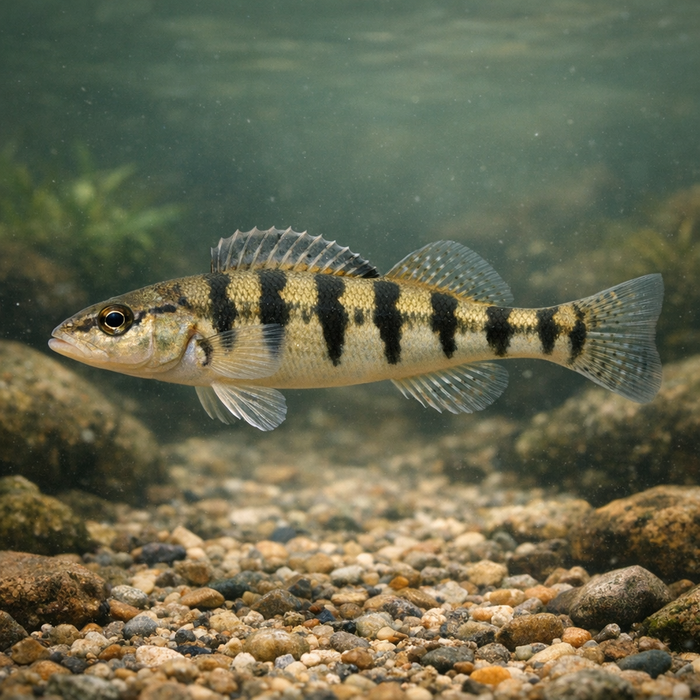
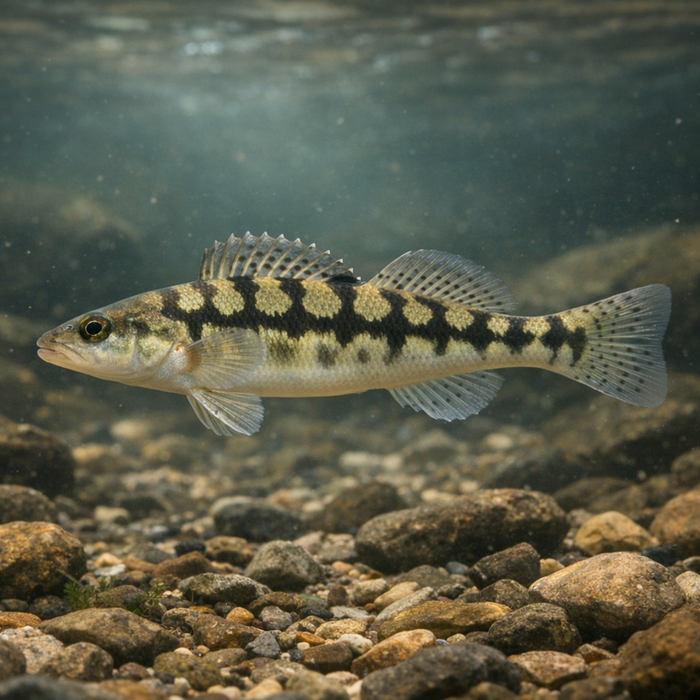
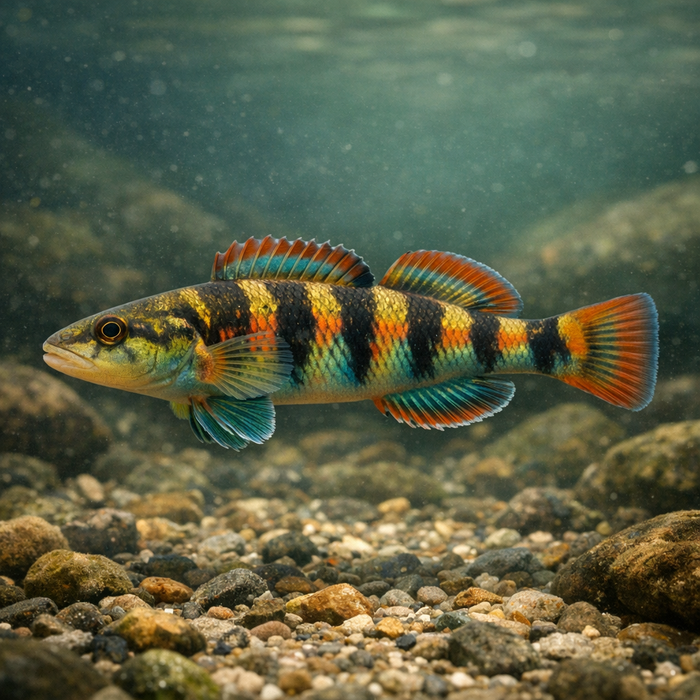
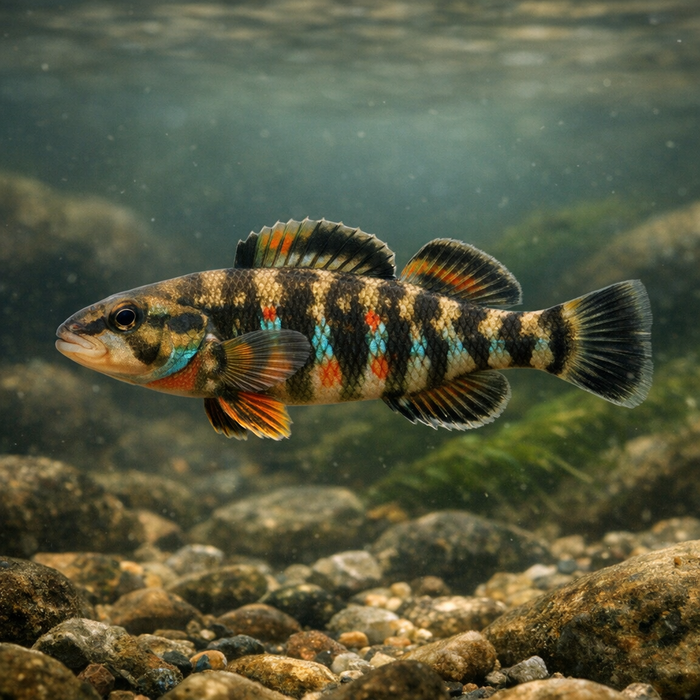
Bluebreast Darter (Etheostoma camurum): Neon-chested riffle ninja in a pocket-size packageIntroductionThe bluebreast darter is the kind of fish that makes big-water anglers squint and smile. It's small, vivid, and lives where the current thrums like a drumline. If you've never watched a thumb-length fish light up neon-blue, hold station in screaming flow, and ambush a drifting morsel with sniper timing, you're in for a surprise.What Makes the Bluebreast darter Unique?Two things make this darter unforgettable. First, breeding males wear an outrageous electric-blue chest and fin accents that look almost fake in clear water. Second, the fish is built for current. Think big, splayed pectoral fins acting like stream brakes and a torpedo-ish body that hugs rock without a swim bladder to float it off station. Add in quick hops instead of long swims and you've got a tiny current athlete. That color show and current mastery are core Bluebreast darter facts every micro-angler eventually obsesses over.Habitat & Global RangeIf you're searching for Bluebreast darter habitat, aim for cool, clean rivers and sizable creeks with fast riffles, cobble, and boulder gardens. They hold tight to the bottom, often in 6 to 24 inches of water, sliding behind a rock nub or in gravel seams where drift delivers snacks. The species is concentrated in the Ohio River system and select Great Lakes tributaries, with a patchy presence driven by water quality and substrate. Silt is the villain. Cover the rock with mud and the darter checks out. In high water or winter, they may pull from blasting riffles into adjacent runs, but flow and rock remain the heartbeat.Behavior & TemperamentBluebreast darters don't roam. They post up. Expect tiny territories, quick dashes, and ruthless efficiency as food passes by. They're not surface feeders and rarely lift far off bottom, so this is a game of low profiles and exact drifts. During the spawn, males crank the glow, posture, and defend postage-stamp patches with more attitude than seems reasonable for a two-inch fish. After that, colors mute and the stealth vibe returns.Ecological ImportanceThis species is a riffle health indicator. Where bluebreast are doing well, you've usually got the right combo of oxygen, clean gravel, and invertebrate life. They vacuum up small aquatic insects and pass that energy to bigger predators. Lose the darter, and you're probably losing mussels and macroinvertebrates too. Keep them happy, and the whole riffle community hums.Conservation & Environmental PressuresThough not globally endangered, the bluebreast darter is vulnerable to exactly the stuff modern waters face: silt from poor land use, nutrient spikes, low summer flows, and habitat fragmentation. Dams and culverts can break up riffle complexes and strand populations. Several states list it as a species of concern, and some have run habitat projects or reintroductions in historically occupied streams. It's a reminder that small fish need big help: keep the rocks clean, and the neon shows up.The FishyAF TakeThe bluebreast darter is proof that "trophy" doesn't always mean heavy. This fish rewards anglers who can read micro-current, kneel in the riffle glare, and land a drift in a teacup. If you're chasing subtleties and want a fish that judges sloppy presentations without mercy, this one's your professor. Learn its rhythm, and you don't just catch a fish-you unlock a piece of river most folks stomp past. That's the real flex.