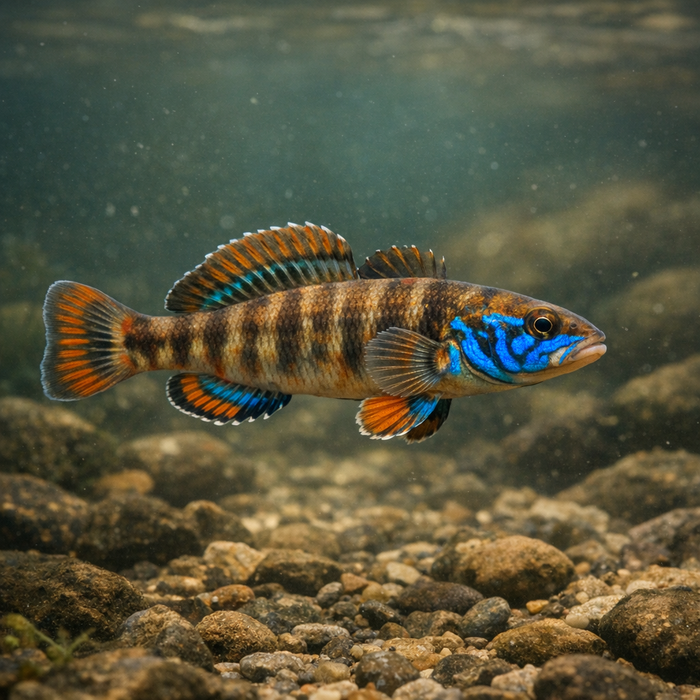
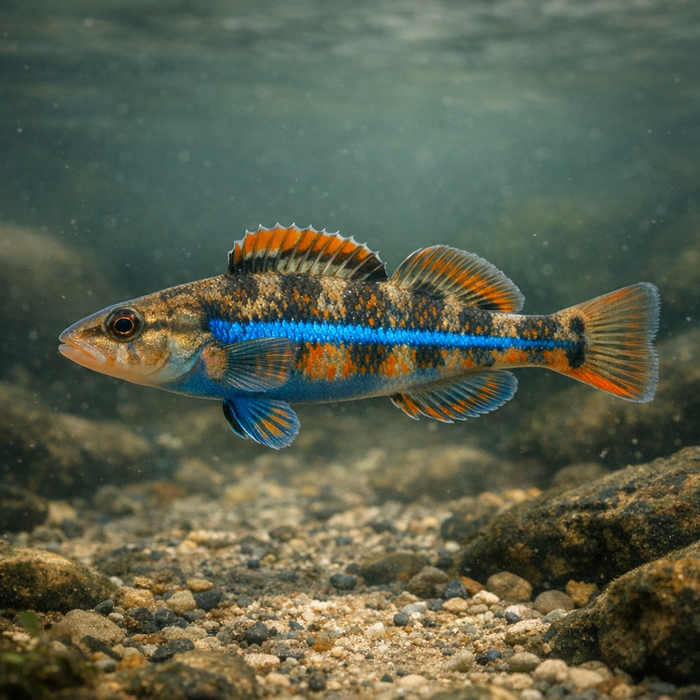
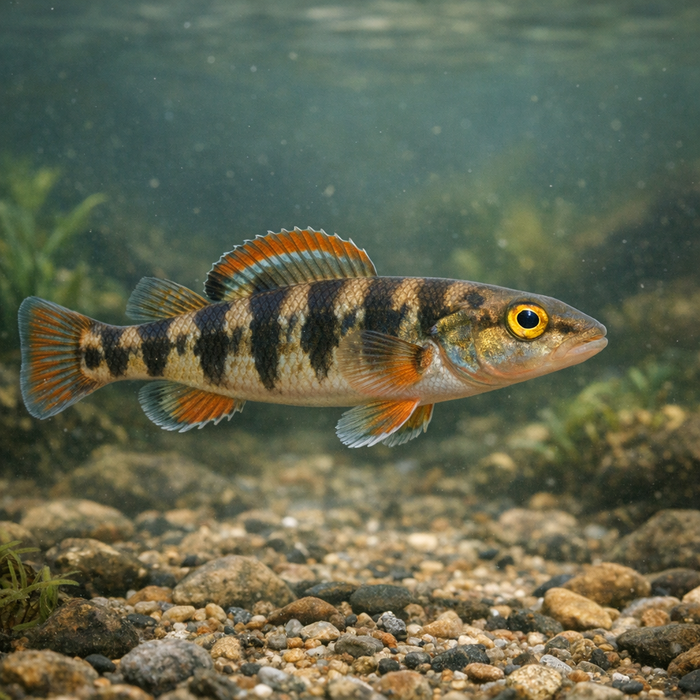
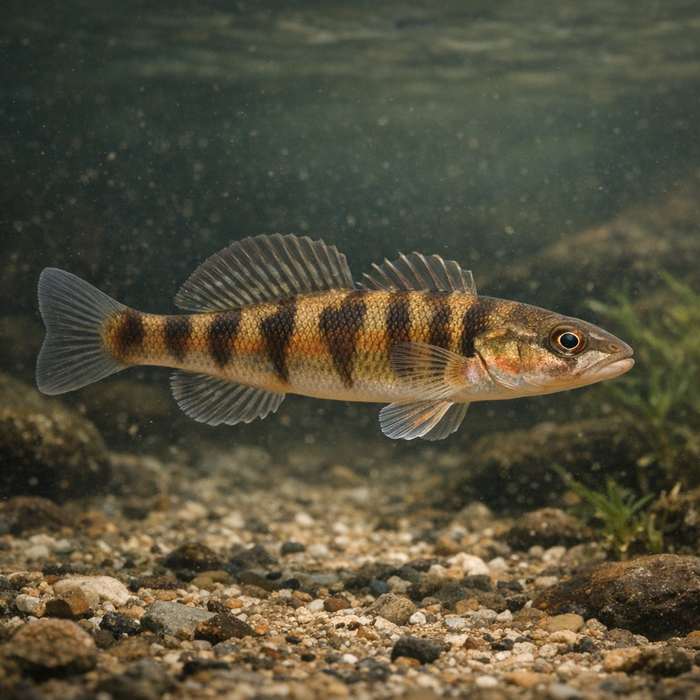
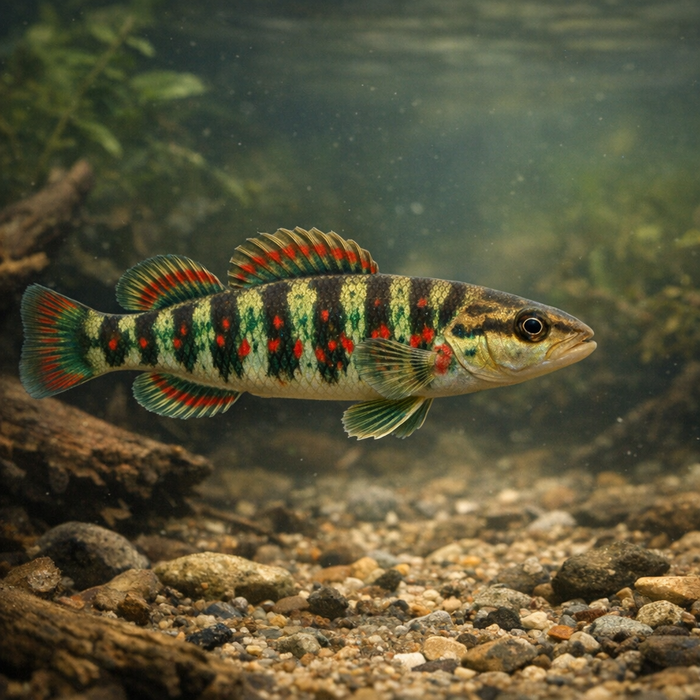
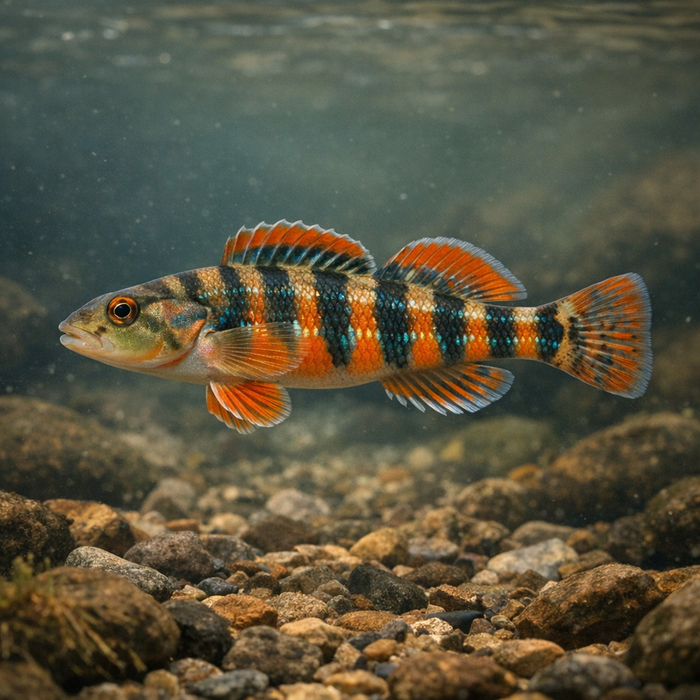
Longhead darter (Percina macrocephala): A Bold, Memorable Hook LineIntroductionThe Longhead darter is a micro-sized bruiser built for fast water, all business from snout to tail. If trout are sprinters, this darter is the track spike: stripped-down, precise, and glued to the lane. Anglers don't chase it for meat or glory. They chase it for the challenge, the clean-water vibe, and the brag that they actually found one. If you're here for Longhead darter facts or you're just curious what makes this tiny fish a cult target, buckle up.What Makes the Longhead darter Unique?Start with the name. Macrocephala means big head, and the Longhead darter absolutely commits to the look. That oversized skull houses serious sensory gear for life on the bottom, where everything is about timing and current. Like other darters, its swim bladder is reduced, letting it stay locked to the substrate instead of bobbing like a cork. It also boasts a sleek, elongated profile with mottled saddles that blend into cobble. This fish doesn't just avoid predators; it disappears between stones. For anglers, that means sight fishing in shin-deep riffles and making presentations that land like lint.Habitat & Global RangeIf you want Longhead darter habitat in a single phrase, it's clear, cool rivers with honest current. Think knee-deep riffles washing over gravel, cobble, and small boulders. The species is centered in the Ohio River watershed, with pockets in tributaries where water runs clean and silt stays low. Flooded, slow, or mucky water is bad news. The fish stays tight to the bottom because that's where the food conveyor belt runs: drifting mayfly and caddis nymphs, stoneflies, and small crustaceans. The best stretches have oxygenated flow, stable substrate, and enough rock texture to create micro-eddies. That's the whole game.Behavior & TemperamentThe Longhead darter doesn't cruise. It posts up, watches, and darts. That sit-and-strike routine is backed by short bursts of speed and pinpoint accuracy. You won't see surface activity, schools, or slashes in the film. Instead, you'll catch a flash of motion as it jumps a few feet to intercept a drifting snack, then locks back onto the bottom like living gravel. Spawning happens in late spring into early summer as water warms; colors intensify, and fish stack into prime riffles. Even then, they're not reckless. Wariness stays high, and anything clunky or noisy sends them ghosting under the nearest rock gap.Ecological ImportanceThe Longhead darter is a riffle report card. It thrives where water is clean, cold, and moving. It fades where sediment chokes crevices and algae slicks the stones. By eating aquatic insects and small crustaceans, it recycles energy from the drift into the fish community, and in turn feeds larger predators. Remove the darter, and you remove a cog that keeps the whole riffle machine humming. Healthy darter populations often signal strong macroinvertebrate communities and resilient stream processes. Translation: if the Longhead darter is doing well, your river is probably in better shape than the average ditch-with-a-current.Conservation & Environmental PressuresThe villain list isn't complicated: siltation, channelization, dams, and water quality dips. A single heavy storm pushing construction runoff can smother eggs sitting in cobble pockets. Channel straightening erases the variety of flows and stone sizes that darters need. Dams flatten gradients and drown riffles. While the Longhead darter isn't globally a headliner on endangered lists, it's a conservation target in parts of its range precisely because it's picky. Protect the riffles, limit sediment, and keep temperatures stable, and the fish responds. Let the substrate turn into pancake batter, and it vanishes.The FishyAF TakeThe Longhead darter is not a "trophy" in the poster sense, but it's a trophy of intent. Catching one says you read the water hard, moved quiet, and delivered a micro offering into a dinner plate the size of your palm. It's clean-river detective work packaged as fishing. For anyone who thinks small fish can't be epic, this darter proves otherwise. Bring stealth, patience, and tiny hooks. Leave the ego. When a Longhead darter materializes from the cobble and taps your drift, it's a wink from a river that still works.