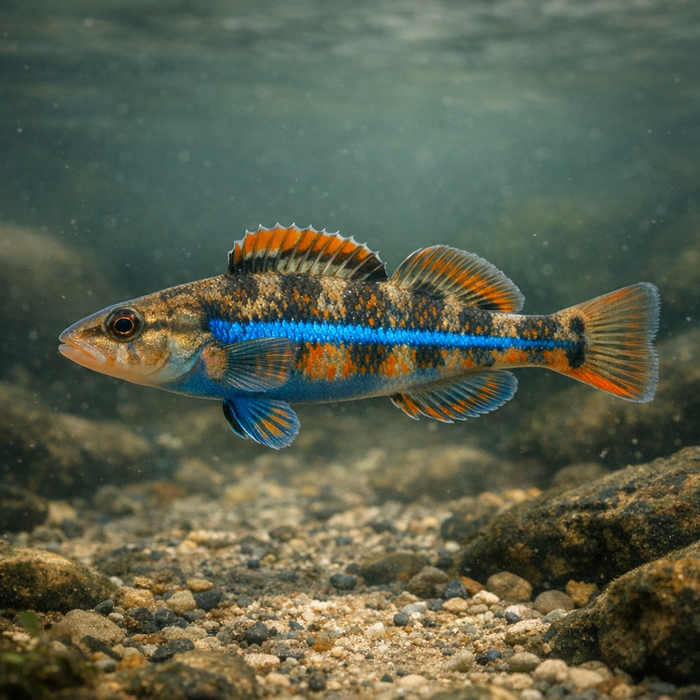
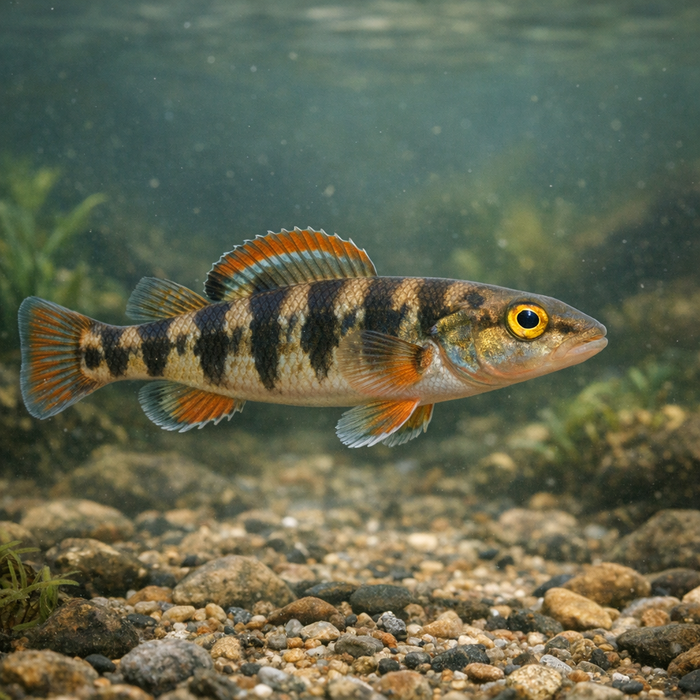
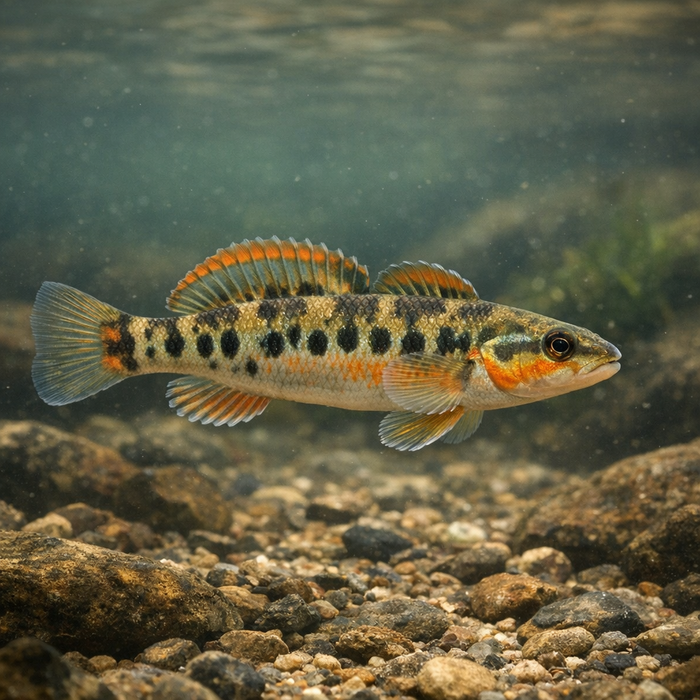
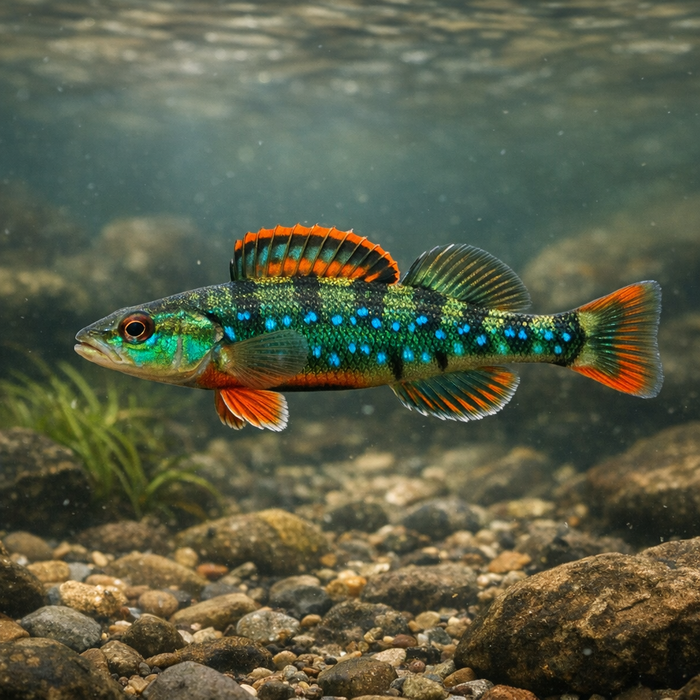
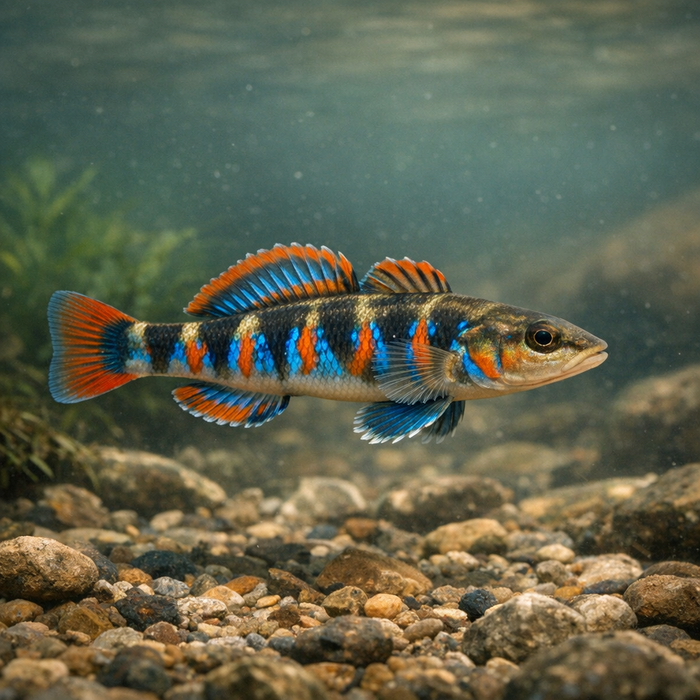
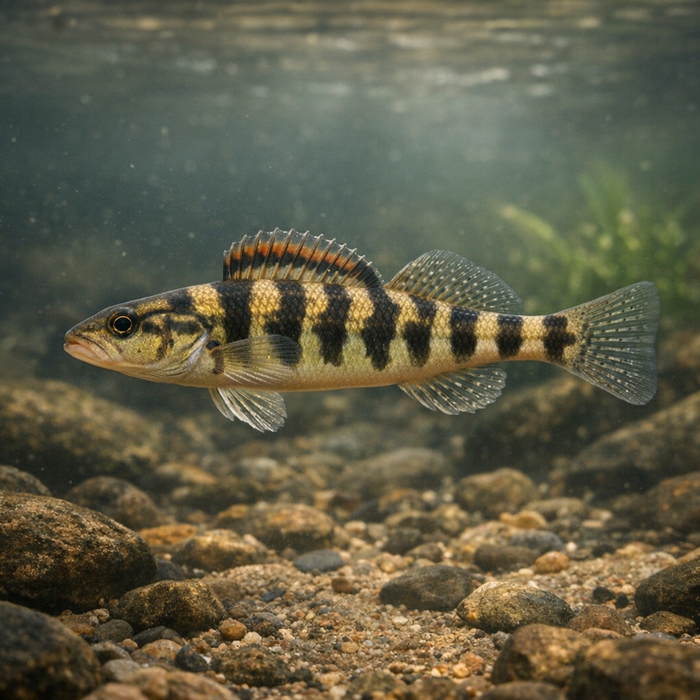
Blueface Darter (Etheostoma cyanoprosopum): The riffle jewel with a neon grin.IntroductionThe blueface darter is a pocket-sized river ninja that trades brute strength for outrageous style. Blink and it's gone. Stare long enough and you'll catch a flash of sapphire on the cheek that looks painted on. If bass are linebackers, the blueface darter is the gymnast sticking a landing on a wobbling boulder. For anglers who love small water, clean cobble, and precision presentations, this fish is a tiny masterclass. Consider this your crash course in Blueface darter facts and why this species deserves big respect despite its small frame.What Makes the Blueface darter Unique?Two things: the face and the finesse. Males light up with a vivid blue facial mask in spawning season, an unmistakable, rock-concert glow under clear water. That flash isn't just pretty; it's a billboard for territory and courtship. Then there's the way they move. Blueface darter bodies are built for life in fast current, with broad pectoral fins acting like kickstands. They don't swim much; they dart, pin, and hold. Add in that bottom-hugging lifestyle and you've got a fish that rewards accurate, subtle presentations like almost nothing else.Habitat & Global RangeThe blueface darter is a specialist. Think shallow, high-oxygen riffles on clean gravel or cobble, with a steady push of current and good clarity. They live tight to the bottom where the water shears and micro-eddies form around stone. Pools and silty runs are dead zones. A perfect blueface darter habitat checklist reads: knee-deep or shallower, polished stones, and water that makes your shins hum. Geographically, their distribution is localized within upland streams of the south-central United States. They don't roam far, and populations are often clustered in very specific reaches where rock size, flow, and water quality align.Behavior & TemperamentBlueface darters are ambush-twitchers. They sit low, scan with sharp eyes, and rocket a few inches to intercept drifting invertebrates. Spawning runs kick off in spring when flows stabilize and temperatures climb, and that's when the males crank the blue and square off in short, fin-flared duels. They're wary, especially in skinny, gin-clear water. Wade heavy or cast sloppy and you'll only see contrails. Present quietly, let the current do the work, and you'll watch them pin a tiny morsel like a laser-guided pellet.Ecological ImportanceThis fish is a water-quality tattletale. A thriving blueface darter population screams stable flows, clean substrate, and oxygen-rich riffles. Silt fills crevices that shelter eggs and macroinvertebrates, so when sediment loads spike, darters fade. They're part of a tight energy loop: shredders and grazers become darter fuel, and darters become snacks for bigger fish and birds. Protect the riffles and you protect the entire small-stream food web.Conservation & Environmental PressuresThe usual suspects apply: sediment from poor land use, low dissolved oxygen from warm, stagnant water, and fragmentation from small dams that mute riffle habitat. Because the blueface darter has a limited distribution, localized hits can bite hard. Even well-meaning stream "improvements" that homogenize channels or armor banks can flatten the microhabitat they need. If you love these fish, think like a riffle: stabilize banks with vegetation, keep livestock and heavy equipment out of the channel, and support policies that maintain clean, cold, moving water.The FishyAF TakeThe blueface darter is not about grip-and-grin glory. It's about reading water the size of your bathtub and making a presentation the size of a fingernail. It's stealth, kneeling in current, and grinning when a two-inch fish with a neon face gives you the nod. For anglers who crave technical challenges, the Blueface darter delivers a PhD-level lesson in current seams and bottom contact. Chase one and you'll start seeing streams differently. That's the win.