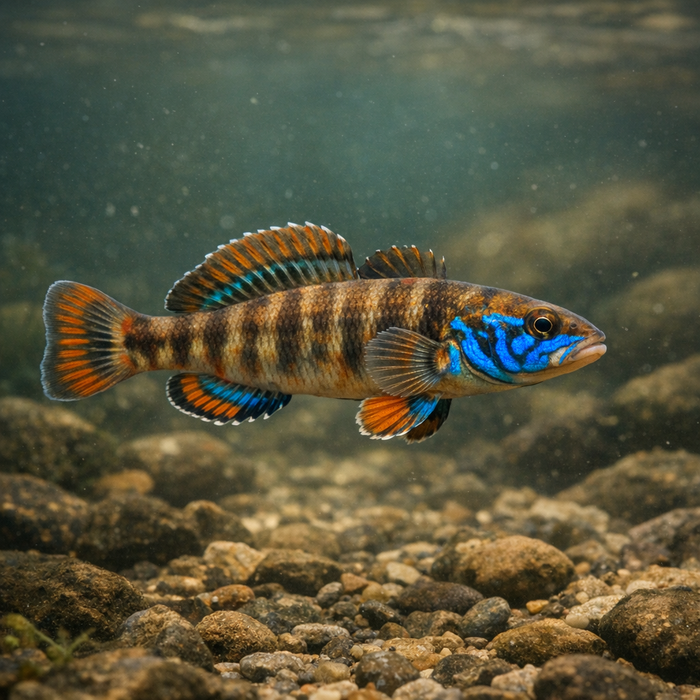
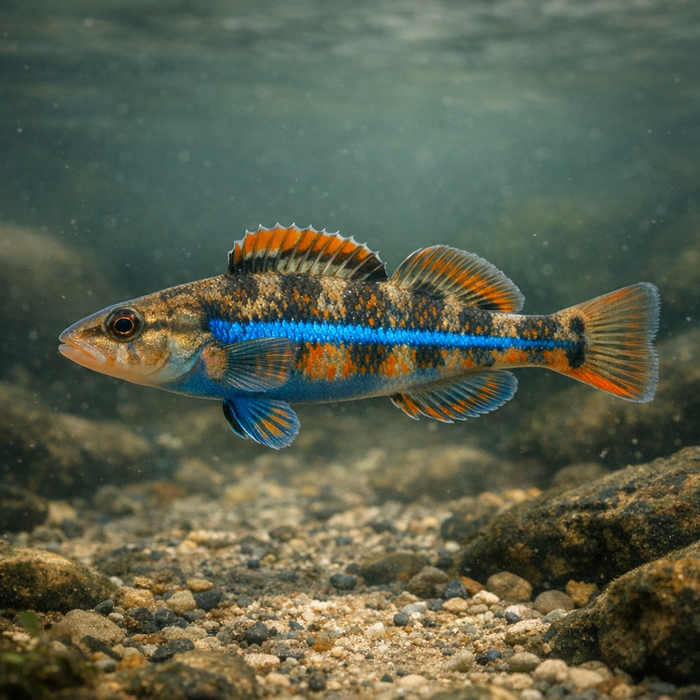
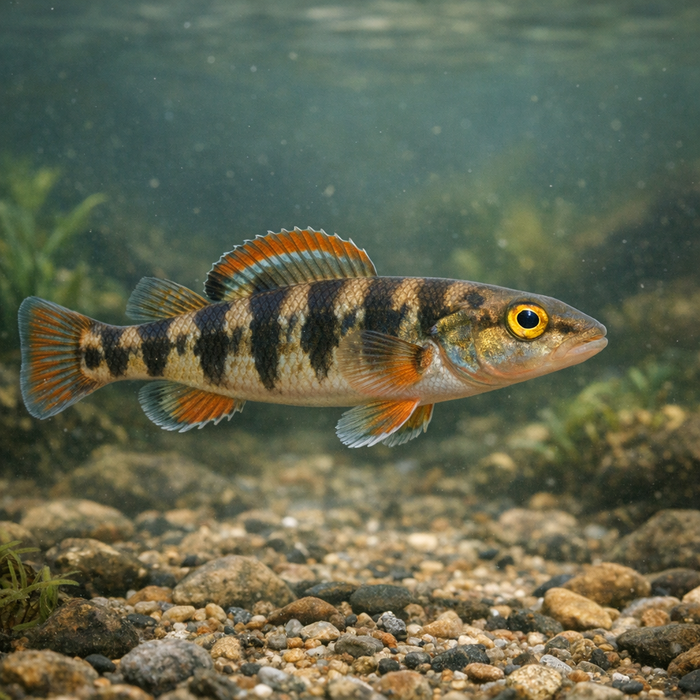
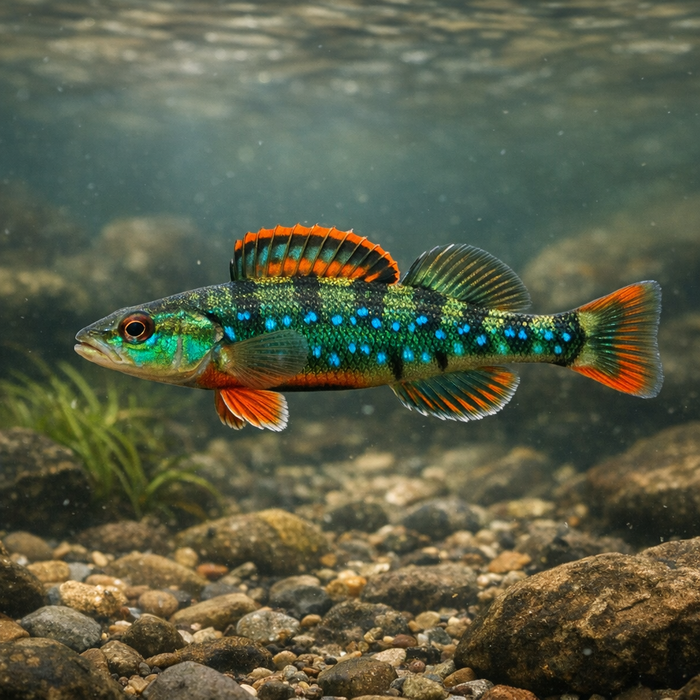
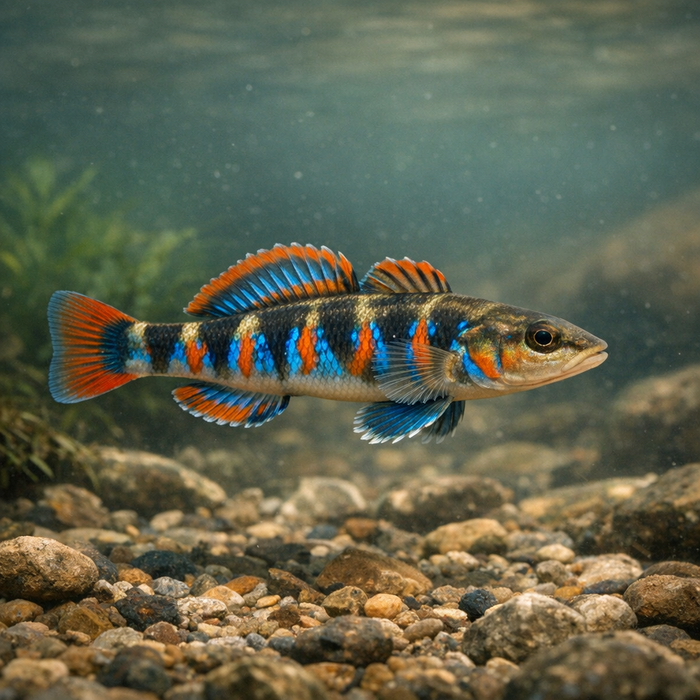
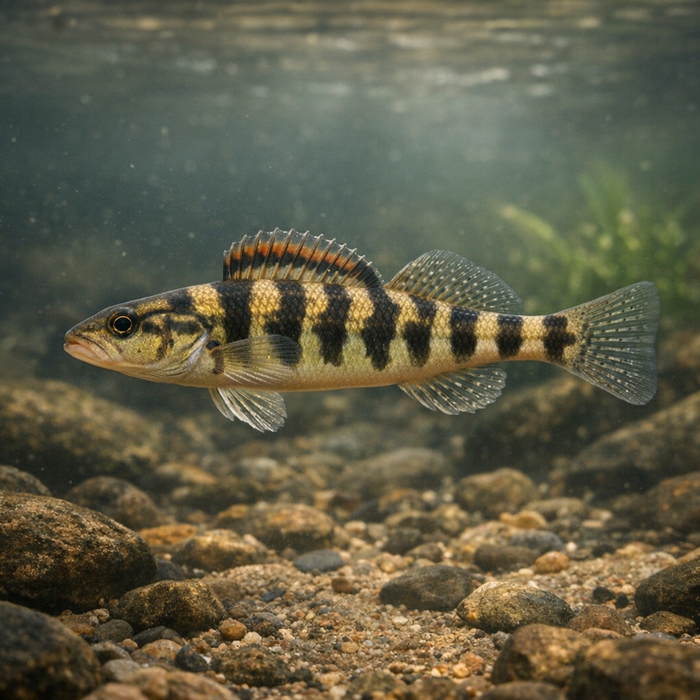
Cumberland Plateau Darter (Etheostoma spilotum): Small Fish, Big Conservation StoryIntroductionThe Cumberland plateau darter is a masterclass in minimalism: tiny body, bottom-hugging posture, and a life lived inches from the streambed. It will never headline a bass tournament, but among microfishing diehards and stream nerds, this fish is a celebrity. You do not sling heavy gear for it. You crouch, you whisper, and you learn to spot motion in the mosaic of sand and gravel. If you came here for real Cumberland plateau darter facts, you are in the right riffle.What Makes the Cumberland plateau darter Unique?Start with the size. The Cumberland plateau darter tops out around two and a half inches, yet carries bold, inkblot side markings that make it unmistakable up close. Unlike gaudy cousins that flash neon breeding colors, this species keeps it subtle, with warmed olive tones and faint fin edging in spring. It also has a reduced swim bladder, which is darter 101 but vital here: it hunkers on the bottom like a pebble with fins, perfectly adapted to life in shallow glides and calm riffle margins. Add an endangered status and a carefully managed comeback story, and you have one of the Southeast's most intriguing micros.Habitat & Global RangeStrip away the world maps. The Cumberland plateau darter is a local specialist tied to clear, cool headwater streams of the upper Cumberland River basin. Think spring-fed trickles to knee-deep glides with sand and fine gravel, silt kept to a minimum, and decent dissolved oxygen. It tucks along the edges of riffles, cruises short lanes in gentle current, and treats big open runs like bad neighborhoods. If you are searching for Cumberland plateau darter habitat, focus on transparency: water clarity tells you more than depth. The fish is all about clean substrate and a stable trickle, not sprawling pools.Behavior & TemperamentThis fish lives the stealth life. It darts a foot, freezes, then vanishes against the substrate. It does not roam much and shows little surface interest. Spawning fires up in spring when temperatures rise, and instead of dumping one massive clutch, pairs release small batches over time. That strategy, paired with a short lifespan, keeps the population nimble in good years. Feeding is micro-scale, mostly tiny invertebrates, which explains why anglers downsize to near-microscopic hooks and midge-sized offerings. Expect quick refusals if you crowd it, then total ghosting.Ecological ImportanceThe Cumberland plateau darter is a pint-sized indicator of stream health. If flows are stable and the substrate stays clean, it thrives. Smother that gravel with silt or let runoff wreck water clarity, and it fades fast. Its food web role is surgical: it converts small invertebrate life into fish biomass while playing prey to larger stream residents. That bottom position, glued to the substrate, means it directly reflects what is happening in the first inch of a creek-where sediment, algae, and macroinvertebrates tell the truth about land use upstream.Conservation & Environmental PressuresThe story here has bite. Historically, habitat degradation, sedimentation, and altered flows pinched the Cumberland plateau darter into a few remnant creeks. Agencies and partners responded with habitat work, propagation, and reintroductions. The species is still endangered, which means the wrong stormwater plan, a poorly timed culvert job, or unchecked silt can erase progress. Recovery hinges on straightforward stuff that is annoyingly hard to implement: keep riparian buffers, manage runoff, protect springs, and maintain natural flow regimes. If you wanted honest Cumberland plateau darter facts, here is one: clear water and clean gravel are nonnegotiable.The FishyAF TakeThis fish is the minimalist's badge of honor. The Cumberland plateau darter forces you to slow down, read every seam, and fish smarter than your ego. It rewards patience, not muscle. It is also a reminder that great fisheries are built on small, overlooked species holding the line in headwaters. You do not need a hero shot with a scale; you need a clean release and maybe a macro photo that proves you can see what most anglers miss. Respect closures, keep knees out of redds, and treat this darter like the tiny treasure it is. You will fish better everywhere else because of it. And yes, we said it: small fish, big game.