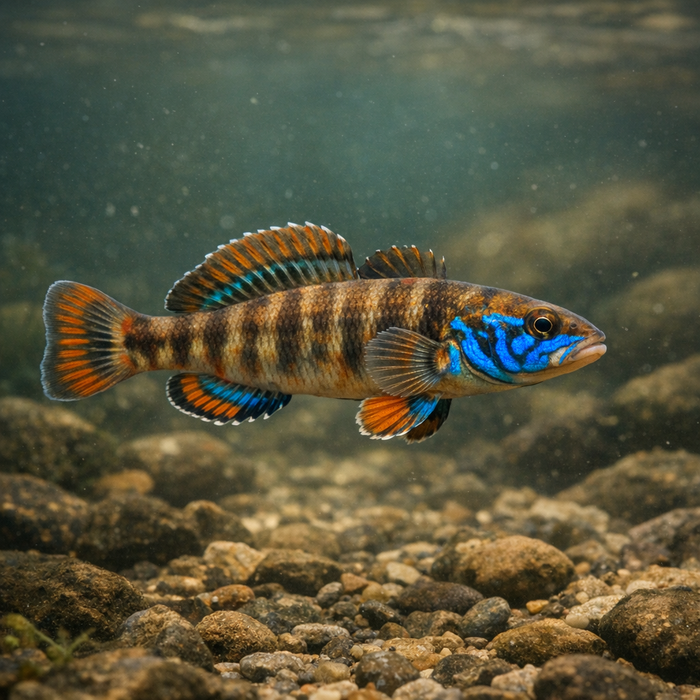
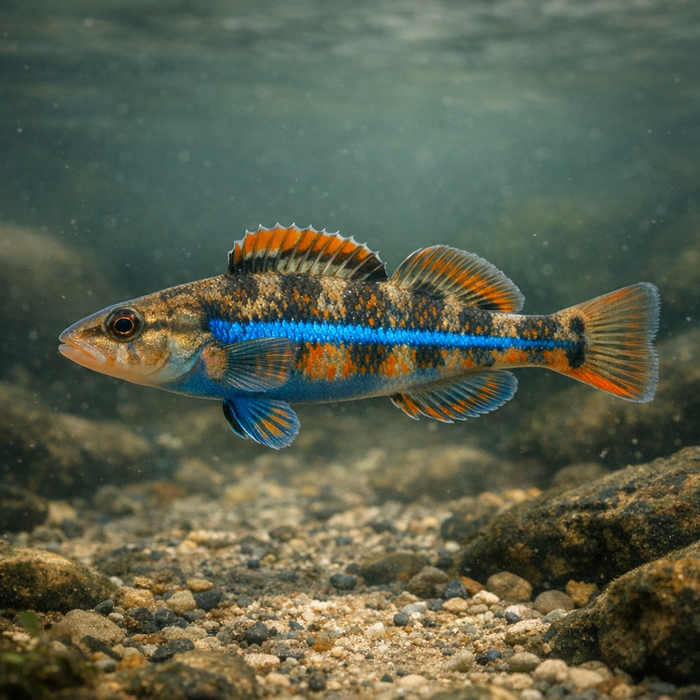
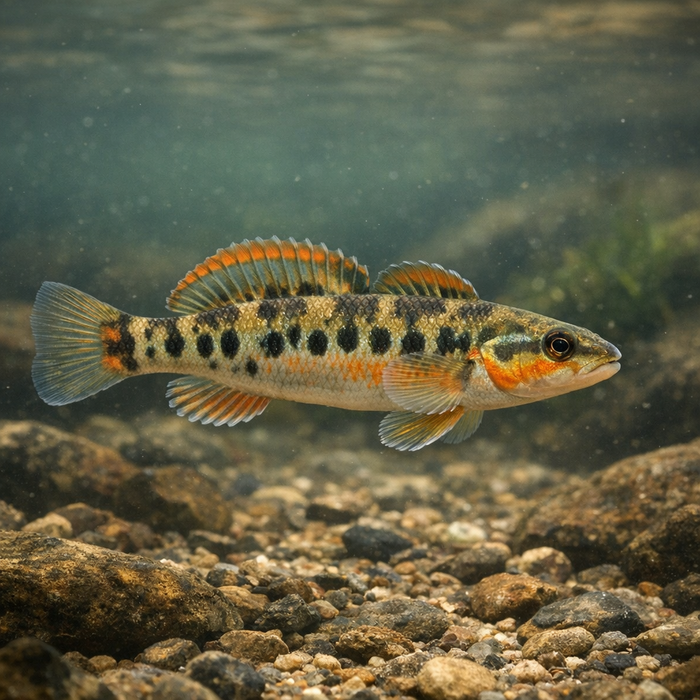
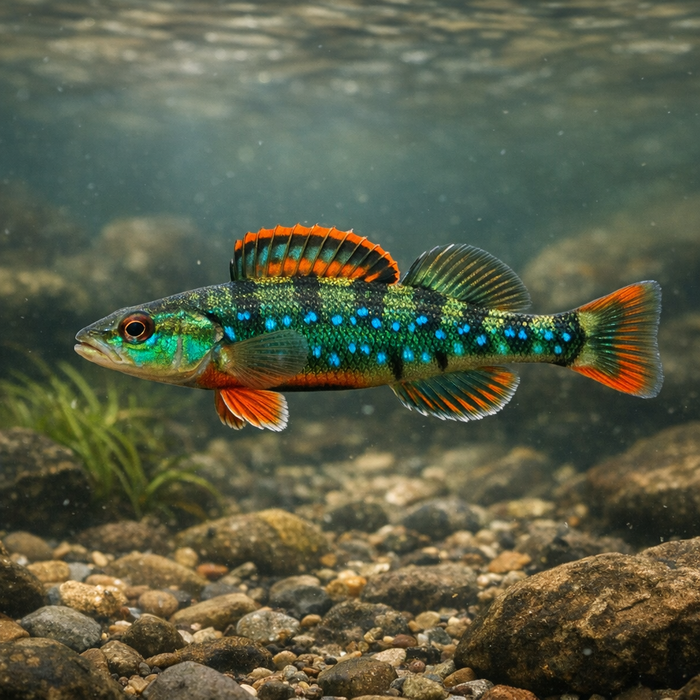
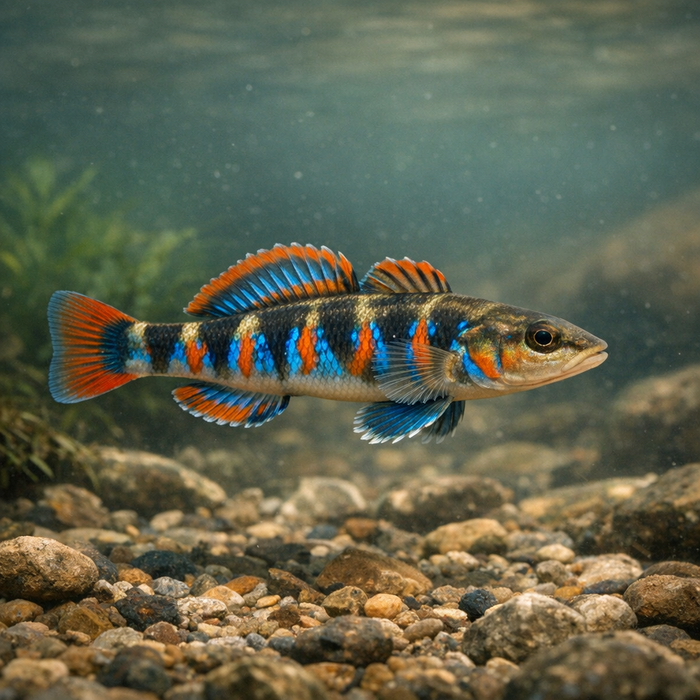
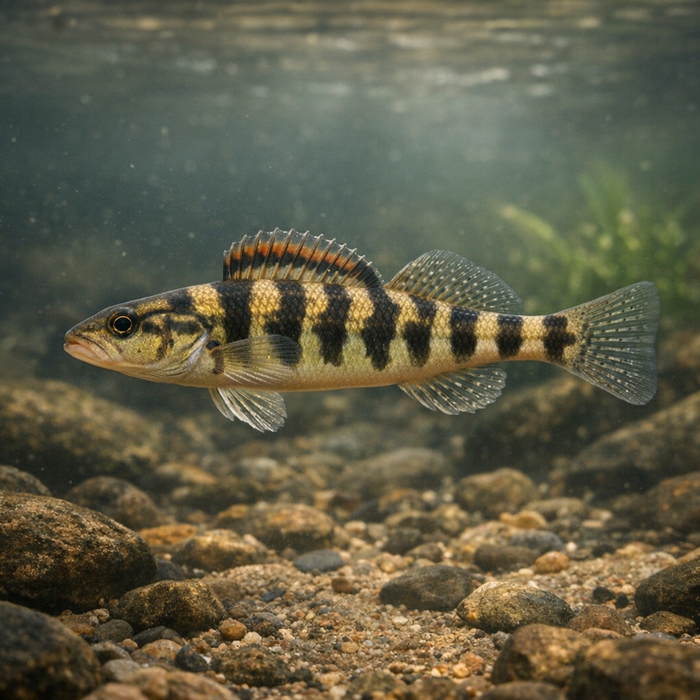
Brighteye Darter (Etheostoma lynceum): A tiny rocket with a glow-in-the-dark stareIntroductionMeet the brighteye darter, a pocket-sized bruiser that lives where the current cooks and the rocks shine. It will not spool your reel or photobomb your grip-and-grin, but if you crave technical, up-close fishing, this little invertebrate assassin is your jam. The brighteye darter is small, stunning, and way more attitude than mass. Consider this your crash course in Brighteye darter facts with an angler-first edge.What Makes the Brighteye darter Unique?Start with the name. Those oversized, reflective eyes are not subtle, especially on breeding males that show a vivid glint around the iris. The body is sleek and elongated, all business for bottom-hopping in strong current, with barred camouflage that mirrors gravel like it was painted on by the river itself. Unlike many stream fish that cruise midwater, the brighteye darter hugs bottom, using pelvic fins like kickstands and launching in fast, precise hops. That posture, paired with a small subterminal mouth, is purpose-built for plucking nymphs out of stone seams.Habitat & Global RangeThe brighteye darter is a riffle loyalist. Think clear to lightly stained streams with steady current, clean gravel or small cobble, and well-oxygenated runs. It thrives in micro structure: thumb-sized rocks, shallow tongues of flow, thin seams ahead of shoals. You do not need a boat. You need patience, stealth, and knee-deep water that hums. While its native footprint is regional within the United States, the pattern repeats: cool, clean, moving water is the home field. If you are hunting brighteye darter habitat, follow the sound of riffles and the shine of unsilted gravel.Behavior & TemperamentThe brighteye darter is a stalker, not a sprinter. It holds position with minimal motion, letting the stream deliver food, then snaps with quick, bottom-hugging darts. Spawning kicks in during spring as days lengthen and flows stabilize, with males staking out low, flat stones and guarding adhesive eggs. They are not schooling fish in the classic sense, but you will often find several working the same productive riffle plate. Even when they are feeding, strikes are subtle. Most takes look like a blink and a shimmy rather than a grab.Ecological ImportanceThis fish is tiny but loud as an indicator. The brighteye darter needs oxygen-rich water and clean substrate, so healthy populations usually signal a stream with good watershed practices. It crops small invertebrates and, in turn, feeds larger predators. Call it a riffle cog that keeps the food web ticking. Lose the gravel, silt the runs, or choke the flow, and the brighteye darter fades fast. Protect the flow, and the eyes keep shining.Conservation & Environmental PressuresFor now, the brighteye darter is not a headliner on threatened lists, but that is not a free pass. The species is tightly tied to clean riffles, which means sedimentation, poorly managed construction, low-flow withdrawals, and chronic runoff are all bad news. Small fish do not have the luxury of big moves; when a riffle silts in, they cannot just commute to the next county. Localized hits can stack up. The playbook is simple: keep streams shaded, banks stable, and gravel clean.The FishyAF TakeThe brighteye darter is the anti-trophy trophy. You do not chase it for weight; you chase it for skill. It is sight fishing at ankle depth, execution over ego. The best anglers treat it like a miniature steelhead: plan the drift, read the seam, and own the micro details. If you want a fish that teaches you more about current, stealth, and presentation than any big lure bite ever will, the brighteye darter is your professor. And if you needed one more reason, those reflective eyes glowing in riffle light are pure river magic. Search "Brighteye darter habitat" once, then go see it yourself.