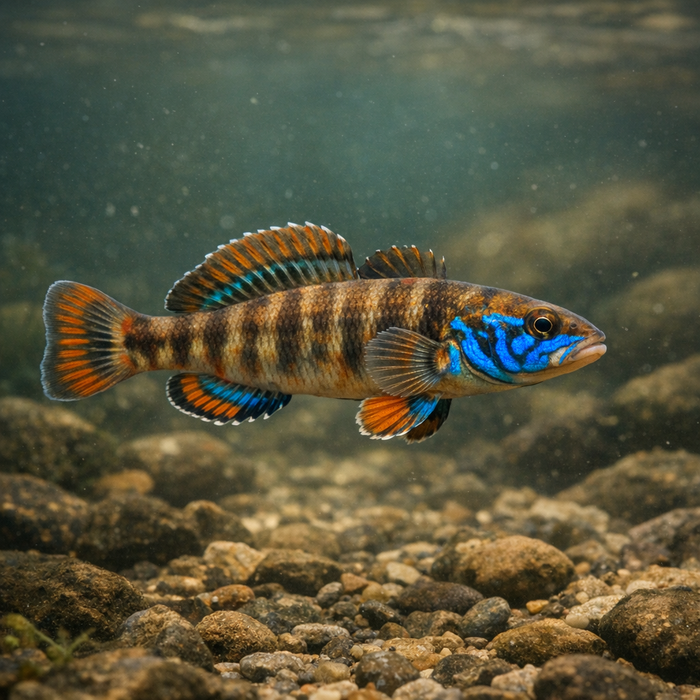
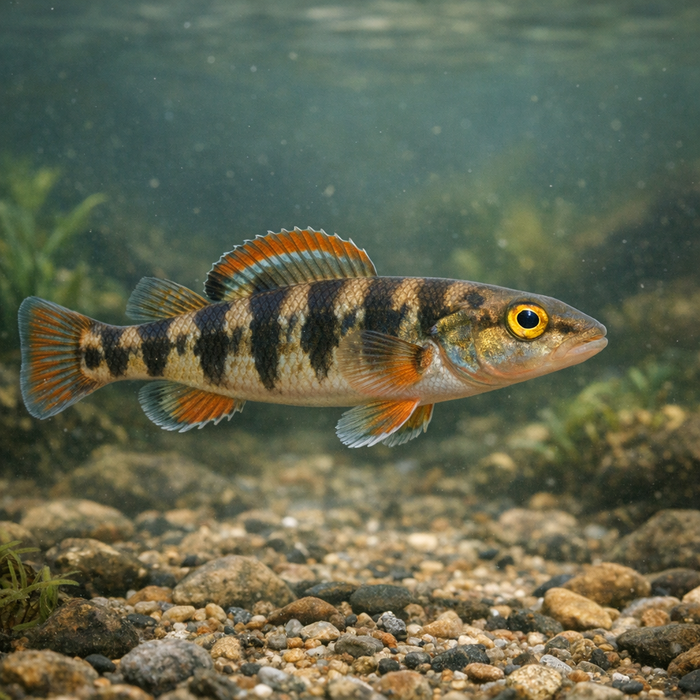
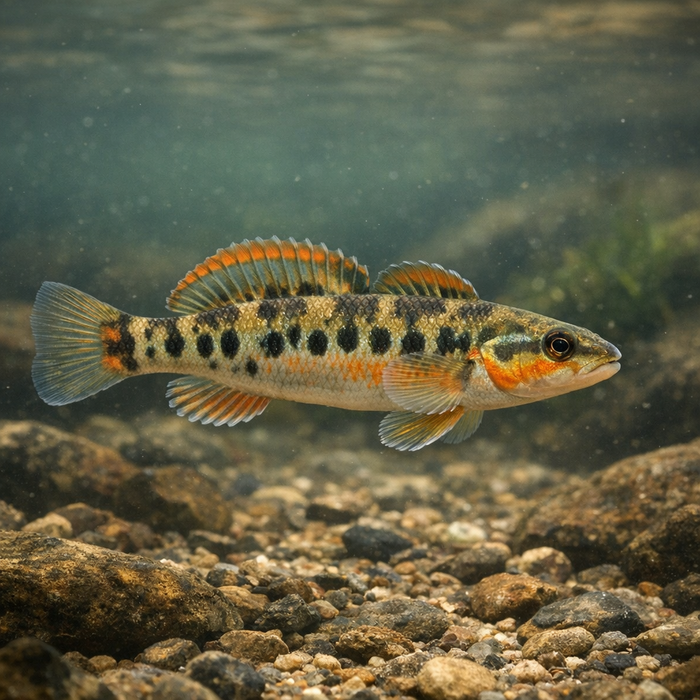
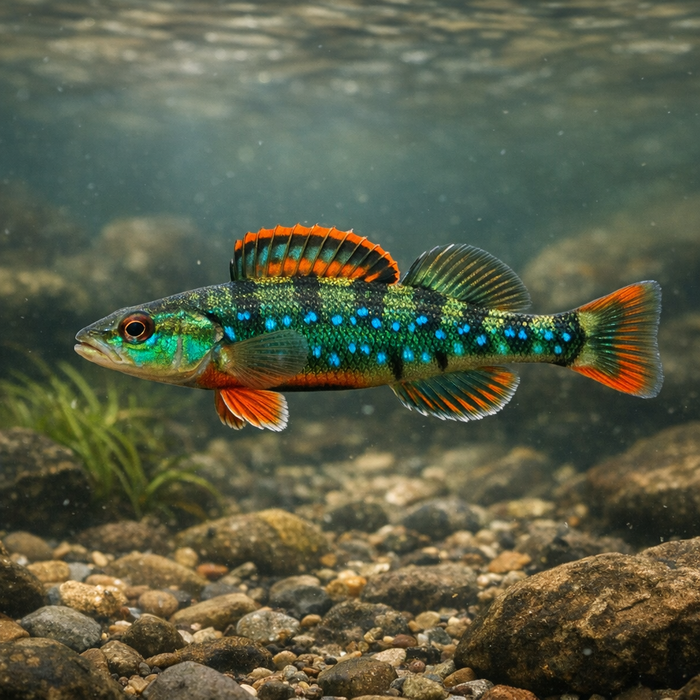
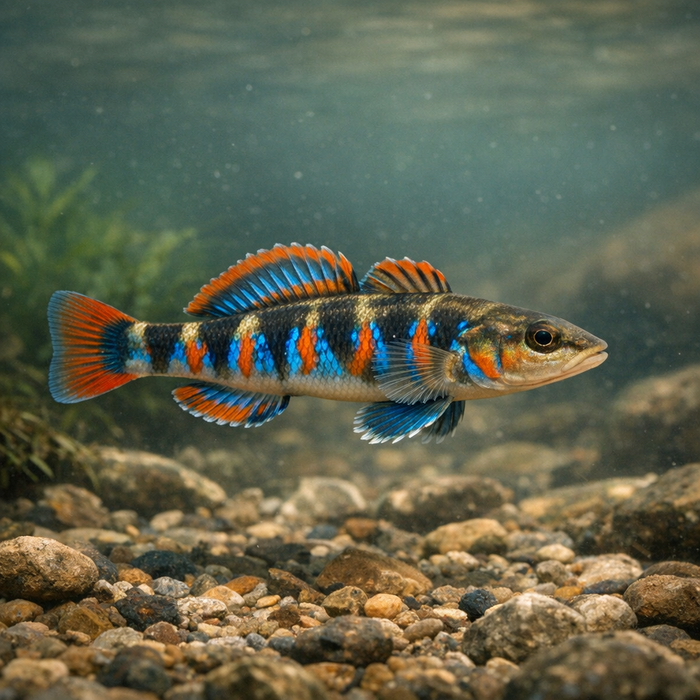
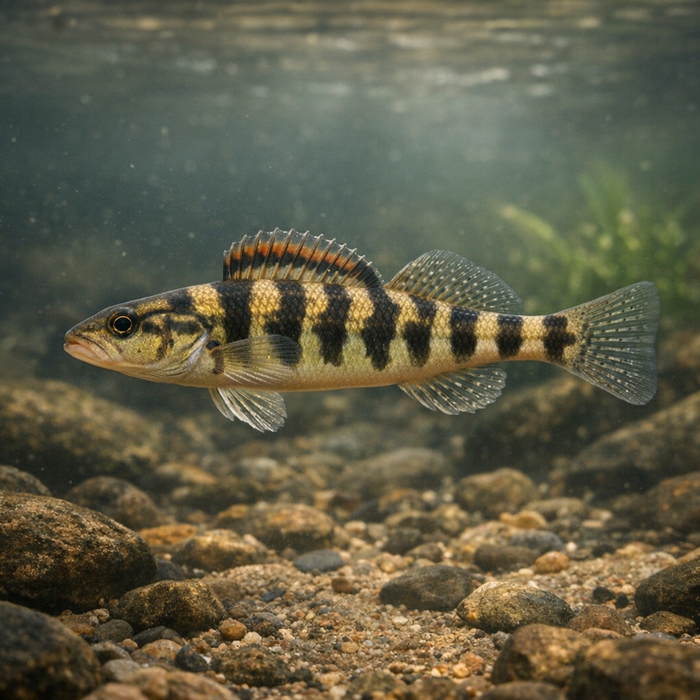
Blueside Darter (Etheostoma jessiae): Neon racing stripes in pocket water and attitude way bigger than its size.IntroductionThe blueside darter is the tiny stream rocket that steals the show the second sunlight hits the riffles. You won't boat-flip this fish. You'll kneel, squint, and grin as a flash of blue bars ghosts across a cobble lane. For anglers who like puzzles more than poundage, the blueside darter delivers a master class in stealth, precision, and current-reading. Consider this your quick-hitting run of Blueside darter facts, with a side of practical sense.What Makes the Blueside darter Unique?Two things: color and current swagger. Breeding males carry brilliant electric-blue bands along the flanks, set off by warm orange fins that look airbrushed. And unlike typical perch relatives, this fish is purpose-built for the bottom. A reduced swim bladder and oversized pectoral fins let it sit in fast water like a paperweight, then burst forward in sniper strikes. Toss in a short lifespan and fast growth, and the blueside darter packs its life into a few seasons with maximum flair.Habitat & Global RangeThis fish is all about clean, cool flow. Think clear creeks and small rivers with gravel, cobble, and plenty of oxygen. Riffles, runs, and the heads-and-tails of pools are the prime lanes. The blueside darter's range is regional rather than coast-to-coast, concentrated in specific Southeastern drainages. If you're learning Blueside darter habitat, focus on freestone shoals with well-sorted substrate, light aquatic vegetation, and steady, knee-deep current. Silt is the enemy; clarity and moving water are the ticket.Behavior & TemperamentThe blueside darter is a bottom ambush artist. It holds tight to cobbles, tracks drifting nymphs, and lunges with a quick vacuum gulp. It won't cruise far, but it will shift positions constantly to micro-eddies like a chess player moving pawns. During spring, males carve out small territories beneath or beside flat rocks, showing off their neon sides and sparring with rivals. They're not schooling fish in the open-water sense, but you'll often see several working the same riffle seam with polite, prickly spacing.Ecological ImportanceDarters are the dashboard lights of a stream. When populations are bright and balanced, the substrate is clean, flows are stable, and bugs are booming. The blueside darter shuttles energy from aquatic insects up the food chain to larger predators, all while helping regulate invertebrate communities. Their nest-guarding behavior keeps eggs safe in a turbulent world, and their reliance on pristine gravel makes them perfect bioindicators. If blueside darters vanish, the stream has bigger problems brewing.Conservation & Environmental PressuresThis species needs clear water and clean rock. Sedimentation from bad land use clogs the gaps between gravels, suffocating eggs and erasing hunting lanes. Low flows and hot summers don't help. Dams fragment habitat and kink migration paths between riffles and pools. Even careless wading can crush nests in spring. While the blueside darter isn't the poster child of endangered fish, local populations can blink out fast when streams get abused. Smart riparian buffers and better stormwater management do more good than any single regulation ever could.The FishyAF TakeIf you measure success in fillets and grip-n-grins, skip the blueside darter. But if you love reading water like a map, kneeling in the spray, and fooling a fish with a bait smaller than a pea, this one hits different. It's the ultralight, eyes-open, creek-level experience, and when those blue bars light up, you'll swear the stream just winked. The blueside darter won't spool your reel, but it will sharpen your approach. That's a trade we'll make any day.