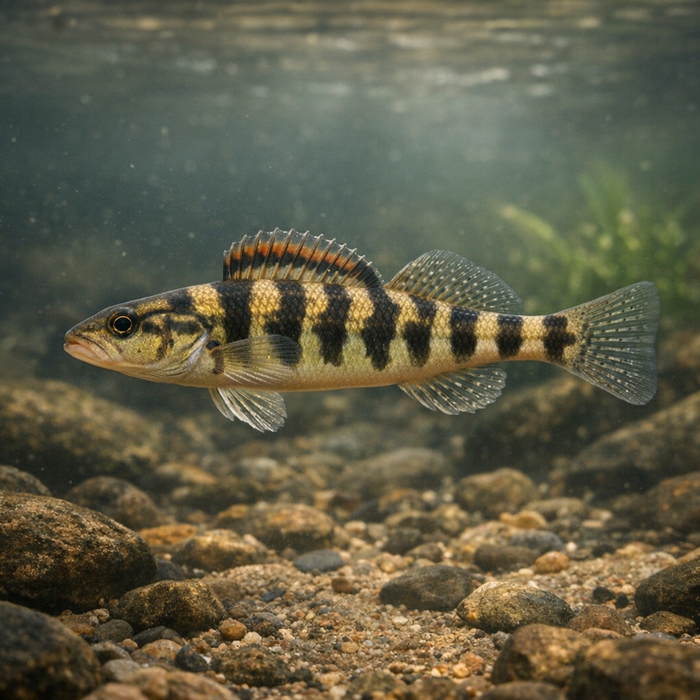
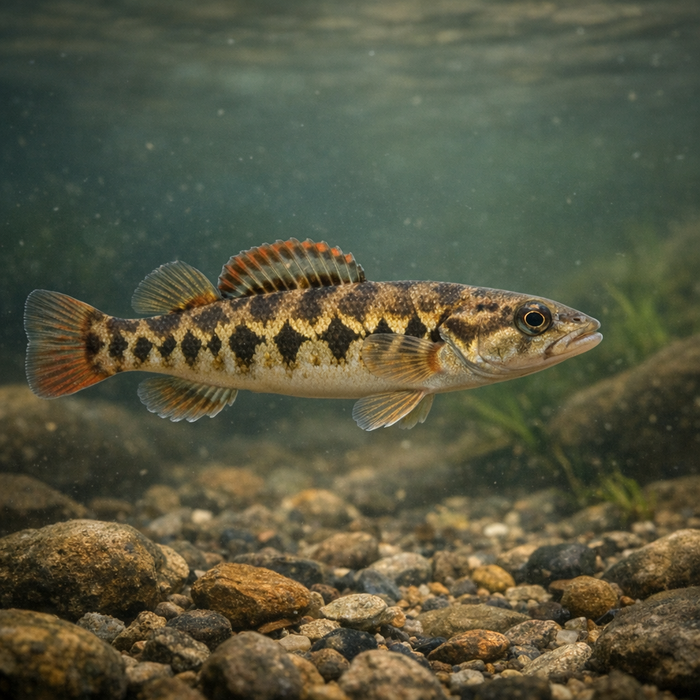
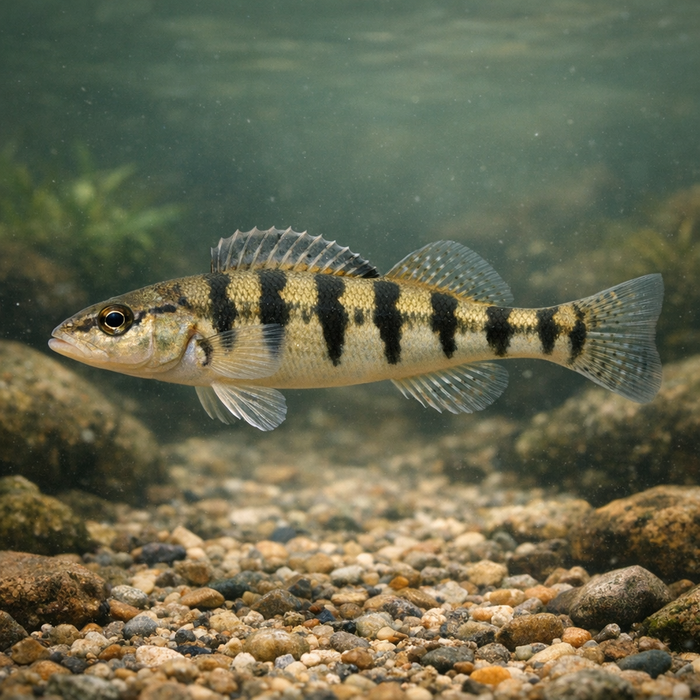
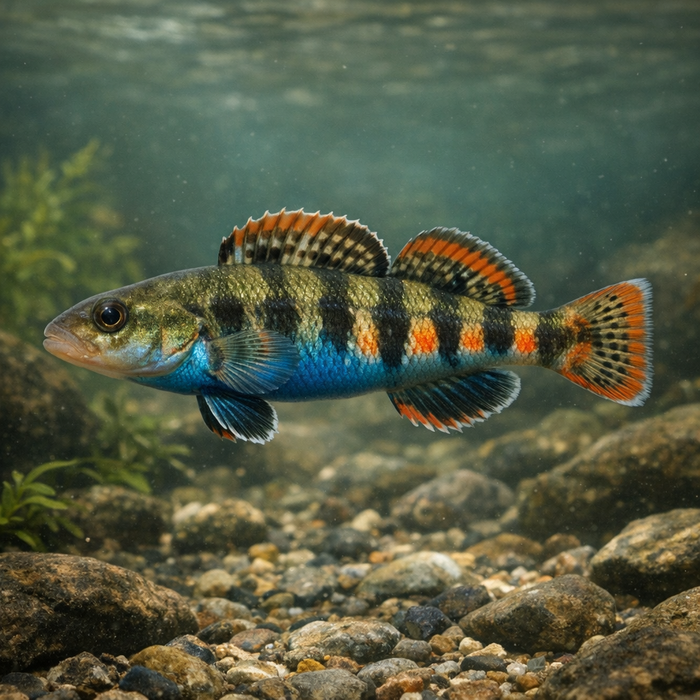
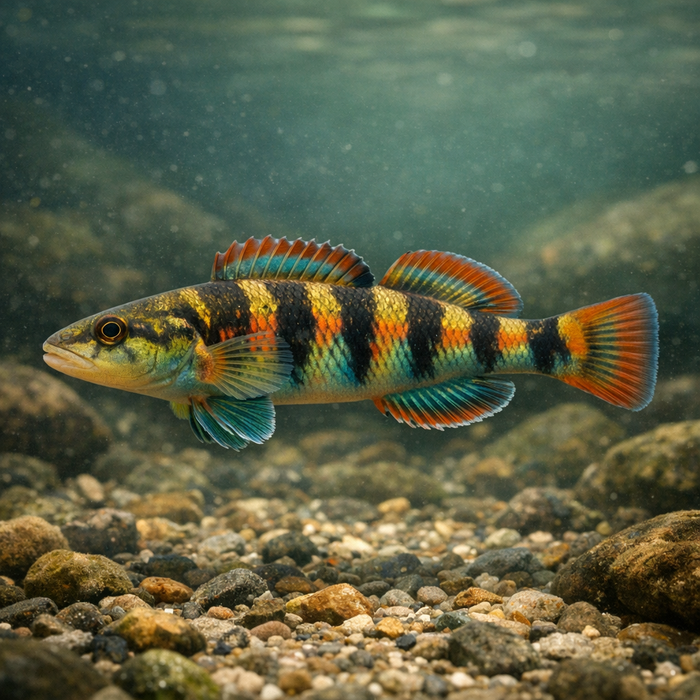
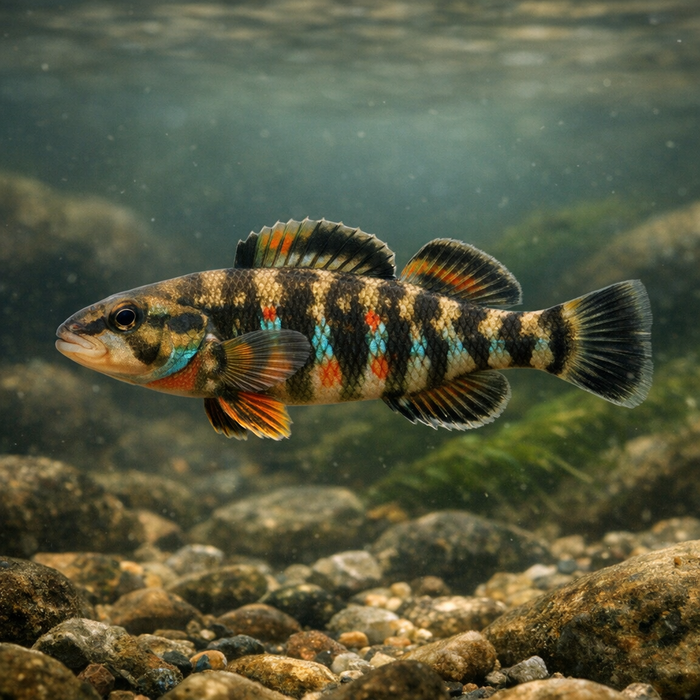
Chainback Darter (Percina nevisense): The pocket rocket of sandy rifflesIntroductionIf you think big fights are the only fun, the Chainback darter exists to prove you wrong. This is a fish tailored for fast water and small drama, a bottom-hugging sprinter with a paint job that looks like it was stenciled by a graffiti artist. Microfishing nuts seek them out, while most anglers step over them without noticing. Your loss if you're in that second group. Get low, look hard, and you'll see a Chainback darter materialize between gravel grains, blink, and then it's gone.What Makes the Chainback darter Unique?First, the pattern. Those linked dark blotches along the flank are not generic speckles. They form a true chain that gives the species its no-brainer name. Second, it's a current specialist with a reduced swim bladder, built to perch on the bottom while heavy flow thunders overhead. Third, the Chainback darter punches way above its weight in elusiveness. Landing one on micro tackle can feel more surgical than sporty, and that's exactly the appeal.Habitat & Global RangeIf you're hunting Chainback darter habitat, think clear to tea-stained coastal plain creeks and small rivers with sand-and-gravel riffles. Picture knee-deep or shallower water, clean pea gravel, and a steady push of current. The species is primarily an Atlantic Slope player in the southeastern United States, with strongholds in creeks and mid-sized rivers across the Carolinas and Georgia, and localized presence in nearby systems. You won't need a boat; you will need sharp eyes and the willingness to kneel on gravel. Silted pools aren't the program. The Chainback darter thrives where the substrate stays clean and oxygen-rich, a clue many anglers miss when scanning for likely spots. If you're researching Chainback darter habitat, start with stable riffles and gently sloping runs rather than deep holes.Behavior & TemperamentThe Chainback darter is a bottom sitter by design. Those broad pectorals act like landing gear, and the fish holds station behind cobble, then launches in jittery bursts. It keys on tiny invertebrates and pins them against sand or gravel, grabbing meals with startling precision. Spawning rides the spring curve of rising temperatures and flow. Males darken, the chain pattern pops, and activity spikes in riffly shallows. Expect them to hunker low when shadows cross or when a boot heel thumps too close. In calm winter windows, they can slide to slower margins, but the theme never changes: down low, near structure, letting the current do the delivery.Ecological ImportanceThe Chainback darter is a small gear tooth in a well-oiled machine. It helps convert swarms of mayflies, midges, and small benthic critters into protein that larger fish, kingfishers, and wading birds can use. Because it demands clean, well-oxygenated substrate, the species acts as a furred-tongue sensor for stream health. Lose the gravel to silt and you lose the darters, which is the first warning siren for a lot of other organisms you do care about, including the sportfish upstream and down.Conservation & Environmental PressuresThe usual suspects line up: sedimentation from poor land use, stormwater blasting channels, small dams that flatten riffles, and careless withdrawals that leave critical runs skinny and warm. The Chainback darter can survive in tea-colored blackwater and in bright, glassy creeks, but it does not love choking silt or flashy, scouring floods. Streamside buffers, smart culverts, and keeping gravel riffles intact go a long way. Even microfishing has etiquette: wet hands, fast dehooking with micro tools, and releasing the fish right back into its micro-home.The FishyAF TakeLook, the Chainback darter is not a grip-and-grin hero. It's a scalpel fish. But sneaking up, threading a size-24 hook with a sliver of midge larva, and watching that chain-patterned shadow twitch, slide, and commit? That's adrenaline, just concentrated. If you want easy, go chase stockers. If you want precision, stealth, and a new way to read water, this tiny riffle punk is your coach. For anyone chasing Chainback darter facts or dialing in new water-reading skills, this species is the perfect, humble teacher that won't let you fake it.