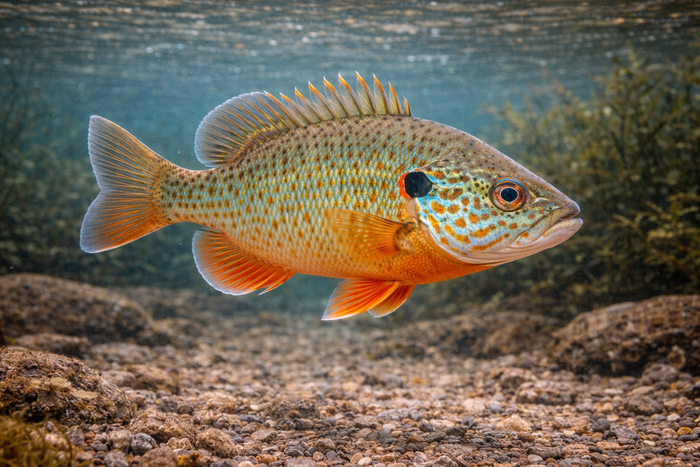
Sailfin Perch (Pseudoambassis agrammus): All Sail, Almost No Fish
The Sailfin Perch brings a raised dorsal fin to a world where being noticed can be dangerous. Small, partly transparent, and easily overlooked beside northern Australia’s headline freshwater fish, this glassfish rewards a closer look rather than a heavier rod. Forget the name’s suggestion of a conventional perch fishery: this is a miniature member of the glassfish family, with documented aquarium interest rather than an established recreational following. Its appeal lives in the details, not the drag setting.
For anglers, that distinction matters. FishyAF’s typical size range is only 1.4–2 inches, with weights measured in grams. This is not a scaled-down bluegill waiting for someone to discover its favorite jig. No validated species-specific tackle setup, bait, or fishing season has been established. Approach it as an identification challenge and a window into freshwater life that usually slips beneath an angler’s attention.
What Makes the Sailfin Perch Unique?
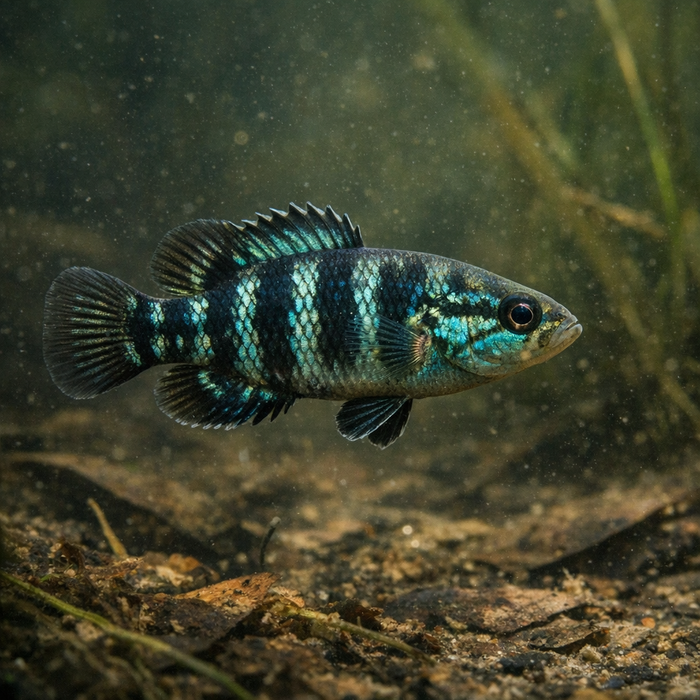
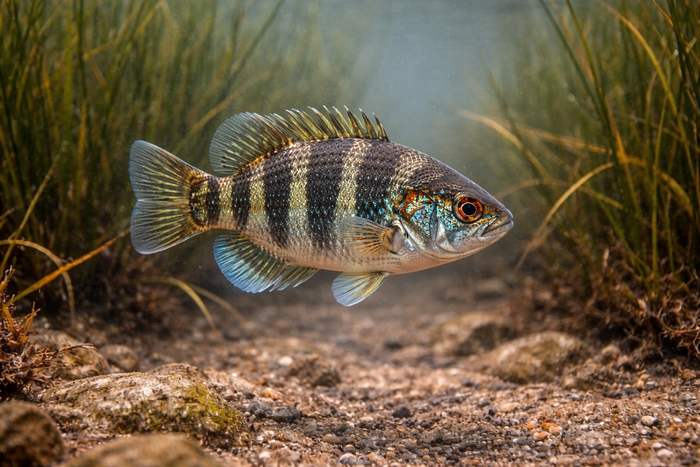
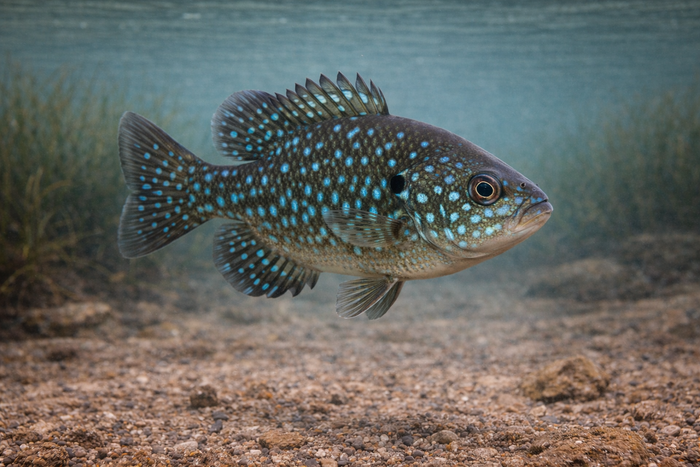
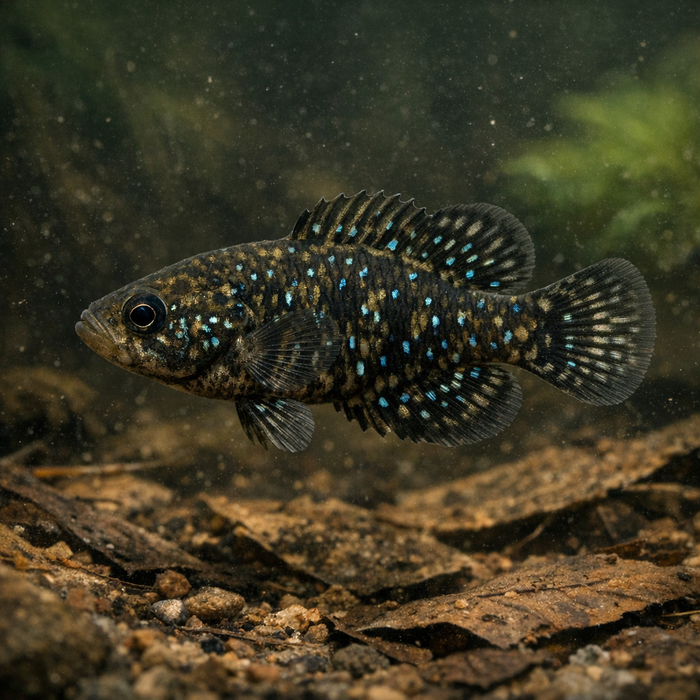
The Sailfin Perch earns its name through its conspicuous first dorsal fin, which is taller than that of the similar Agassiz’s glassfish. Its body is compressed from side to side, giving it a substantial profile despite its tiny dimensions. From one angle it looks surprisingly deep; from another, there seems to be barely anything there. Dark-edged scales can create a delicate network across its semitransparent body.
Its reproductive development is equally impressive. In aquarium research, fish first bred at just three months old and approximately 30 millimeters standard length. That is an observed captive result, not a universal timetable for wild populations. Still, it puts the species’ scale into perspective: a fish shorter than many anglers’ terminal rigs can already be reproducing. Among useful Sailfin Perch facts, that one deserves more attention than any imaginary trophy claim.
Habitat & Global Range
Sailfin Perch habitat centers on tropical fresh waters in northern Australia and New Guinea. Australian accounts describe separated populations in Northern Territory coastal drainages and northeastern Queensland. Streams, lakes, dams, and billabongs all feature in its documented habitat, particularly where aquatic plants provide cover. This is a freshwater glassfish, not an invitation to search coastal reefs because the dorsal fin sounds nautical.
Field observations from the Alligator Rivers region associate it with shallow sandy areas and vegetated water. Those observations help explain where to look, but they do not establish a universal fishing depth. Nor should a distribution map be treated as a list of guaranteed collecting spots. Local identification, access, and current conditions matter far more than confidently pointing at an entire tropical river system.
Behavior & Temperament
The Sailfin Perch commonly gathers in aggregations around aquatic vegetation. Its feeding world is built around small prey, including insects and crustaceans. Calling it a predator is accurate; imagining it behaving like a miniature barramundi is not. Predation does not require a cavernous mouth or a spectacular surface strike. Sometimes it happens quietly among plant stems, at a scale most anglers never bother to examine.
Research on reproduction recorded pairs forming during daylight and eggs being released among submerged vegetation at nightfall. That is a fascinating behavioral observation, not proof of a dusk bite window. The distinction matters whenever biological information gets repackaged as fishing advice. Knowing when a fish spawns does not automatically tell you when it takes a hook.
Ecological Importance
Its documented consumption of microcrustaceans and aquatic insects places this tiny fish within the small-prey pathways of tropical freshwater food webs. Field research describes feeding mainly in midwater, with some feeding nearer the bottom. That makes the vegetated margins worth understanding as living habitat rather than dismissing them as inconvenient weeds between you and open casting water.
There is also a practical lesson here: a species does not need a commercial landing total or a tournament category to merit attention. Learning to recognize small native fishes improves the way anglers read a waterway. It replaces the vague label “baitfish” with an actual animal, a particular life history, and a reason to leave its habitat intact.
Conservation & Environmental Pressures
The Sailfin Perch is assessed as Least Concern. That is a global conservation category, not a guarantee that every local population is secure or that collection is unrestricted. Its association with aquatic vegetation makes protection of those habitats a sensible priority, without pretending that a quantified species-specific threat assessment exists for every creek.
Moving aquarium fish between waterways is not conservation. Keep observations separate from collection, check the rules before taking specimens, and never assume that native somewhere means native everywhere. Australian biosecurity guidance specifically warns against releasing aquarium organisms or their water into natural systems.
The FishyAF Take
The Sailfin Perch is what happens when a species guide refuses to judge every fish by fillet weight. No invented hot bite. No magical micro-lure recommendation. No world-record story assembled from wishful thinking. Just an overlooked little glassfish with an excellent dorsal fin and enough genuine biology to make the usual trophy chatter feel oversized.
Give it the right kind of attention. Learn the identification, respect the vegetation, and let curiosity do the heavy lifting. Sometimes the smartest thing an angler can bring to the bank is not another hook.