Saugeye (Sander vitreus × Sander canadensis): Walleye Pedigree, Sauger Grit, and a Bottom-Floor Address
Saugeye do not need postcard-clear water to make a fishery worth your time. These toothy freshwater hybrids turn murky reservoirs, rocky shorelines, and dam tailwaters into serious fishing water. They combine walleye and sauger ancestry in a streamlined perch-family package, with enough identification wrinkles to keep confident anglers honest. Most adults measure 12–18 inches and weigh 1–2 pounds, but exceptional fish get substantially larger. The appeal is straightforward: accessible fishing, useful tackle, and a predator that rewards attention rather than a shopping cart full of gadgets.
What Makes the Saugeye Unique?
The standard hatchery cross uses eggs from a female walleye and sperm from a male sauger. That combination produces fast-growing fish suited to reservoirs where maintaining strong walleye populations can be difficult. Fisheries managers value the hybrid for practical reasons, not because somebody thought the name sounded good on a stocking truck.
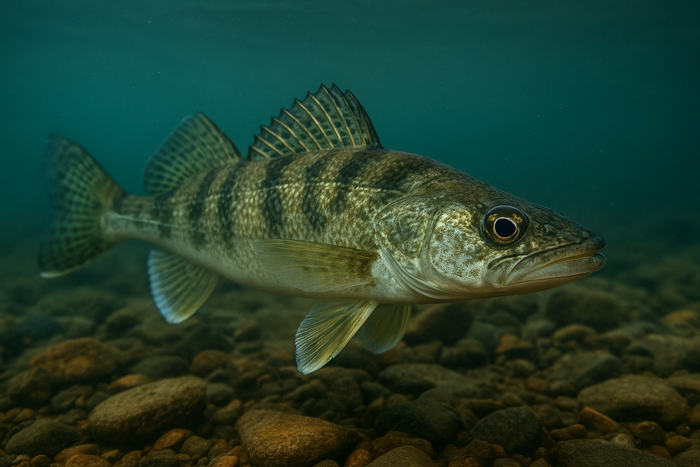
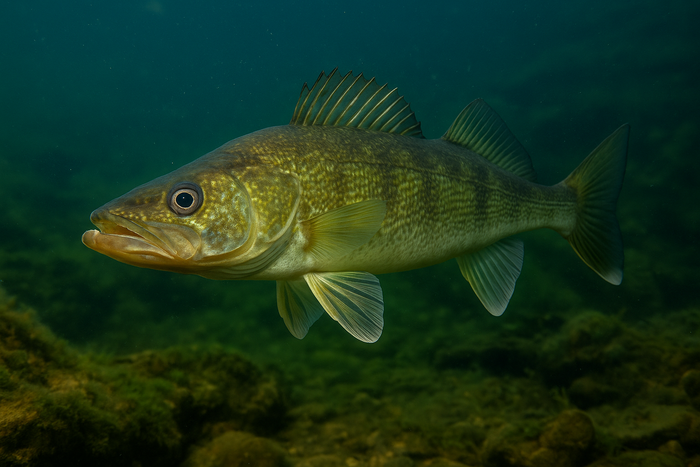
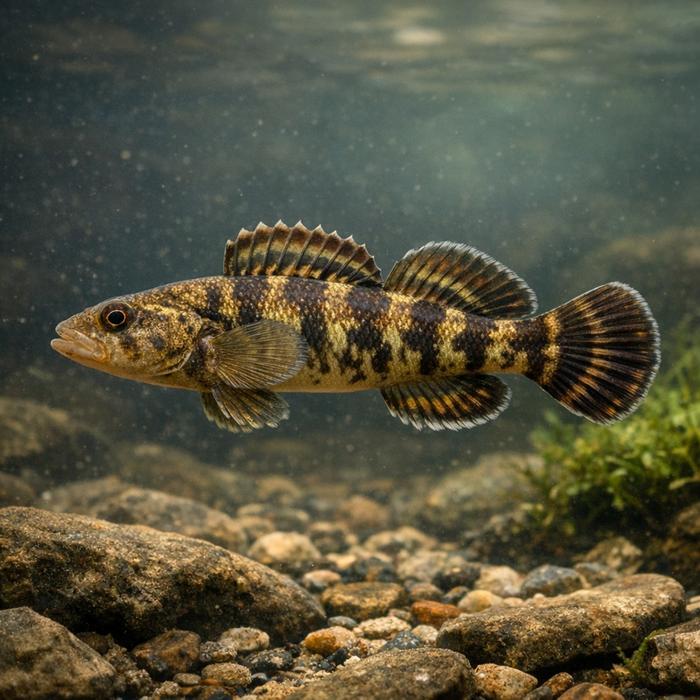
Its appearance mixes parental traits. Dark bars or elongated spots interrupt the first dorsal fin, while blotchy sides and pale lower-fin tips complicate identification. Look at several features together rather than declaring victory over one white tail tip. More surprisingly, saugeye are not automatically sterile: some reproduce with other hybrids or either parent species, although stocked fisheries commonly depend on repeated introductions. Hybrid does not mean reproductively disconnected.
Habitat & Global Range
Saugeye habitat centers on freshwater impoundments and connected rivers, particularly turbid reservoirs and their tailwaters. The Midwest is a major angling stronghold, with Indian Lake, Buckeye Lake, and Caesar Creek Lake among established Ohio destinations. Lake Thunderbird and Fort Cobb Lake extend the picture into Oklahoma. This is primarily a North American fishery story, not a naturally widespread global species.
Think bottom contours before open-water acreage. Sandbars, rocky banks, channel edges, ledges, and underwater points provide useful starting places. Water color matters: fish can use surprisingly shallow water when visibility is reduced, while clearer conditions often favor deeper locations. Stocked fish can also pass through or over dams and appear downstream, sometimes well beyond the reservoir where their hatchery journey ended. A stocking map is therefore a starting point, not a fence.
Behavior & Temperament
Saugeye generally stay associated with the bottom, which explains why a beautifully worked lure can still miss the assignment when it travels too high. Their eyes contain a reflective layer that improves low-light vision and produces the familiar eyeshine. Dawn, dusk, darkness, and stained water deserve attention, although none creates an appointment the fish must keep.
They also have more flexibility than a strictly deep-water reputation suggests. In shallow lakes, fish may use overhead cover, including brush and lily pads. Late-winter and spring concentrations around rocky areas reflect spawning-related behavior, even where successful natural reproduction contributes little to the fishery. On light tackle, expect weight, headshakes, and resistance toward the bottom rather than an aerial performance.
Ecological Importance
As predators, these hybrids connect abundant smaller fish to larger sport-fish biomass. Young gizzard shad and other small fishes are important prey in Ohio waters. In some Oklahoma fisheries, managers stock them partly to thin overcrowded, slow-growing crappie populations. That is a specific management tool, not permission to assume adding predators improves every lake. Outcomes depend on the existing community and management objectives.
Saugeye also demonstrate how deliberately managed fisheries can create substantial recreational value in human-made waters. Reservoirs already differ from the rivers they replaced. Choosing a predator that performs well under those conditions can provide anglers with opportunities that a less suitable stocking choice would not sustain.
Conservation & Environmental Pressures
The guide's Not Evaluated designation should not be mistaken for a declaration that every local population is secure. For a stocked hybrid, conservation questions often concern stocking success, habitat quality, prey availability, and effects on other fishes rather than the extinction risk of a distinct wild species. Many fisheries require routine stocking to maintain catchable populations.
Their occasional fertility adds another management consideration wherever parent species occur. Fish moving downstream also mean management effects need not stop at a dam. These are reasons to leave introductions and transfers to fisheries professionals, not invitations to improve a favorite pond with a bucket.
The FishyAF Take
Saugeye deserve better than being treated as discount walleye. They are a different proposition: a reservoir-ready hybrid that makes anglers read stained water, feel bottom composition, and distinguish an actual bite from another expensive conversation with a rock.
That is good fishing. A bank, a sensible spinning outfit, and a carefully presented jig can put you in the game. You still have to solve location, timing, and speed, but the entry fee does not require a second mortgage. Respect the fish's habits instead of its family reputation, and this muddy-water specialist becomes much more than a consolation prize.