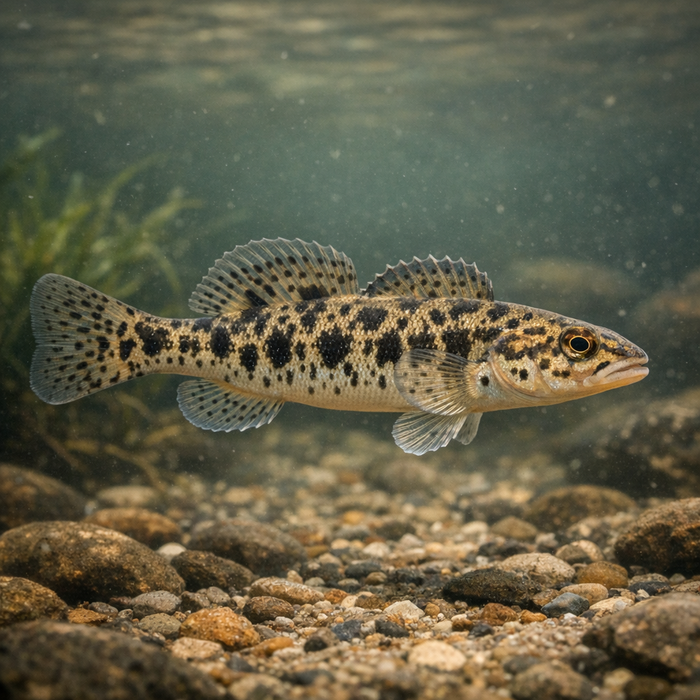
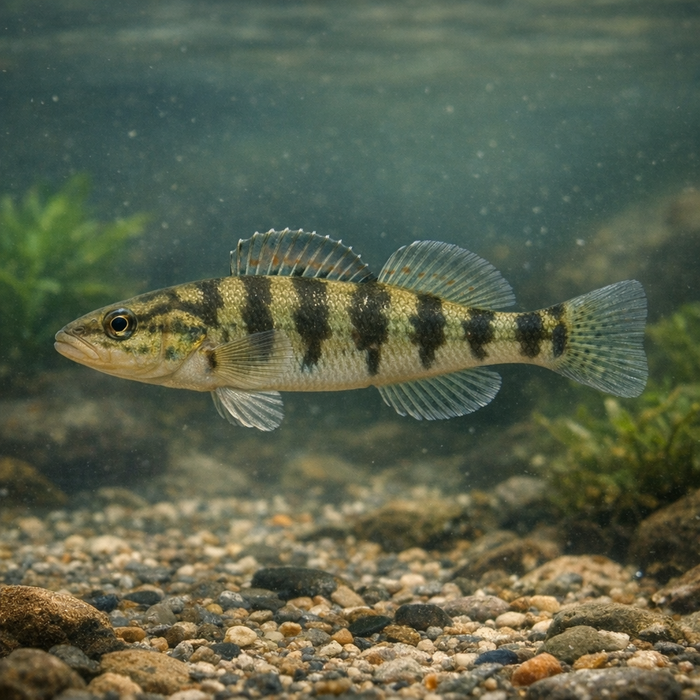
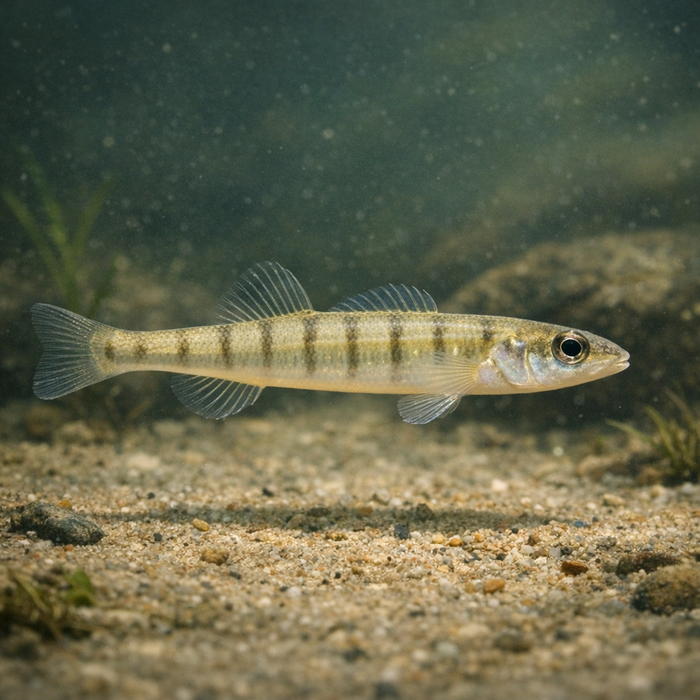
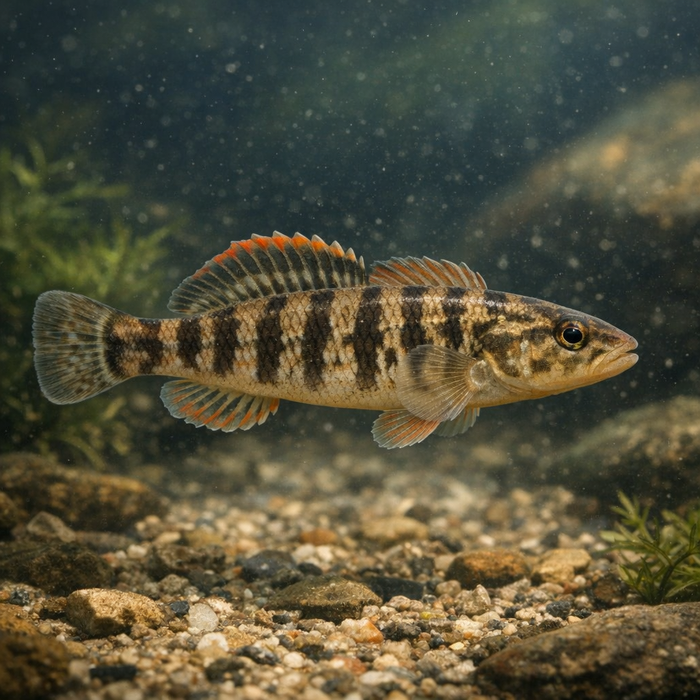
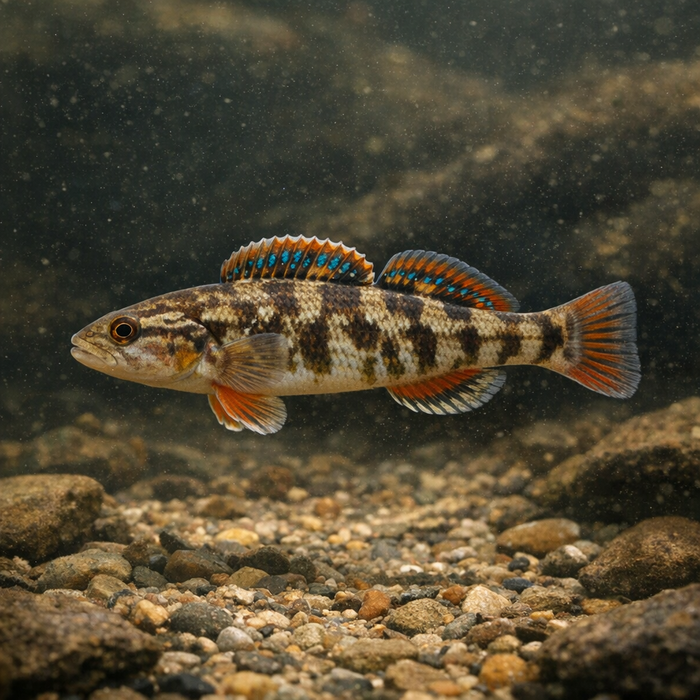
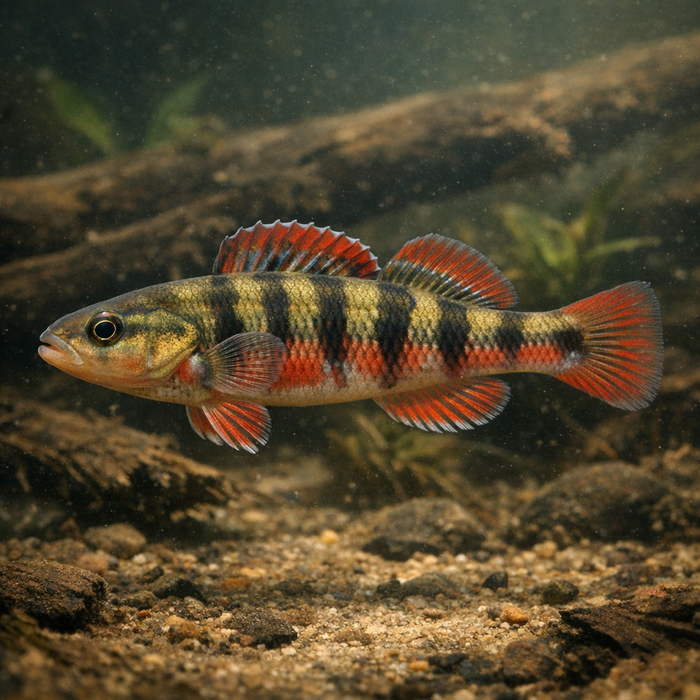
Scaly Sand Darter (Ammocrypta vivax): The tiny ghost that vanishes into sand before you can even blinkIntroductionSmall doesn't mean boring, and the scaly sand darter proves it. This fish is a living magic trick. One second you spot a sliver of translucence hovering over pale grains, the next it nose-dives and disappears like a coin in a street hustler's hand. For micro anglers and river nerds, the scaly sand darter is catnip: challenging to see, finicky to approach, and bizarrely satisfying to catch. Consider this your go-to file of scaly sand darter facts with just enough attitude to keep it interesting.What Makes the Scaly Sand Darter Unique?First, sand-burying stealth. The scaly sand darter is built to vanish. A slim, translucent body, high-set eyes, and no swim bladder let it hug bottom and dive into sand with zero drama. Second, that name isn't a joke. Unlike "naked" relatives, Ammocrypta vivax sports more obvious scales onto the belly, a key field mark when you're sorting lookalikes in the sieve. Third, color pop in miniature. Breeding-season males can light up with lemon-yellow fins that contrast sharply against pale runs, turning this subtle fish into a pocket neon sign.Habitat & Global RangeWhen anglers ask about scaly sand darter habitat, they're really asking for one thing: clean, moving sand. The species thrives in small to medium rivers with clear flow and well-sorted sandbars, side channels, and mid-channel shoals. Picture low, steady current corrugating the bottom in delicate ripples. That's the setup. Its range is a Gulf Slope story, anchored in parts of the Southeast where rivers still push bright sand instead of mud. If the river is scoured, the sand is fresh, and the water reads tea-clear to gin-clear, the scaly sand darter could be in the neighborhood.Behavior & TemperamentThis fish is a current surfer with a low profile. Without a swim bladder, it rests tight to bottom and darts in short, ballistic bursts. Hungry? It watches for drifting invertebrates and tiny morsels, then pounces. Spooked? It digs, fast. Schooling isn't really its style; loose aggregations at best. You'll often see singles or a few fish staggered across a run, each guarding its mini beat. Peak daylight can actually help sighting because shadows and contrast define their outlines, but step heavy and the whole scene erases.Ecological ImportanceThe scaly sand darter is a pint-sized quality-control agent for rivers. It wants clean sand and consistent current, which means its presence tips off healthy sediment dynamics and decent water clarity. As a micro-predator of invertebrates, it transfers energy from the riverbed buffet up the chain to larger fishes and wading birds. It's also a textbook indicator species: lose the sand, clog the interstitial spaces, and this fish is one of the first to check out. When you see darters thriving, the river's bottom machine is still humming.Conservation & Environmental PressuresSand darters don't negotiate with silt. Excessive sediment from poor land use, bank erosion, or upstream construction fills the tiny spaces between sand grains they need for feeding and spawning. Flow regulation that flattens seasonal pulses can also starve sandbars and erase the very microhabitats they occupy. While the scaly sand darter is not the poster child for crisis in every basin, localized declines happen quickly when the river's conveyor belt of clean sand shuts down. Protect the flow, stabilize sediments, and this species usually rebounds.The FishyAF TakeThe scaly sand darter is the fish equivalent of a minimalist sports car: stripped of frills, hyper-specific, and wildly fun if you "get it." It demands quiet wading, pinpoint drifts, and a healthy respect for river hydraulics. Micro anglers know the drill: kneel, scan, and drift a pin-sized bait through pale lanes until the sand itself twitches. Catching one won't bend your rod, but it will sharpen your river sense. If you're building a bucket list of smart, technical freshwater targets, slot the scaly sand darter near the top. It's proof that small fish can teach big lessons.