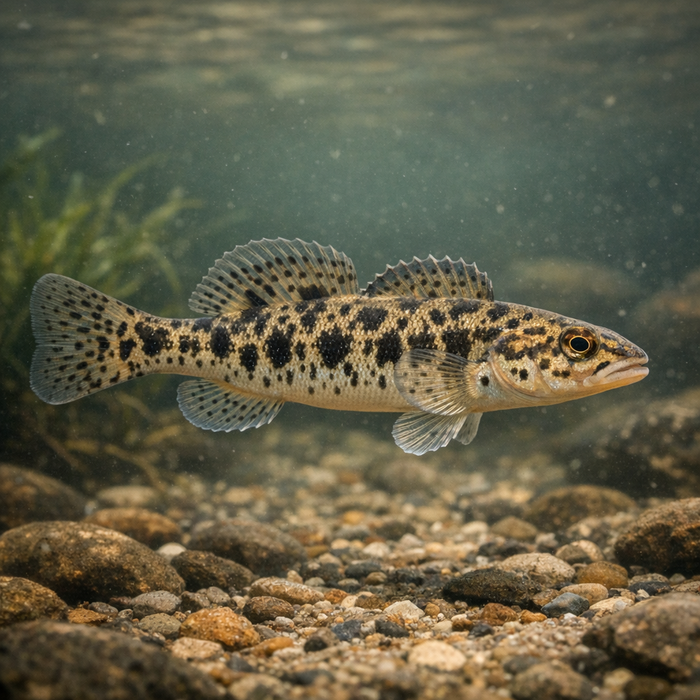
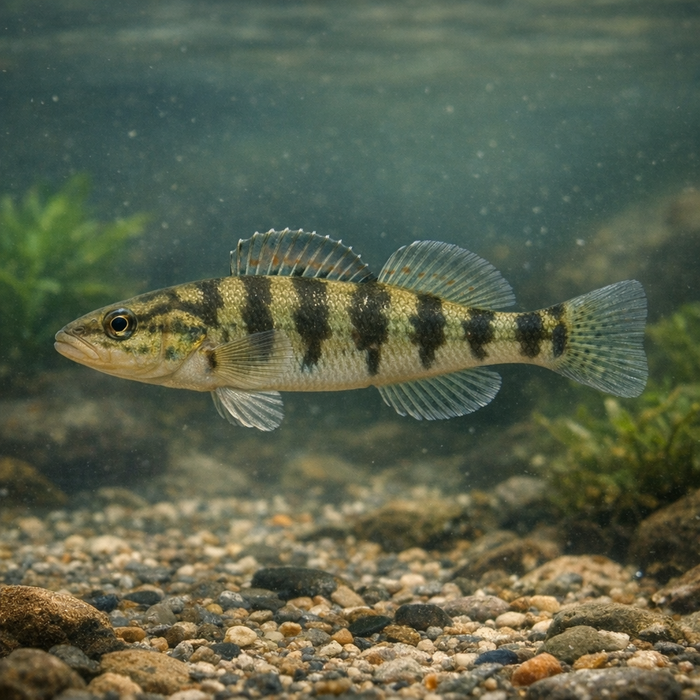
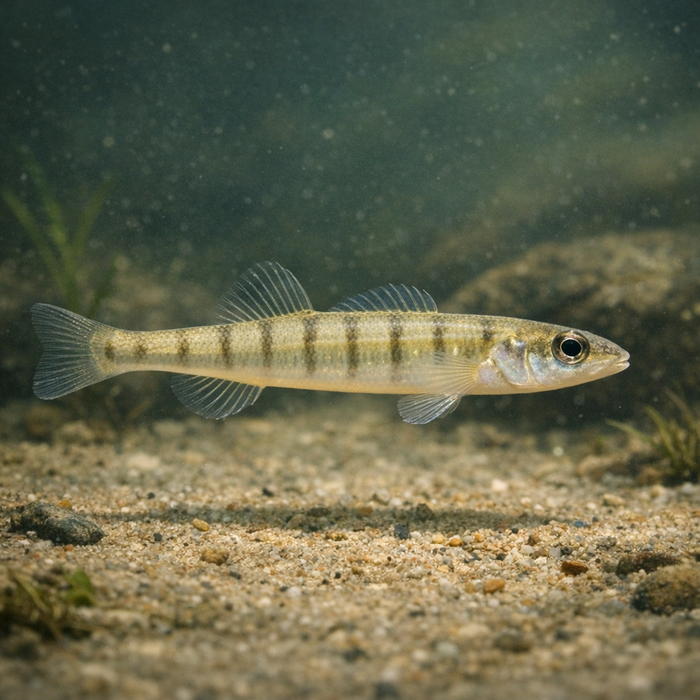
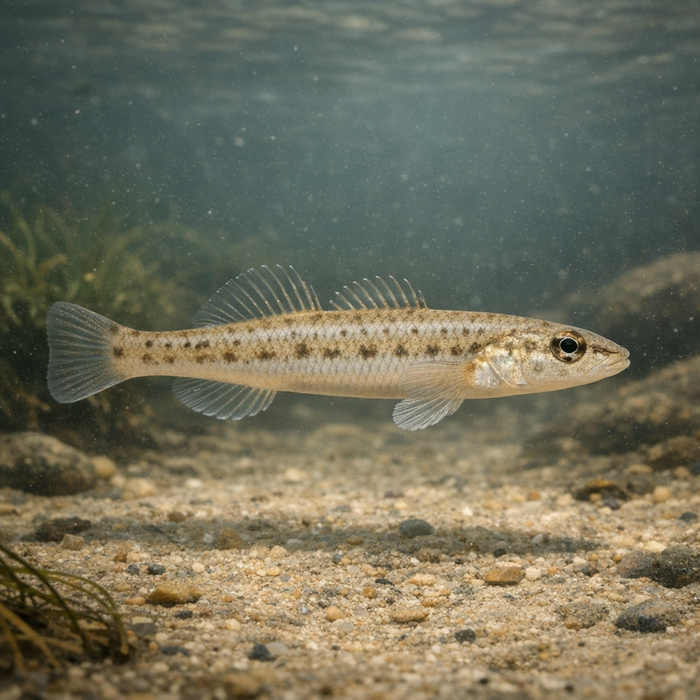
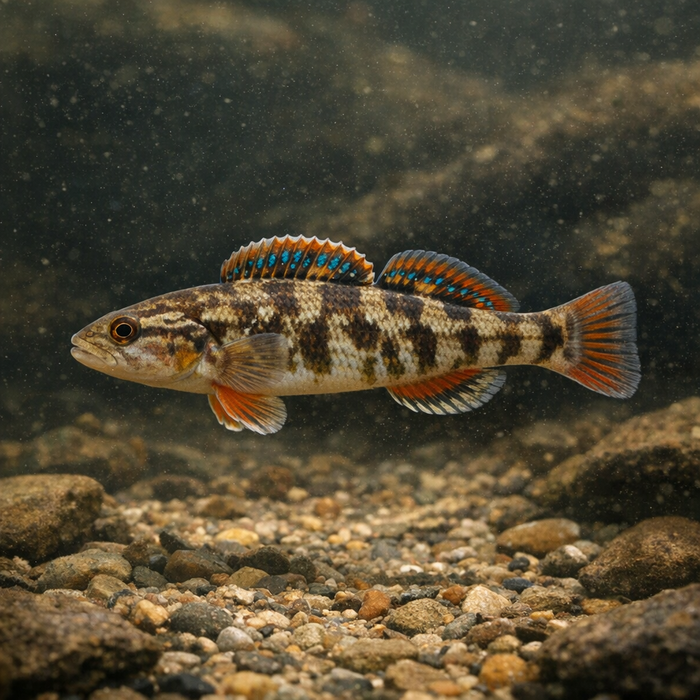
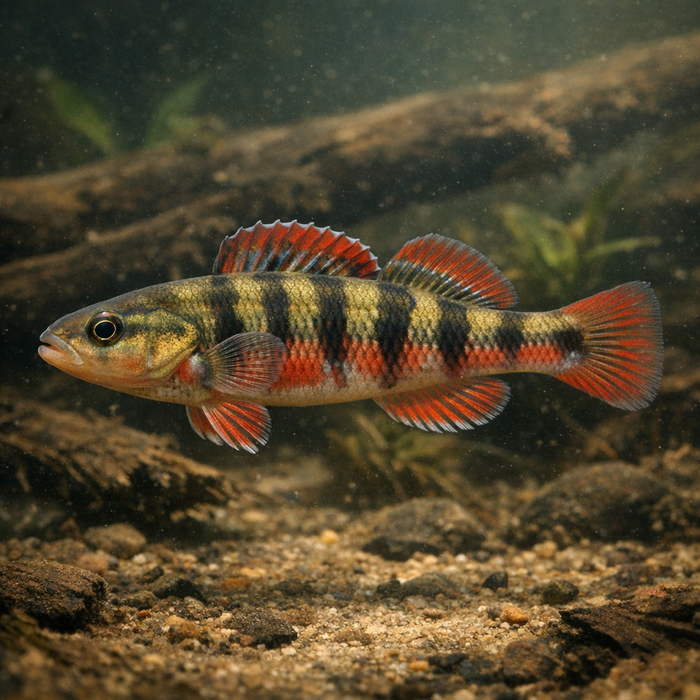
Tombigbee Darter (Etheostoma lachneri): A tiny river sprinter with attitude that outweighs its ouncesIntroductionThe Tombigbee darter is proof that big character comes in small packages. Blink and you'll miss it: a streak along the gravel, a flick of pectorals, and it's gone. For anglers who like puzzles more than tug-of-war, this micro native makes a compelling target. It's not here to stretch your line. It's here to test your observation, stealth, and finesse. If you're chasing Tombigbee darter facts or curious about Tombigbee darter habitat, you're in the right riffle.What Makes the Tombigbee darter Unique?First, it's engineered for current. With a reduced swim bladder, it hugs the bottom like a tiny torpedo, using big pectorals as stabilizers to pin itself to the flow. Second, it compresses life into a fast-forward timeline. The Tombigbee darter matures quickly, spawns in spring, and rarely sees a third birthday. Finally, nuptial colors. Breeding males pop with blues and oranges, broadcasting in short, electric displays under slabby stones while females place adhesive eggs where the current scrubs them clean.Habitat & Global RangeDespite the cosmic name, the Tombigbee darter is a local specialist. Think clear, shallow riffles over gravel or small cobble, with knee-deep water as a luxury and ankle-deep more the norm. It prowls the tight seams between stones, especially where clean substrate and steady oxygen converge. You won't need a boat; you'll need good knees, polarized glasses, and the patience to scan a patch no bigger than a doormat. In its home drainage, small tributaries carry much of the action. The best Tombigbee darter habitat is usually where the water whispers, not roars: steady current, not flood-chute mayhem.Behavior & TemperamentThis fish doesn't cruise like a sunfish; it teleports. Short, precise dashes move it from shadow to shadow. It's wired for ambush on a micro scale, snatching tiny invertebrates with the kind of acceleration you only notice after the fact. Tombigbee darter groups may share good riffles, but they aren't schooling in the bait-ball sense. Expect individuals spaced out along prime stones, each holding a postage-stamp territory. During spawn, males get bolder and brighter, yet still bunker tight to the substrate. Spook radius is measured in feet, not yards, which is generous for a fish this size; your approach still matters.Ecological ImportanceThe Tombigbee darter is a riffle health meter. It demands clean gravel and good oxygen. When sediments choke a stream or algae slicks the rocks, darters bow out. Their diet links drifting invertebrates to larger predators, passing energy up the chain. They're also a favorite data point for biologists chasing clues about water quality. In short: if you're seeing darters, good things are happening in that creek.Conservation & Environmental PressuresOfficial listings may read Least Concern, but that label hides a truth: riffle specialists lose fast when habitat quality slides. Siltation from poor land use, low flows from water withdrawals, and runoff spikes after heavy storms all stress small-stream natives. The Tombigbee darter is resilient to a point, but it can't outmuscle mud. Fortunately, basic stream stewardship-stable banks, intact riparian buffers, and reduced sediment-pays immediate dividends for this fish.The FishyAF TakeThe Tombigbee darter won't break your personal best, but it might sharpen your game more than any bruiser bass. It rewards slow looking, quiet feet, and tiny tactics. If you want a quick gulp of adrenaline, move along. If you want to read microcurrents, learn the language of gravel, and appreciate a fish built like a race car for the riffle lane, this is your huckleberry. The Tombigbee darter is niche, nimble, and honestly pretty punk. Count us fans.