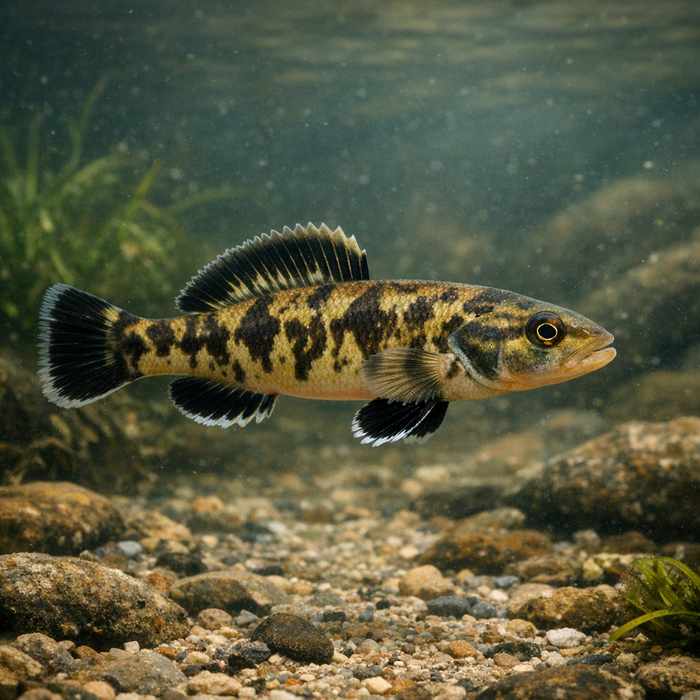
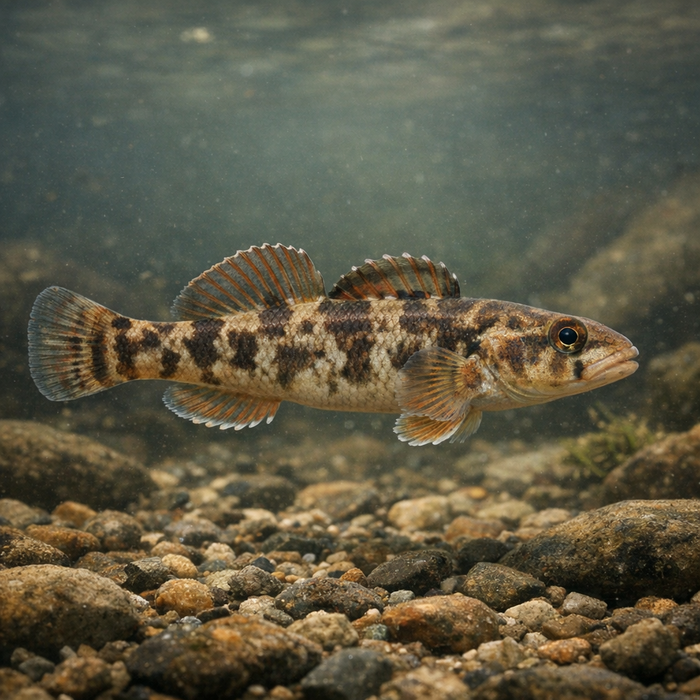
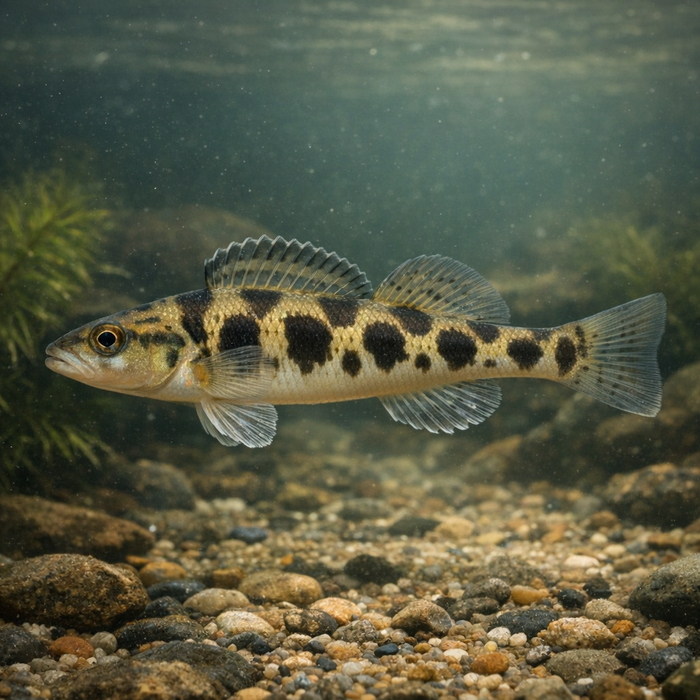
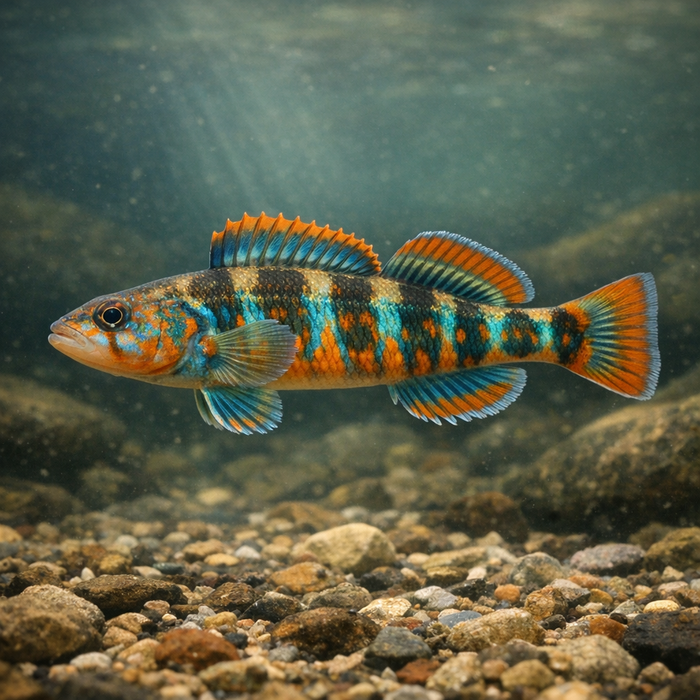
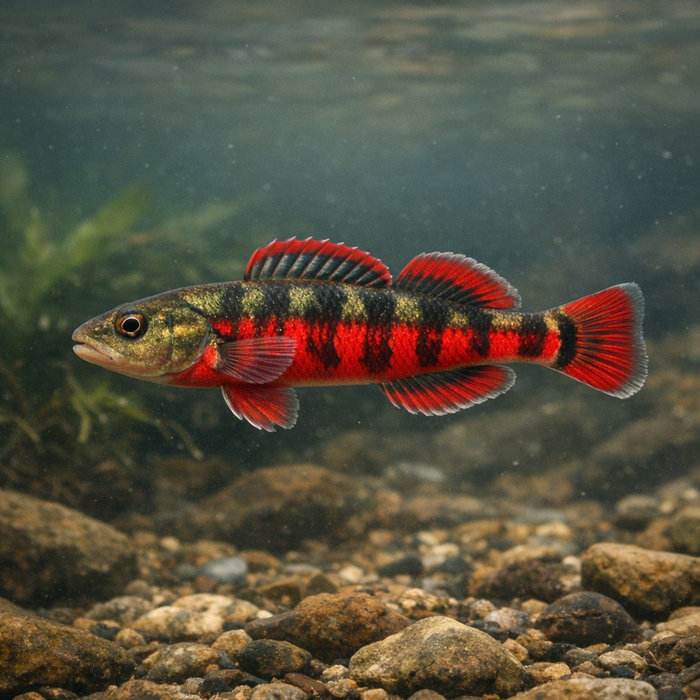
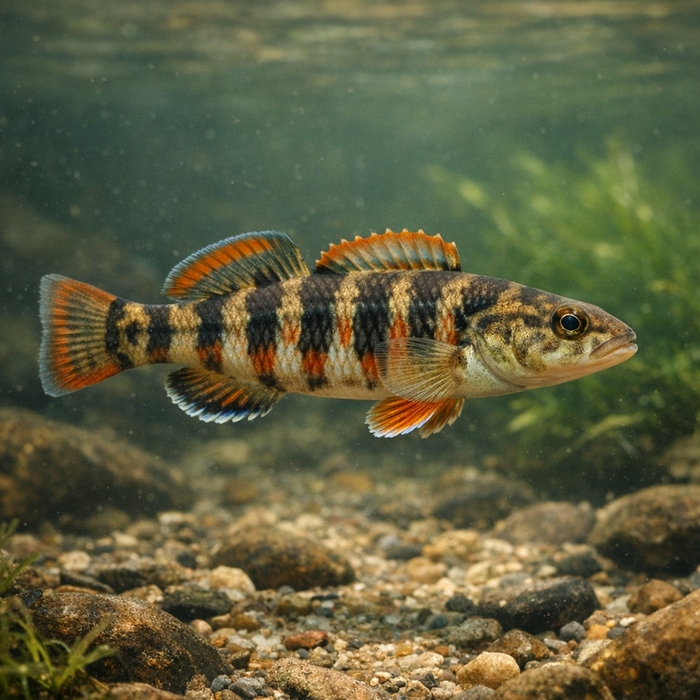
Sharphead Darter (Etheostoma acuticeps): Pocket-Rocket Perch With A Built-In Current WedgeIntroductionThe sharphead darter is the fish version of a rally car: tiny frame, low center of gravity, and outrageous control in ugly water. If you've ever stared into a blasting riffle and wondered how anything lives there, this little throttle-junkie is your answer. For anglers who love microfishing or just appreciate stream biology, the sharphead darter is proof that high-performance engineering can fit into three inches of fish.What Makes the Sharphead darter Unique?Start with the name. That sharply pointed snout isn't marketing fluff. It partners with a flattened belly and oversized pectorals to push the fish into the gravel seam, letting it hold station where bigger fish get blown out. The sharphead darter also keeps its life at ankle depth, riding the bottom with precision and darting short distances instead of cruising long laps. That means stealth and accuracy matter if you're trying to actually catch one. Finally, males turn moody and fashion-forward during spawning, deepening body bars and flashing warm amber fin edges that make them look like miniature stream tigers.Habitat & Global RangeThis is a riffle specialist. Think clear water, firm gravel-to-cobble bottoms, and consistent current that delivers a conveyor belt of drifting morsels. You'll encounter the sharphead darter in select drainages of the southeastern U.S., especially upland and foothill streams where gradient builds character and oxygen stays high. Pools are intermissions; riffles and runs are home field. If you're studying Sharphead darter habitat, picture a small, wadeable stream with clean rock, sparse silt, and just enough pockets to hide in when flood pulses roll through.Behavior & TemperamentThe sharphead darter hugs the substrate like it owns it. Instead of cruising midwater, it uses micro-bursts to hop between stones, often stopping short to scan for drifting prey. It is not a schooling show; you'll see singles and small loose groups tight to the bottom. Spawning fires up in spring as temperatures climb, and that's when territory size shrinks and attitude grows. Even then, aggression is scaled to the body: decisive, not dramatic. Hook one and you won't get drag-scorching runs; you'll get twitchy jukes and an immediate attempt to use rocks as a shield.Ecological ImportanceSharphead darters are riffle accountants, keeping insect populations honest and passing that energy up the line to the bigger fish everyone makes T-shirts about. Because they demand clean, well-oxygenated rock gardens, their presence signals stream health. Lose the current, clog the rocks with silt, or let algae mats take over, and the sharphead darter is one of the first to vanish. For biologists and savvy anglers, that makes it a fast, reliable indicator species hiding in plain sight.Conservation & Environmental PressuresThis fish isn't arm-wrestling catfish or roaming reservoirs. It's tied to a habitat that's easy to mess up: siltation from bad land use, low flows from withdrawals, and water quality swings after heavy storms. Even subtle changes smother eggs in crevices or wipe out the insect drift they count on. Some waters might protect non-game natives by default, while others allow collection with permits. Either way, a healthy sharphead darter population usually means the watershed's doing something right. Keep an eye on local conservation groups; they're often the first to notice when riffles start going quiet.The FishyAF TakeThe sharphead darter is the definition of small but mighty. It won't pad your freezer or test your drag, and that's the point. Fishing for one is precision work: tiny hooks, silly-light tippet, and a presentation that lands exactly where the current breaks over stone. Nail it and you'll connect with a fish that turns chaos into order using nothing but a pointy face and attitude. If you came for Sharphead darter facts, here's the kicker: mastering this micro actually makes you a better angler everywhere else. When inches matter, everything matters.