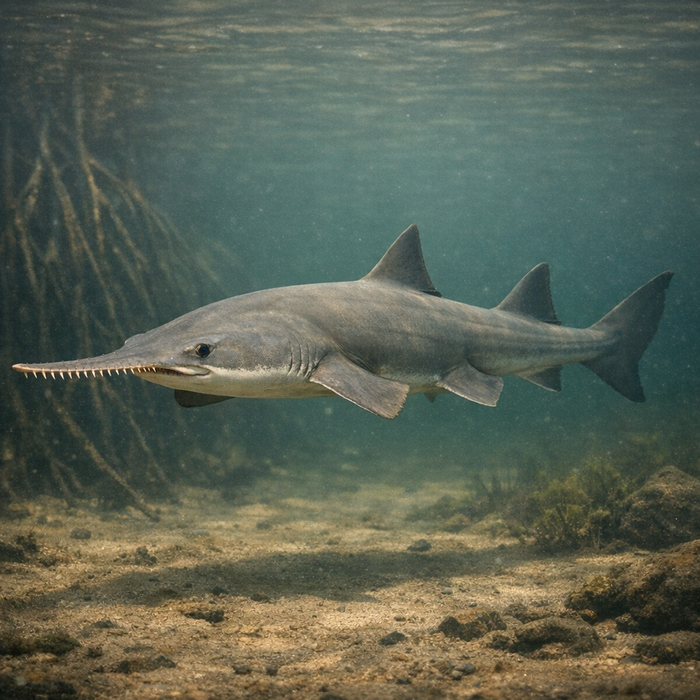
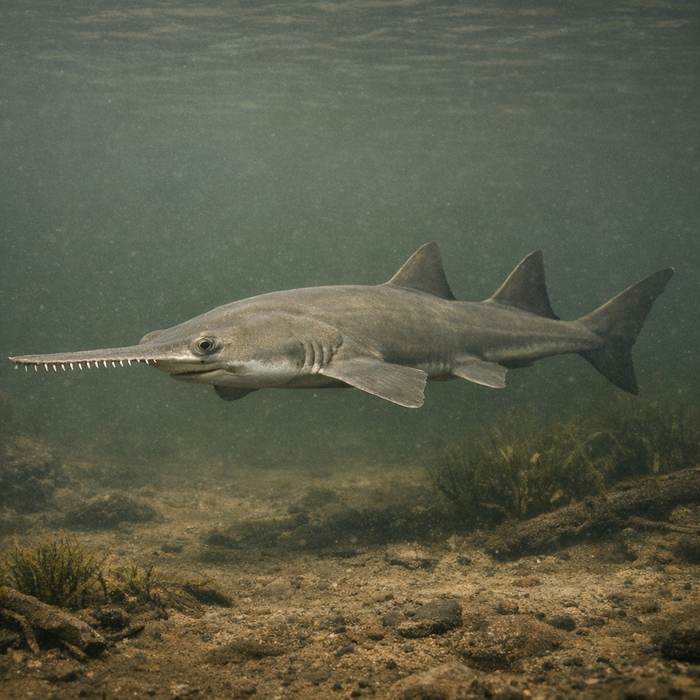
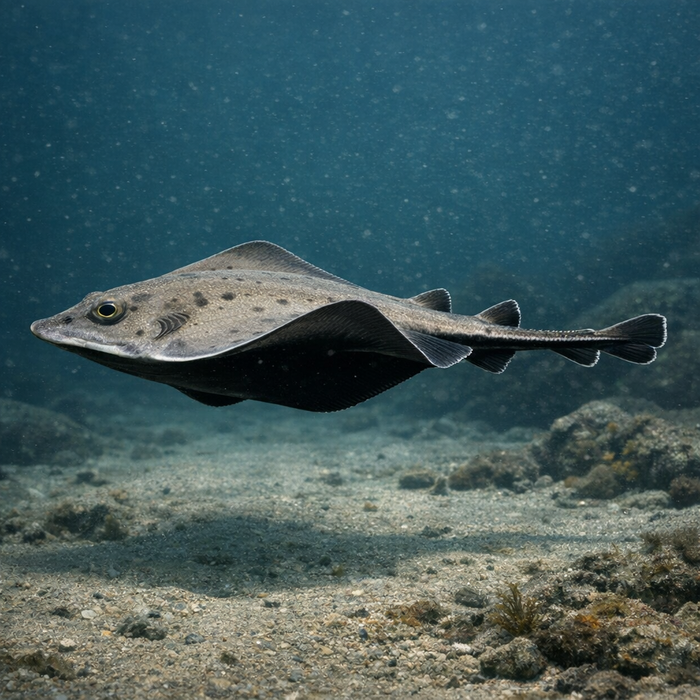
Smalltooth Sawfish (Pristis pectinata): A Bold, Memorable Hook LineIntroductionMeet the underwater chain saw that isn't a shark. The smalltooth sawfish looks like a prehistoric prank, but it's a razor-focused predator built for life in skinny, muddy water. For anglers who've shared a flat with one, the moment burns into memory: a long shadow, a blade for a face, and the sense that you just crossed paths with royalty.What Makes the Smalltooth sawfish Unique?Start with the business end. That rostrum isn't for show; it's a precision slashing tool bristling with teeth that turns bait balls into scattered confetti. Pair that with top-tier electroreception and you've got a fish that can sense the tiny nerve flickers of buried prey. Add the silhouette: a ray's body, dorsal fins like a shark, and a built-in sword. There's nothing else quite like a smalltooth sawfish, and that's saying something in the land of tarpon and gators.Habitat & Global RangeIf you're looking for true Smalltooth sawfish habitat, think tropical and shallow. Estuaries, mangrove creeks, sandy or muddy bays, and flats with warm, often tea-stained water are prime. In the western Atlantic, they're most closely associated with South Florida and parts of the Caribbean. Juveniles haunt ultra-shallow nursery zones among mangrove roots, while larger fish roam channels, river mouths, and soft-bottom bays. Depth isn't the draw here; soft substrate, food, and shelter are. When you're scanning Smalltooth sawfish facts for a pattern, start with warm water plus protected backcountry.Behavior & TemperamentDespite the hardware, the smalltooth sawfish isn't a bruiser charging boats. It's deliberate. That saw sweeps side to side when it feeds, then the fish vacuums stunned prey off the bottom. They're not built for blitzes; they excel at ambush and control. Most show serious site fidelity, sticking to productive bays season after season. Hook one and you'll feel a steady, unstoppable pull, long runs, and the stubborn weight of a living anchor. They'll use the environment too, grinding lines into oyster edges or wrapping mangrove roots if given the chance.Ecological ImportanceThis fish is a walking, slashing indicator of coastal health. Mangrove stands and intact estuaries don't just shelter juvenile sawfish; they power the entire food web. A smalltooth sawfish keeps prey species honest, redistributes nutrients, and signals that the shoreline still functions. Lose the mangroves and you don't just lose a trophy encounter-you cut out a keystone piece of the flats.Conservation & Environmental PressuresThe smalltooth sawfish is critically endangered. Gillnets, habitat loss, and coastal development hammered historic populations. The very tool that makes them special also made them vulnerable; rostra tangle in nets and lines at brutal rates. Today, strict protections and education have bent the curve in a few places, especially South Florida, but recovery takes time. Clean freshwater flow, mangrove preservation, bycatch-reduction practices, and smart release behavior are non-negotiables. Every healthy release matters.The FishyAF TakeThe smalltooth sawfish is the flats' final boss you're not trying to fight. Spotting one is a career moment; tangling with one is usually accidental and instantly humbling. If it happens, your goal is simple: keep it wet, cut the line, and let that legend slide away. You came for a fish story-this one ends with a pulse, not a photo on a dock. Respect the blade, respect the habitat, and you'll understand why the smalltooth sawfish still owns the backcountry.