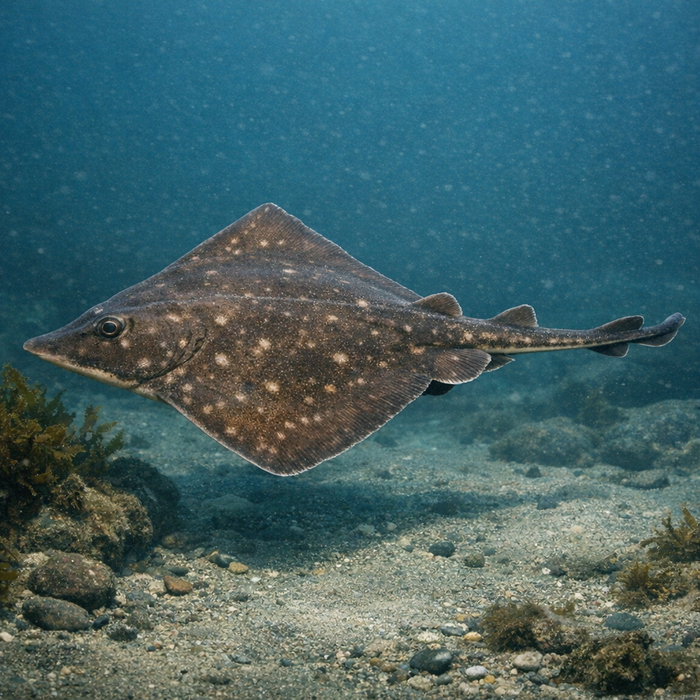
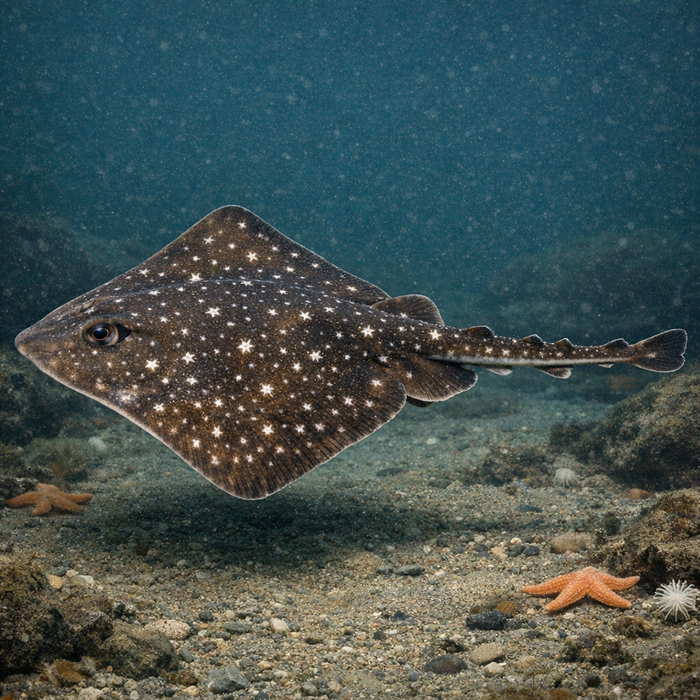
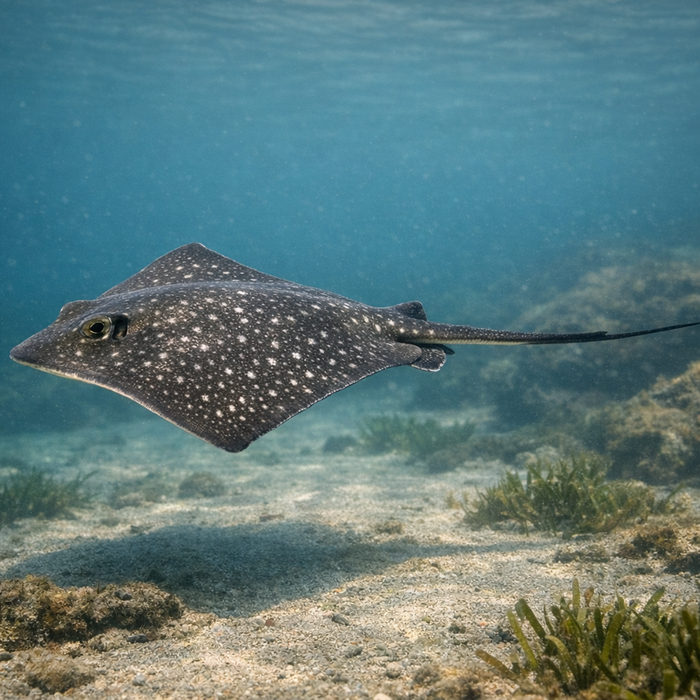
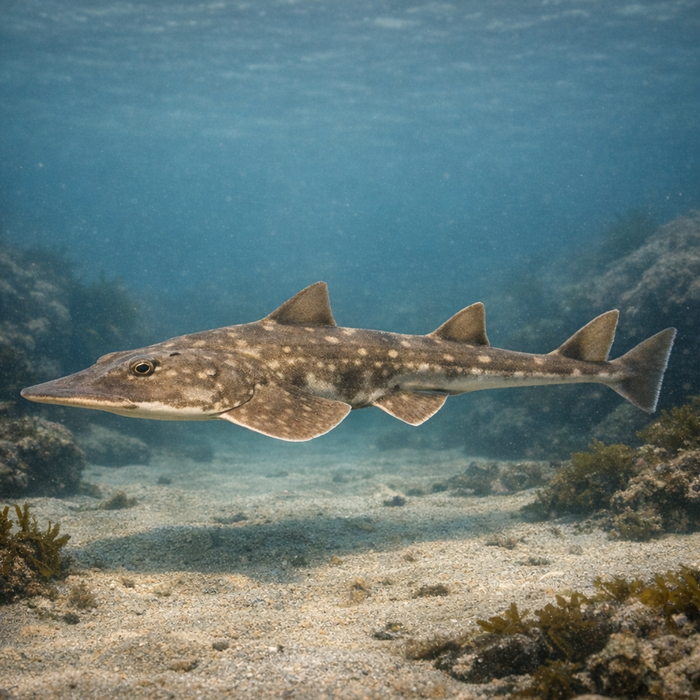
Spiny Butterfly Ray (Gymnura altavela): Big wings, tiny tail, and serious torque in the surf.IntroductionThe spiny butterfly ray is that oversized beach blanket that suddenly comes alive when your bait disappears. Ultra-wide disc, comically short tail, zero nonsense once the rod bends. If you like nearshore surprises and long, stubborn runs, this bottom-hugging glider delivers. Consider this your quick hit of spiny butterfly ray facts and why this winged pancake deserves respect.What Makes the Spiny Butterfly Ray Unique?Start with proportions. The spiny butterfly ray is almost all wings, spreading to outrageous widths while trailing a stump of a tail. Unlike many stingrays, there's no venomous spine back there, but the upper surface carries small thorns that inspire the "spiny" name. It moves with slow, manta-like pulses and then, when spooked or hooked, it shifts into bulldozer mode. Another standout: serious sexual dimorphism. Females grow much larger than males, producing live pups already wide enough to look like handheld frisbees.Habitat & Global RangeThe spiny butterfly ray hugs shallow, sandy or muddy bottoms along the Atlantic's edges, including the Mediterranean. Think surf lines, sandy bays, estuary mouths, and open flats where small fish funnel with the tide. Western Atlantic encounters stretch from the Caribbean and Gulf of Mexico down to Brazil, with occasional strays into the Southeast U.S. On the eastern side, Europe and North Africa host notable populations. If you're scouting spiny butterfly ray habitat, look for soft-bottom zones near channels, bars, and current seams that concentrate bait.Behavior & TemperamentBottom-oriented but not lazy, these rays bury in the substrate with eyes and spiracles periscoping above. When it's feeding time, they slip forward, pin prey, and vacuum it off the bottom with a mouth that's practically the width of their head. They cruise in loose company at times but typically act like solitary ambush predators. Hooked fish don't sprint like tuna; they hunker down, angle their disc for maximum drag, and make peeling runs when you try to lever them off the bottom. It's a tug-of-war with a living parachute.Ecological ImportanceAs mid-level predators, spiny butterfly rays help regulate small fish and crustacean populations on coastal flats. Their foraging turns over sediment, exposing invertebrates to the food web and oxygenating surface layers. They're also part of the menu for larger sharks, especially juveniles, which links shallow flats to offshore predators. Bottom line: when spiny butterfly rays thrive, the nearshore buffet stays balanced.Conservation & Environmental PressuresGymnura altavela is listed as Endangered in many assessments due to coastal fishing pressure, bycatch in trawls and gillnets, and widespread habitat loss. Nursery areas overlap with human playgrounds: dredged channels, resort beaches, and estuaries absorbing pollution and runoff. Add slow maturation and low productivity compared to bony fish, and recoveries take time. Ethical handling matters here. If you catch a spiny butterfly ray, keep it wet, support the disc, and get it back quickly.The FishyAF TakeThe spiny butterfly ray is a powerlifter dressed as a bedsheet. It doesn't win for aerials or speed, but it scores max points for leverage, stubbornness, and shock factor when it surges in knee-deep water. If your idea of fun is testing knots, drags, and patience while the crowd watches from the beach, this fish delivers. Also, it's a walking lesson in coastal stewardship. Protect the flats and you protect the wings. That's the kind of nearshore trophy we want our kids to meet, not just read about in dusty reports on spiny butterfly ray habitat.