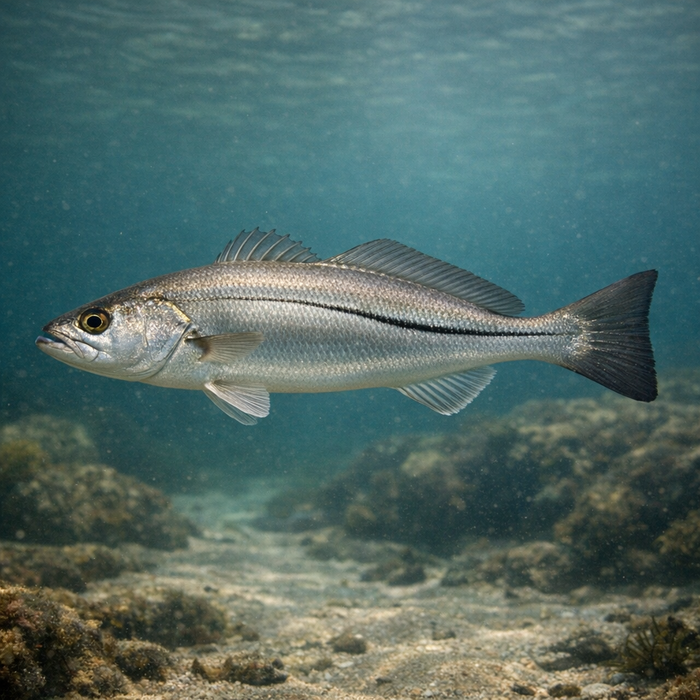
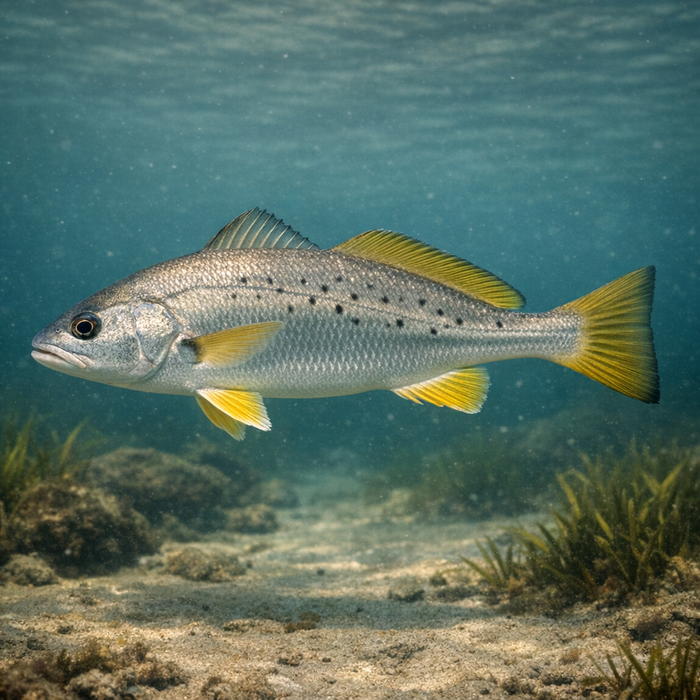
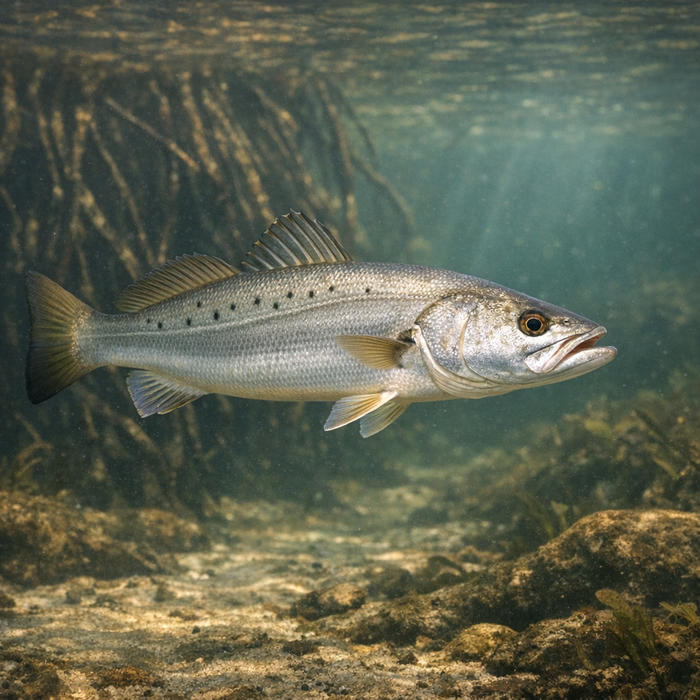
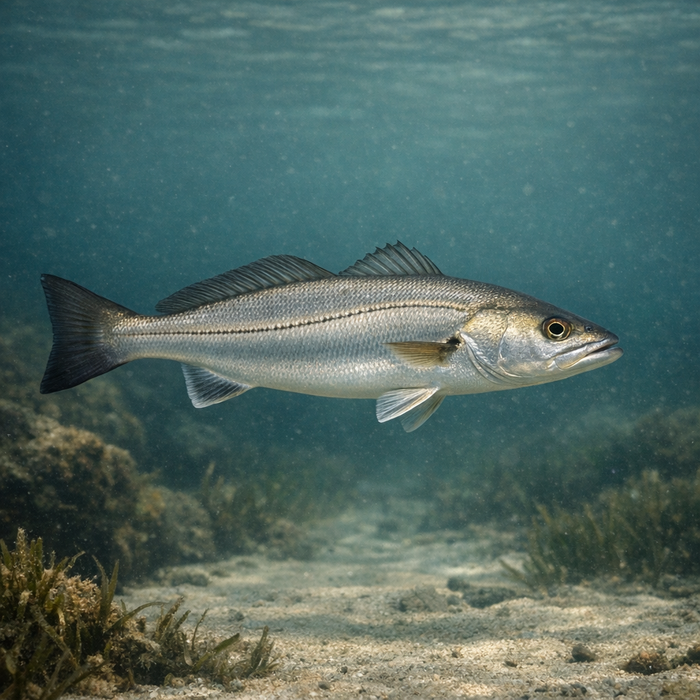
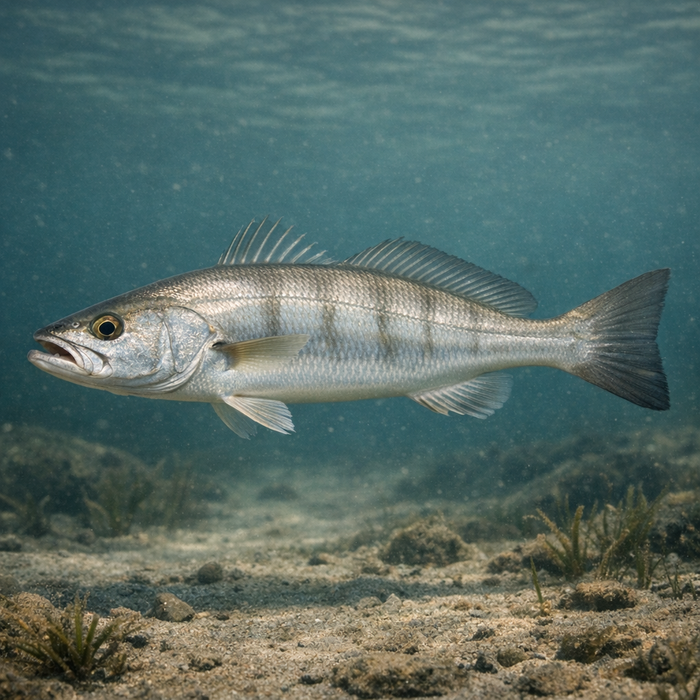
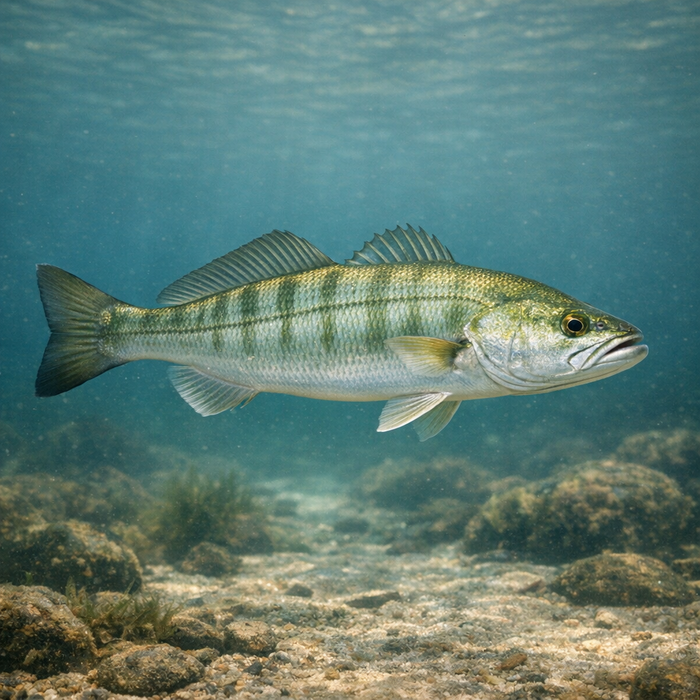
Spotfin croaker (Roncador stearnsii): The surf-zone bruiser with a built-in drum kit and a telltale black badge.IntroductionSpotfin croaker are the heavy hitters of the Southern California and Baja surf scene. They grunt, they dig, and they absolutely truck sideways in a ripping shore break. If you're combing beach troughs or poking around warm bays, this croaker is the thick-shouldered customer you hope shows up. For anglers collecting Spotfin croaker facts or scouting Spotfin croaker habitat, this fish sits squarely at the intersection of approachable and addictive.What Makes the Spotfin croaker Unique?First, the name is not a tease. Adults wear a bold black spot at the base of each pectoral fin, a quick ID check when foam and glare make life difficult. Second, they're built for the buffet line under the waves, with robust pharyngeal plates that crush clams, mussels, and sand crabs into protein paste. Third, they talk back. Like many sciaenids, spotfin croaker vibrate specialized muscles against the swim bladder to croak, a low rumble you can feel through a rod or a wet palm. Put it together and you get a muscular, noisy, unmistakable surf specialist.Habitat & Global RangeThe spotfin croaker calls the Northeast Pacific home, primarily Southern California through Baja California and into the Gulf of California. They favor sandy beaches with defined troughs, jetties with adjacent sand, and warm, protected bays. Think skinny water and movement: shifting bars, edges of eelgrass, channel mouths, and pier shadows. Depth is usually shallow, often knee to waist deep in the surf, sliding deeper in harbor channels during colder months. If there's food rolling in the wash or funneled by tide, a spotfin croaker is probably nosing around.Behavior & TemperamentSpotfin croaker are workmanlike predators. They forage by feel and vibration, rooting in the wash for buried crabs and soft-shelled clams. Bites tend to start as tap-tap curiosity, followed by a committed surge once the bait feels right. They school loosely by size, with bigger specimens often shadowing prime lanes or current seams. Peak activity lands on moving water, especially around dawn and dusk, and hot, stable summer weather can make an already good bite go a little silly.Ecological ImportanceAs mid-level predators, spotfin croaker convert beach invertebrates into fish biomass, then pay that energy forward to larger hunters like leopard sharks, halibut, and sea lions. They're part of a productive surf-and-bay circuit that recycles nutrients churned up by waves and tides. Healthy spotfin numbers often coincide with strong invertebrate communities and intact sandy shoreline processes.Conservation & Environmental PressuresThis species isn't usually the target of heavy commercial effort, but it does feel the cumulative punch of urban coastlines. Stormwater runoff, sediment changes from coastal engineering, and degraded bay bottoms all chip away at forage and nursery quality. Local fishing pressure can stack up on popular beaches. The smart move is staying current with regional rules and giving larger breeders an easy release.The FishyAF TakeThe spotfin croaker is beach fishing's blue-collar prize. It eats honest baits, fights dirty in the whitewater, and shows up where your feet can get you. For anglers, that's a killer combo. If you learn to read sand, watch tide, and ride the rhythm of the sets, you're already talking spotfin. And when that rod loads and you hear that faint croak, you're in on the joke: this species is more personality than its modest size suggests. That's why the spotfin croaker keeps pulling us back to the foam.