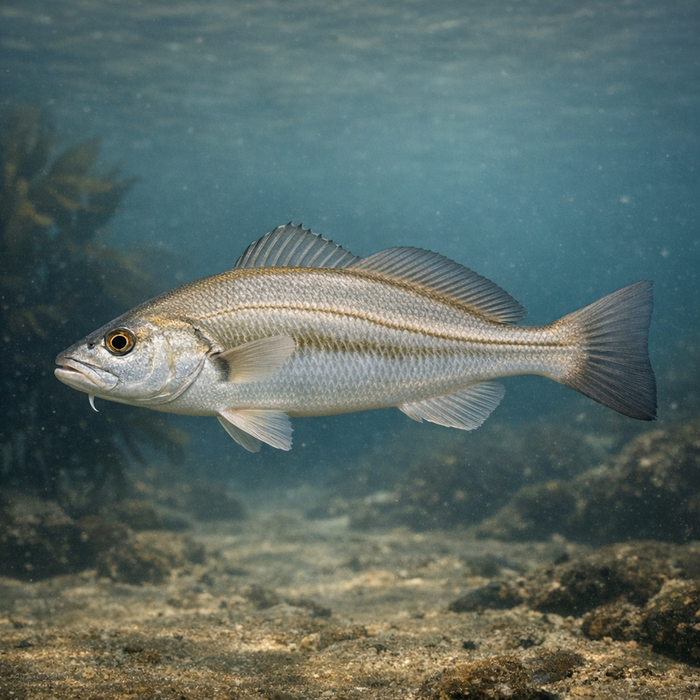
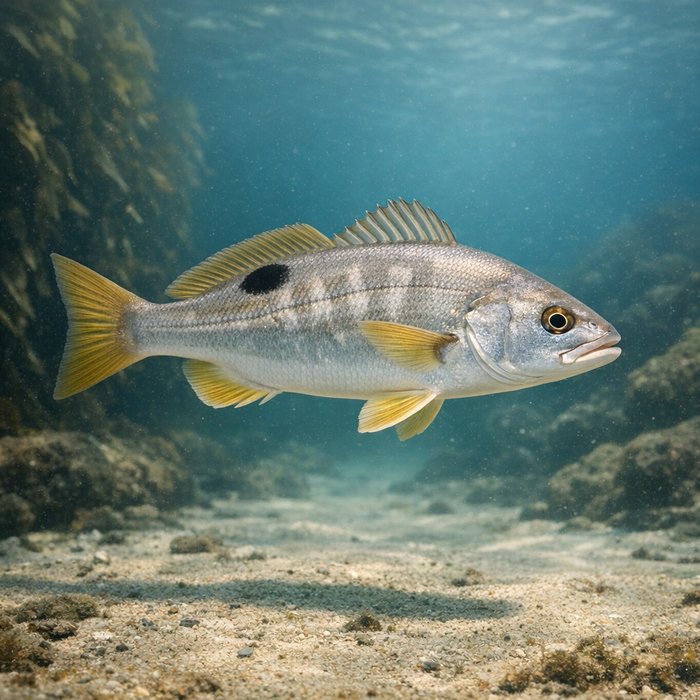
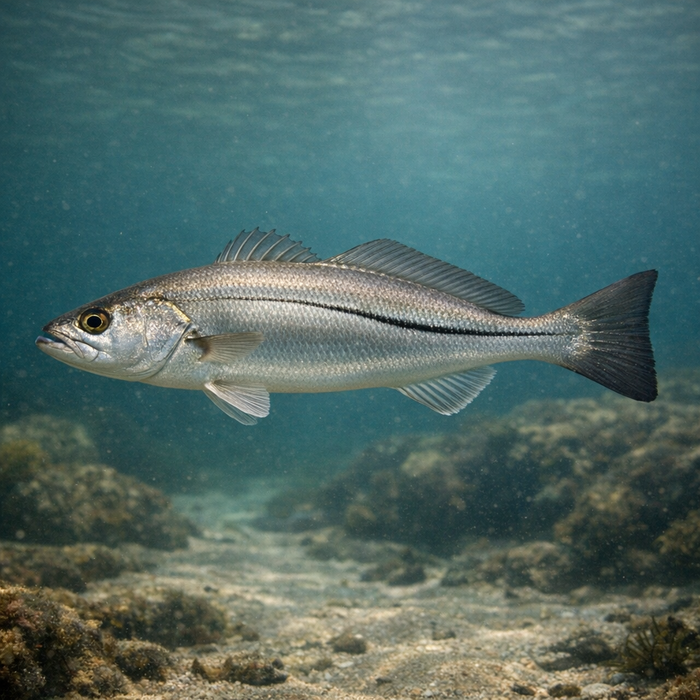
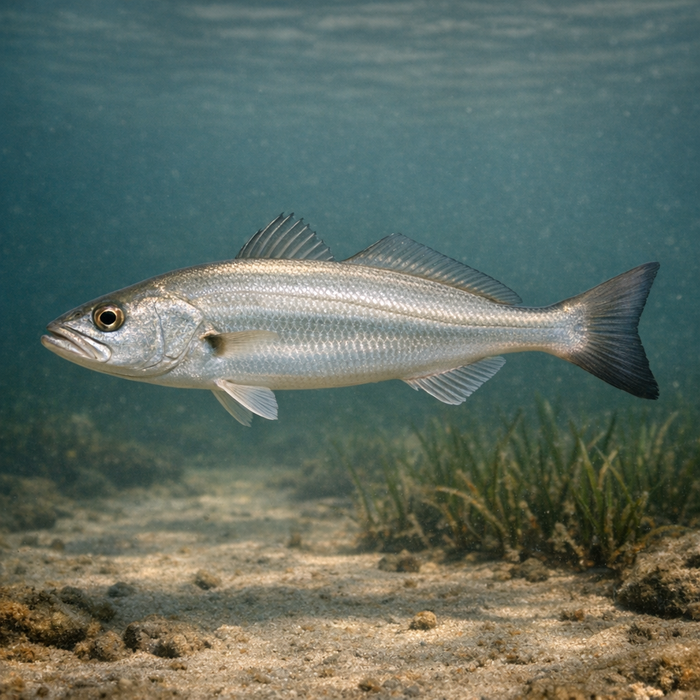
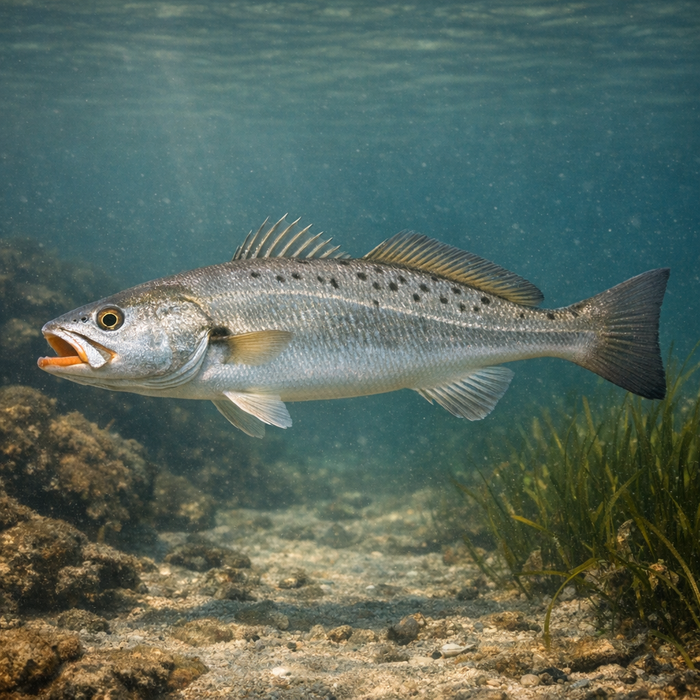
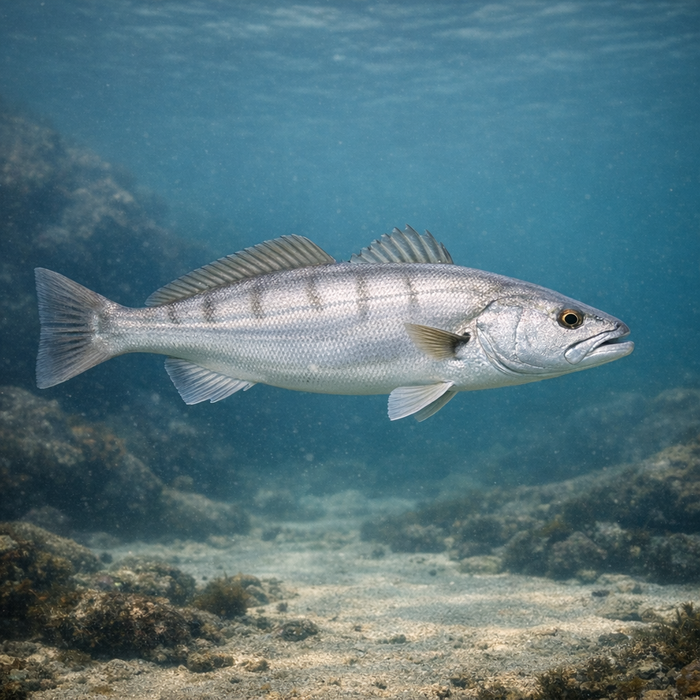
Yellowfin Drum (Umbrina roncador): A Bold, Memorable Hook LineIntroductionThe yellowfin drum is the SoCal surf's pocket brawler: bright fins, louder personality, and way more grit than its size suggests. If you've ever heard croaking from a five-gallon bucket, that wasn't your aerator dying. That was this fish talking trash. It's a gateway species for new surfcasters and still magnetic for veterans who appreciate subtle tides, troughs, and light-tackle fun. Consider these Yellowfin drum facts your fast track to smarter beach sessions.What Makes the Yellowfin drum Unique?Start with the looks: metallic body with pale diagonal bars and those unmistakable yellow paired fins. Add a single tiny chin barbel that works like a whisker, probing sand for buried meals. Then there's the soundtrack. The yellowfin drum summons a percussive croak by vibrating its swim bladder with specialized muscles. You'll hear it boatside, pier-side, and yes, bucket-side. Toss in hard head shakes and surprisingly stubborn runs, and you've got a compact fighter with big-fish attitude.Habitat & Global RangeIf you're scouting Yellowfin drum habitat, think warm, sandy beaches and adjacent bays along the Pacific coast of Baja California and Southern California. They gravitate to nearshore zones where waves sculpt guts, rips, and soft edges. Seasonal pushes often bring thicker schools into skinny water during summer and early fall, while cooler months nudge fish into deeper bay channels and protected areas. Structure doesn't have to mean rocks; for this species, a two-foot trough or a faint seam can be the whole game.Behavior & TemperamentYellowfin drum travel in loose size-class packs, sliding along troughs and current edges like commuters on a moving sidewalk. They aren't reckless, but they're not spooky divas either. The bite lights up with moving water, particularly around tide swings, and the daily prime times are classic: dawn and dusk. They feed tight to the bottom and broadcast their croaks most during the summer spawning window, when energy and competition spike. Hook one, and expect gritty, short runs, insistent tail thumps, and dogged circles in the wash.Ecological ImportanceAs a midlevel predator, the yellowfin drum connects sandy-beach invertebrates to bigger coastal hunters. Their bottom-grubbing habit stirs and recycles organic matter, and their schooling nature makes them important forage for larger gamefish and marine mammals. Those drumming calls aren't just drama; they're social signals that help coordinate spawning and reduce wasted energy in chaotic surf environments.Conservation & Environmental PressuresOverall, yellowfin drum status trends stable, but they rely on healthy sandy-beach ecosystems that are anything but indestructible. Coastal armoring, stormwater runoff, and polluted river plumes hit surf-zone species first. Persistent algal blooms and heatwaves scramble seasonal patterns. Recreational pressure adds up on accessible beaches. Smart harvest, quick icing, and respect for local closures keep these fish plentiful and worthy.The FishyAF TakeThe yellowfin drum is proof that you don't need a boat or a massive budget to feel like a genius angler. Read the beach, time the tide, and you're in the game. The fish is honest: show it a sand crab in the right lane and it usually plays ball. That approachability doesn't make it boring; it makes it addictive. Strip the surf down to its essential puzzle, and this little drummer is the perfect partner. Chase it for practice, chase it for tacos, or chase it because hearing your catch growl at you is surf-caster poetry. Either way, the yellowfin drum earns its reputation as the West Coast's most charismatic everyman fish.