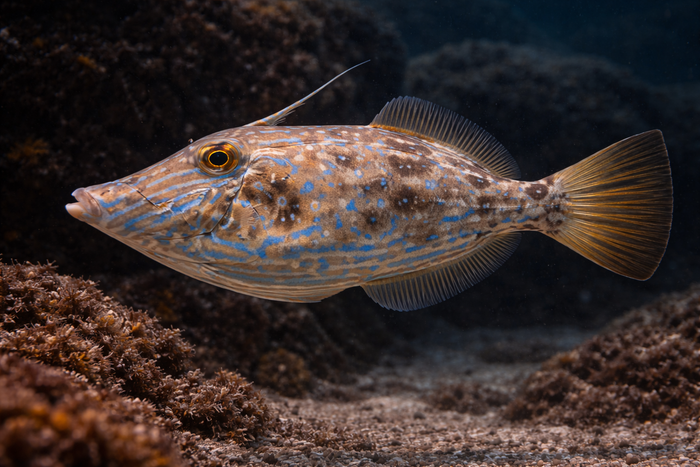
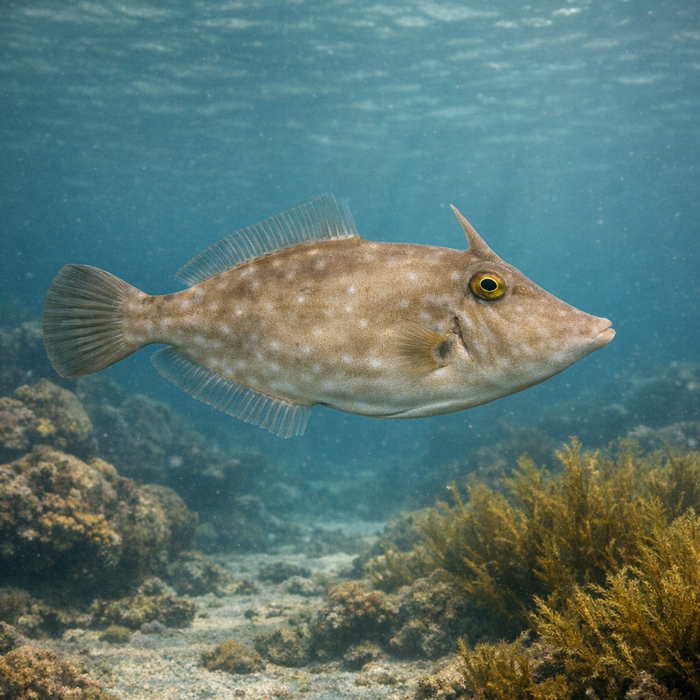
Surgeonfish (Acanthuridae): The Reef Grazer With a Blade Behind Its Back
A fish can spend its day nibbling algae and still deserve a little personal space. Surgeonfish carry sharp defensive structures beside the tail, turning careless handling into a particularly avoidable mistake. Their deep bodies, small mouths, and sometimes outrageous colors suggest aquarium royalty. Their equipment says otherwise.
One important distinction comes first: Acanthuridae is a family, not a single species. This guide covers the group that includes tangs, bristletooths, and unicornfishes. The practical profile centers on smaller and medium reef dwellers, with an indicative size of 8–14 inches and 0.5–2 pounds. Those figures are useful starting points, not family-wide averages or maximums.
What Makes the Surgeonfish Unique?
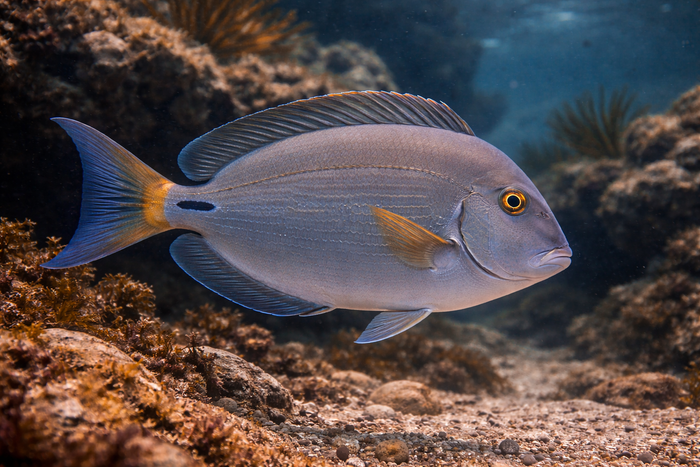
The signature feature is the tail armament. In Acanthurus, a scalpel-like spine on each side of the narrow tail base folds into a groove. Other family members carry fixed defensive plates or keels instead. These structures are not decorative, and a sideways tail movement can put them exactly where an unwary hand does not belong.
Feeding equipment is equally specialized. Many members use closely packed teeth to crop attached algae, while bristletooths have slender, comb-like teeth suited to collecting material from reef surfaces. Doctorfish even possess a muscular, gizzard-like digestive structure that uses swallowed grit to help process food. Reef grazing involves more engineering than the casual nibbling suggests.
Then there is the costume department. Juvenile mimic surgeonfish resemble certain angelfishes before adopting adult coloration. Atlantic blue tangs begin life bright yellow rather than blue. Identification requires attention to life stage, not just matching a passing fish to the brightest photograph online.
Habitat & Global Range
Surgeonfish habitat spans tropical coastal waters across the Atlantic, Indian, and Pacific oceans, with some members extending into subtropical areas. Coral reefs and rocky reefs are central, but adjacent sand, rubble, lagoons, and other coastal feeding grounds also matter. Global distribution does not mean every species occurs everywhere.
Depth depends heavily on identity and age. Some familiar grazers work shallow reef flats and shore-accessible rock. Other members occupy deeper slopes and drop-offs. Young ringtail unicornfish can use shallow lagoons, while adults are usually observed on deeper reef drop-offs. A family-wide depth prescription would be tidy, memorable, and wrong.
For anglers, the useful question is not simply whether there is coral nearby. Look for accessible feeding surfaces, actual fish activity, and a legal way to present bait without dragging tackle through living reef. Structure helps locate the fish; it should not become collateral damage.
Behavior & Temperament
Surgeonfish are often active daytime feeders, moving across feeding surfaces in repeated bouts of grazing. Some gather in schools, including mixed groups with related fishes. Others defend feeding territories with considerable enthusiasm. That peaceful-looking vegetarian can be deeply unreasonable about its patch of groceries.
The family label also conceals dietary variation. Herbivory is the central theme here, but detritus contributes to some diets, and certain members consume animal material. Yellowfin surgeonfish are documented taking animal bait on hook and line, an important exception to the assumption that every member will ignore shrimp.
Many are difficult hook-and-line targets despite being easy to see. A visible school is not a promise of bites. Small mouths, specialized feeding habits, and species differences reward patient observation more than aggressive casting. Their presence can turn a simple bait session into an unexpectedly absorbing identification exercise.
Ecological Importance
These fishes influence what grows on a reef. Algae-eating members remove growth that can compete with corals and occupy surfaces needed by settling coral larvae. Their ecological value depends on which species are present, how abundant they are, and what they actually eat.
They are not interchangeable underwater lawnmowers. Browsing larger algae, cropping short growth, and collecting detritus perform different jobs. Protecting a functioning mixture of feeding roles matters more than assuming any colorful grazer can replace another. Healthy herbivore populations support reef resilience, but they cannot cancel every other environmental pressure.
Conservation & Environmental Pressures
Surgeonfish face different pressures in different places, including food fishing, aquarium collection, and changes to reef habitat. Marine heatwaves, coral bleaching, sediment, and poor water quality affect the broader environments they depend on. Local abundance should never be mistaken for unlimited replacement capacity.
The guide's Not Evaluated designation is a broad record label, not a conservation verdict for every species in Acanthuridae. Individual assessments and local stock conditions need separate checking. Likewise, harvest rules may protect particular species, sizes, areas, or ecological functions rather than the entire family uniformly.
The FishyAF Take
Surgeonfish make a strong case for fishing with your eyes before your hands. Identify the fish, watch its feeding, and keep the presentation modest. Light tackle is a sensible starting point for smaller adults, not permission to undergun a large unicornfish.
The appeal is precision, not guaranteed action. Getting a specialized reef feeder to accept a legal, carefully presented bait is satisfying precisely because it refuses to behave like a hungry snapper. Respect the tail blades, respect the reef, and do not confuse a fish being everywhere with a fish owing you a bite.