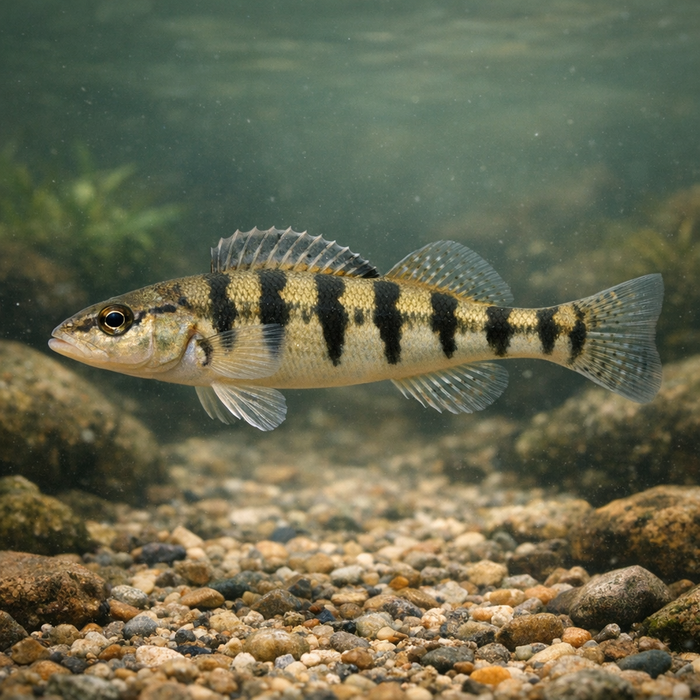
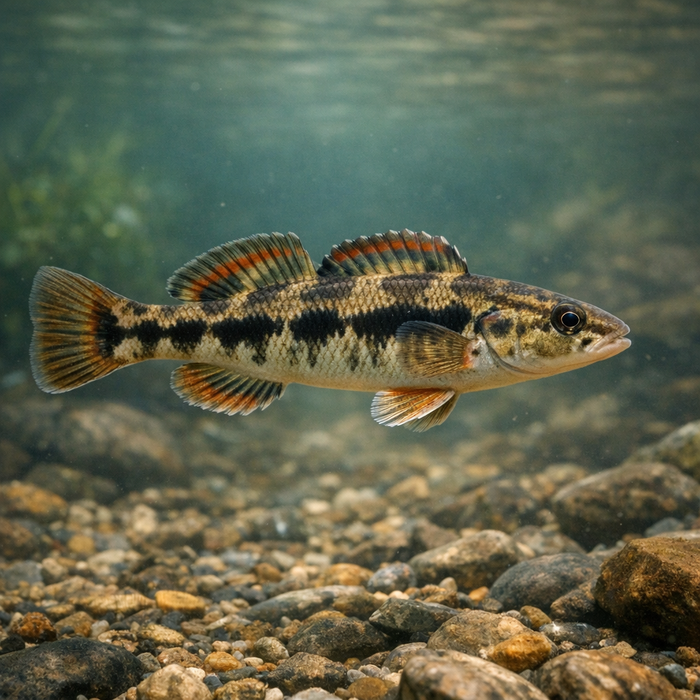
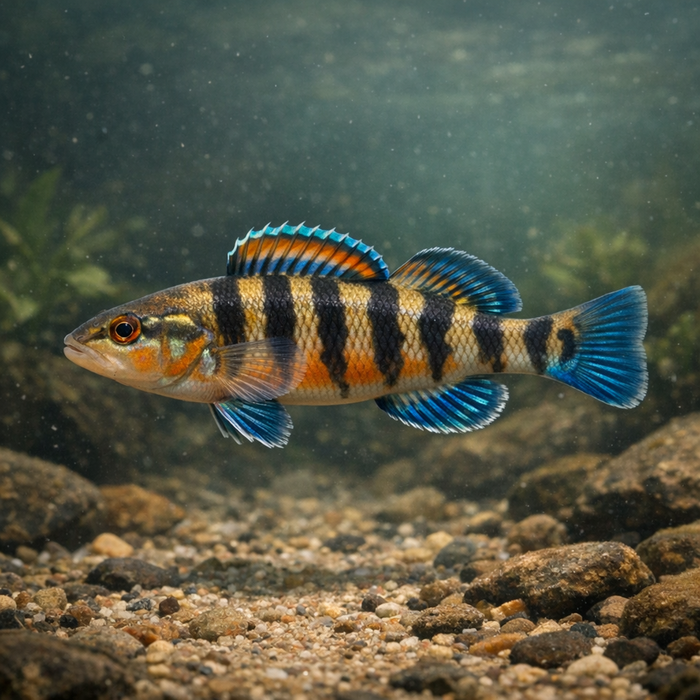
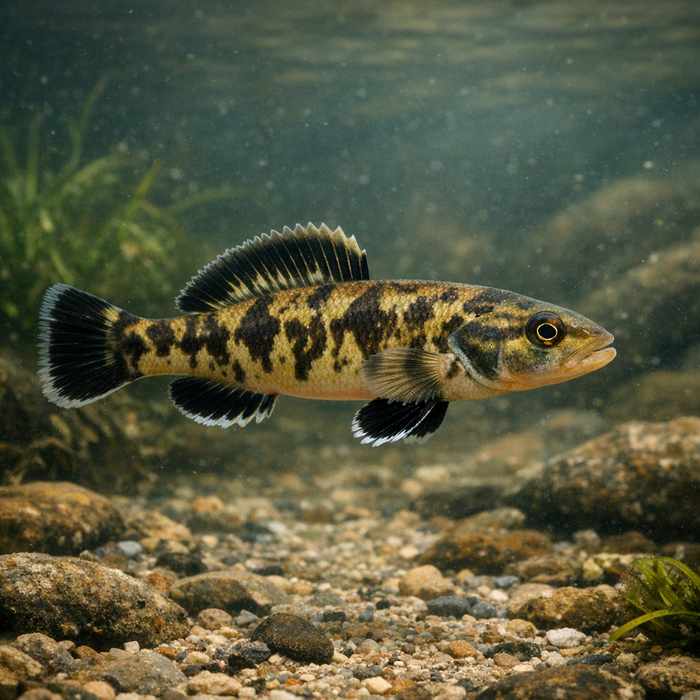
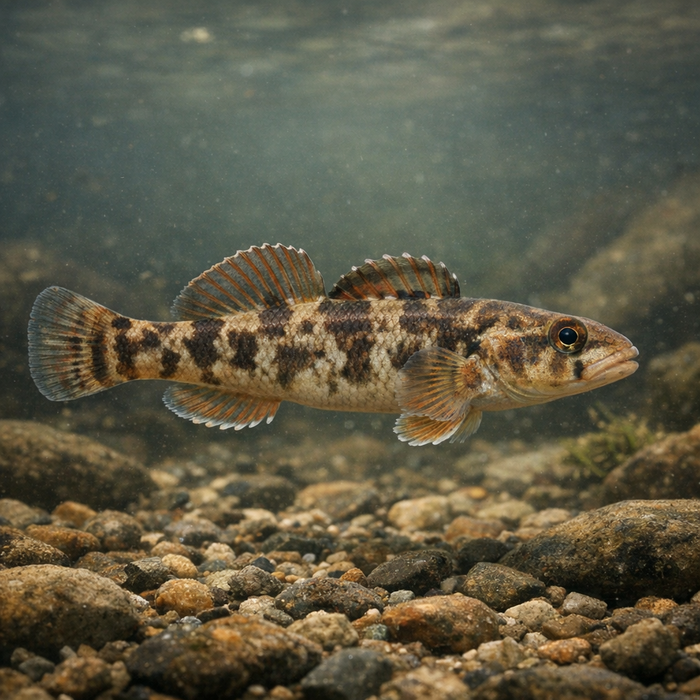
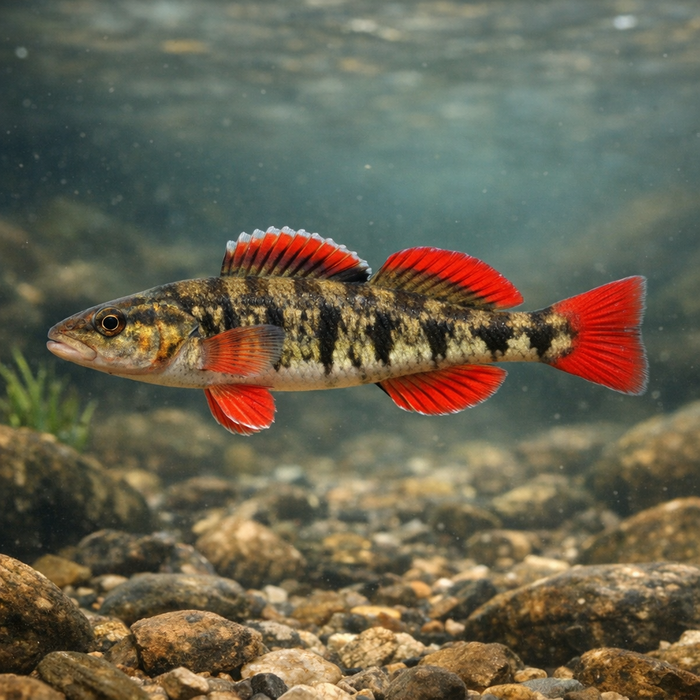
Tangerine Darter (Percina aurantiaca): A Bold, Memorable Hook LineIntroductionThe Tangerine darter is a small-stream showoff wearing high-vis safety orange. It doesn't smash topwater plugs or spool your reel, but it will make you rethink what "trophy" looks like when color, current, and attitude collide. For anglers who wade riffles with micro tackle and tight drifts, the Tangerine darter is a bright, wild reward.What Makes the Tangerine darter Unique?Two things jump out: size and style. Among darters, this one is a bruiser, often stretching to six inches with thick shoulders that look out of place in a current the speed of a treadmill. Then there's the color. Breeding males glow with tangerine-orange fins and bold flank bars that can make a trout angler do a double take. Add in those oversized pectoral fins acting like rock-grabbers and you've got a fish purpose-built for rapids. These are the Tangerine darter facts that stick.Habitat & Global RangeIf you're looking for the Tangerine darter habitat you'll find it in the upper Tennessee River drainage, especially the Appalachian foothills. Think clear, cool water, cobble-to-boulder riffles, and knee-deep runs that push hard against your shins. They hug bottom, sliding between micro-current seams where drifted invertebrates funnel past. Silt is their sworn enemy; they need clean gravel, steady flow, and solid oxygen. In winter they may shift into slightly deeper glides, but the blueprint stays the same: fast, clean, and rocky.Behavior & TemperamentTangerine darters are ambush sprinters. They hold tight to stone, watching the conveyor belt of food, then rocket a few inches to smack a mayfly nymph before dropping right back. They don't roam like trout or school like shad. Instead, they carve out tiny territories, using shadows and cobble pockets to stay hidden from predators above. They're wary but not impossible. Nail the drift, go small, and move like a heron, and you'll meet them.Ecological ImportanceThis fish is a current-loving canary in the coal mine. Because Tangerine darters demand clean, well-oxygenated riffles, their presence signals a healthy stream. Lose the riffles to silt, and you lose the darters. They are important mid-level predators, thinning the ranks of aquatic insects while feeding bigger fish and birds. They knit together the food web in ways you can see if you just crouch beside a riffle and watch the life sliding past.Conservation & Environmental PressuresThe Tangerine darter is generally listed as Least Concern across its range, but that label hides a catch. It's hyper-specific about habitat. Sediment from poorly managed construction, agriculture, or road cuts can clog gravel and hammer eggs. Warm, low water in summer shrinks usable habitat. Even small water-quality dips can knock a local population back. Protecting riparian buffers and keeping fine sediment out of streams isn't feel-good talk; it's the only way this fish keeps glowing.The FishyAF TakeThe Tangerine darter won't headline a tournament, and that's fine. It's the punchy, bright reminder that small water can be epic. For anglers, it's a masterclass in reading micro-current, in stealth, and in drifting something tiny exactly where it needs to go. Catch one and you'll start noticing the stream differently: every rock, every seam, every flicker of orange. That's a win we'll take any day.