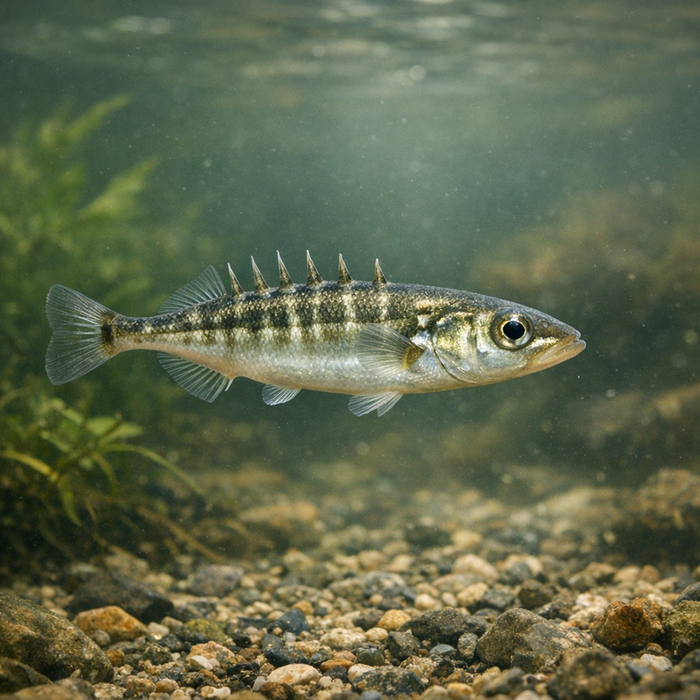
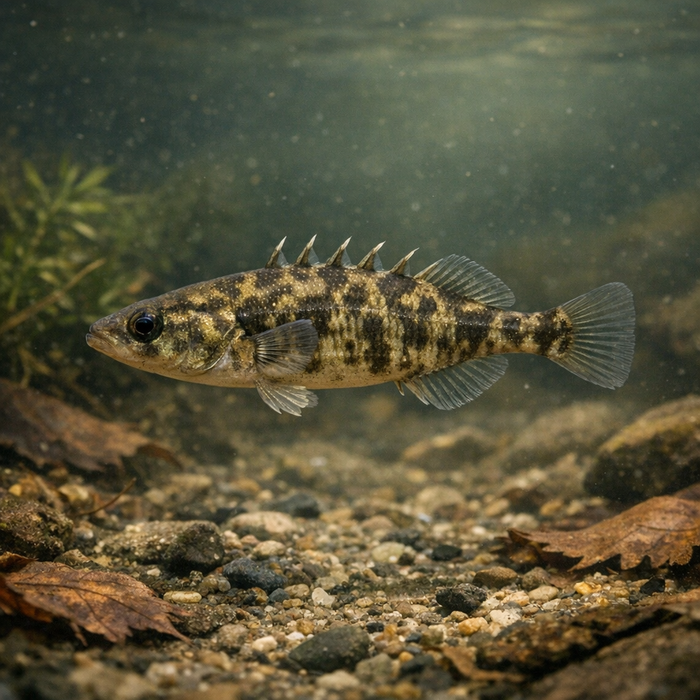
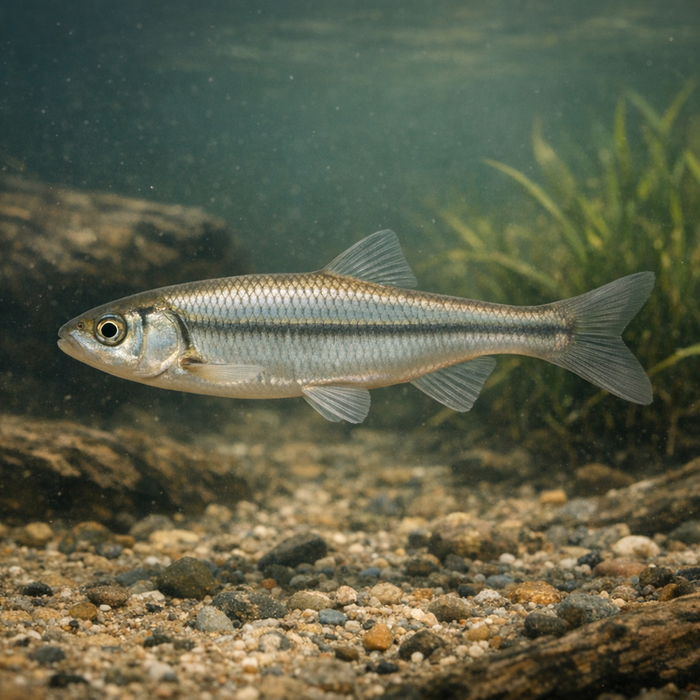
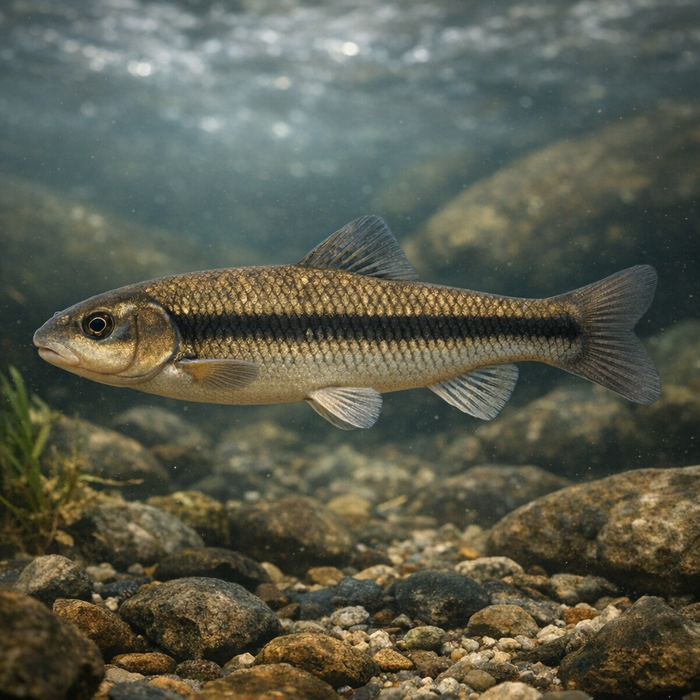
Three-spined Stickleback (Gasterosteus aculeatus): A barbed bantam with big-dad energy and zero quitIntroductionThe three-spined stickleback is proof that size and swagger are not related. This thumb-length scrapper patrols weeds and tide creeks with raised spines and a chip on its shoulder, then builds a custom nest and guards it like a bouncer. If you're after Three-spined stickleback facts or curious about Three-spined stickleback habitat, you're looking at the world's most famous little fish, a legend in biology and a fun microfishing target when you want instant action and oddball behavior.What Makes the Three-spined stickleback Unique?Two things: armor and parenting. Those three dorsal spines aren't decoration. They lock upright, making the fish hard to swallow and even harder to pry from reeds or net mesh. Then there's the dad routine. Males craft a tube-shaped nest using plant bits glued with kidney-made "spiggin," flash a red throat and blue eyes like a living traffic light, and fan eggs obsessively. Many freshwater fish guard eggs. Few do it with this much chemistry, color, and attitude. Add the shape-shifting armor plates that vary by population, and you've got a fish that evolves visibly across neighborhoods.Habitat & Global RangeThe three-spined stickleback is practically everywhere in the cool half of the world, hanging in ponds, ditches, creeks, lakes, and brackish estuaries. Some populations migrate like pint-sized salmon, riding tides into marshes to spawn, while resident lake fish stick to weedy shallows. Give them cover-reeds, eelgrass, boulders, dock shadows-and a little current, and they'll set up shop. They tolerate a wild salinity range, shifting from freshwater to full seawater without drama, which is why you can catch one yards from the surf or miles upstream.Behavior & TemperamentOutside breeding, sticklebacks school and peck around for tiny invertebrates, but when spawning kicks in, it's fight night. Males carve out a turf patch, paint up, and start the zigzag courtship dance made famous by Nobel-winner Niko Tinbergen. Trespassers get charged, even if they're way bigger. Hook one and expect a flurry of jitters, not a run; the show is in the stalking, watching, and quick set on ultralight gear.Ecological ImportanceThis fish is a keystone snack and a barometer. Juvenile trout, char, salmon, perch, and seabirds smash them. In turn, they inhale mosquito larvae, amphipods, and chironomids, shaping bottoms-up productivity. Because they adapt fast, local forms can signal pollution, salinity swings, and habitat fragmentation in real time. If you care about fisheries, you should care about the fish your fish eat-and few prey species pull more weight than the three-spined stickleback.Conservation & Environmental PressuresGlobally, the species sits at Least Concern, but that headline hides a thousand local stories. Culverts block migratory runs. Reedbeds get bulldozed. Nutrient spikes and urban stormwater juice algae and choke nests. Invasive predators and water-level yo-yoing can hammer specific populations. The fish's saving grace is flexibility; it colonizes ditches and roadside ponds like a champ. Still, protecting clean, vegetated shallows pays dividends up the food chain.The FishyAF TakeThe three-spined stickleback is the blue-collar legend of small water. It's everywhere, it's tough, and it teaches. Want to tune your micro presentations, test knots on 2-pound mono, and actually watch fish behavior at your feet? This is your huckleberry. It won't dump your drag, but it will open your eyes. Nail the sight game, appreciate the spines, admire the dad-bod nest duty, then snap a clean photo and let it go. You'll fish better for it-and you'll never look at a weedy shoreline the same way again.