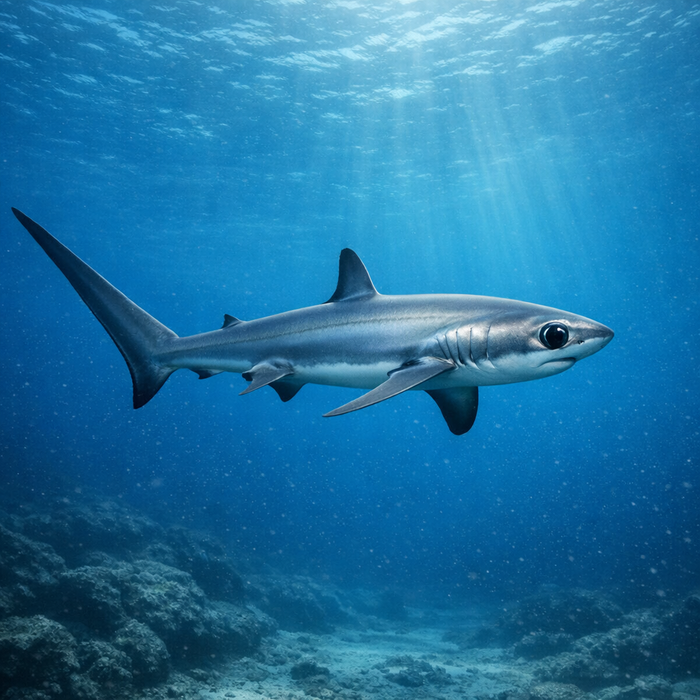
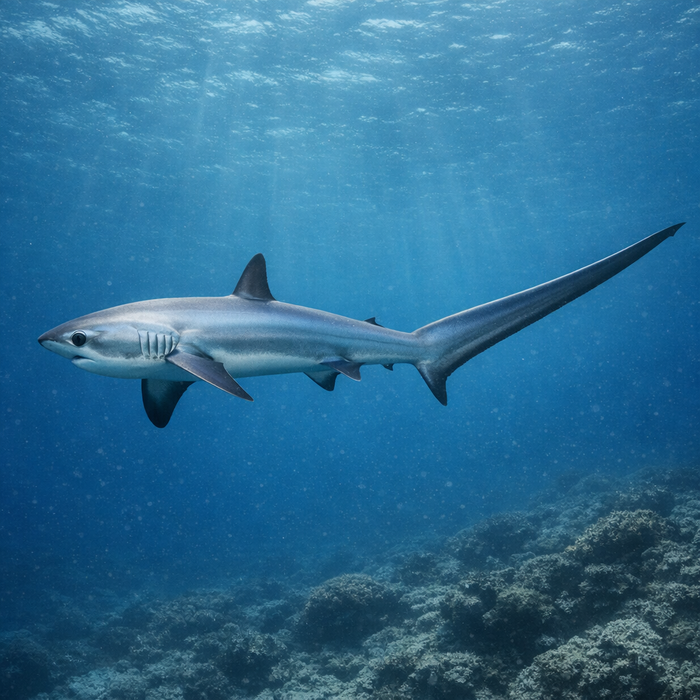
Thresher (Alopias vulpinus): A Bold, Memorable Hook LineIntroductionThe thresher is the shark that shows up with a built-in bullwhip and zero patience for baitfish drama. It's sleek, fast, and infuriatingly clever, famous for tail-slapping baits so hard they practically fly into your cooler. If you like long runs, aerials, and a fight that leaves your forearms quivering, the thresher checks all your boxes. Consider this your deep-dive into Thresher facts without the snooze.What Makes the Thresher Unique?Start with the tail. The upper lobe is absurdly long-often as long as the body-and it's not just for show. Threshers herd and stun prey with precise, whip-crack strikes that can knock out multiple fish in one shot. They're also capable of dramatic breaches, cartwheeling clear of the surface like a torpedo learning gymnastics. Add in surgical aim and a knack for staying just outside sloppy presentations, and you've got a predator that punishes mistakes.Habitat & Global RangeIf you're mapping Thresher habitat, think cool, productive water where currents collide and bait stacks up. They roam offshore edges, upwellings, coastal drop-offs, and canyon rims, frequently appearing within striking distance of beach towns when the bait floodgates open. The species is globally distributed across temperate oceans, with strong fisheries on the U.S. West Coast, parts of the Northeast, and across select hotspots in New Zealand, Europe, and South Africa. They aren't married to structure, but they love the invisible architecture of currents, thermoclines, and slicks that corral forage.Behavior & TemperamentThe thresher is a patient hunter that prefers clean angles over chaos. It circles bait schools, bunches them tight, then detonates with a tail strike that stuns the unlucky. Hooking them is its own circus. Many fish connect tail-first after a whack, then light up the surface with blistering runs and surprise aerials. They're wary around boats, especially on bluebird days, and often demand long setbacks or kite-suspended baits. They move with purpose, covering water mid-column but swinging shallow when bait showers the surface. One minute you're scanning sonar; the next, you see a sickle tail carve the chop and realize you're in it.Ecological ImportanceThreshers are apex predators that keep forage fish honest. By picking off the weak, distracted, or unlucky, they help stabilize schooling dynamics and energy transfer in pelagic systems. Their preference for places where currents fertilize the ocean ties them to the health of upwelling cycles and climate-sensitive oceanography. Translation: when the ocean machine hums, the thresher thrives, and when it coughs, so do they.Conservation & Environmental PressuresAlopias vulpinus is listed as Vulnerable in many assessments, a nod to slow growth, late maturity, and historical fishing pressure. They're not indestructible, and they don't crank out big litters fast. Bycatch in gillnets and longlines has been a notable issue, though live-release survivorship improves with careful handling and circle hooks. Regional management has helped in some places, but reliable population signals can lag behind. Ocean-warming shifts, altered upwelling rhythms, and prey changes also factor into whether your local thresher season explodes or fizzles.The FishyAF TakeA thresher owns the definition of sportfish. It's athletic, beautiful, and just difficult enough to elevate your game. You can't bully it; you have to outthink it, feed it right, and fight it clean. When that meter stick of tail slices past your spread and a rod folds over like wet spaghetti, the whole crew wakes up. For anglers who crave chess at 20 knots and a fight measured in bruises, the thresher delivers. And if you were only here for quick Thresher facts, here's the headliner: respect the tail, feed the bait well, and bring patience. The shark will handle the rest.