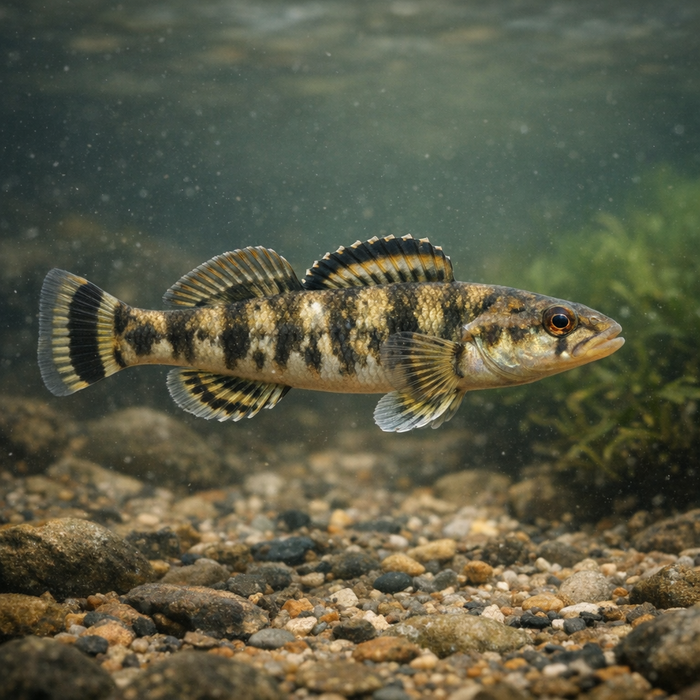
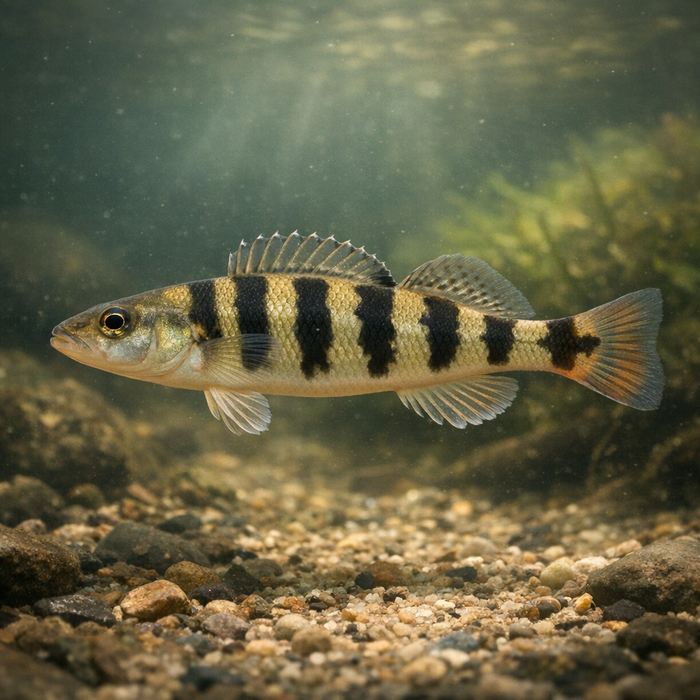
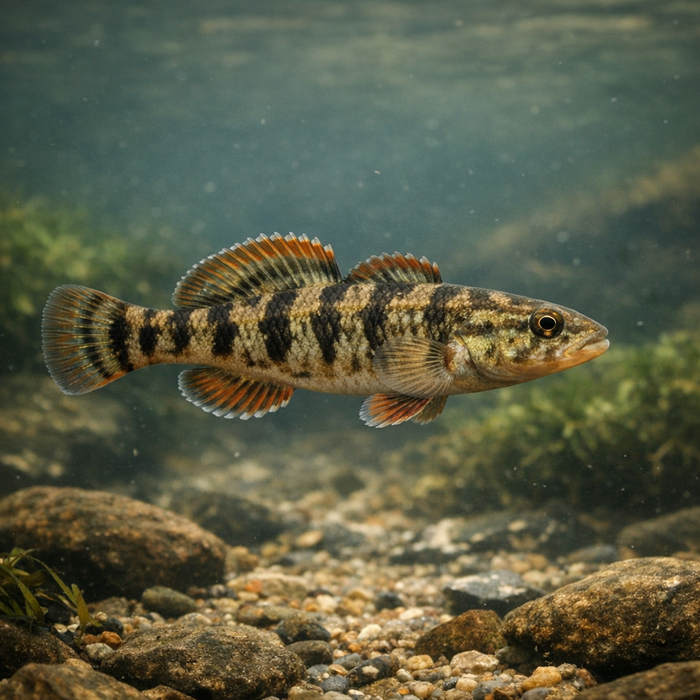
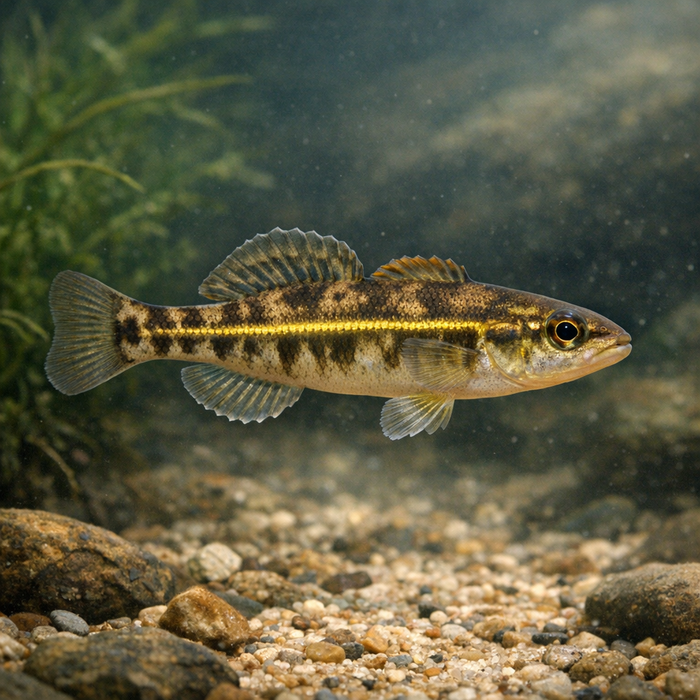
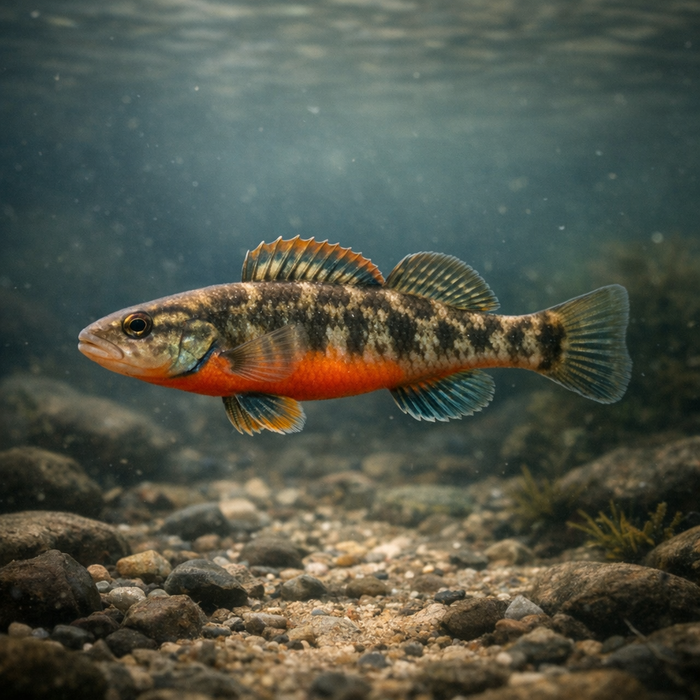
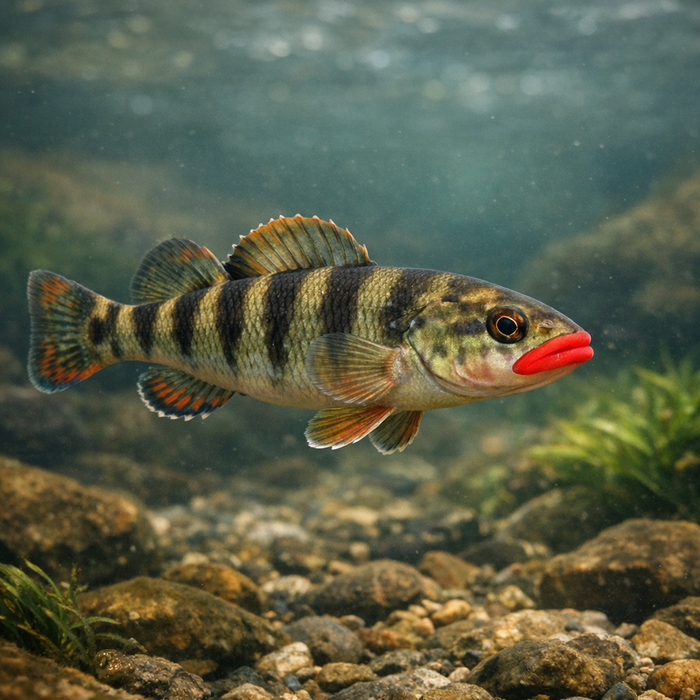
Variegate darter (etheostoma variatum): A riffle rocket with neon pinstripes and a chip on its shoulderIntroductionThe variegate darter is the streams little linebacker, built low, wide, and stubborn as a cobble. It doesnt jump. It doesnt run far. It just hits the current like it owns the place. For anglers who like puzzles and precision, this fish turns shallow, brawling water into a playground. Consider this your field guide to real-world variegate darter facts without the textbook nap.What Makes the Variegate darter Unique?Two things: color and current swagger. In spring, males dial up electric teal and orange bars that look painted on with a racing stripe kit. Even outside breeding season, the variegate darter carries bold broken bars and a stone-hugging posture that sets it apart from minnows and shiners. Its also a bottom athlete. Huge pectoral fins and a reduced swim bladder keep it glued to the rocks while everything else gets surfed downstream.Habitat & Global RangeIf youre studying variegate darter habitat, think clean, cool, fast, and rocky. The fish thrives in swift riffles and runs of small to medium rivers across the upper Ohio River system and some Lake Erie tributaries. Its a water-quality snob, bailing the party when silt rolls in or the flow turns sluggish. Youll locate them where oxygen is cranked up, substrate is cobble to slab, and ankle- to knee-deep current powers a constant drift.Behavior & TemperamentThe variegate darter doesnt roam much. It holds precise micro-territories, lunging inches at a time with explosive tail flicks. During spawning, males claim the underside of flat rocks, then guard eggs like a grumpy landlord. They spook quickly in skinny water, yet smash a properly placed morsel without ceremony. Fights are measured in inches, not yards, but the take is decisive and the confidence radiates well beyond its size.Ecological ImportanceThis species is a riffle barometer. Where variegate darter numbers are strong, you usually have cold, clean, well-aerated water and intact rocky substrate. They channel energy from invertebrates to larger predators and keep benthic communities honest by vacuuming the drift. Because theyre picky about habitat, trends in their local abundance often mirror bigger watershed health stories.Conservation & Environmental PressuresThe variegate darter is generally listed as Least Concern, but that doesnt mean bulletproof. Sedimentation, low-head dams, and nutrient spikes flatten riffles, mute current, and smother nesting sites. Even small changes in flow regimes can turn a great stretch into a ghost town. Protecting this fish isnt about hatcheries or fancy rules; its about keeping rivers bony, fast, and clear. Stabilize banks, manage runoff, and let riffles breathe.The FishyAF TakeThe variegate darter is proof that big isnt required for bold. Its a microfishing masterclass in reading current and making perfect short drifts. Youre not swinging streamers for hero shots; youre hunting tiny neon linebackers under a firehose. Nail that one-foot drift over a rock seam and youll understand the appeal. Miss it, and the river shrugs. For anglers who appreciate detail and clean water, the variegate darter delivers a surprising amount of attitude in a few inches of fish.