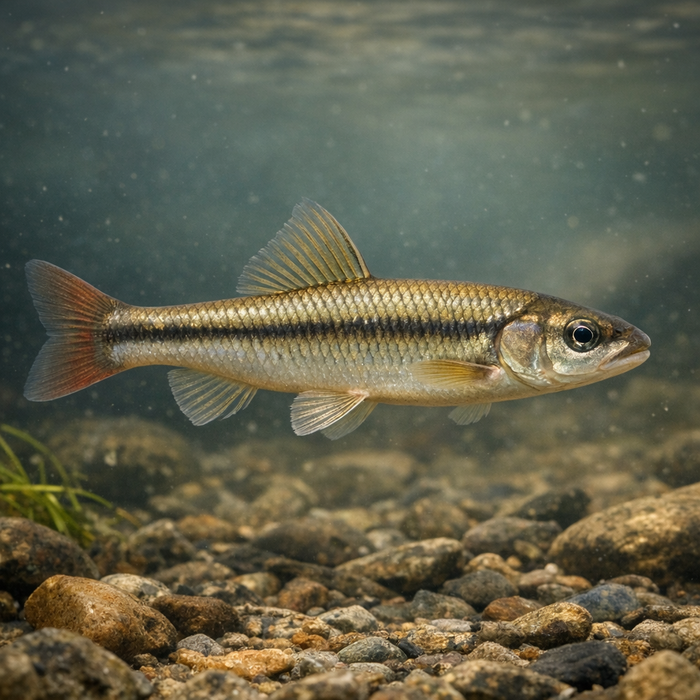
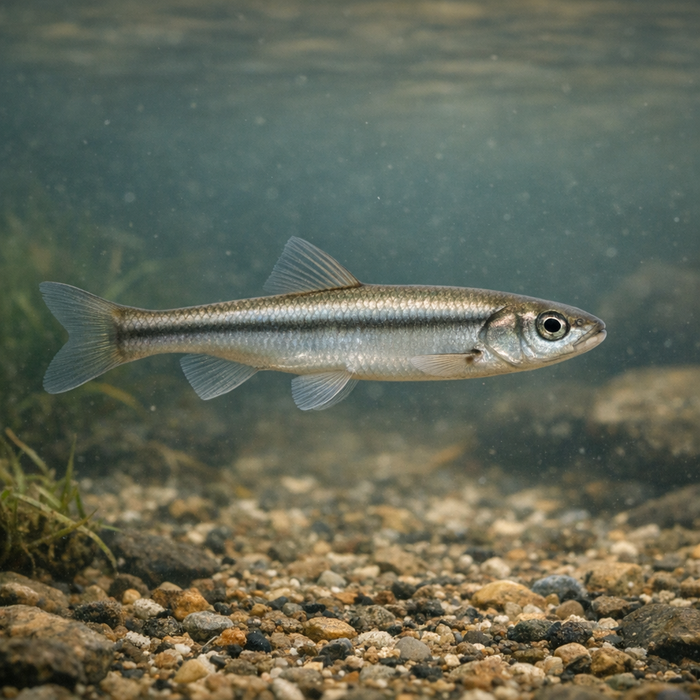
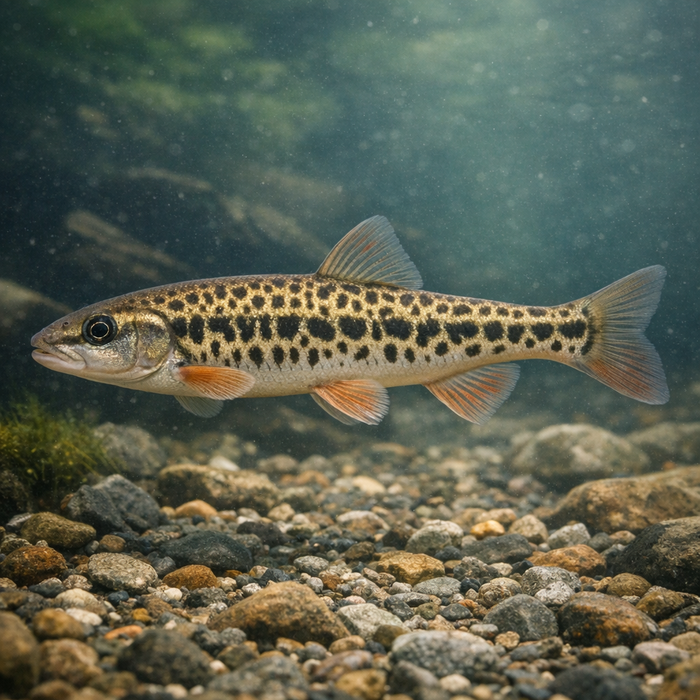
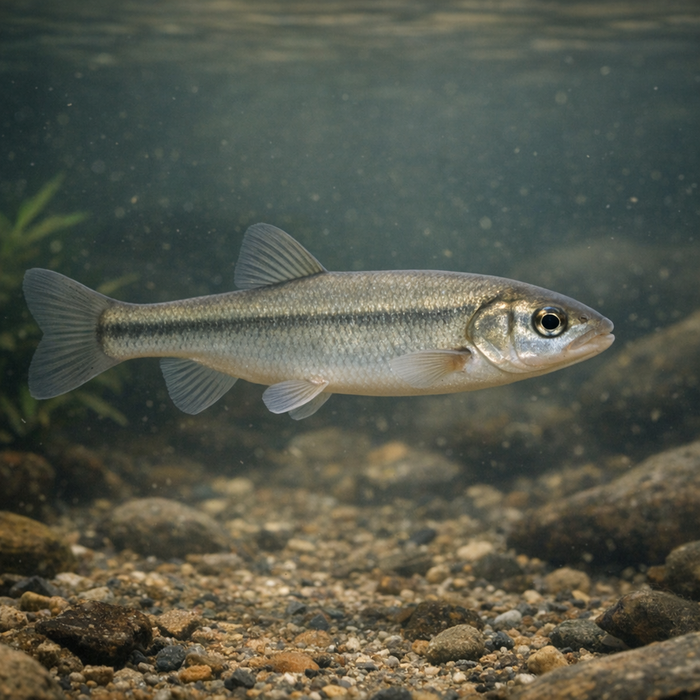
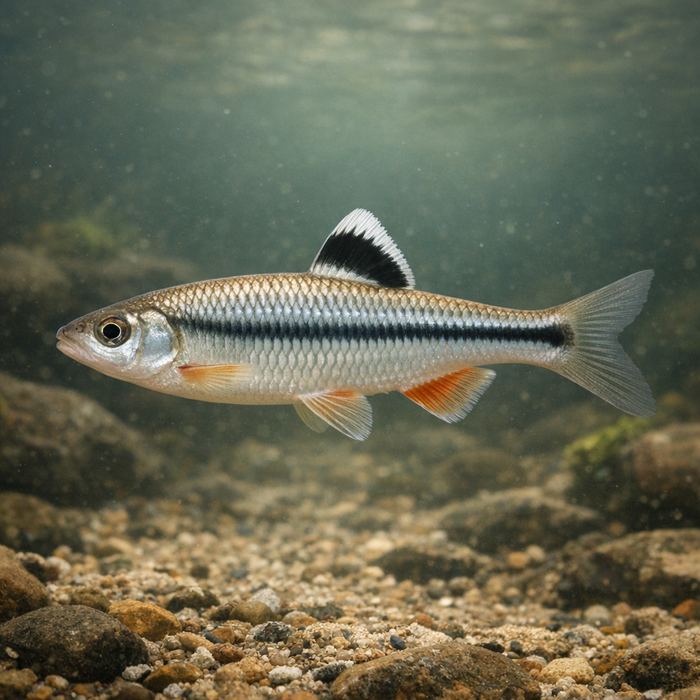
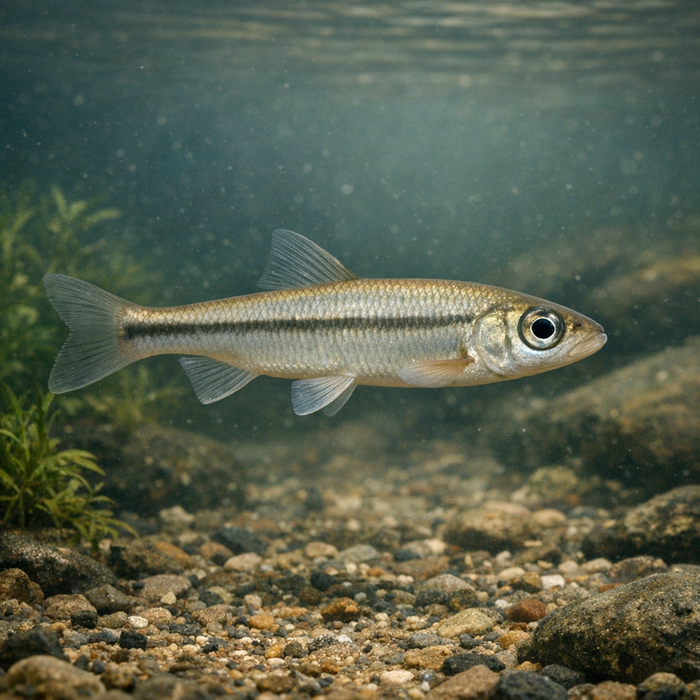
Western Blacknose Dace (Rhinichthys obtusus): A pint-sized rocket with a racing stripe and zero patience for slow waterIntroductionMeet the western blacknose dace, the tiny current junkie that lives where water hisses over rock. It's not a headline sportfish, but it's a master class in stream survival. Quick, wired, and fitted with that iconic black stripe curling onto the snout, this fish is a favorite among micro anglers and a key clue that your water is clean and lively. If you're here for Western blacknose dace facts, you're in the right riffle.What Makes the Western blacknose dace Unique?Start with design. The western blacknose dace is basically a living arrow: slim, subterminal mouth, and fins made for bracing in current. During spring, males light up with orange fins and sprout breeding tubercles on the head, turning into mini bulldozers that spar over gravel. It's also a specialist. While many minnows dabble, this one commits to fast water and thrives in it. For anglers, that means a reliable indicator of good Western blacknose dace habitat and a fun micro target on tiny flies.Habitat & Global RangeThe western blacknose dace rules cool, clear creeks with cobble and gravel. Think riffles, runs, and pocket water near undercut banks. It's widespread across much of the Great Lakes and Mississippi watersheds, stretching east into parts of the Northeast. You'll also see it in small lake inlets and outlets where flow and oxygen stay high. Winter settles them into deeper pools; once spring bumps flows and temps, they stage back into riffles for feeding and spawning.Behavior & TemperamentThis fish runs on quick bursts. It darts to snatch drifting invertebrates, then freezes to conserve energy in the seam. Schools are common, especially in low cover stretches where safety comes in numbers. Spawning fires up in late spring when clean gravel and good flow align. Males defend tiny patches like they're fortress walls, nudging and chasing with surprising intensity for a fish that barely weighs a handful of paperclips.Ecological ImportanceThe western blacknose dace is a cornerstone in small-stream food webs. It hoovers midges, caddis, and detritus, converting that drift into calories for everything larger. Trout, smallmouth, herons, and kingfishers all cash the checks this minnow writes. When dace disappear, it can signal silted gravel, warm water, or chemistry issues upstream. When they flourish, the creek usually hums along nicely.Conservation & Environmental PressuresOfficially, the species sits at Least Concern. That doesn't mean bulletproof. Siltation that clogs gravel, bank erosion, low summer flows, and nutrient spikes can flatten dace populations fast. Channelization wipes out the microhabitats they depend on. Invasive plants that destabilize banks and canopy loss that warms water also punch above their weight here. Protecting riffles, curbing runoff, and keeping riparian cover intact is basically a western blacknose dace insurance policy.The FishyAF TakeYou won't brag about a 3-inch trophy, but you might brag about the stream they reveal. The western blacknose dace is the spark plug of pocket water, proof your creek still has pulse and grit. For micro anglers, it's the perfect low-stakes, high-skill target on 2-pound line and size-18 nymphs. For everyone else, it's a living water-quality meter with attitude. If your local riffles are buzzing with these stripes, you're fishing a system worth protecting. That's the real win, and it's the one that keeps bringing you back to the same little run with a goofy grin and a tiny hook.