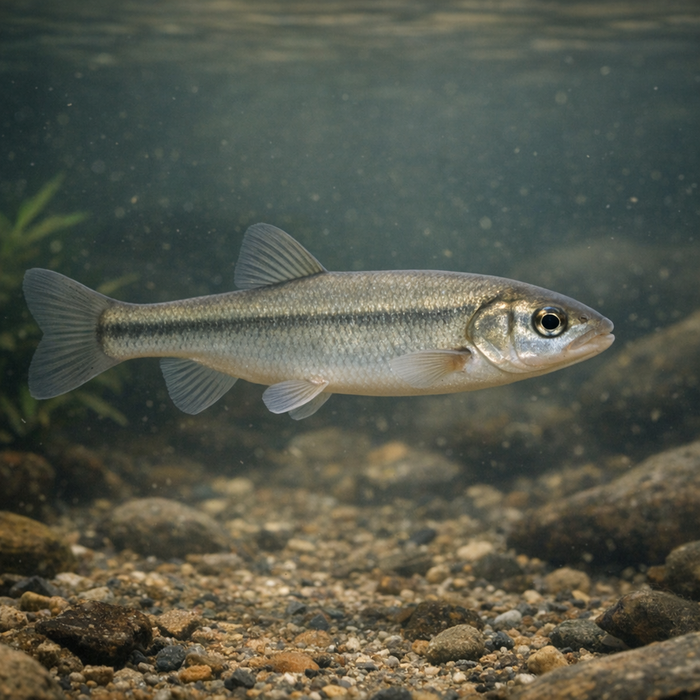
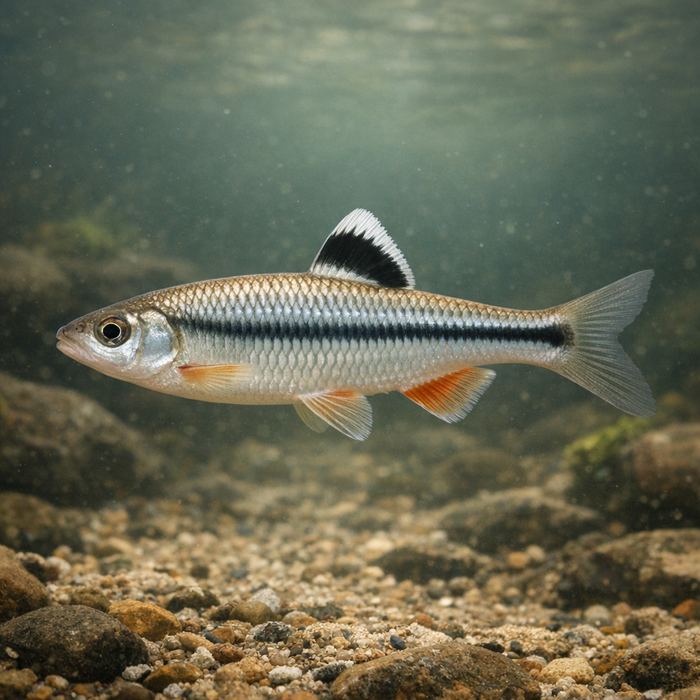
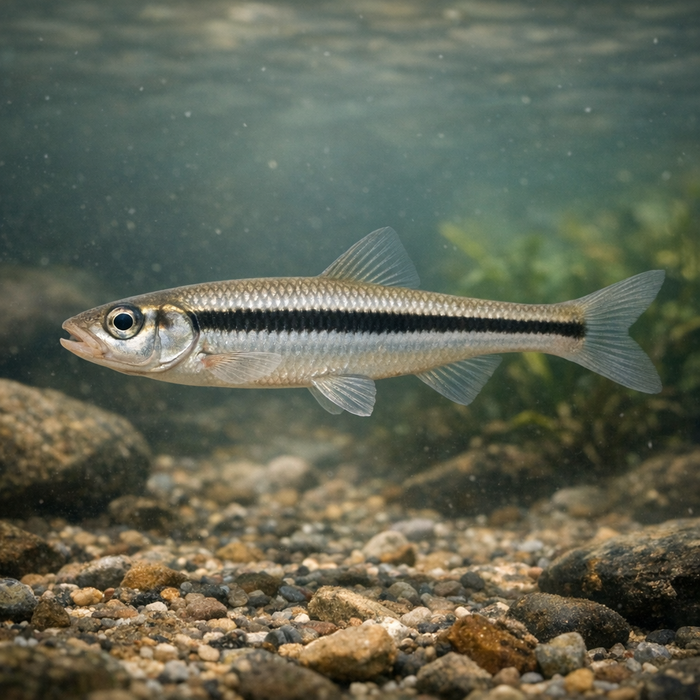
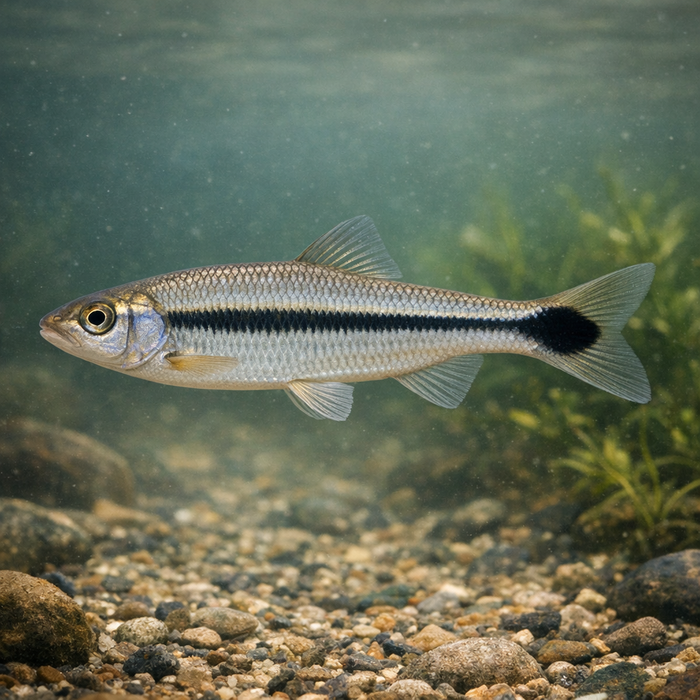
Bigeye Chub (Hybopsis amblops): A Bold, Memorable Hook LineIntroductionThe bigeye chub is proof that small fish can have big personality. With saucer eyes, quick-dart moves, and a taste for drifting bugs, this little cyprinid turns skinny water into a microfishing playground. You are not going to mount one over the fireplace, but if you like clean casts, fine tippets, and watching a tiny float twitch, the bigeye chub delivers all the nuance without the drama.What Makes the Bigeye chub Unique?Let's start with the obvious: those eyes. The bigeye chub has outsized optics that help it pick drifting prey in low, ripply light. It is a midwater feeder in a clan of bottom grubs, hunting the conveyor belt of insects swept along by current instead of rooting in gravel. It grows fast, matures early, and rarely breaks 5 inches, which means a healthy stream supports swarms of quick, jittery fish that reward precise presentations. If you are collecting Bigeye chub facts, file this one: it is among the most visually adapted minnows in its range.Habitat & Global RangeBigeye chub habitat is a very specific cocktail: clear streams with sand and fine gravel, modest current, and clean edges where runs melt into pools. It occurs across portions of the Midwest, Great Lakes drainages, and the Ohio and Tennessee river systems, with patchy strongholds in the Ozarks and upper South. Think sunny riffle tails, sandy bars, and mid-depth runs from knee-deep to a couple feet, often near submerged grasses or wood that breaks the flow. It tolerates seasonal swings but fades fast when silt buries the substrate. That sensitivity makes it a crisp barometer for watershed health.Behavior & TemperamentThe bigeye chub schools tight and drafts behind subtle structure like a pack of cyclists. It feeds in the water column rather than down in the grit, plucking mayfly nymphs, midge larvae, and any unfortunate terrestrial that tumbles in. Low sun and glossy chop seem to light them up, and they rely on quick darts and freeze-camouflage to escape trouble. They are not picky eaters, but they are detail snobs: tiny morsels, light line, and soft drifts get the nod. Hook one and it vibrates like a live tuning fork, all speed and no torque.Ecological ImportanceThis fish is a drift filter with fins. By hoovering small invertebrates mid-column, the bigeye chub converts insect production into bite-sized protein for larger predators. In clean streams it is an energy bridge: bugs to minnows to bass, darters, and herons. Because it reacts badly to turbidity and habitat smothering, its presence telegraphs stable flows, intact banks, and unchoked gravel. Lose this minnow, and you are probably losing mayflies, mussels, and a lot of what makes a stream fishy.Conservation & Environmental PressuresOn paper the species sits at Least Concern, but the map tells a messier story. Local declines track sediment runoff, riprap channelization, and sloppy stormwater. Where sand bars harden into silt and algae, the bigeye chub thins out or vanishes. Some states list it as a species of concern, and relict populations linger in cleaner tributaries while mainstems degrade. The fix is not mysterious: keep the banks vegetated, protect spring flows, and stop treating streams like ditches.The FishyAF TakeThe bigeye chub is the minimalist's target: no giant gear, no hero shots, just clean water, sharp eyes, and tiny offerings. If you can drop a pinhead of bait on a current seam without spooking a school the size of your hat, you are doing something right. For new anglers, it is instant-feedback fishing. For veterans, it is a tune-up for your presentation game. Call it a gateway species to noticing the little things, which, on rivers, are usually the big ones.