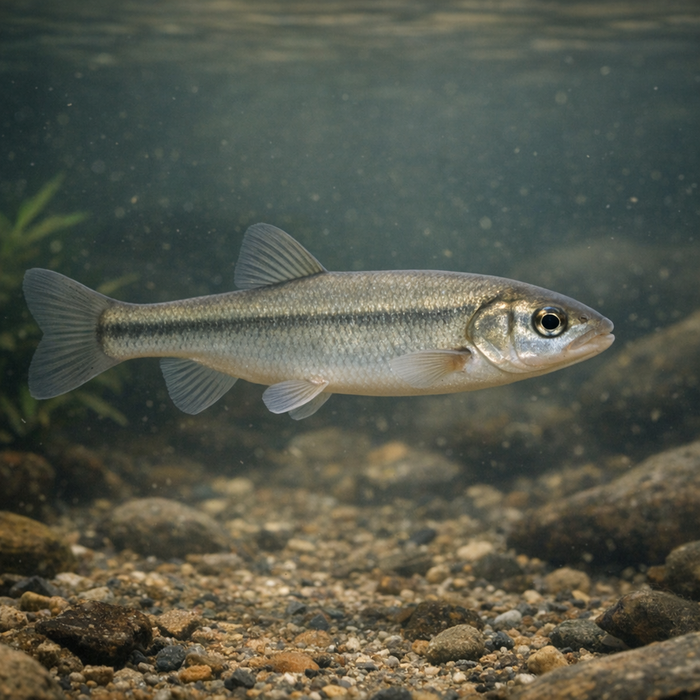
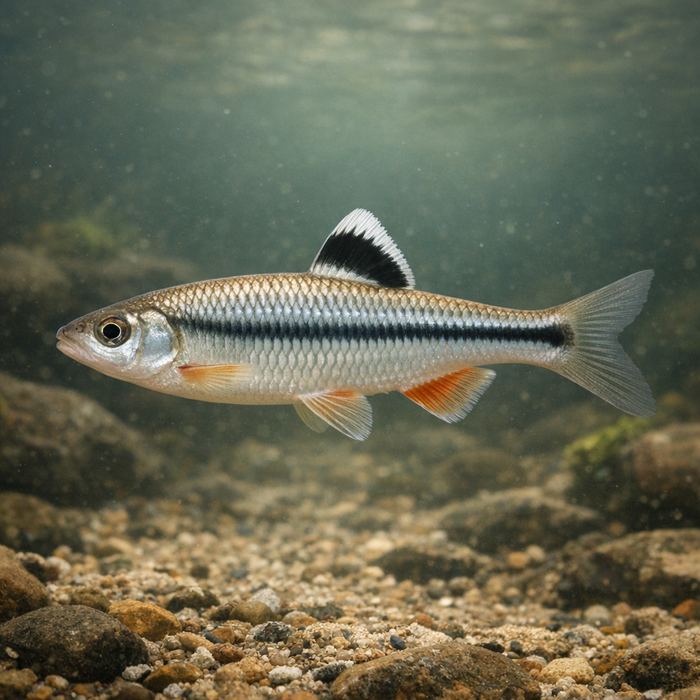
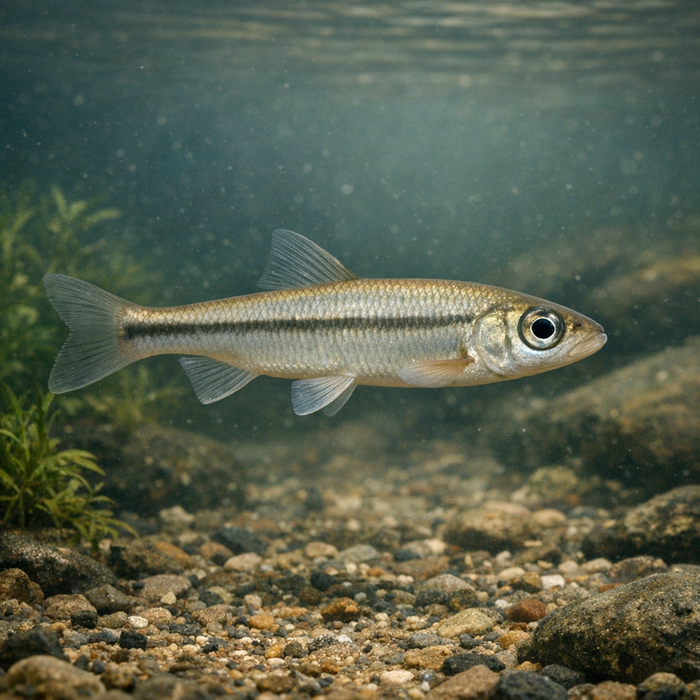
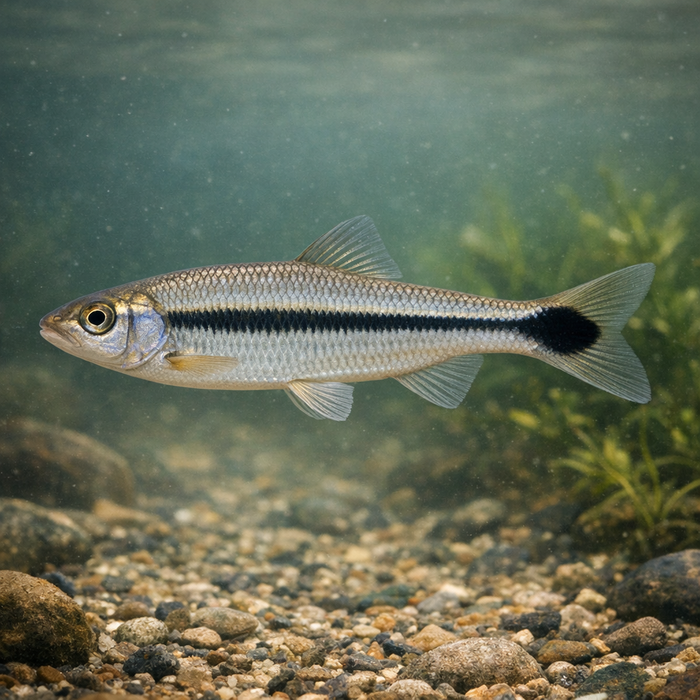
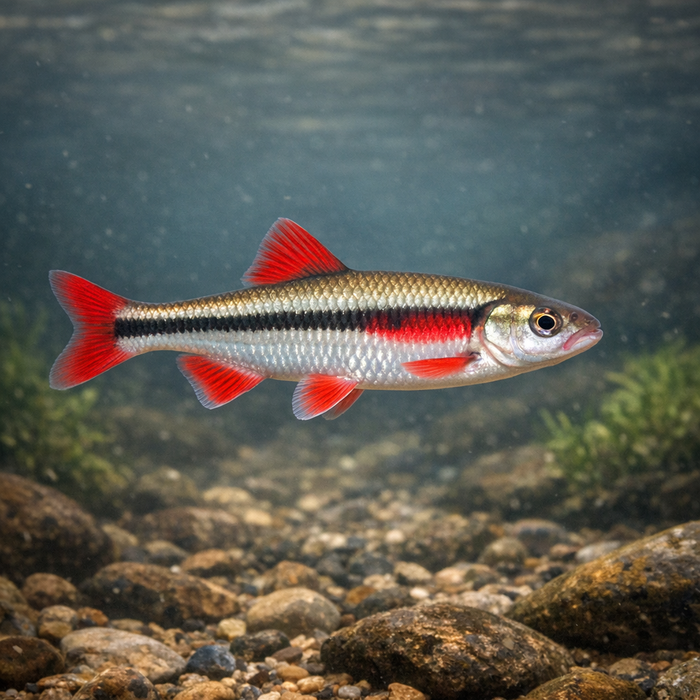
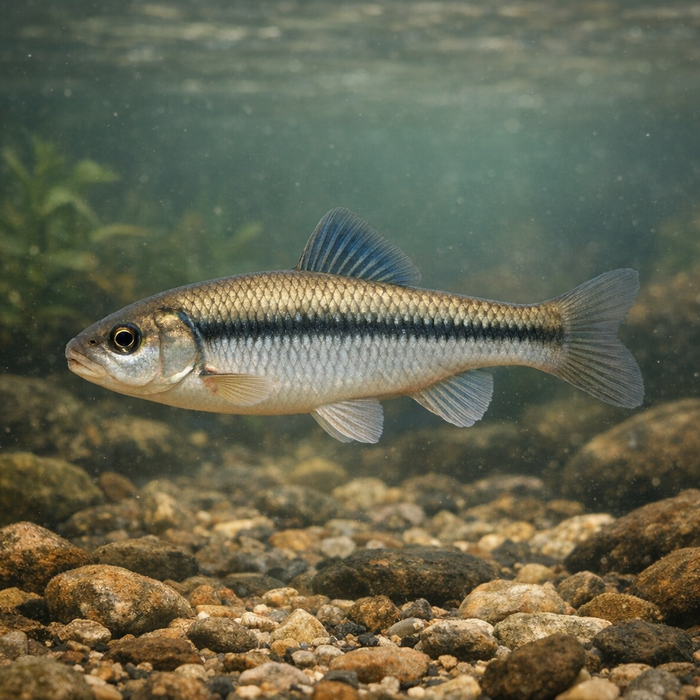
Bigmouth Shiner (Ericymba dorsalis): Small Fish, Big AttitudeIntroductionThe bigmouth shiner is the fish equivalent of a pocket rocket. Tiny body, oversized intake, permanently wired for drifting snacks. If you walk a Midwestern sand-bottom creek and see nervous silver blinks just ahead of your boots, you are probably watching a school of bigmouth shiner do its thing. It is not a classic sportfish, but for micro-curious anglers, this species is ridiculous fun and a perfect intro to small-water sleuthing. Consider this your quick-hit on Bigmouth shiner facts and the Bigmouth shiner habitat it prefers.What Makes the Bigmouth shiner Unique?Start with the hardware. That mouth is comically large for a minnow, angled to Hoover up anything edible that rides a sandy run. It is like a vacuum nozzle with fins. Pair that with a faint dark line along the back and sleek, silvery sides, and you get a fish built for speed and drift-feeding. The bigmouth shiner also moves in tight, coordinated schools that flicker like a low-battery strobe. When they turn, everything flashes at once, then vanishes. For a fish that rarely breaks 4 inches, it has serious stage presence.Habitat & Global RangeThink prairie streams across the central U.S. The bigmouth shiner excels in small to medium creeks and rivers with sandy or fine gravel bottoms, low to moderate flow, and lots of shallow runs. It also holds along inside bends and silted pool heads, especially where current carries a steady trickle of food. You will bump into it throughout much of the Mississippi River basin, from the upper Midwest into adjoining drainages. In winter cold snaps, schools slide into deeper pools to conserve energy, then spill back over the shallows when spring brings flow and bugs. Turbid pulses after a thunderstorm are not a deal-breaker for this fish. If the bottom is mostly sand and the current is reasonable, the bigmouth shiner will make it work.Behavior & TemperamentThis is a drifter and a group thinker. Schools cruise knee-deep runs, grab food in the film or midwater, and then slide a few yards to reset. Aggression is modest. They are not charging down big prey, just intercepting tiny stuff while staying one spook length ahead of your shadow. Despite the "bigmouth" branding, they have small, delicate takes. Use light line and you will see the bobber tick, pause, then slide a whisper. In cold water, activity dips and the fish stack deeper. When the sun warms a sandflat, everything reactivates and schools flicker again. For micro anglers, it is all about timing, stealth, and tiny presentations.Ecological ImportanceThe bigmouth shiner is a classic prairie-stream middleman. It converts drifting invertebrates and organic bits into snack-sized protein for larger fishes and wading birds. Because it thrives in modest flow over sand, it helps stabilize food webs in reaches where fewer riffle-loving species can dominate. Its schooling behavior also creates a moving signal for predators and a quick-read indicator for biologists assessing stream condition. When the bigmouth shiner is plentiful, shallow run habitat is probably doing fine.Conservation & Environmental PressuresOverall, the bigmouth shiner is in good shape, but it lives close to the action. Channelization that erases natural bends, chronic silt loads that bury sand into muck, and prolonged low flows can all squeeze suitable habitat. Nutrient spikes push algal swings that alter invertebrate timing, which in turn breaks the fish's conveyor belt of food. Because it relies on clean-ish sand rather than cobble, it can endure some turbidity, but not sloppy, stagnant fines that eliminate current seams. Maintaining natural flow variation and protecting riparian corridors are the easiest wins for this species.The FishyAF TakeIf you have never fished for micro species, the bigmouth shiner is the gateway fish. It is common, visible, and honest. Bring a 2-pound leader, a hook the size of an eyelash, and a crumb of worm. Sight a school, drop it in the lane, and watch the float whisper. You are hunting a handful of grams, sure, but you are also learning current, reading bottom, and dialing presentation in a way that makes every other fish easier later. The bigmouth shiner is proof that small water is not small-time. It is a tiny masterclass with scales.