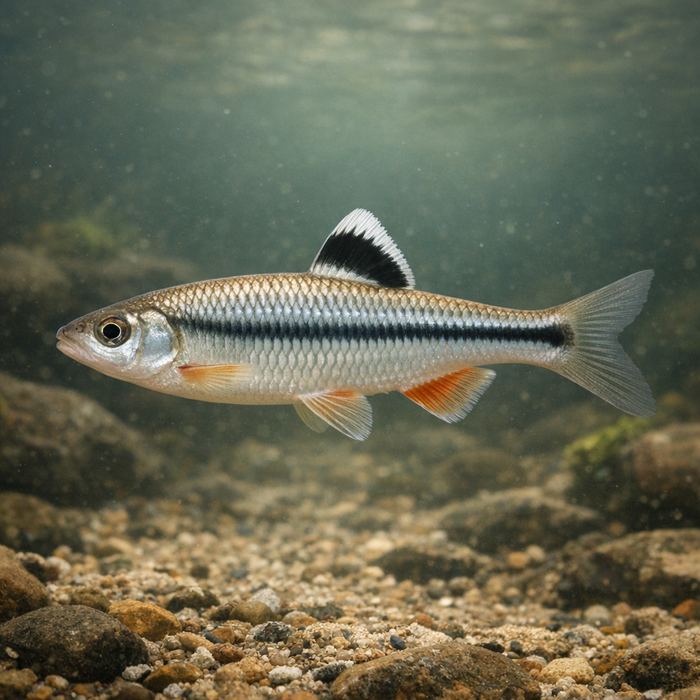
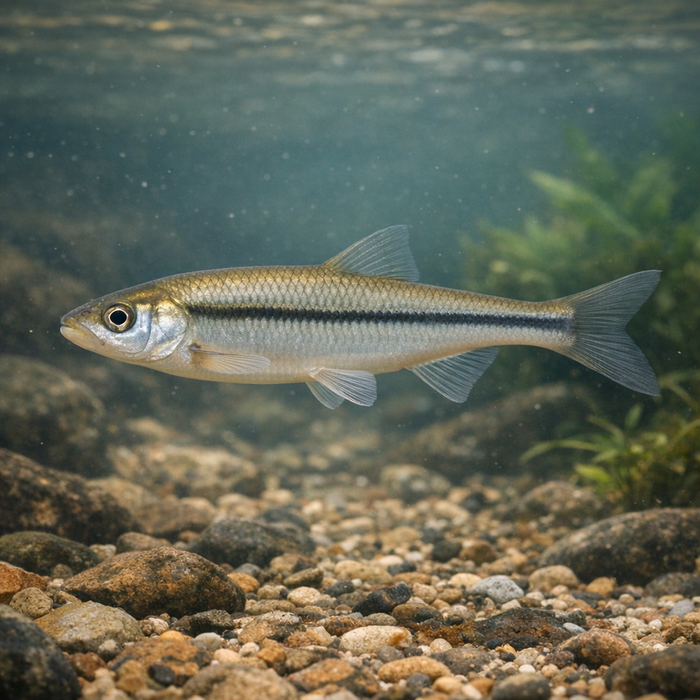
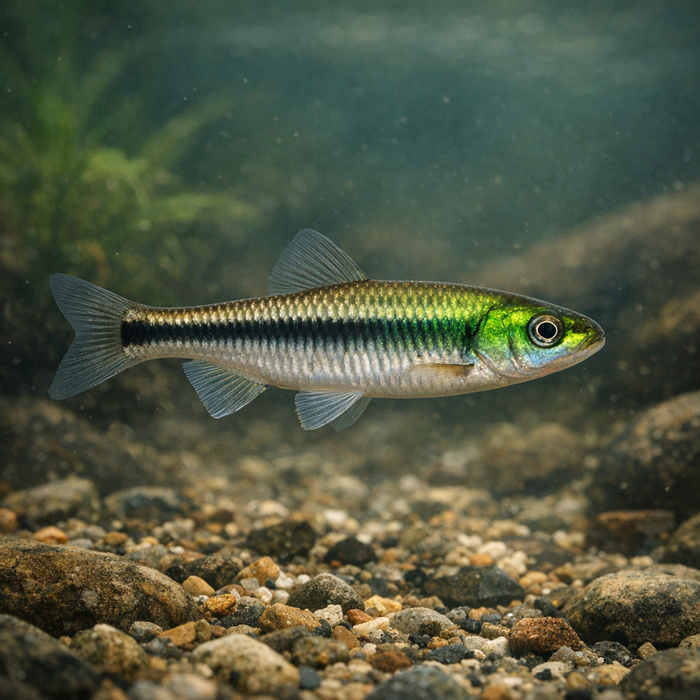
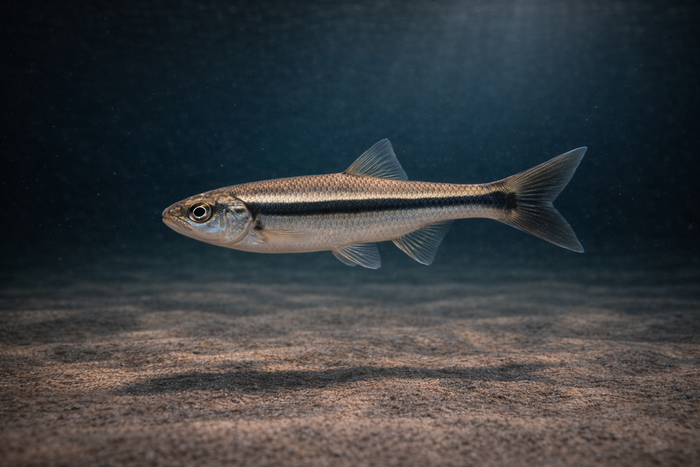
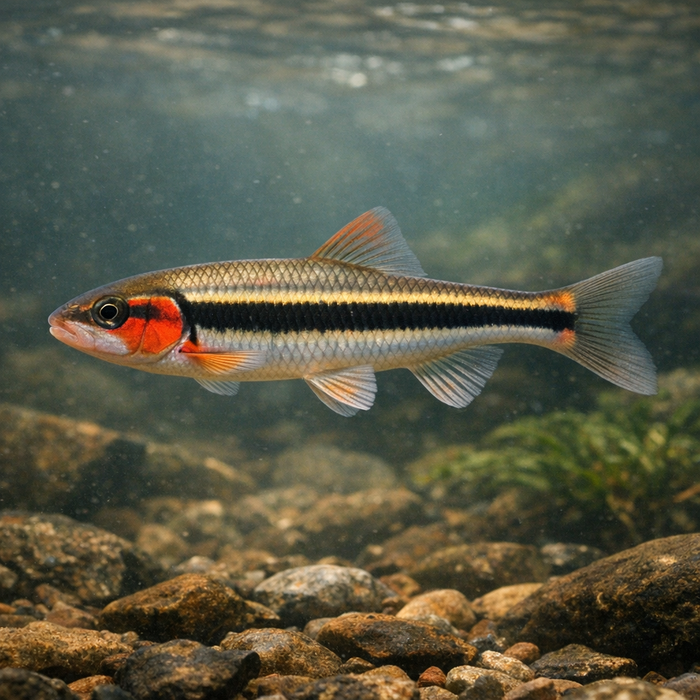
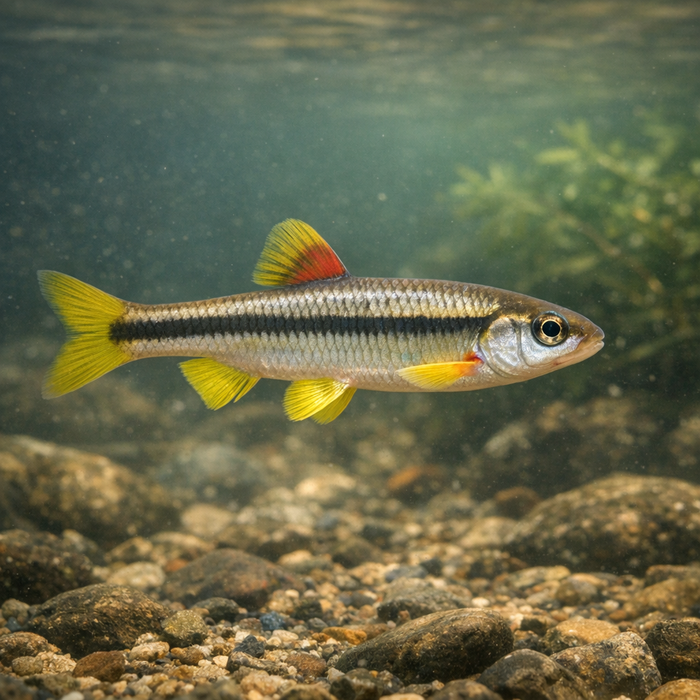
Bluefin Stoneroller (Campostoma pauciradii): The riffle bulldozer with electric-blue flairIntroductionThe bluefin stoneroller punches way above its weight in personality. It's a tiny cyprinid with a hard hat, horned snout, and a bad habit of renovating riffles. When the water warms and the flow hums, males light up with sapphire-edged fins and start rolling pebbles like construction foremen. If you're hunting Bluefin stoneroller facts or curious about Bluefin stoneroller habitat, this little algae-scraper has a surprisingly big story.What Makes the Bluefin stoneroller Unique?Two things. First, that jaw. The lower lip carries a tough, keratinized scraping shelf built to sandblast rocks clean. It wears down and regrows like a constantly sharpened chisel. Second, the show. Breeding males flash vivid blue fin margins and sprout rough head tubercles, then proceed to bulldoze stones while guarding their patch. It's equal parts habitat engineer and fashion statement. Among minnows, the bluefin stoneroller is the rare combo of specialist and scene-stealer.Habitat & Global RangeThe bluefin stoneroller is a southeastern stream fish to its core. Think shallow, clear, and cobbled: knee-deep riffles, bony runs, and the heads of pools. Current is key because it keeps fresh algae drifting and oxygen high. Gravel, pebbles, and small cobble are the buffet table, and stable flows make for prime real estate. You might bump into them in small creeks up to medium rivers, occasionally lingering in calmer pools between feeding sessions. While relatives range widely, this species is a regional act, most common across Gulf-slope drainages and Piedmont streams where clean, rocky substrates still exist.Behavior & TemperamentBluefin stonerollers are professional scrapers. They mow biofilm with rhythmic head-down passes, often schooling tightly and advancing like a tiny grazing herd. When the spawn approaches, males carve shallow pits and start flipping pebbles, exposing fresh growth and clearing space. They're alert in clear water but not spooky if you move slow. Hook one and you'll feel a few quick jitters before it's in hand. The fight won't make your drag sweat, but stalking a school in skinny, fast water feels like stealth trout practice at micro scale.Ecological ImportanceFor a fish that barely grazes five inches, the bluefin stoneroller is a stream janitor. By scraping algae and detritus, it shapes how nutrients flow through riffles, keeps rocks from getting slimed over, and shakes loose invertebrates other fishes snap up. That pebble-rolling behavior aerates egg sites and rearranges microhabitats. In short, they tune riffles like groundskeepers: clean the surface, fluff the gravel, and leave things better for neighbors. This is one of those species whose hustle quietly props up the entire community.Conservation & Environmental PressuresThe biggest threats are the usual stream killers: sediment, nutrient overload, and unstable flows. Clogged riffles smother algae in muck the stonerollers can't efficiently graze, while low oxygen and heat waves hammer metabolism. Channelization erases the riffle-run rhythm they need. The good news: the bluefin stoneroller still scores as Least Concern overall, especially where watersheds keep their rocky texture. Protecting buffers, reducing erosion, and leaving some stream complexity goes directly into the stoneroller's fuel tank.The FishyAF TakeIf the bluefin stoneroller were human, it would be that friend who cleans the grill, fixes the music, and still shows up dressed sharp. Unpretentious, hard-working, and surprisingly flashy. Anglers usually meet them while drifting nymphs for sunfish or dapping a worm for creek chubs. But spend ten minutes watching a school mow a riffle and you'll get it. This is small-water magic. The bluefin stoneroller isn't a grip-and-grin fish; it's a lesson in stream function wearing electric-blue fins. Respect the bulldozer, and your whole creek game gets better. Say you were after Bluefin stoneroller habitat intel, and you found a masterclass in riffle life. That's a win.