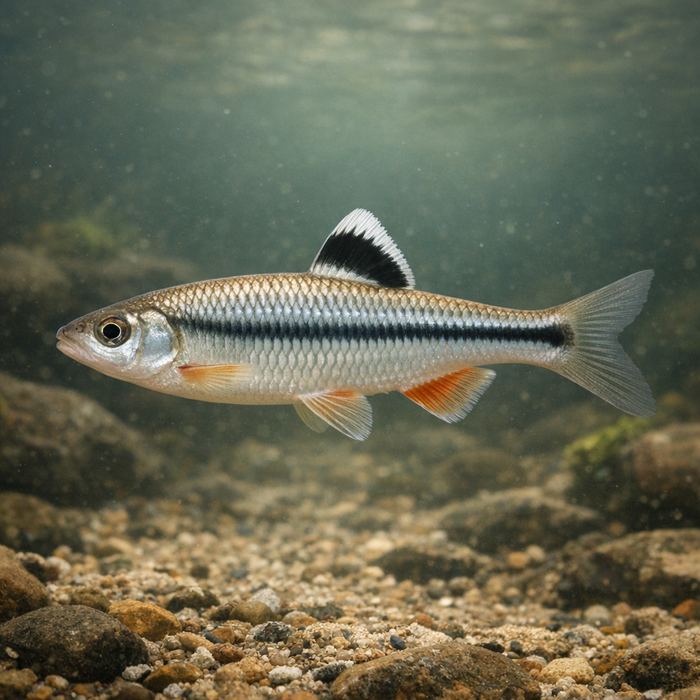
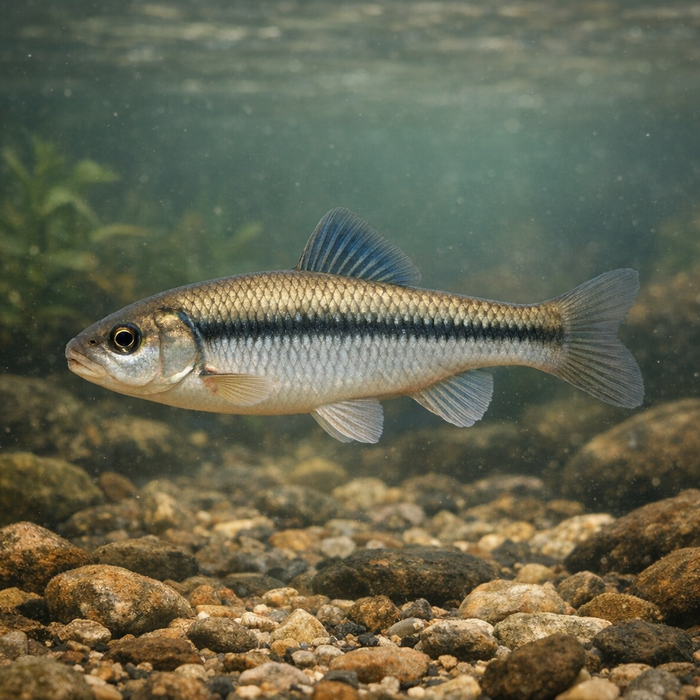
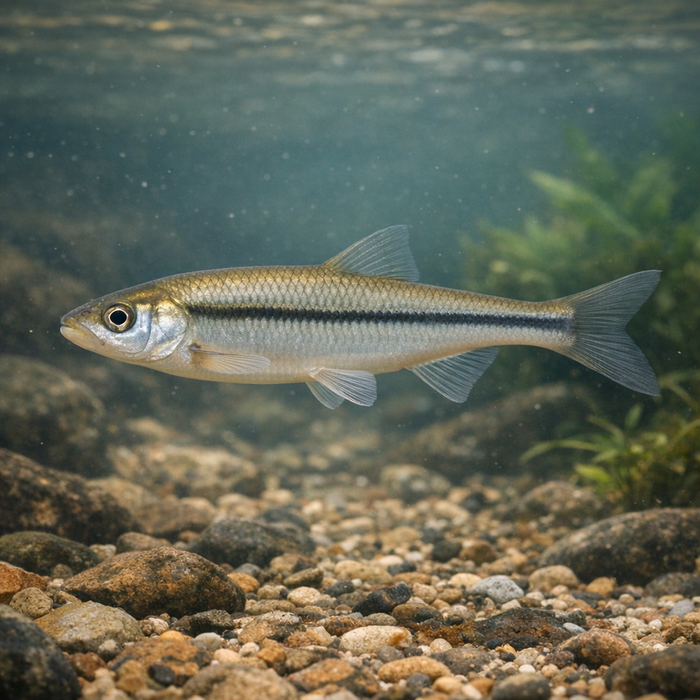
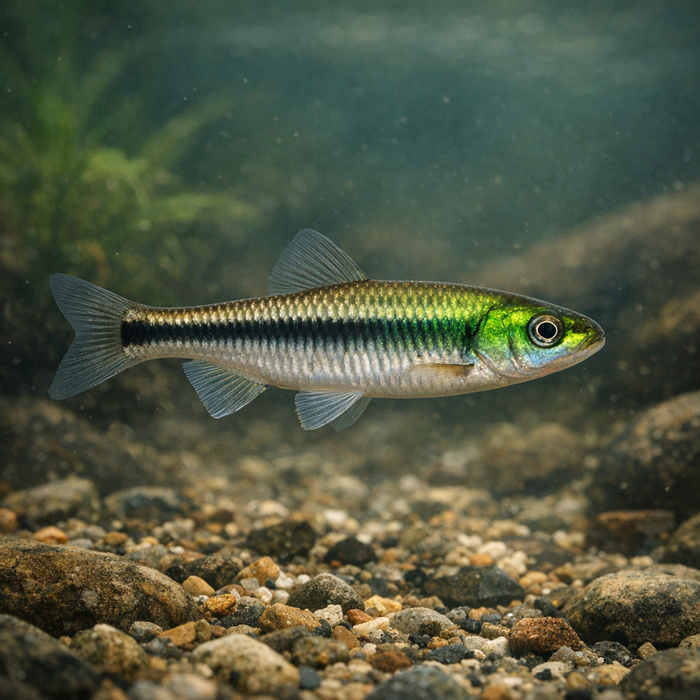
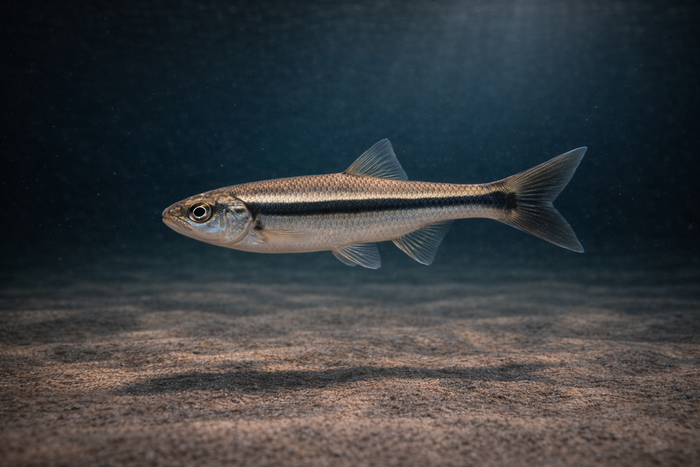
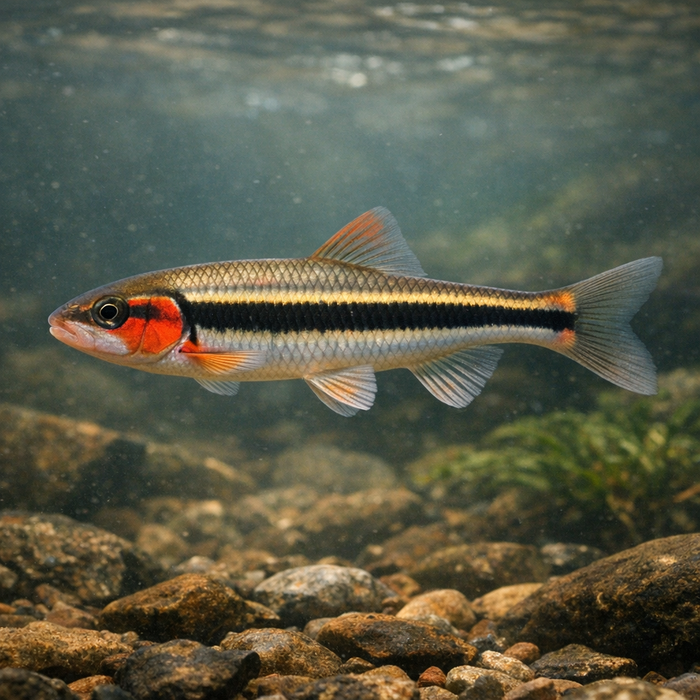
Yellowfin shiner (Hydrophlox lutipinnis): A Bold, Memorable Hook LineIntroductionSmall fish, big personality. The Yellowfin shiner is a Piedmont creek spark plug, throwing electric colors in spring and pinballing through riffles all year. It's the fish you notice even when you weren't trying to, because a single sunbeam turns the school into liquid glitter. For anglers into micro-fishing, this little rocket is a perfect mix of easy access and fun challenge, and it makes for some excellent Yellowfin shiner facts.What Makes the Yellowfin shiner Unique?When the water warms, males flip a switch: fins go canary yellow, bodies flush copper, and they swarm bluehead chub nests to spawn. That nest-hijacking behavior is wild to watch and even wilder to fish around, because the whole creek seems to vibrate. The Yellowfin shiner also packs surprising attitude for a two-to-three-inch fish, striking tiny flies and micro baits with careless confidence when the current lines up.Habitat & Global RangeCall it classic Yellowfin shiner habitat: clear, moderate-flow creeks and small rivers of the Southeastern Piedmont, with clean gravel, riffles, and adjacent pools. They park behind boulders, nose along seams, and stack in knee-deep runs. You'll see them in Georgia and the Carolinas, often in tributaries where the water stays transparent and oxygen-rich. They're comfortable in a range of flows but really come alive where gravels are loose and the current hums.Behavior & TemperamentSchooling is the default setting. The Yellowfin shiner moves in coordinated pods, pulsing from pool to riffle as light and current change. They feed midwater most of the time, sniping tiny drifting invertebrates, but they'll flirt with the surface during insect activity and slide lower to graze micro bits when the buffet slows. Spring is showtime. Males color up, jockey for position, and rain eggs and milt over chub-built gravel mounds. Even outside the spawn, they're twitchy, alert, and surprisingly responsive to precise micro presentations.Ecological ImportanceThe Yellowfin shiner is a gear tooth in the creek's food machine. It converts insect drift into shiner biomass, then hands that energy off to larger predators like sunfish, bass, and herons. By piling onto bluehead chub nests, they help kick extra oxygen and circulation through the gravel, bumping survival for multiple species. Their presence is a quick read on stream health: clear flow, working riffles, and intact banks usually mean strong shiner schools.Conservation & Environmental PressuresMost populations are stable, but this species is only as tough as its gravel. Silt from poor land use smothers nest sites, stormwater spikes blast out riffles, and low summer flows shrink habitat. Invasive bait releases can also scramble native community dynamics. Fortunately, when streams keep their banks, buffers, and natural flows, the Yellowfin shiner thrives. Watch the watershed and you'll usually be watching a healthy shiner scene.The FishyAF TakeThe Yellowfin shiner is proof that fun doesn't need 20 pounds of drag. You get color, current, and numbers, all a short walk from the road. Want pure micro satisfaction? Bring a tiny float, absurdly small hook, and a pebble of worm. Want finesse on a fly? Size 18 nymphs in skinny water will make them pop. If you're building a micro species list or just want to experience a creek lit up by fish confetti, the Yellowfin shiner delivers. File this under practical joy and essential Yellowfin shiner habitat scouting: clear water, clean gravel, moving current. Simple recipe. Maximum sparkle.