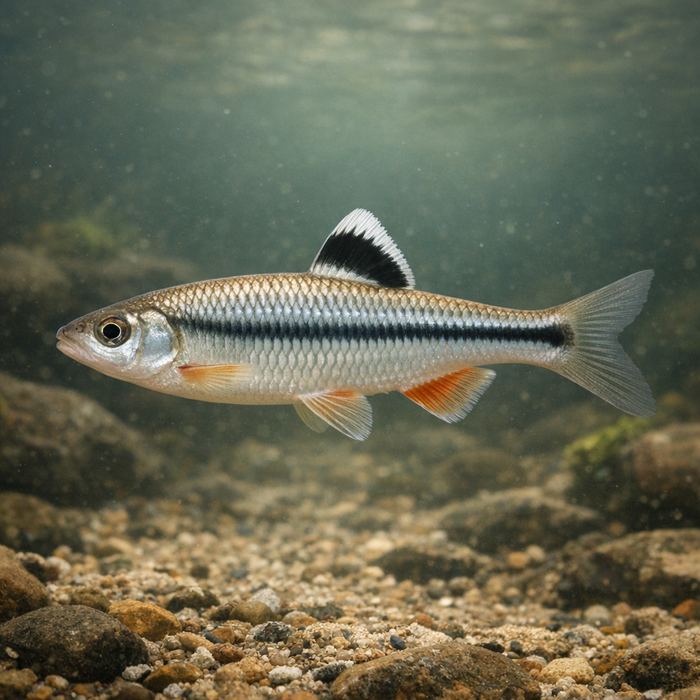
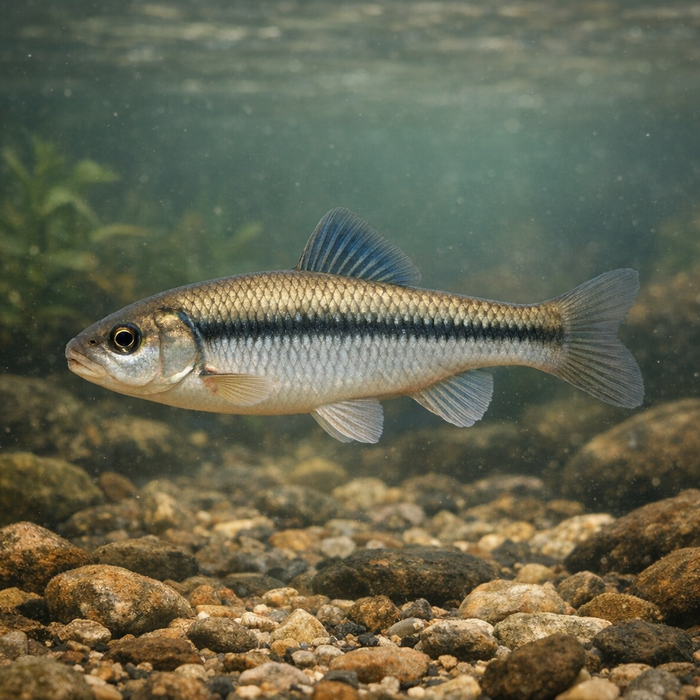
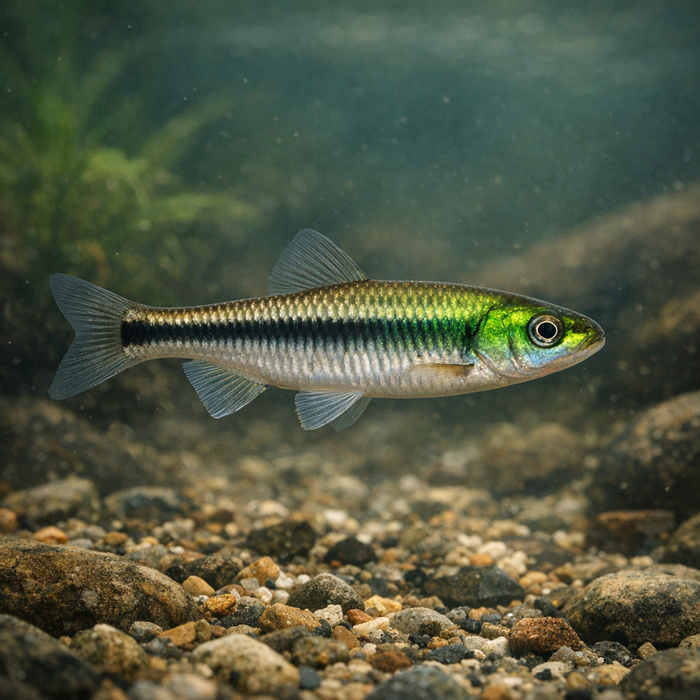
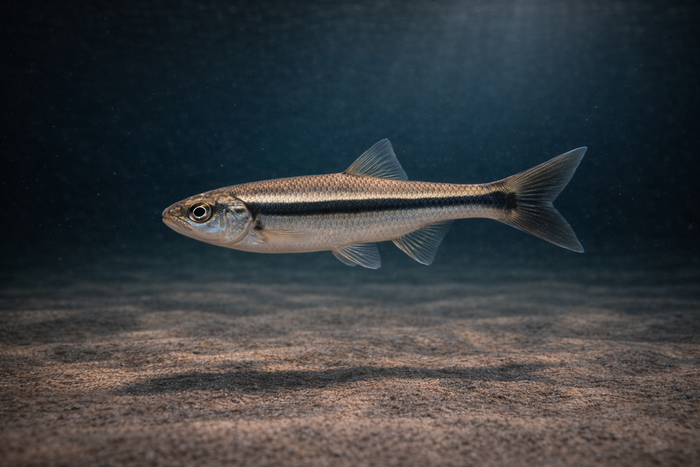
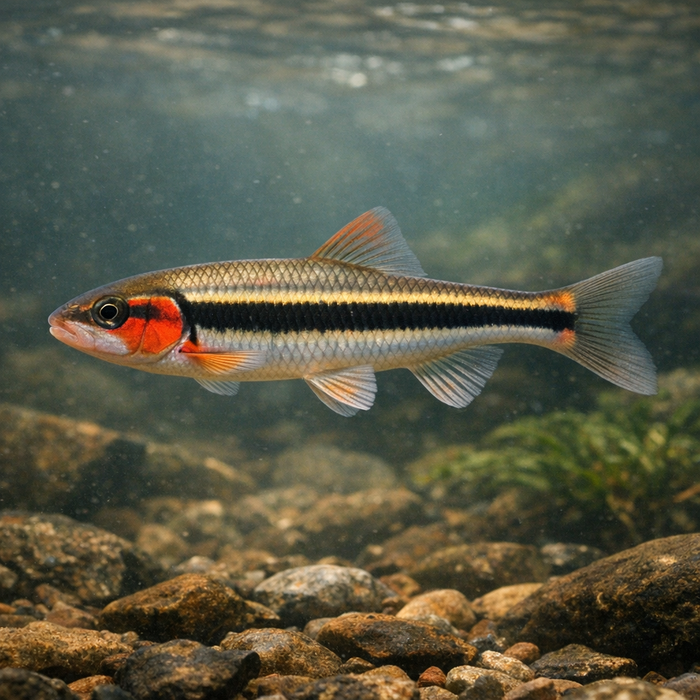
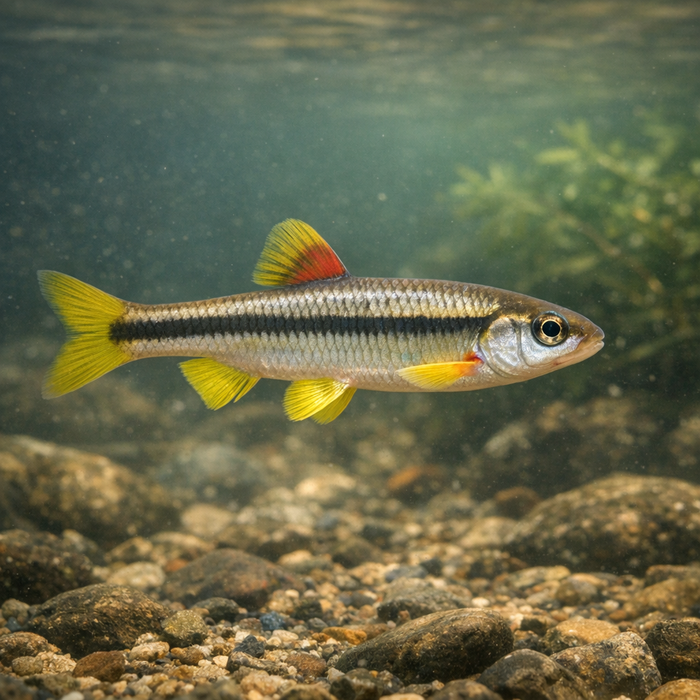
Coosa Shiner (Alburnops xaenocephalus): A Bold, Memorable Hook LineIntroductionThe Coosa shiner is proof that a fish doesn't need to be big to be addictive. Quick, flashy, and glued to current like it owes rent, this little minnow turns clear Southern streams into moving light shows. If you've ever watched a riffle sparkle and thought, what are those, this is your culprit more often than not.What Makes the Coosa shiner Unique?Start with style. During spring, males of the Coosa shiner throw on lemon-yellow fins and roughen up with tiny head tubercles, broadcasting "it's go time" without subtlety. They also run in impossibly tight schools, pivoting as one body over pea gravel and cobble. Their lives are fast-forward: grow up quick, spawn often, keep moving. That urgency makes every flow bump a party. Among microfish nerds, the Coosa shiner stands out for those breeding colors and for being a bona fide local, hugging the Coosa drainage instead of roaming half the continent.Habitat & Global RangeIf you're hunting Coosa shiner habitat, think clear, oxygen-rich water with honest current. Riffles, runs, and the heads and tails of pools are prime. Gravel matters. Silt does not. The species sticks to the Coosa River system and connected tributaries across parts of Georgia, Alabama, and Tennessee. That regional focus gives this fish a neighborhood feel. You don't need a boat. Knee-deep water and polarized glasses get you in the game. Drop the term "Coosa shiner habitat" around local anglers and you'll instantly be talking about riffles, sun angles, and where the gravel stays clean after a storm.Behavior & TemperamentThe Coosa shiner lives fast and doesn't loiter. Schools graze the current where food drifts by, then pulse upstream when a flow bump spikes oxygen. They're daylight active but feel boldest in broken light, like when riffles throw glare or a cloud cover softens the surface. Spawning lines up with spring warmth and clean flow, with fish broadcasting eggs over gravel and getting back to eating in minutes. They're not loners. If you spot one, there are dozens off your shoulder.Ecological ImportanceTiny fish, huge job. The Coosa shiner is a conveyor belt, moving insect energy up the food chain to larger predators like bass, sunfish, and darters. It trims down invertebrate populations, cycles nutrients, and tells stream biologists a lot about water quality. When shiner schools are thick and tight, you're looking at a stream that's oxygenated, structurally intact, and doing what it should. Their sensitivity to silt and low oxygen also makes them a built-in alarm system when things go sideways.Conservation & Environmental PressuresGood news first: the Coosa shiner is not teetering on the edge. Least Concern is the general vibe. But it plays a home game, so local problems hit hard. Sedimentation from poorly managed development, channelization that smothers riffles, and low summer flows can yank the rug out. Warm, stagnant water is not a friend. Keeping gravel clean and current honest is everything. When stormwater is handled smartly and riparian buffers stay leafy, Coosa shiners repay the favor immediately.The FishyAF TakeThe Coosa shiner is a champion of small water joy. If you think fishing only starts at a three-pounder, you're missing a whole sport. Micro hooks, a split shot, and ten minutes at a riffle will serve up schooling fireworks and teach stealth better than any spooky trout. On the scale of fun-per-ounce, the Coosa shiner punches like a prizefighter. And for anglers who love local stories, this fish is the Coosa's signature flicker. Consider this your gateway drug to noticing current seams, gravel patches, and the living pulse of a creek. That's the real trophy hidden in plain sight.