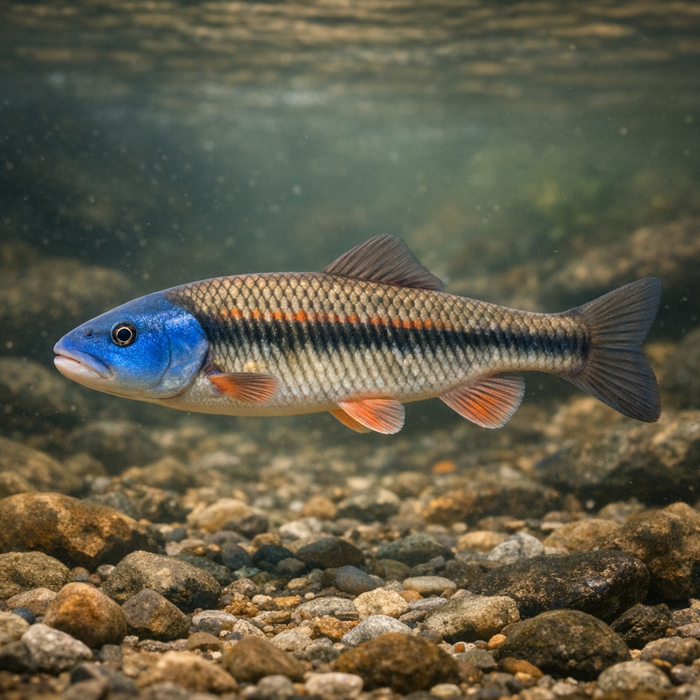
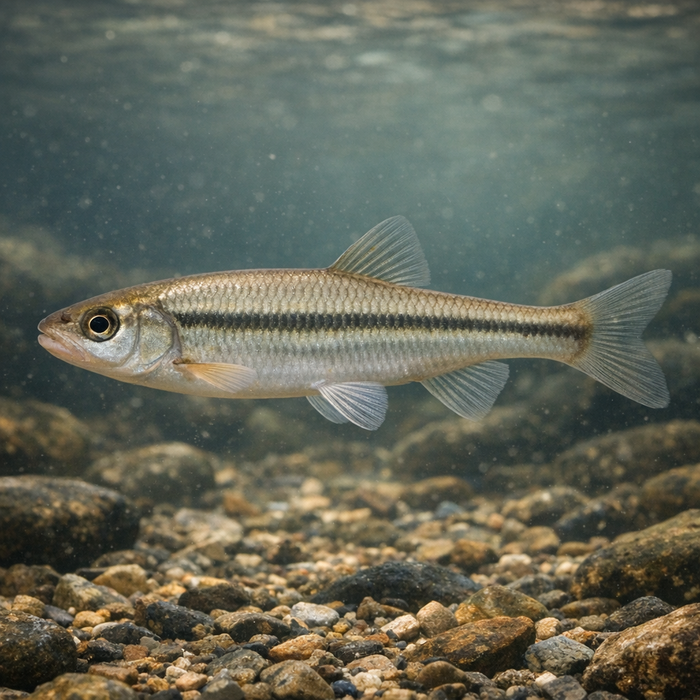
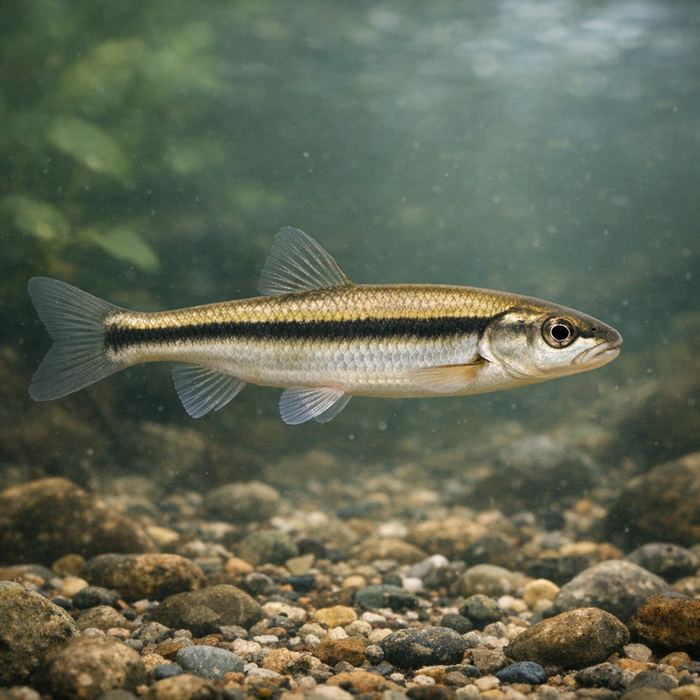
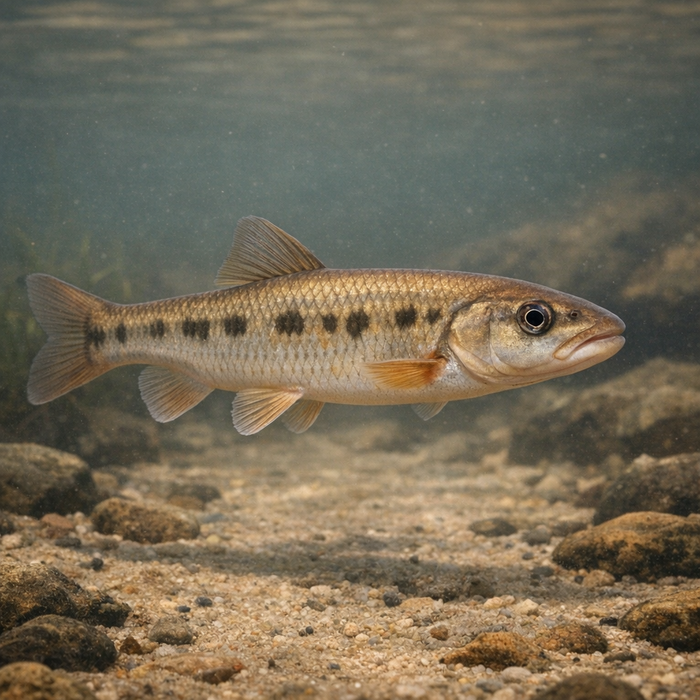
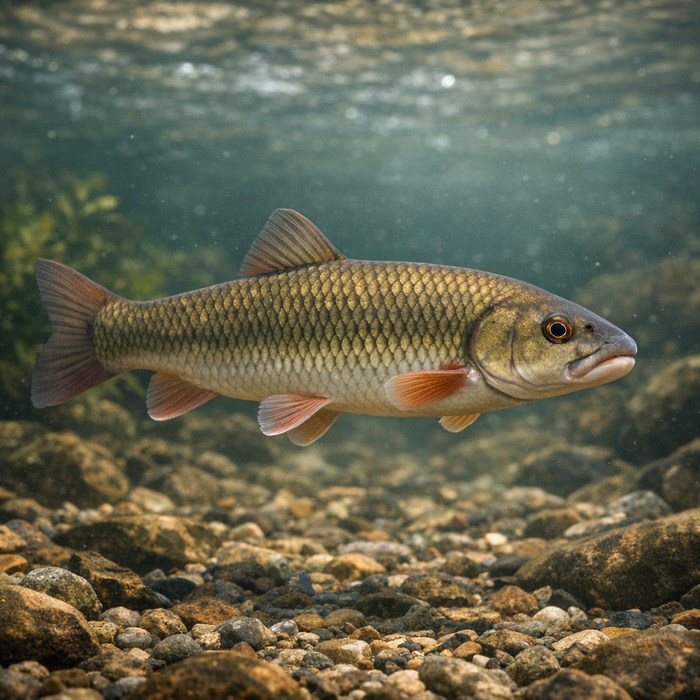
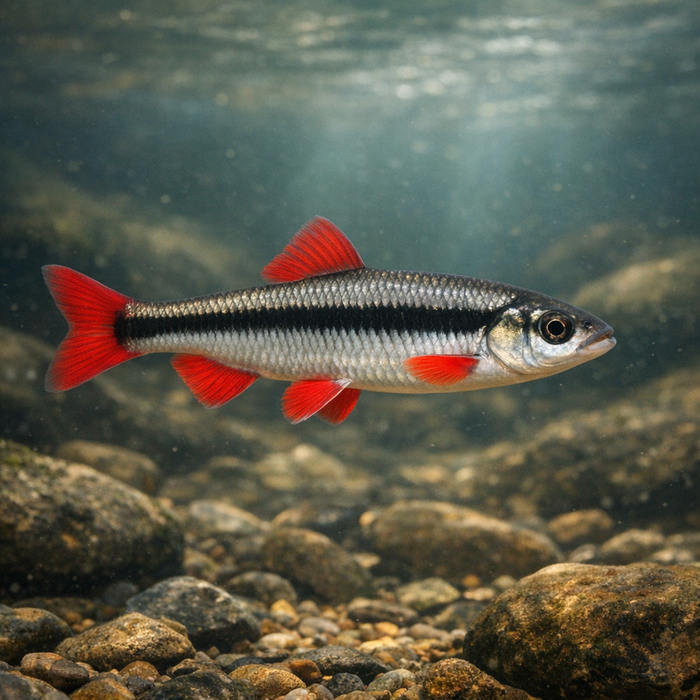
White shiner (Luxilus albeolus): Stream silver with a springtime swaggerIntroductionThe white shiner is the flashy little hype-man of southeastern creeks, schooling hard, gleaming brighter, and then vanishing in a blink. It's not a headline sportfish, but if you're into microfishing or you just like reading the river's living heartbeat, this minnow delivers. The white shiner shows how small fish can be big-time interesting: bold colors in breeding season, clever survival tactics, and a knack for crowding the exact seams that make anglers stare longer. If you want White shiner facts without the yawn, stick around.What Makes the White shiner Unique?Two things: style and strategy. Come spring, male white shiners flip from plain-silver commuters to glitter-mode, flashing metallic sides, greenish backs, and crisp white fin edges. They also grow tiny nuptial tubercles on their heads, the sandpapery bumps they use to joust with rivals. Strategy-wise, Luxilus albeolus is a notorious nest associate, piling its eggs into the carefully arranged rock mounds of larger chubs. The chub guards the pile. The shiner scores free security. It's the river's best childcare hack.Habitat & Global RangeWhen we talk White shiner habitat, think clear, moving water. This species centers on Piedmont and foothill streams of the Southeast, favoring gravel-bottom riffles, pockety runs, and the calm edges just below them. In summer heat or winter chill, schools slide to deeper pools, but once spring stabilizes, they push back into lively flow where food and oxygen are constant. They're sensitive to silt that smothers gravel, so the best populations track with clean watersheds and stable flows. If your shoes crunch fine gravel and your calves feel pushy current, you're in the white shiner's living room.Behavior & TemperamentWhite shiners school like it's a team sport. The group moves as one, pivoting on a dime when shadows cross, then locks back onto the feed. They're midwater pickers, grabbing drifting invertebrates with quick snaps from slightly upturned mouths. In bright conditions they're alert and twitchy, but the mood softens under clouds or at twilight when the surface dimples with rising fish. During spawning, they mob chub nests on riffle crests, males flashing, bumping, and shivering in place. They're not fighters in the rod-bending sense, but they're fast, reactive, and oddly charismatic.Ecological ImportanceThis is the coin of the stream food web. White shiners convert insect drift into high-octane protein for bass, sunfish, and stream predators. Their seasonal dogpiles on chub nests aren't freeloading chaos; they build multi-species success by concentrating eggs where one attentive chub dad can defend an entire micro-neighborhood. Their schooling puts predictable energy in motion, distributing nutrients downstream and stabilizing predator-prey rhythms. When white shiners are thick and shiny, the creek is usually humming.Conservation & Environmental PressuresWhite shiners are currently listed as Least Concern, but that's not a forever stamp. They stumble when sediment loads ramp up from sloppy construction, failing culverts, or hard rains riding bare banks. Gravel gets clogged, oxygen drops, and spawning real estate disappears. Persistent turbidity also boosts wariness and reduces feeding efficiency. Add low summer flows and warmed water, and schools retreat to fewer, riskier refuges. The fix isn't rocket science: intact riparian buffers, functioning floodplains, and stormwater controls that keep the creek's heart from clogging.The FishyAF TakeThe white shiner is proof that the river's small stuff matters. You can chase megabass all day and still crack a smile stalking a glinting school in a knee-deep riffle. It's a gateway fish for kids and a finesse test for anyone who thinks they're stealthy. Learn a stream through the white shiner's eyes and you'll read seams, undertows, and seasonal timing a lot better. White shiner facts are cool, but seeing that chrome school ignite under a cloud bank is cooler. Respect the little legends and the rest of your fishing gets sharper.