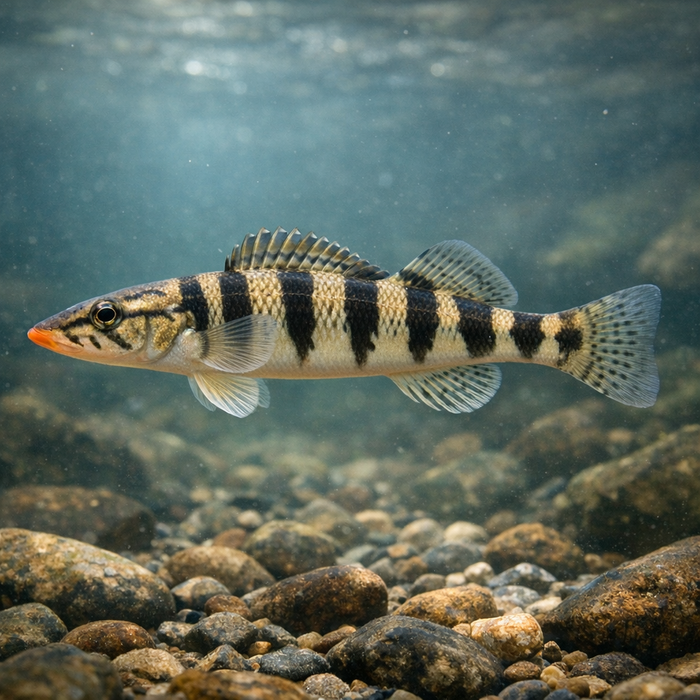
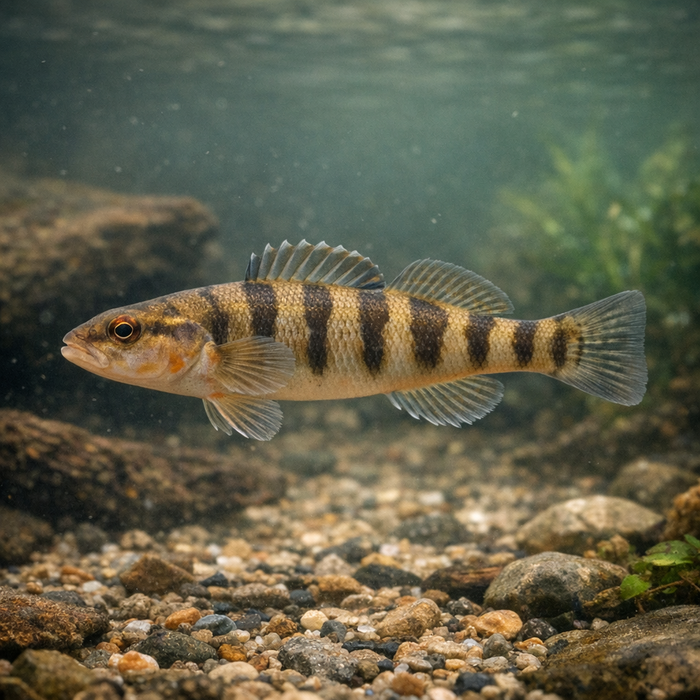
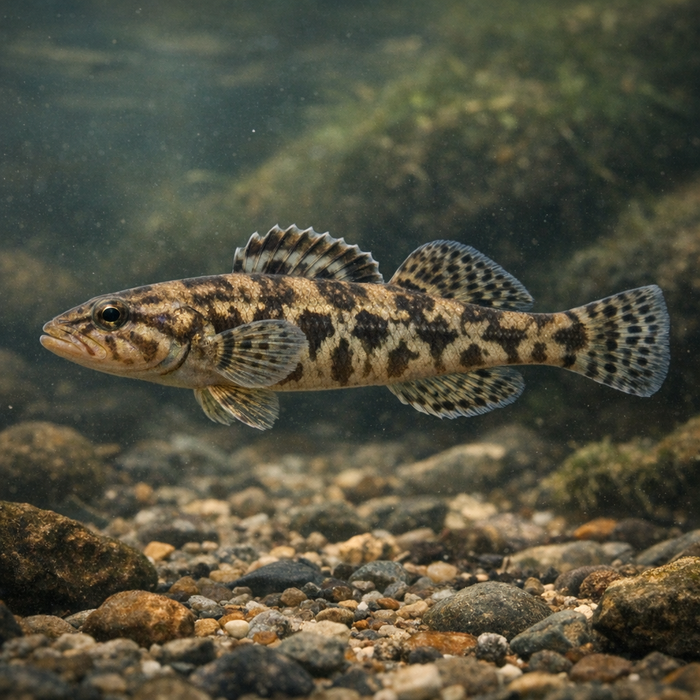
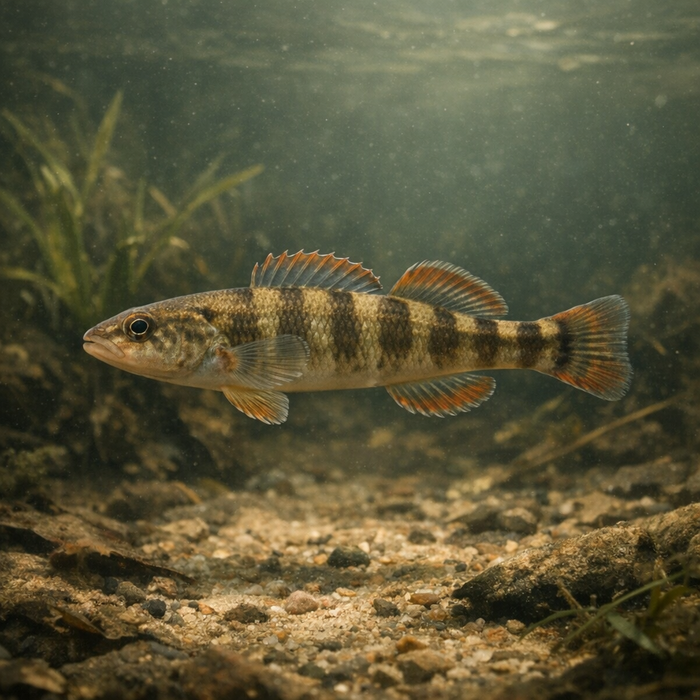
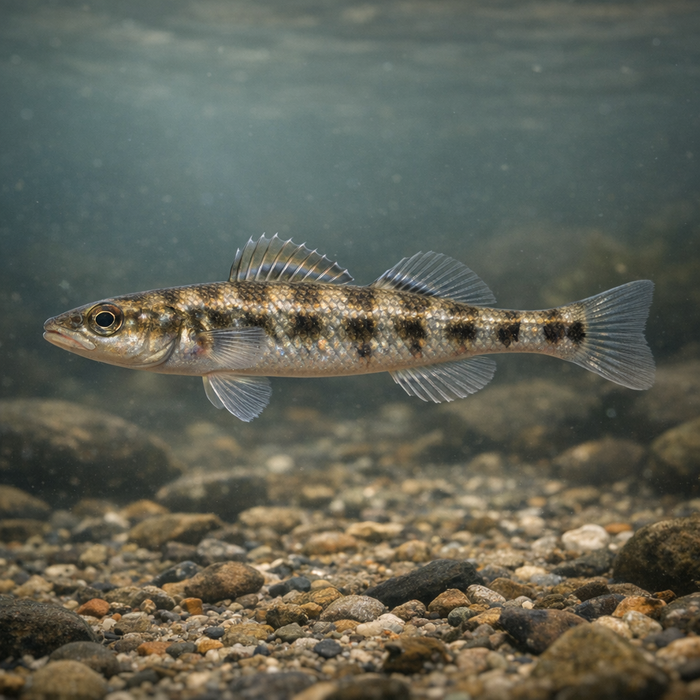
Amber Darter (Percina antesella): Riffle ninja, blink-and-you-missed-it small, and protected for a reason.IntroductionMeet the amber darter, the little rocket that owns the shallow, fast lanes. It's tiny, fussy, and almost invisible until it isn't. You don't "chase" this fish; you spot it like a ghost flickering over gravel. Most anglers will never see one, and that's fine. The amber darter is more conservation legend than catch target, a reminder that rivers are built from small, rare gears that keep everything else spinning. If you're here for straight Amber darter facts, you're in the right riffle.What Makes the Amber darter Unique?First, size. Adults rarely crack two inches. In a family that includes bruisers like walleye, this is the stealth fighter in fun-size. Second, color. Breeding males wash up with warm amber bars that seem to glow in clean flow. Third, it's specialized to the point of obsession. Wide, hydrofoil-like pectorals and a low profile glue it to the stones, letting it hold steady where most fish would cartwheel downstream. That extreme riffle tuning is its superpower and, honestly, its Achilles heel.Habitat & Global RangeLet's talk Amber darter habitat without the fairy dust. Think fast, clear shoals; pea-to-cobble gravel; shallow water you could wade in sneakers if you liked cold toes. It doesn't prowl lakes or lazy pools. It thrives where current brings a conveyor belt of drifting invertebrates and the bottom is squeaky clean. Geographically, it's a hyper-local specialist in the upper Coosa drainage of Georgia and Tennessee, with modern strongholds tied to the Conasauga River system. That razor-thin footprint is why it's federally endangered.Behavior & TemperamentThe amber darter is a burst-move, freeze, and vanish operator. It flashes ten inches forward, locks down, then pretends to be a pebble. Feeding is close-quarters: eyes up, belly down, snatching tiny prey as the current delivers. Don't expect jumpy topwater antics; surface feeding is basically a no. These fish are daylight-friendly when water is clear and stable, but clarity and flows call the shots. They'll cluster in micro-eddies and seams, rarely straying far from tight structure.Ecological ImportanceHere's the unsexy truth that matters: riffle fish like the amber darter are canaries in the watershed. They need clean gravel, consistent flows, and low silt. When those go, they go. Keeping this micro-predator on the map means the insect engine is humming, the substrate breathes, and bigger gamefish upstream and down have a functioning nursery. Lose the darters, and you've hollowed out the river's base layer.Conservation & Environmental PressuresEndangered isn't just a label here. Sedimentation from roads and development, nutrient surges, droughts that stall flows, storm pulses that sandblast gravel, and habitat fragmentation all stack the deck. Even small changes in substrate quality can wipe out the gaps eggs settle into. Because the range is tiny, one bad event can punch above its weight. Agencies, researchers, and local partners have focused on water quality, erosion control, and protecting critical shoals. That's the game: keep the riffles fast, clean, and alive.The FishyAF TakeSome fish are for grip-and-grins. The amber darter is for grit and respect. If you're hunting Amber darter facts for a bucket list, rewrite the list: this species is about seeing, not seizing. Learn its riffles, read the seams, and know you're looking at a survivor with absurdly narrow needs. Protect those needs, and the whole river gets better. Blow them, and you don't just lose a tiny fish. You lose proof that the river still breathes.