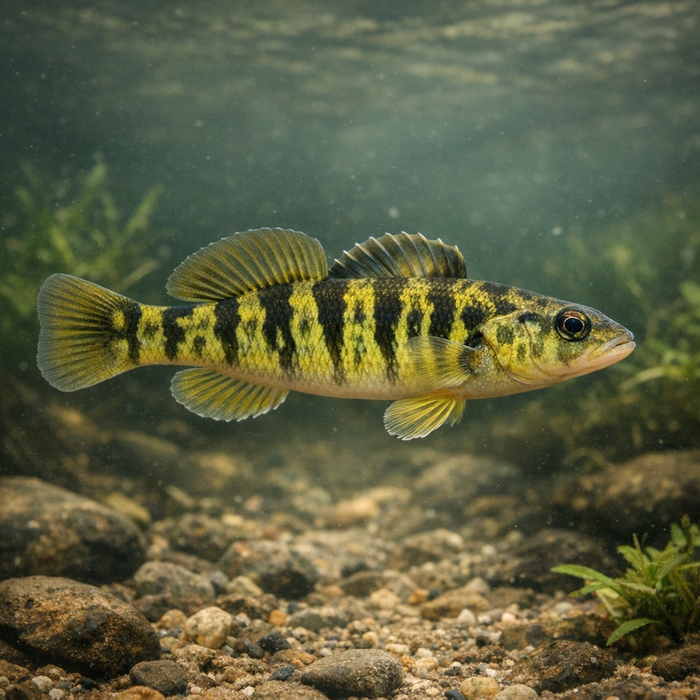
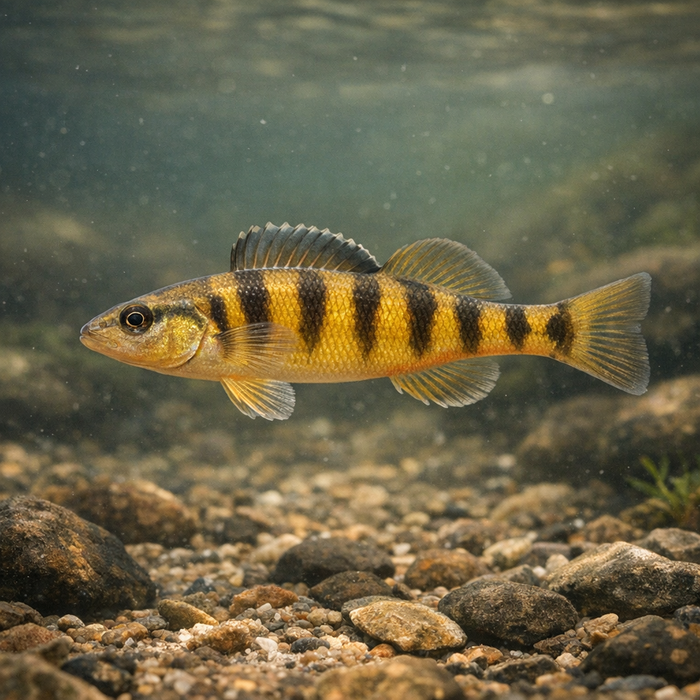
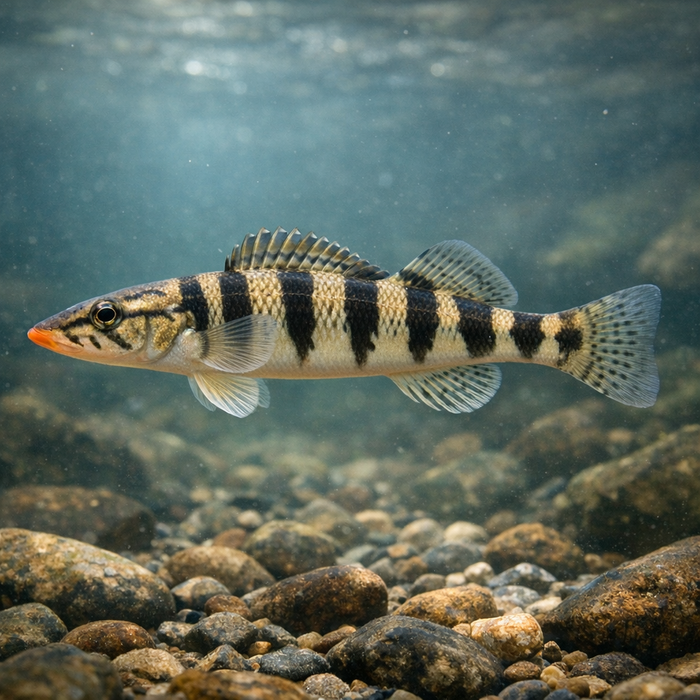
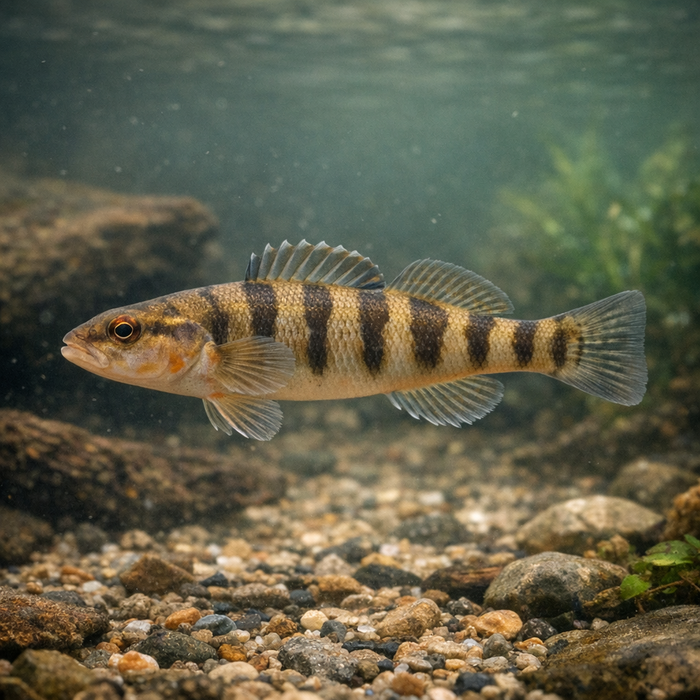
Diamond Darter (Crystallaria cincotta): The river's stealthiest gem, built to disappear in plain sight.IntroductionIf stealth had scales, it would be the Diamond darter. This tiny, translucent sprinter lives in hard current, disappears into sand with a twitch, and reminds anglers that not every great fish is meant for a hook. Here's your deep dive into Diamond darter facts, why it matters, and what its razor-thin existence says about our rivers.What Makes the Diamond darter Unique?The Diamond darter isn't just small; it's practically optically evasive. With a slender, nearly see-through body and outsized eyes, it's tuned for low light and fast water. Like many darters, it lacks a functional swim bladder, which means it hugs bottom and darts rather than cruising midwater. Its party trick is sand-burying: a quick shimmy and it's gone, with only eyes and snout peeking out. Add in its scientific backstory - described as a distinct species in 2008 after being overlooked for decades - and you've got a river cryptid confirmed by science.Habitat & Global RangeThis is a fish of clean, flowing water. Diamond darter habitat centers on medium to large rivers with swift, shifting sand and fine gravel, where current feeds oxygen and keeps the bottom scoured. Historically tied to the Ohio River drainage, the modern, documented stronghold is painfully narrow. Think specific shoals and runs rather than broad stretches of river. Siltation, dredging, and altered flows quickly wreck its microhabitat. If you're picturing brush piles or weed beds, think again; this darter wants moving sand lanes and the seams where current slack meets speed.Behavior & TemperamentThe Diamond darter is a bottom-hugging ambush artist scaled for insects and microcrustaceans. It prefers low light, and night surveys often reveal more activity than daytime hunts. It doesn't school like shad or roam like bass. Instead, it makes short, explosive dashes, then locks down against the substrate or sinks into it. That sand-burying behavior is both camouflage and a bunker against current. Spawning likely lines up with late spring into early summer when temperatures and flow cooperate, with brief, high-energy windows tied to stable water.Ecological ImportanceSmall doesn't mean small-time. The Diamond darter helps move energy up the food chain by converting insect biomass into fish protein. Its dependence on clean, shifting sands makes it a perfect indicator for river health: when sediments clog the runs, or flows flatten out, this fish is among the first to vanish. Protecting Diamond darter habitat also protects a suite of other current-loving species that need oxygen-rich, silt-free conditions to survive.Conservation & Environmental PressuresThe Diamond darter is critically endangered, and the reasons read like a to-do list of river insults: sediment from poor land practices, channelization, impoundments that flatten flow pulses, and chemical contamination. Because it lives in narrow habitat lanes, even small changes bite hard. Rediscovery in the 2000s sparked hope, but hope doesn't replace habitat. Conservation here means protecting entire flow regimes and the fine-scale structure of sandy shoals. Translation: good forestry, smart stormwater control, sensible gravel management, and staying honest about dam operations.The FishyAF TakeThe Diamond darter is the fish equivalent of a rare vinyl: you don't put it on every day, and you sure as hell don't scratch it. It's not an angling target, period. But if you love rivers, you should love this fish. The Diamond darter tells you where the water still breathes - where sand still moves, where current still flips stones and flushes silt. You want real river cred? Learn the seams, learn how sediment moves, and cheer when a survey turns up a few more diamonds. Diamond darter habitat is the heartbeat of a living river. Keep that pulse, keep the fish.