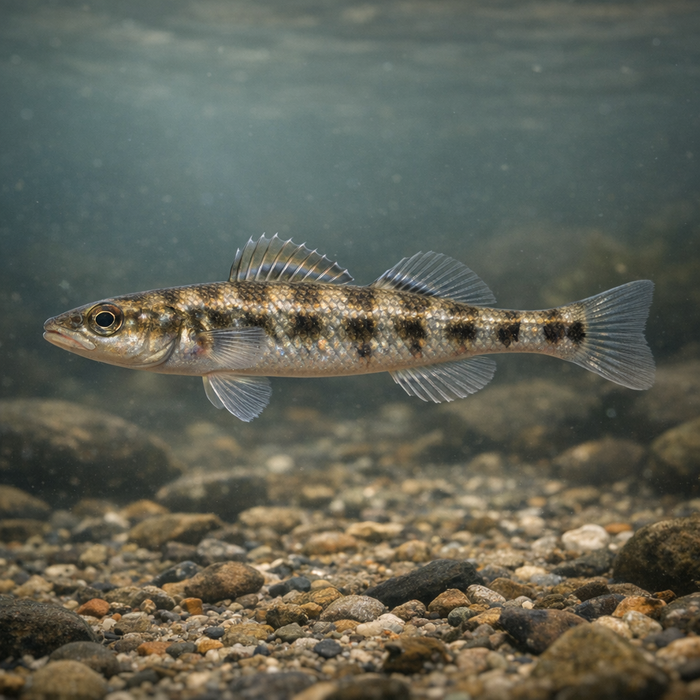
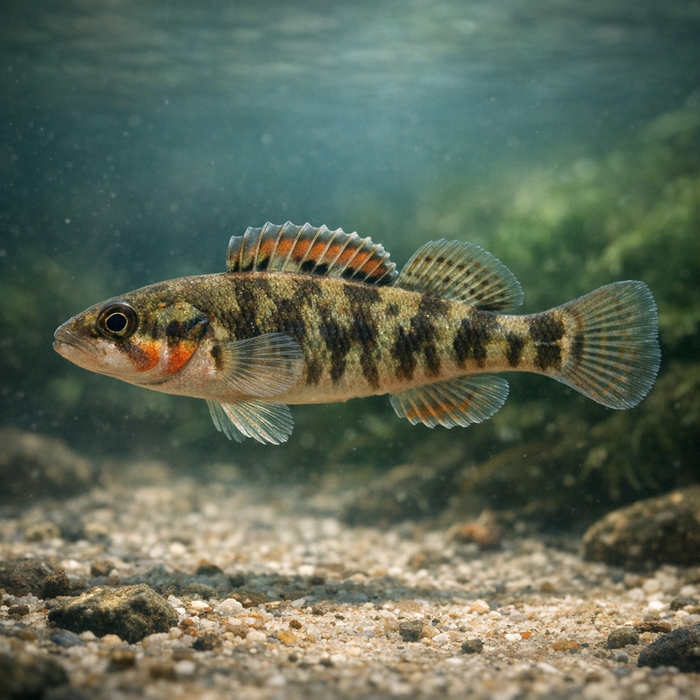
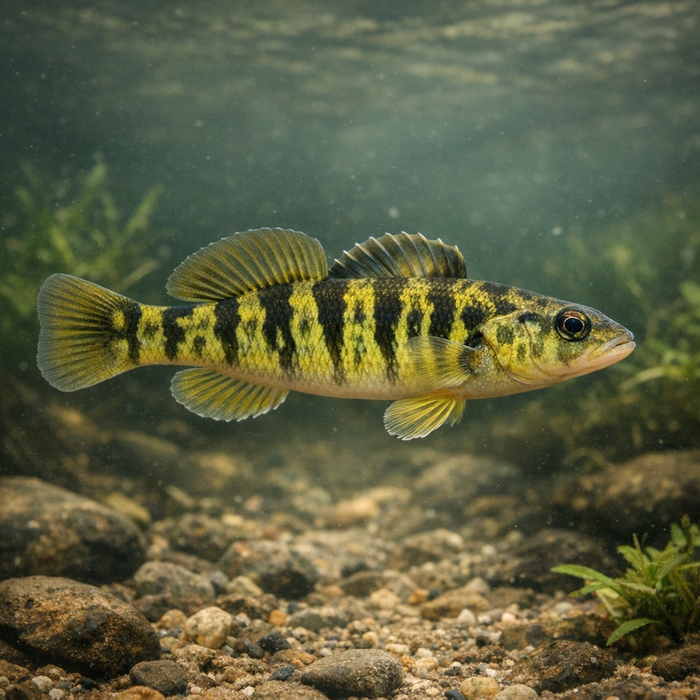
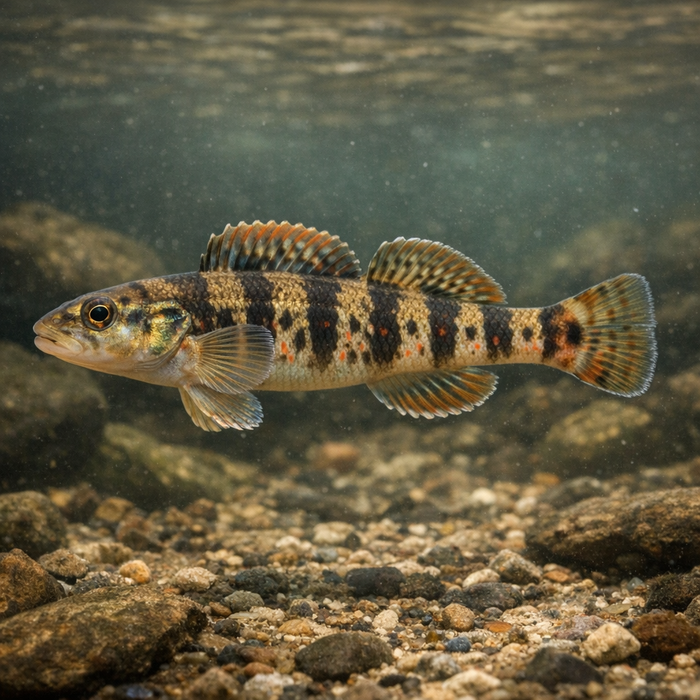
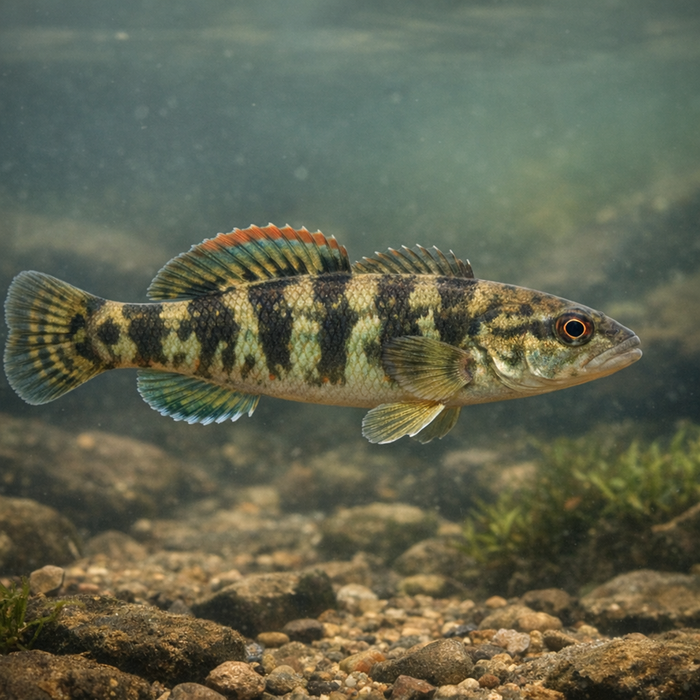
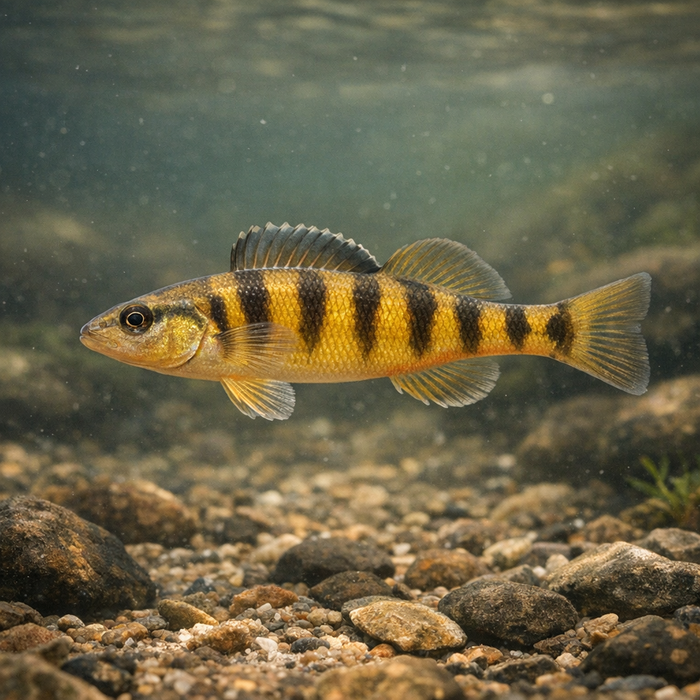
Tuxedo Darter (Etheostoma lemniscatum): A Bold, Memorable Hook LineIntroductionThe Tuxedo Darter is tiny, rare, and cranked to eleven by fast water. This riffle-rocket lives its entire life in current most fish avoid, which makes simply spotting one feel like you've cracked a secret level. For anglers and fish nerds alike, the Tuxedo Darter is less a target and more a backstage pass to a wild, whitewater micro-world. Consider these Tuxedo Darter facts your map to a fish that looks sharp and lives sharper.What Makes the Tuxedo Darter Unique?First, the look. Breeding males sport a deep, black lateral band with pale edging that reads like formalwear-hence the name. It's not just pretty; it's a billboard in swift water where signals fade fast. Second, the build. Darters ditch the swim bladder, trade up for big pectorals, and become bottom-hugging sprinters. That design lets the Tuxedo Darter pin itself to boulders and surge forward in bursts that ignore current most minnows can't stand. Third, the scarcity. The species is hyper-local, with a distribution clinging to select shoals in the Big South Fork system. That tight range makes every encounter feel special and underscores why this fish carries serious conservation weight.Habitat & Global RangeLet's cut to it: the Tuxedo Darter isn't a world traveler. Its entire known range sits in the Big South Fork of the Cumberland River and key tributaries. Picture steep-walled gorge country with clear, cool, oxygen-rich water ripping over cobble, ledges, and head-sized boulders. Riffles and runs are the sweet spot, usually knee-deep or shallower, where broken flow creates micro eddies and insect buffets. If you're searching Tuxedo Darter habitat, ignore the pools and focus on the white, choppy stuff that makes wading dicey. That's their turf.Behavior & TemperamentThis is a bottom-lurker with pop. Tuxedo Darters slide between cobbles, ambush invertebrates, and hold station in bite-sized eddies they practically blueprint with their fins. They're not roamers; they're riffle locals with fine-tuned addresses. Breeding season flips the switch: males court, display, and guard eggs on or under rocks like they own the block. Feeding happens mostly in daylight when visibility and drift align, with quick snatches at larvae wedged in the substrate or drifting along seams. Spook one and it vanishes between stones like smoke.Ecological ImportanceThe Tuxedo Darter is a small predator that punches above its weight in insect control. Because it's tied to stable, well-oxygenated flows, it's also a living litmus test for watershed health. Lose clean riffles or strand shoals under sediment, and darters disappear fast. Keep them thriving and you've likely nailed key ingredients-intact riparian buffers, natural flow regimes, and bedrock that isn't smothered in silt. In other words, protecting a two-inch fish protects a lot of river.Conservation & Environmental PressuresHere's the hard truth: hyper-local species have zero room for error. The Tuxedo Darter is federally endangered, and its fortunes rise and fall with flow management, sediment loads, and water quality. One bad storm season with rampant erosion, or chronic siltation from upstream disturbance, can erase crucial microhabitat. Add in barriers that scramble natural flow or migration among riffle complexes and you have a fish living on a razor's edge. Conservation wins here look like habitat protection, science-based flow plans, careful land use, and leaving the fish alone.The FishyAF TakeThe Tuxedo Darter is proof that "trophy" doesn't always mean heavy. It means rare, wild, and unapologetically specialized. You don't chase this fish with a scale; you bring a lens, a steady stance in knee-deep current, and enough respect to walk away without a cast. Yes, the markings are killer. Yes, the habitat is cinematic. But the real flex is restraint. If you want a souvenir, take a photo of the riffle and a memory of a fish that survives only where the river still roars. Treat that as your personal best and you'll get what the Tuxedo Darter is all about.